Categories
Uncategorized

Coming this month at PS Dot com: broadcast engineering highlights of the mid 60s

BE_1063_CvrHow are y’all doing…  I recently picked up a large pile of the old ‘Broadcast Engineering’ mags from the mid 60’s.  Although much of the content focuses on video engineering (not quite ready to go there yet…), I found a good amount of audio-related content that is still potentially relevant today.  I’ll be uploading bits and bobs throughout March.  Thanks for reading, and stay tuned…. oh and here’s a sample of that yr in for…

BE_1264_Cvr BE_1164_Cvr BE_0764_Cvr BE_0763_Cv BE_0664_Cvr BE_0564_cover BE_0465_cvr BE_0364_cvr BE_0164_Cvr

Categories
Uncategorized

Mates of State record “Desire” for AUDIO-FILES television program at Gold Coast Recorders

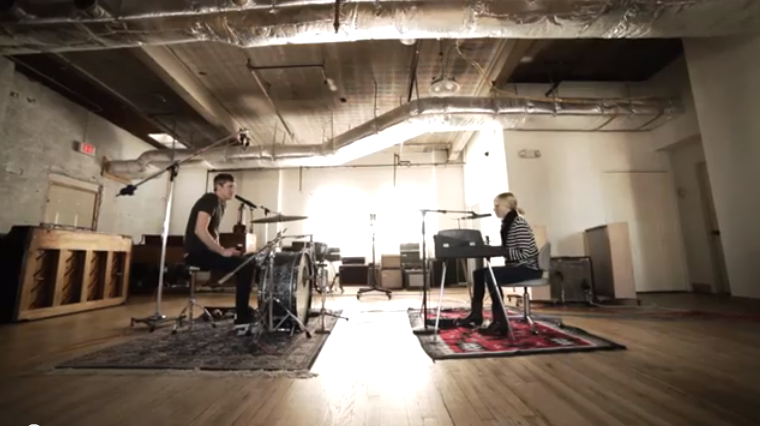
MOS_AT_GCRWe were lucky a few months back to have the fantastic band MATES OF STATE at Gold Coast Recorders to tape part of their AUDIO-FILES episode.  You can watch the whole performance right here.  Wonderful performance by Kori and Jason and just an absolutely delightful crew to work with.  Directed by Matt Eastin.  Recorded by Chris and Cade Thalman at Gold Coast Recorders, mixed by Jason Hammel.

Categories
Uncategorized

An Absurd Tape Duplication Scheme c. 1950

PreviewScreenSnapz002that’s right, git all up in that shit MOTHAFUKKA

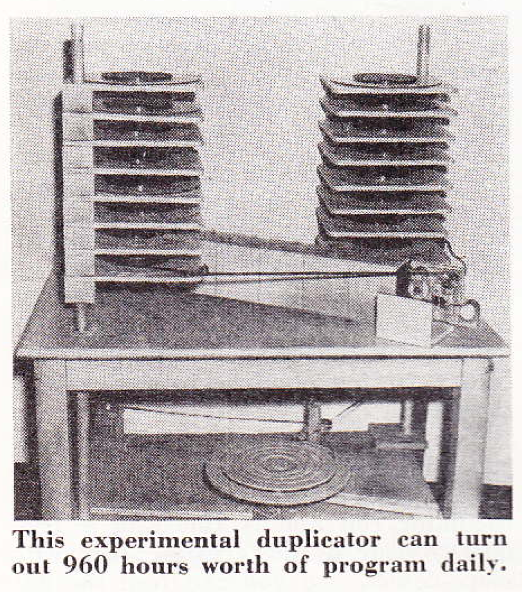
Ahem.  From RADIO-ELECTRONICS circa 1950 comes this piece on a forgotten cul-de-sac of audio production, the ‘magnetic-transfer-field’ method of duplicating analog audiotape.  WTF?   Read on and learn, dudes (VIA is there a lady?  Do any women read this nonsense?  if so, pls speak up thanks).

DOWNLOAD: MagneticTapeDupe1950

PreviewScreenSnapz001I was in Marin county this past weekend and I met some pretty interesting folks at the yard-sales.  First, a dude who made a lot of the DigiRack presets in protools, and hours later, a very old fellow who used to build bridges+road by day and then service musical equipment by night.  Hooked me up with some amazing ancient tech-data books.  fascinating sorta shit/sorta folks that I don’t seem to find too often out here East.  Anyhow…  point is…  there are so, so, so many weird little roads of audio-production that have not been traveled by plug-in designers…  so many paths still unexplored digitally. Every weird dead-end of commercial audio production awaits a potential rebirth in the plug-in age…  Via: someone make a magnetic-transfer-field simulator already?

Categories
Uncategorized

Electrodyne circa 1969

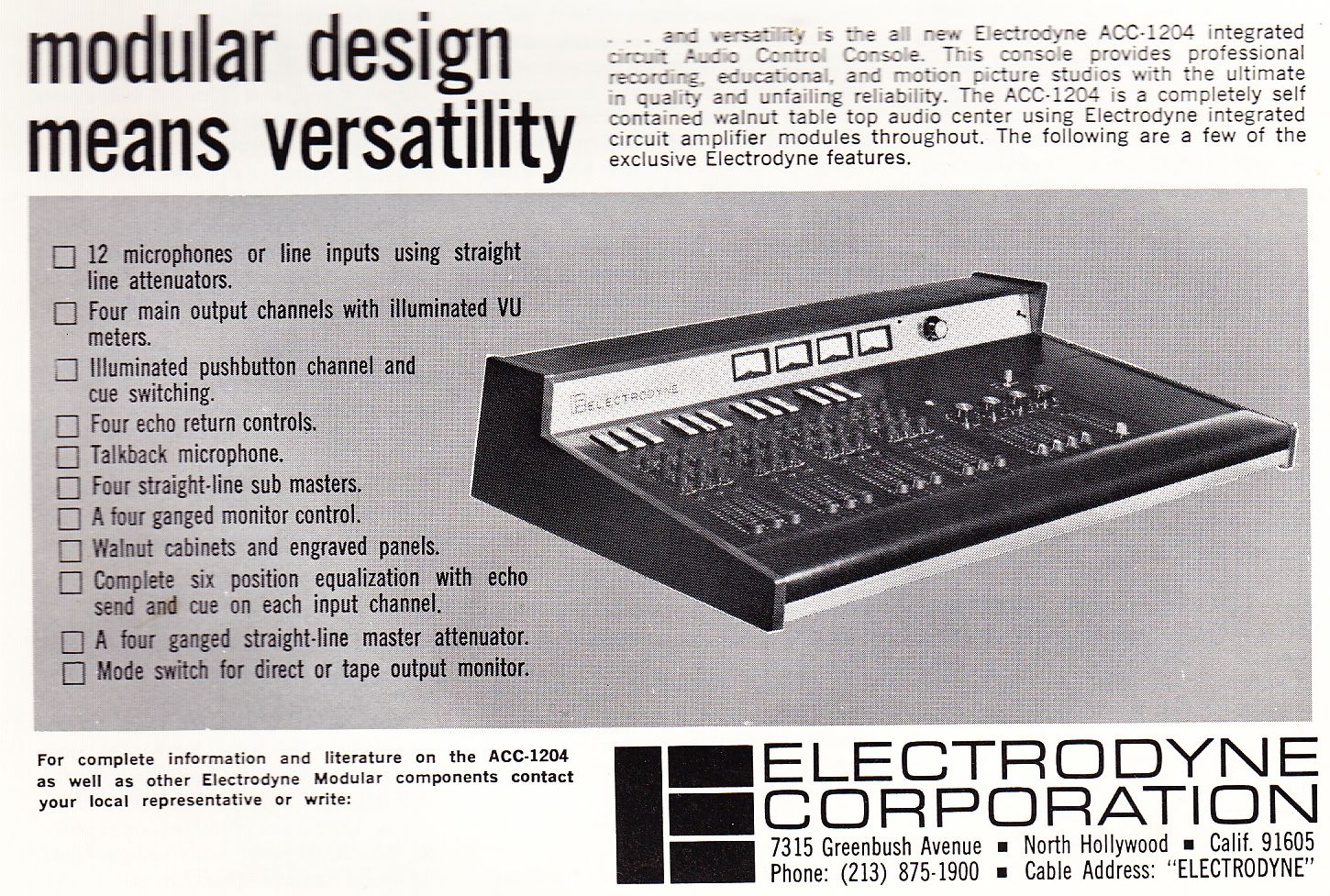
Electrodyne_ACC_1204_Console_1968

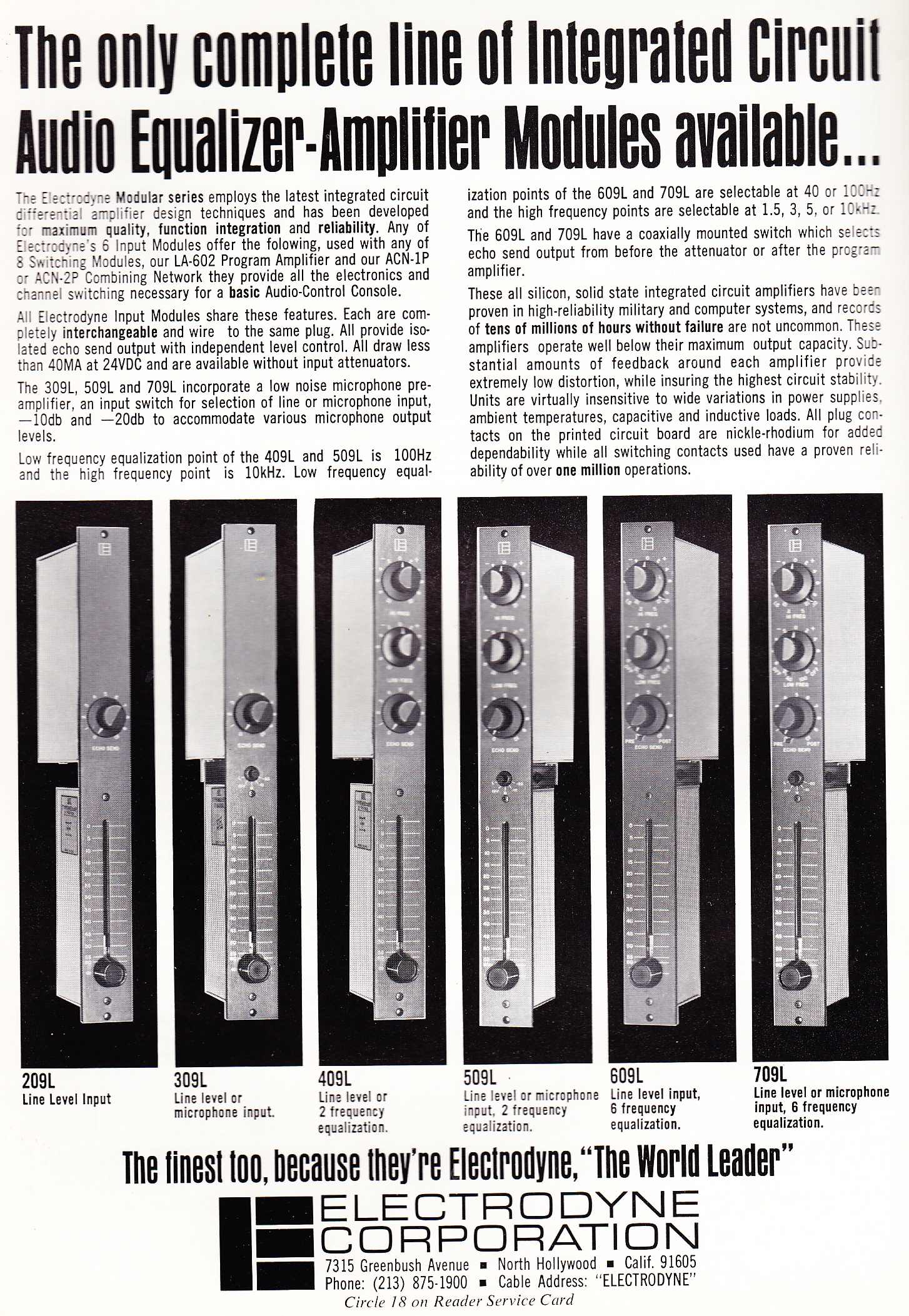
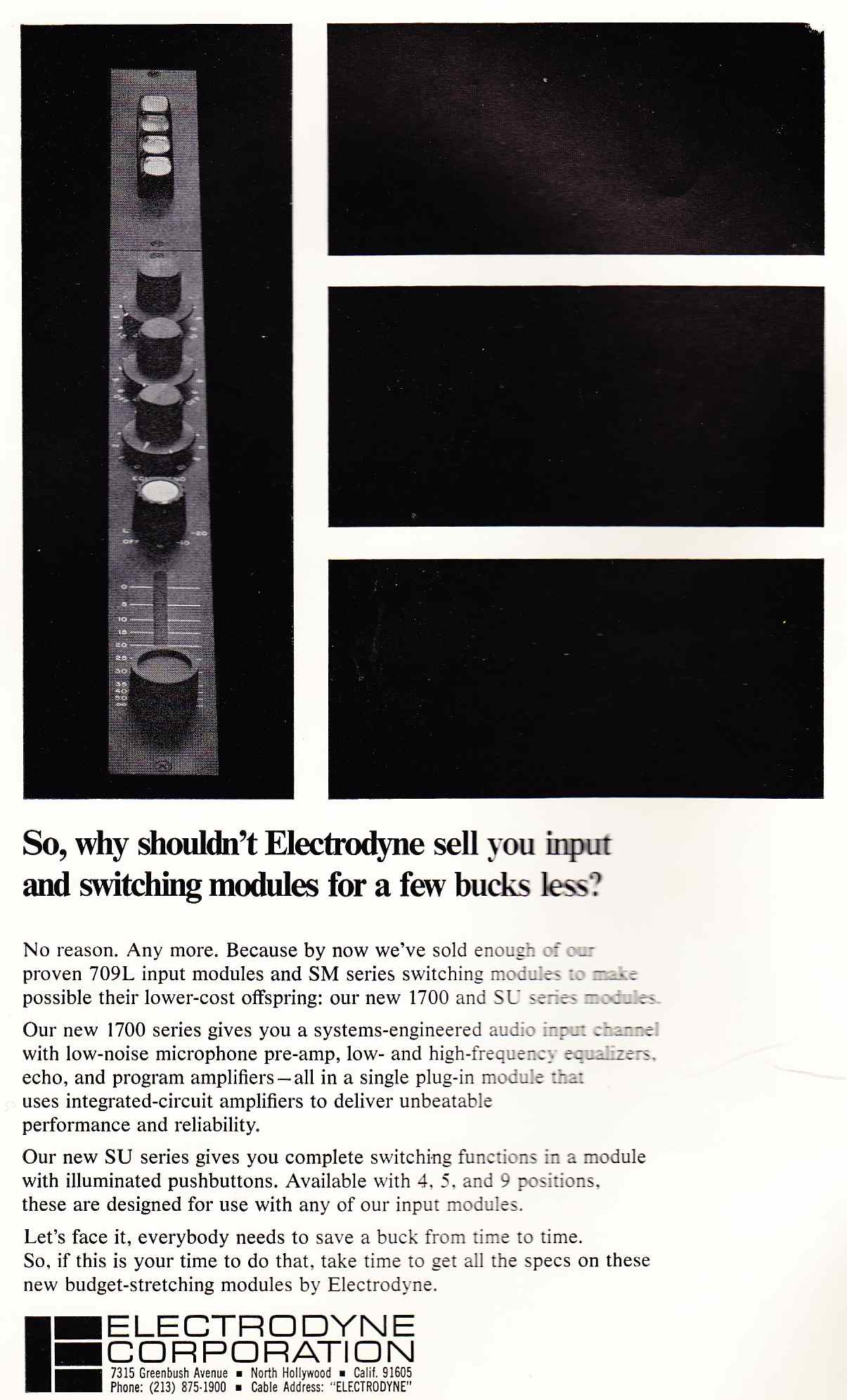
Some random bits of Electrodyne kit that I came across…  Above, their ACC-1204…  looks pretty neat… anyone?


Electrodyne_Console_strips_1968 Electrodyne_strips_1969

Categories
Uncategorized

Live DJ Set: Wednesday March 06: New Haven CT

SwayMarchHello y’all… Once again I will be dusting off ye old 70s soul and punk vinyl at FIREHOUSE 12, New Haven CT, alongside my good old friend JBW aka SWAY…  We’re on tomorrow, Wednesday the sixth, from 9PM til one.  Come on down to the best bar in CT and hear some (lost)(never were)(prolly should-have-been) classics.

Categories
Uncategorized

Just what I need. Another Collection.

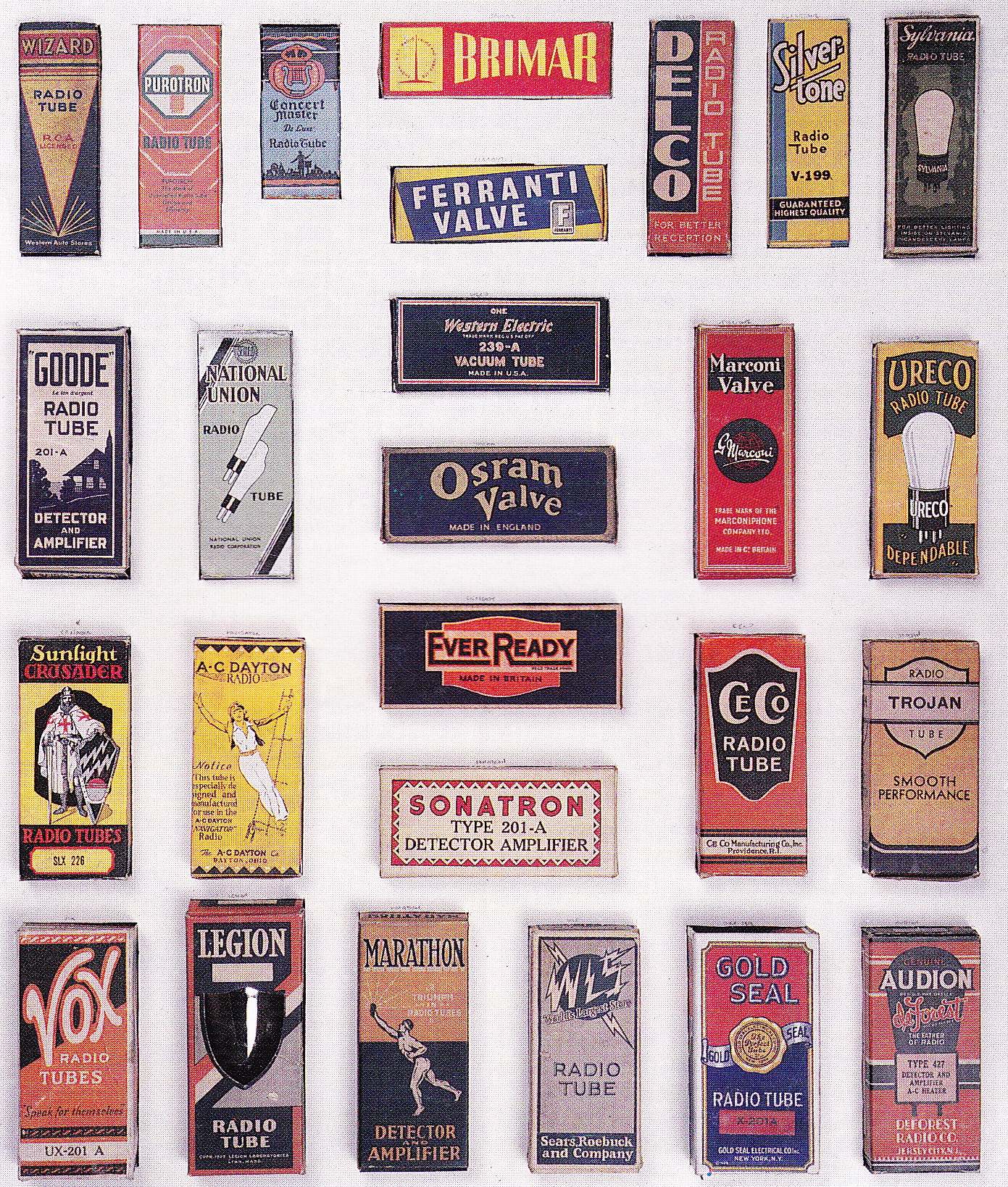
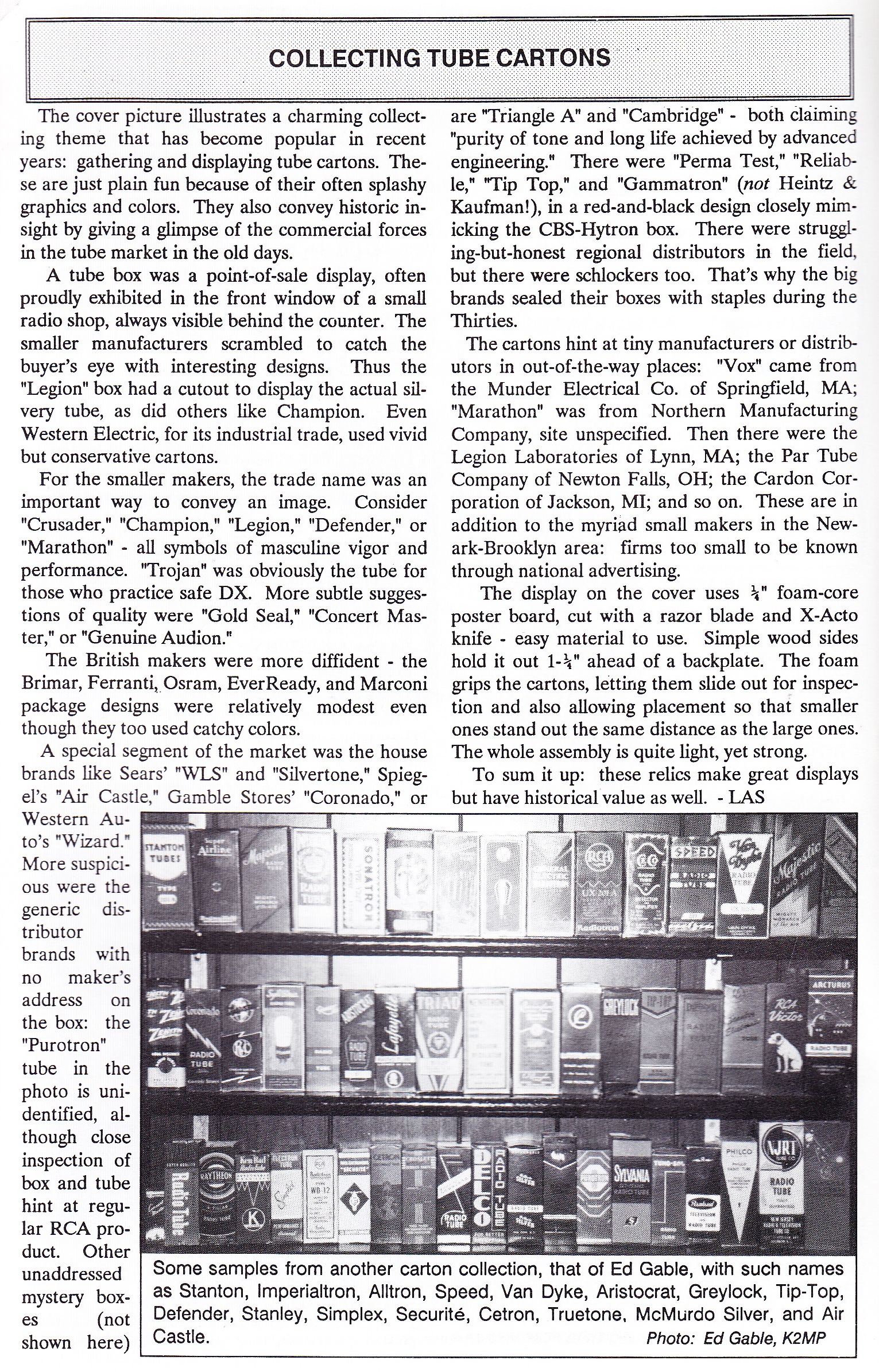
TubeBoxCollectionFrom “The Old Timer’s Bulletin” Vol 33., #1: a short piece on the minor hobby of collecting and displaying antique tube BOXES.  Not the tubes, mind you, just the boxes.  Fast forward to me in 30 years…

Text************

*******

***

I recently bought a huge pile of the old radio fanzines; hundreds, probably, from the family of a deceased collector, likely; and while Old Radios just aren’t ‘my thing,’ the ‘zines are great, really charming+heartfelt lil snapshots of collector-life.  The only parallel I have seen in the musical-gear world is Vintage Guitar magazine, which is eh so-so.  I have subscribed and unsubscibed to VG a few times now, it’s not bad, and the price is certainly right, but I dunno it just sorta misses the mark… maybe it’s just too dry…  Anyhow, in this era of online-everything, are there any noteable audio and/or instrument print-fanzines still in production?  Anything worth checking out?  Let us know…

Categories
Uncategorized

1982: The Age Of Digital Audio Begins (REVISED)

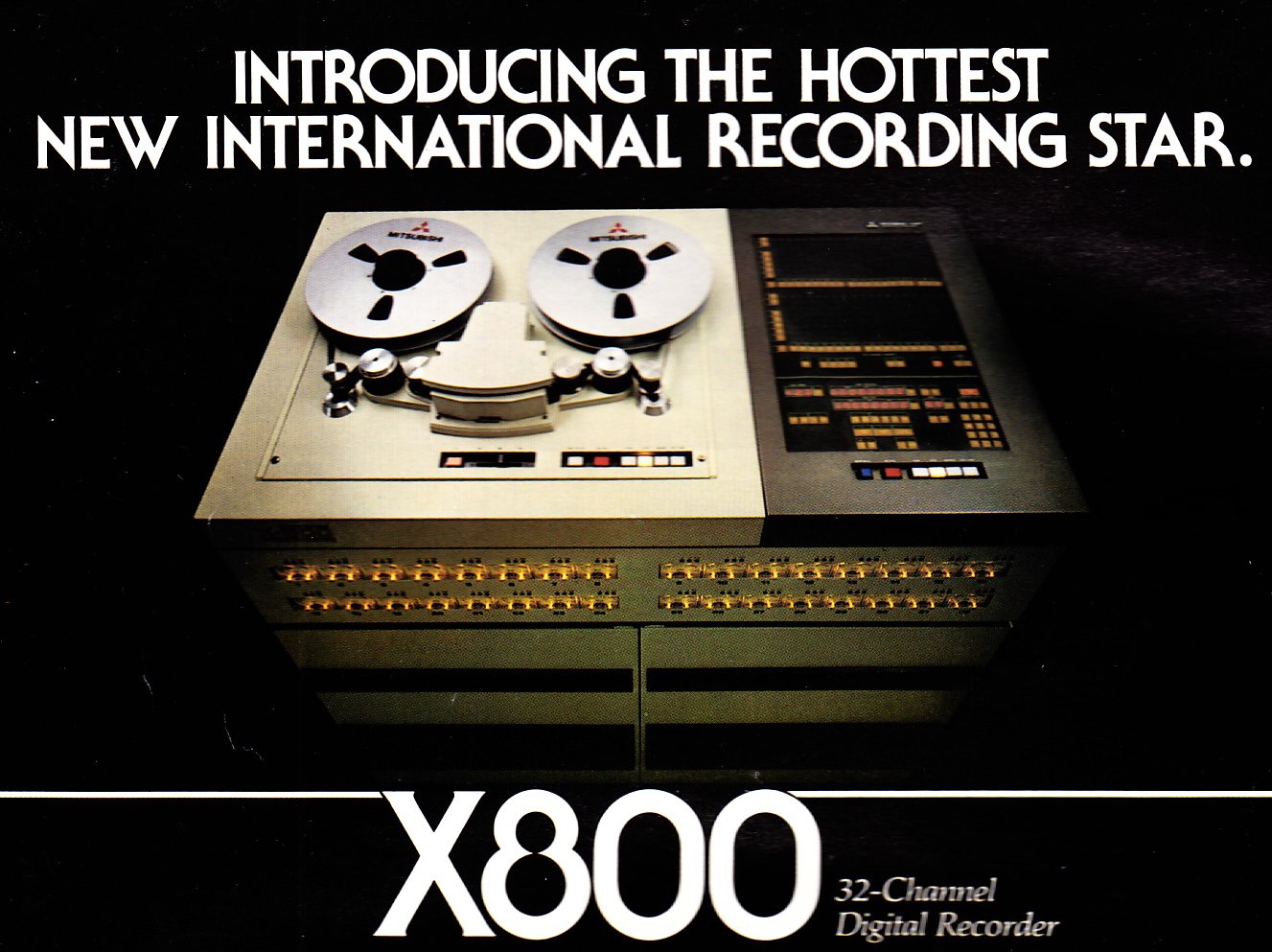
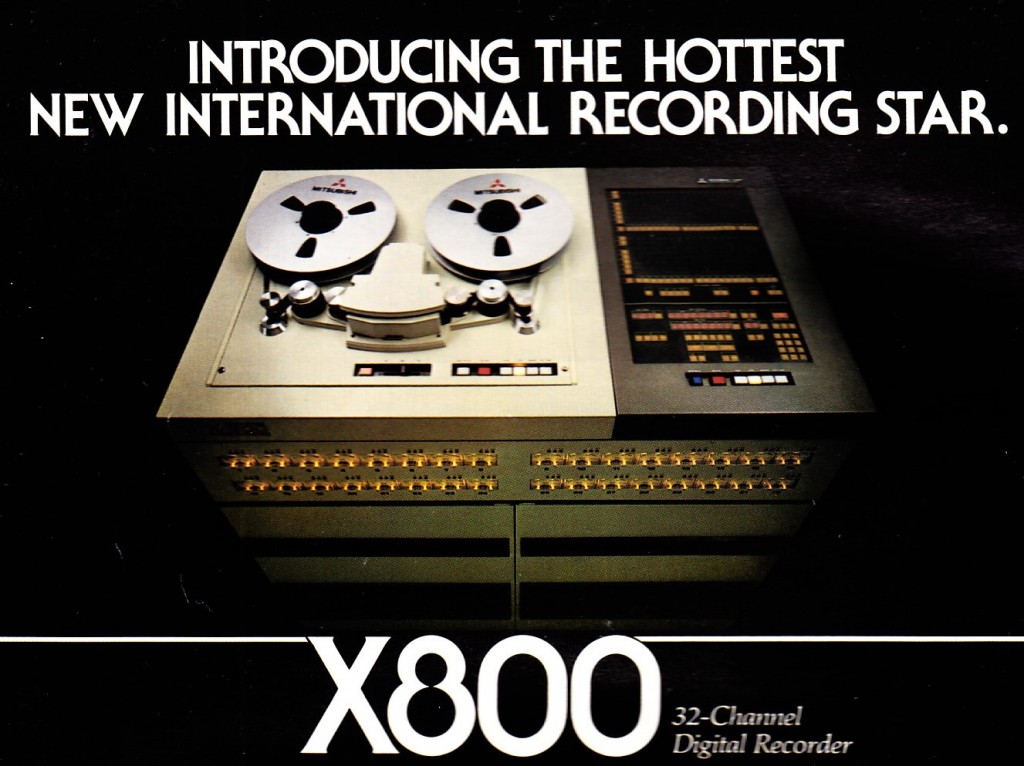
Mitsubishi_x800_1980Above: The Mitsubishi X800, an early digital multitrack audio recorder (1980).

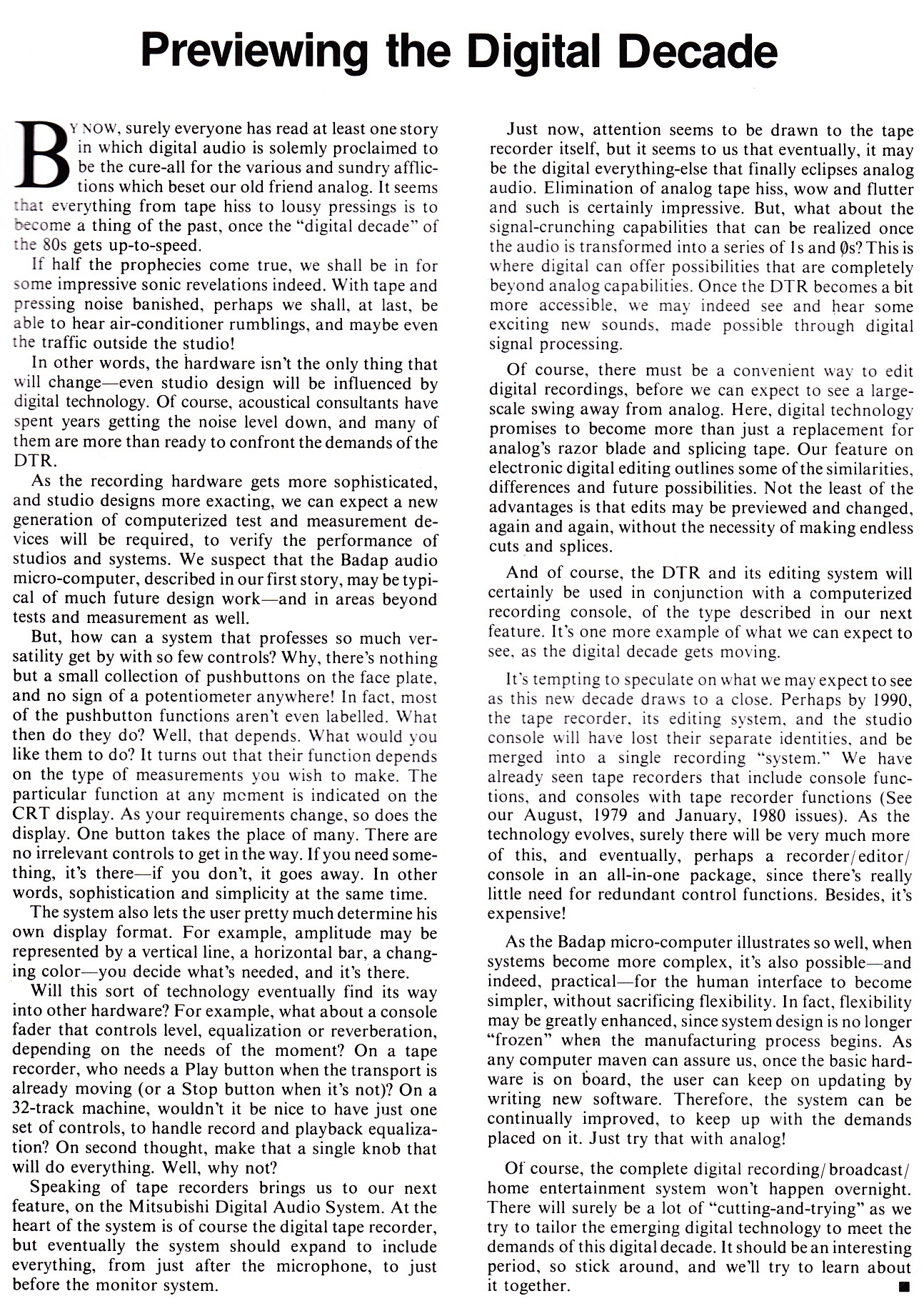
What better way to end 70’s month at PS dot com than a to take a quick look forward, from the vantage point of 1982, at the new era of digital audio.  Below: the very-smart John Woram offers an editorial in DB magazine, 1982, on the new age to come.  Although digital multitracking was already widely-used in high-end music production by 1982, that year saw the introduction of the first consumer digital audio playback devices, the CD player.  For the first time, the cycle could be complete: you, as the consumer, could hear exactly (well, speakers and room acoustics notwithstanding) what the producer heard in the mastering suite.  Audio, which had been a chimerical, elusive magnetic or physical/mechanical fluctuation for over 100 years had been successfully reduced to an (at least acceptable) data stream.   Let’s see what Woram had to say…
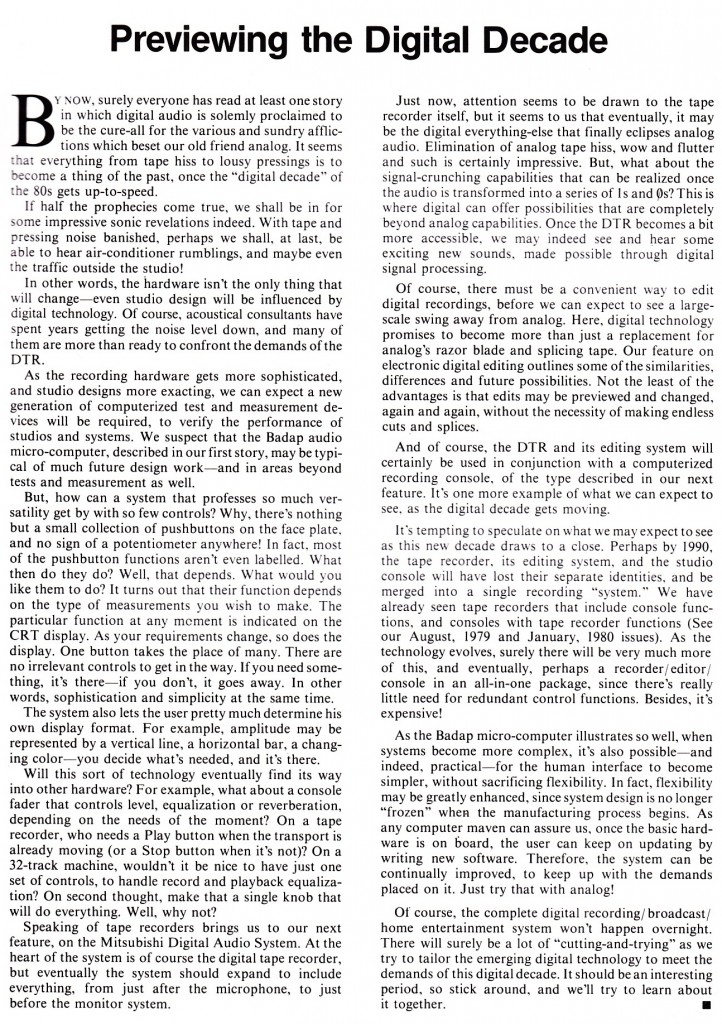
JohnWoram_DB_Feb1982It’s not an easy thing to imagine the future.  I see this in practice every year with my Visual Semiotics students when I issue an assignment that requires them to re-create a current print advert as it might appear 50 years from now.  The students who manage to do it successfully are able to grasp that both the technology and the aesthetics of the culture will shift, and that these shifts need to be related in some fundamental way.  Of course, they could still end up being very wrong about the particular outcome;  only time will tell.  But a relationship between tools, technique, and form is fundamental to human endeavor.  Woram seems to have very accurately predicted the state of professional audio circa 1995 or so.  It’s now 2013.   Where will be be in twenty years?

Back to that Mitsu’ pictured at the head of the article.  Anecdotal information that I gleaned from engineers I have worked with over the years had somehow created the impression that these machines marked the introduction of widespread digital multitracking, and my admittedly cursory research seemed to confirm that.  T. Fine wrote in to offer a more detailed account based on his ARSC article published in 2008.  Click here to read the complete article entitled THE DAWN OF COMMERCIAL DIGITAL RECORDING.  Fine:

“The first widely-used digital multitrack system was 3M’s,  at first by Warner Brothers’ studios out in California. Ry Cooder’s  “Bop Til You Drop” was the first all-digital rock album, recorded on  the 3M system. Many followed including Ricky Lee Jones’ “Pirates”  and others. Fleetwood Mac did “Tusk” on the 3M recorder, too.  The 3M system was also used by Columbia for classical recordings and  by Deutsche Gramophone. Soundstream was the first AMERICAN digital audio recorder, but not  the first. Denon had them beat by more than 5 years.  All of the early players — Denon, Soundstream and 3M — faded by  the mid-80s. RCA was heavily invested in Soundstream and bought most  of the remaining equipment when the company went out of business. I  don’t know if 3M made 100 total digital recorders. The things cost a  fortune.”
Categories
Uncategorized

When DIY Gets Sexxxy (SFW)

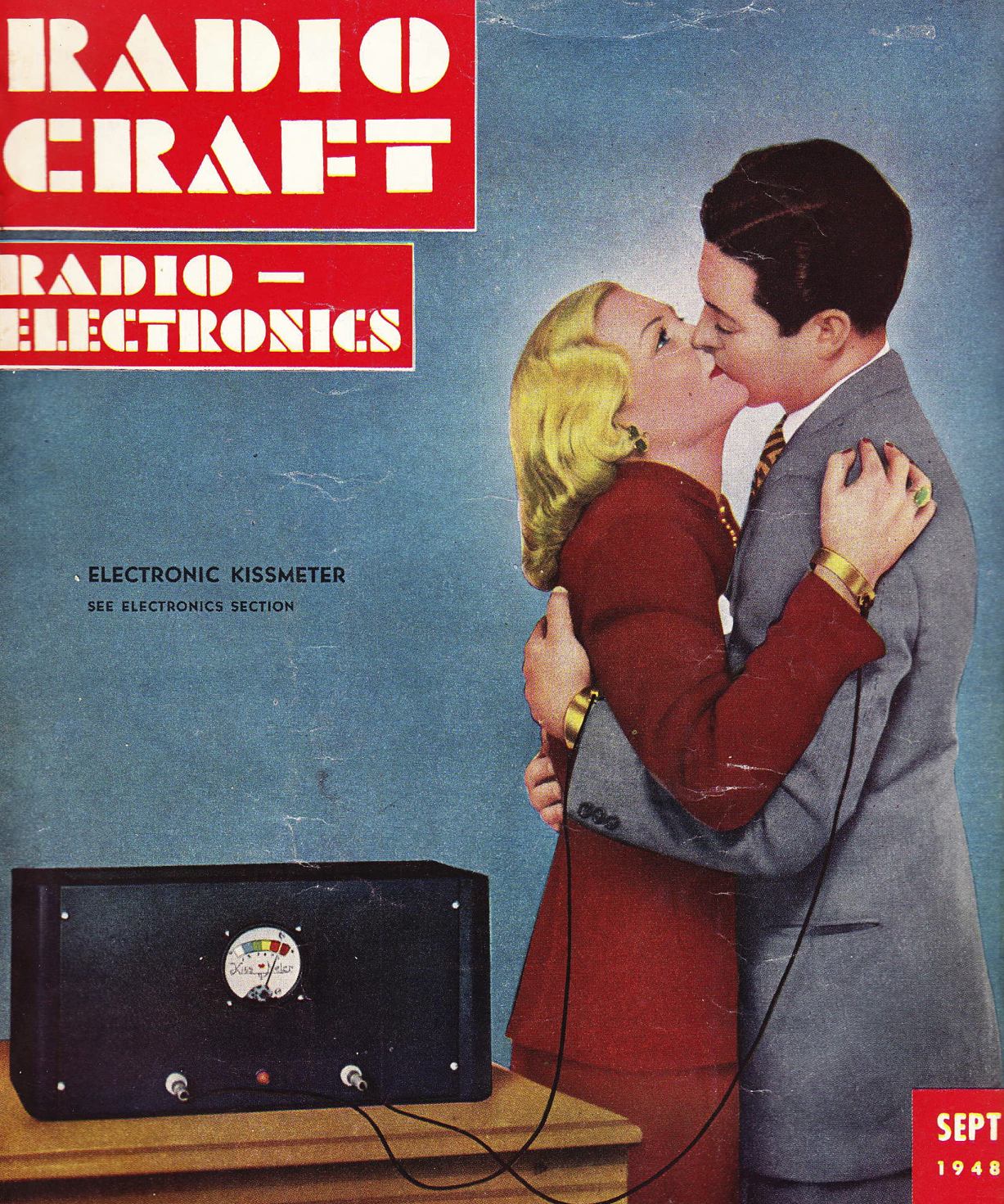
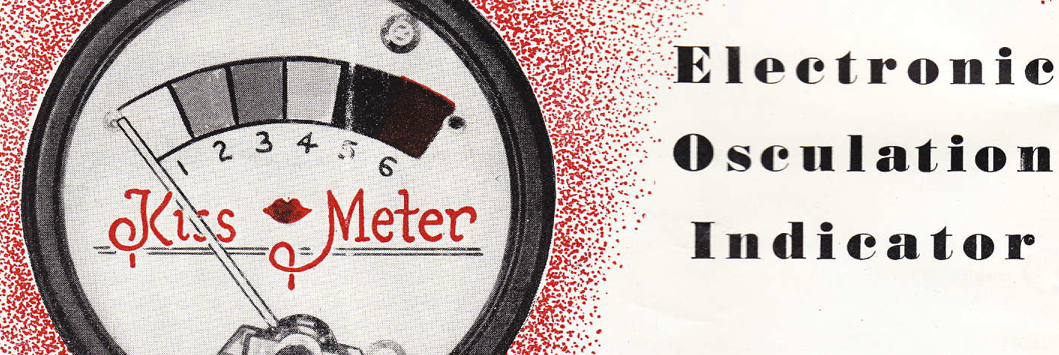
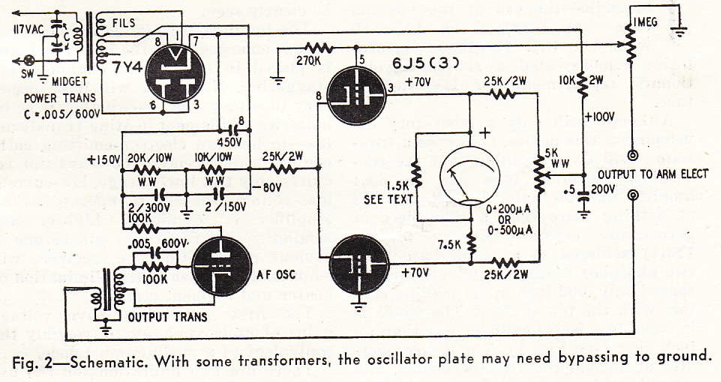
RadioCraft_cover_0948From RADIO CRAFT 9/1948: plans and schematics to build a vacuum-tube powered KISS METER. In the post-war period of frenetic coupling and reproduction (via Baby Booms), new technology like this was required to ensure optimum conditions of repopulation.  Apparently.  Download a 3-page PDF here:

DOWNLOAD: Kissmeter

meterWe see here the 6J5, long considered to be the most romantic tube.  When two 6J5s love each other very, very much they can combine and create a 6SN7!  HANDS-DOWN WORST JOKE EVER. 

Happy Valentine’s Day!   Schematic below.

Schematic_Kissmeter

Categories
Uncategorized

Stephens Electronics, maker of the 40-track analog multitrack machine (1973)

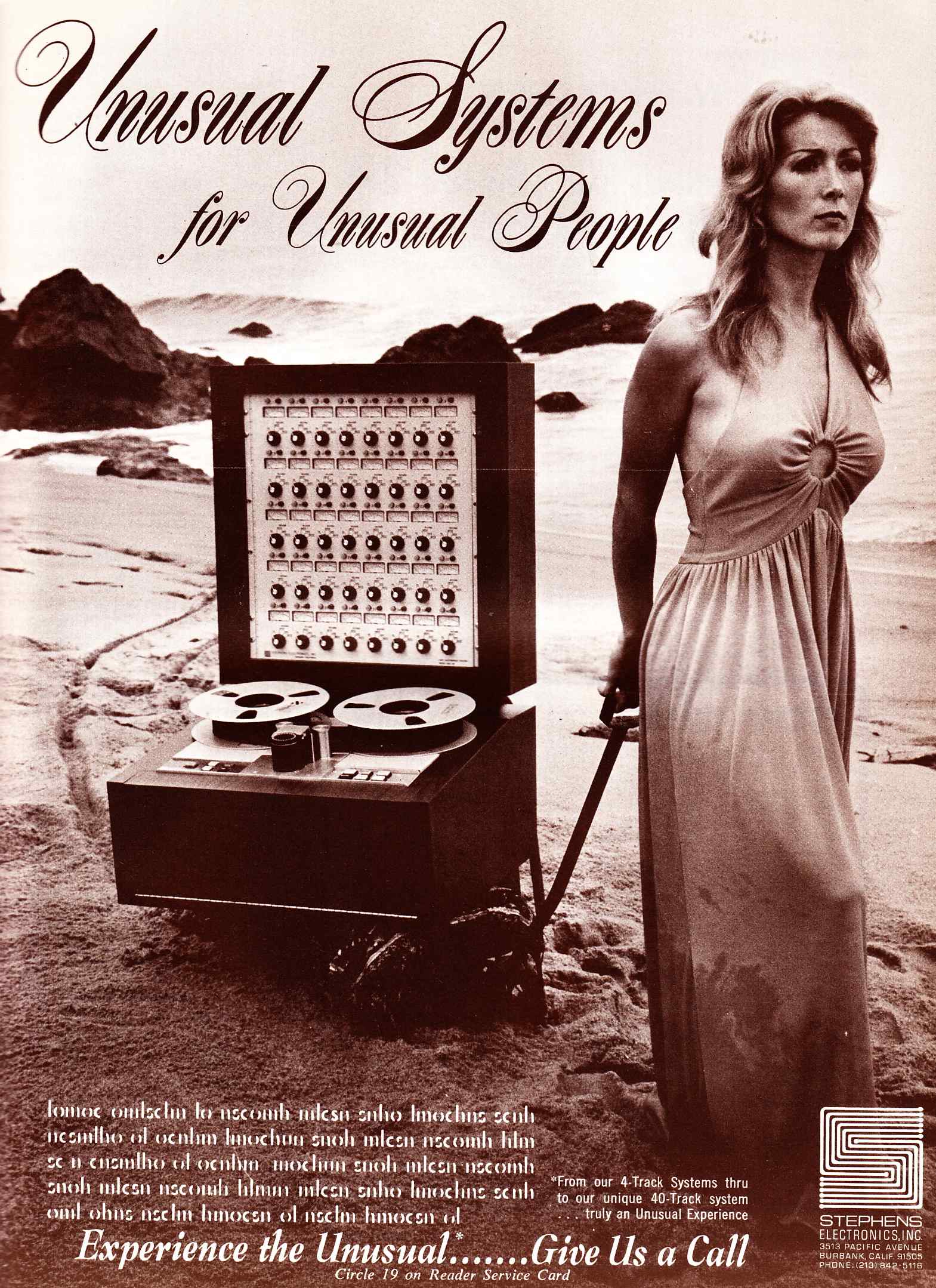
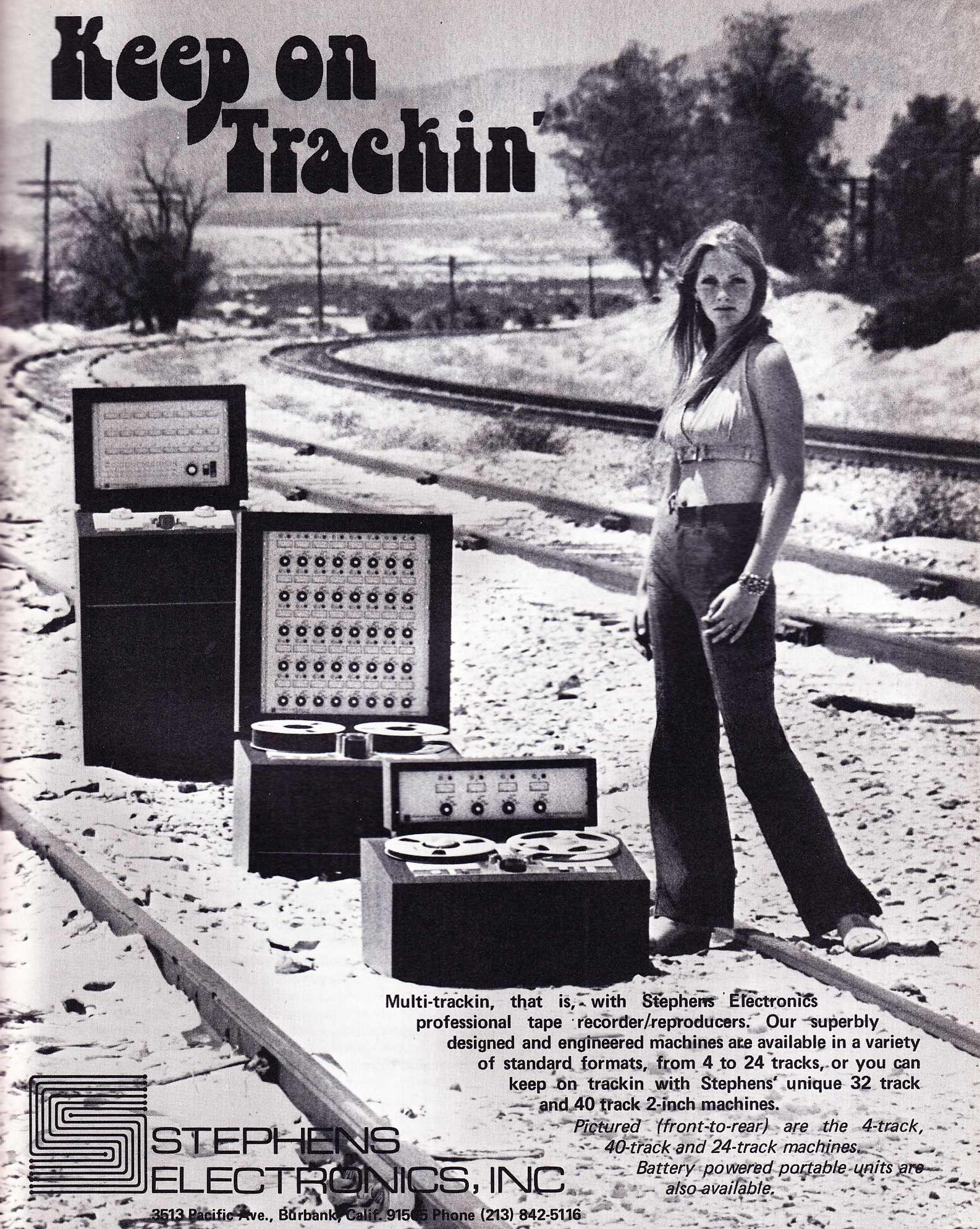
Stephens_40_track_1973Commercially-released albums were made on 24-track tape machines for a very long period of time, approximately 1971 – 1995.  Now, before 24-track machines were available there was always the possibility of ping-pong’ing, which can get you 8 solid-sounding tracks on a 4-track machine (and at least 20 on an 8-track) , and at some point in the 70s engineers were able to lockup two 24-track machines to get, I imagine, 46 tracks of audio plus timecode.  But as early as 1973, Stephens Electronics of Burbank offered another solution: a 40-track, 30 IPS 2″ tape machine that still promised 40 – 2oK response.  Users of these machines apparently included Leon Russell and Roy Thomas Baker; can anyone positively confirm any well-known records that were made on the Stephens 40-track?

A helpful dude has made the original Stephens catalog/spec sheet available online; click here to download the PDF (not my link).

Let’s get back to that advert tho…  WTF is going on here?

moodyPensive lady

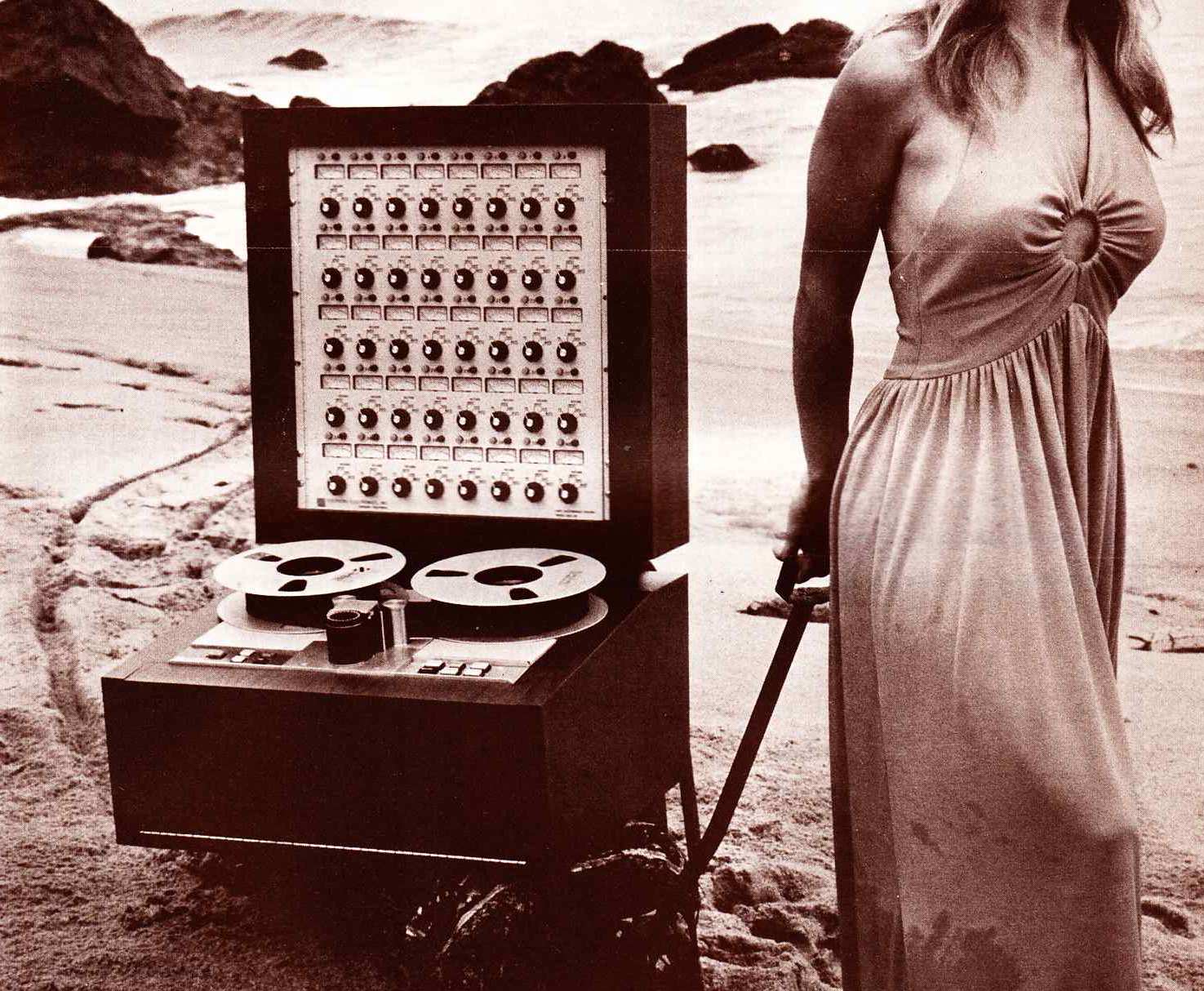
draggingDrags 132lb tape deck along beach

GreekNonsensical ‘greek’ placeholder copy tells us nothing

headlineHeadline hails the freaks

Aphrodite FowlerThere’s clearly some sort of Venus/Aphrodite metaphor at work here, but what exactly IT ALL MEANS remains a mystery (at left, a painting of Aphrodite by Fowler).  I could find one other similar-period Stephens advert, and it’s a little quirky, but not as bizarre as beach-lady.

Stephens_ad_1974Any of y’all using these machines nowadays?

Many former Stephens users report that the machines compare well to Studer and Ampex in terms of sonics.  They were also designed for utmost mechanical and electronic reliability; designer John Stephens apparently had a background in aerospace engineering.  The machines seem to be few and far between these days, commanding prices well above that of similar vintage Studers.

Categories
Uncategorized

Now for some really obscure shit

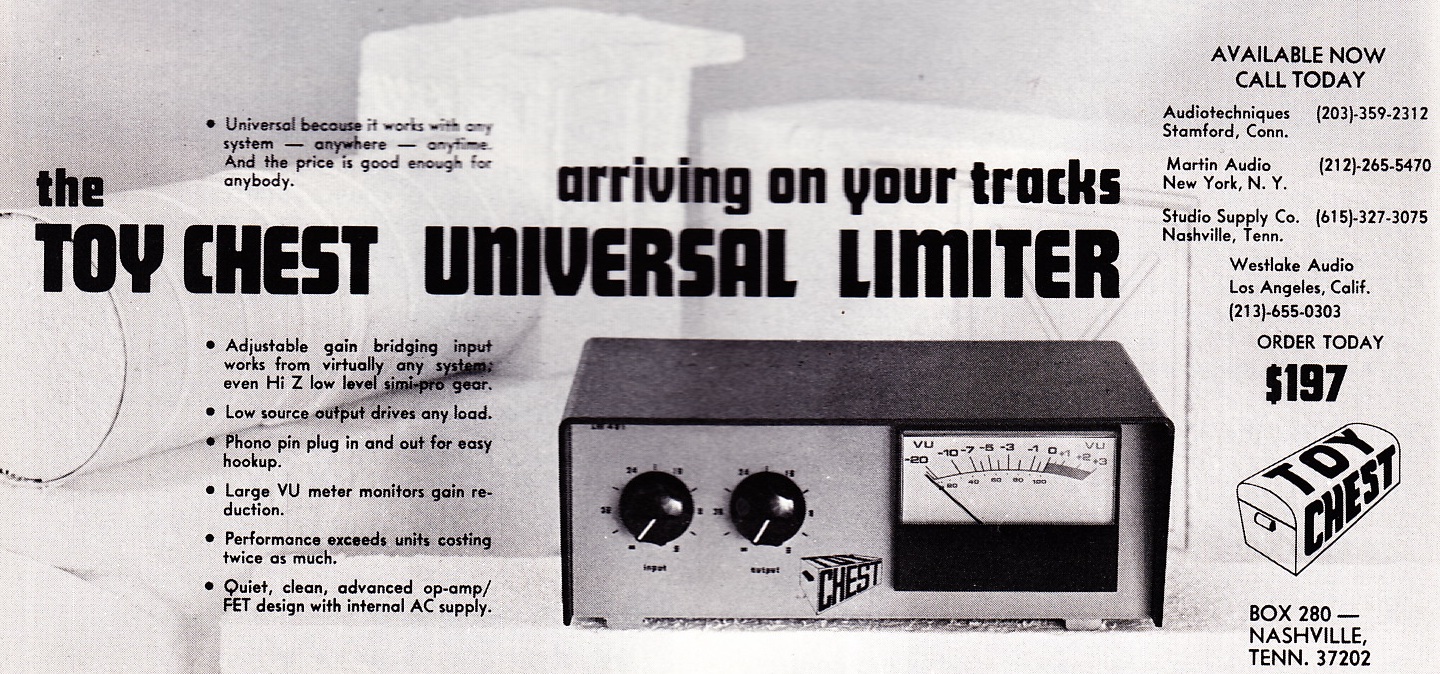
ToyChest_Universal_Limiter_1973Above: the TOY CHEST brand ‘Universal Limiter,’ a FET limiter produced in 1973.

Today at PS dot con: some interesting+bizarro seventies pro audio kit that caught my eye; i can find little to no reference to any of this stuff online.  Anyone?

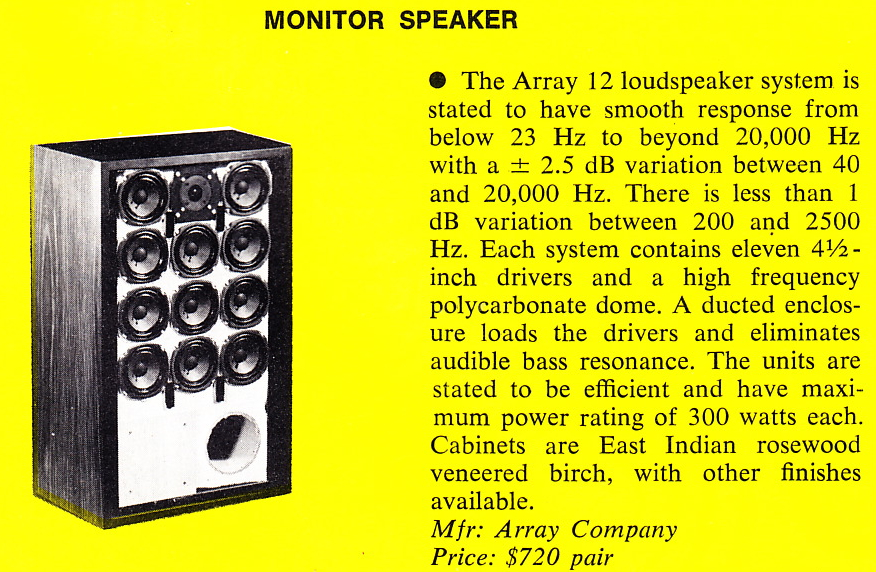
Array_12_Monitor_1972

Above: The ARRAY Co. model 12 studio monitor of 1972, which SEEMS similar in principle to the classic BOSE 901, except that…  all of the twelve drivers in the ARRAY fire forward.  I can’t imagine what these must have sounded like but i would love to know!

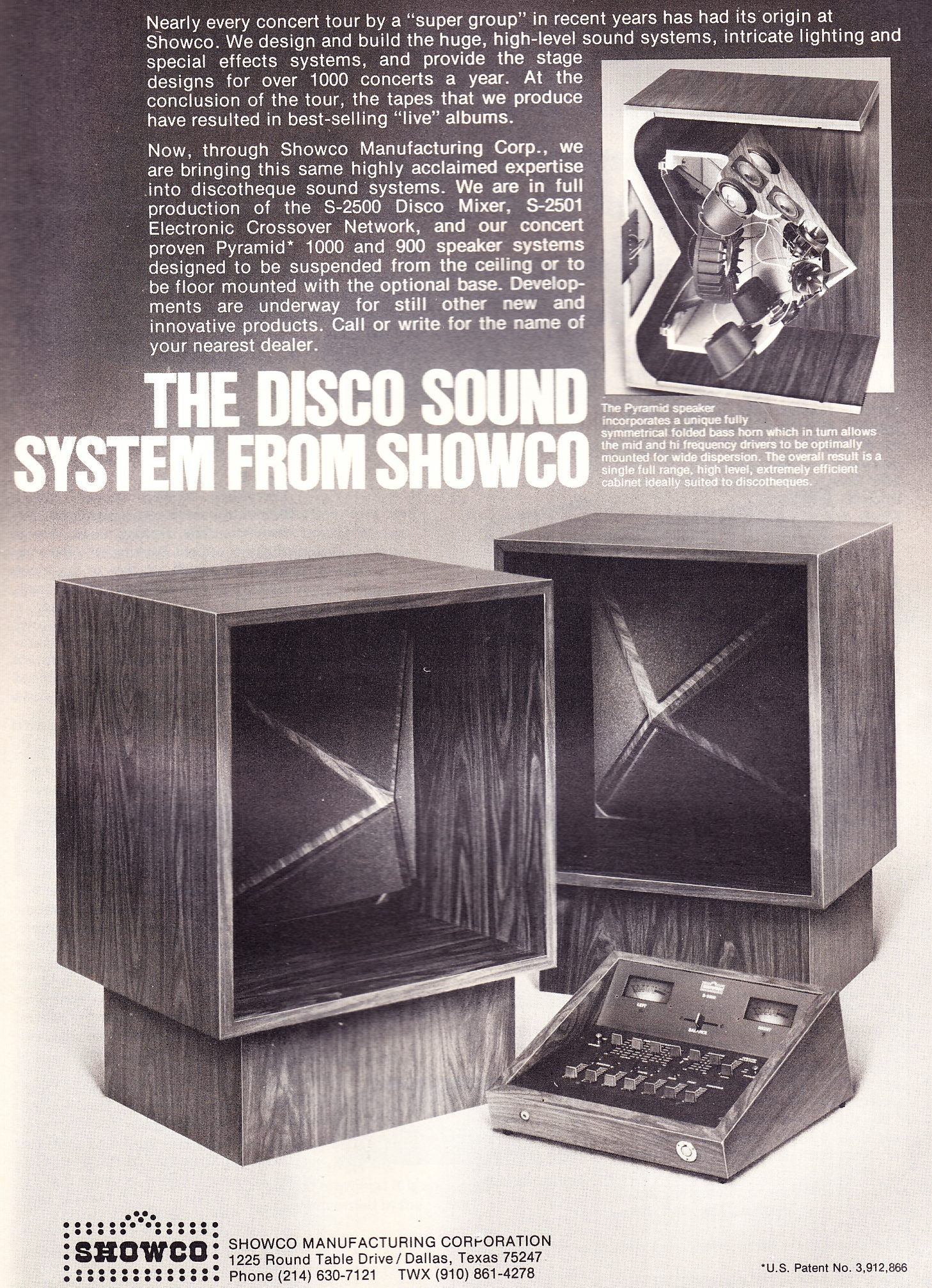
ShowCo_Disco_speakers_1977Above: the Showco Pyramid model 1000 loudspeaker. 

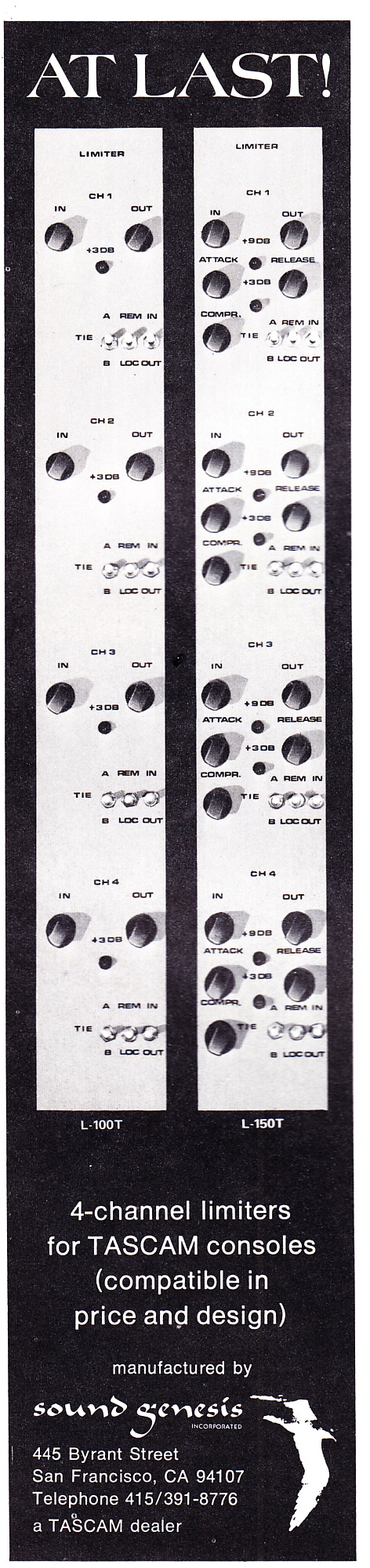
SoundGenesis_TascamLimiters_1975And, at left: Sound Genesis Corp, which was primarily a retail operation, AFAICT, offered these buss (i am guessing?) limiters as aftermarket add-ons for the early Tascam mixing consoles!  Very interesting.  Did any one else make similar drop-in aftermarket strips for Tascam boards?  Circa 1975.