Categories
Technical

Swiss Mix

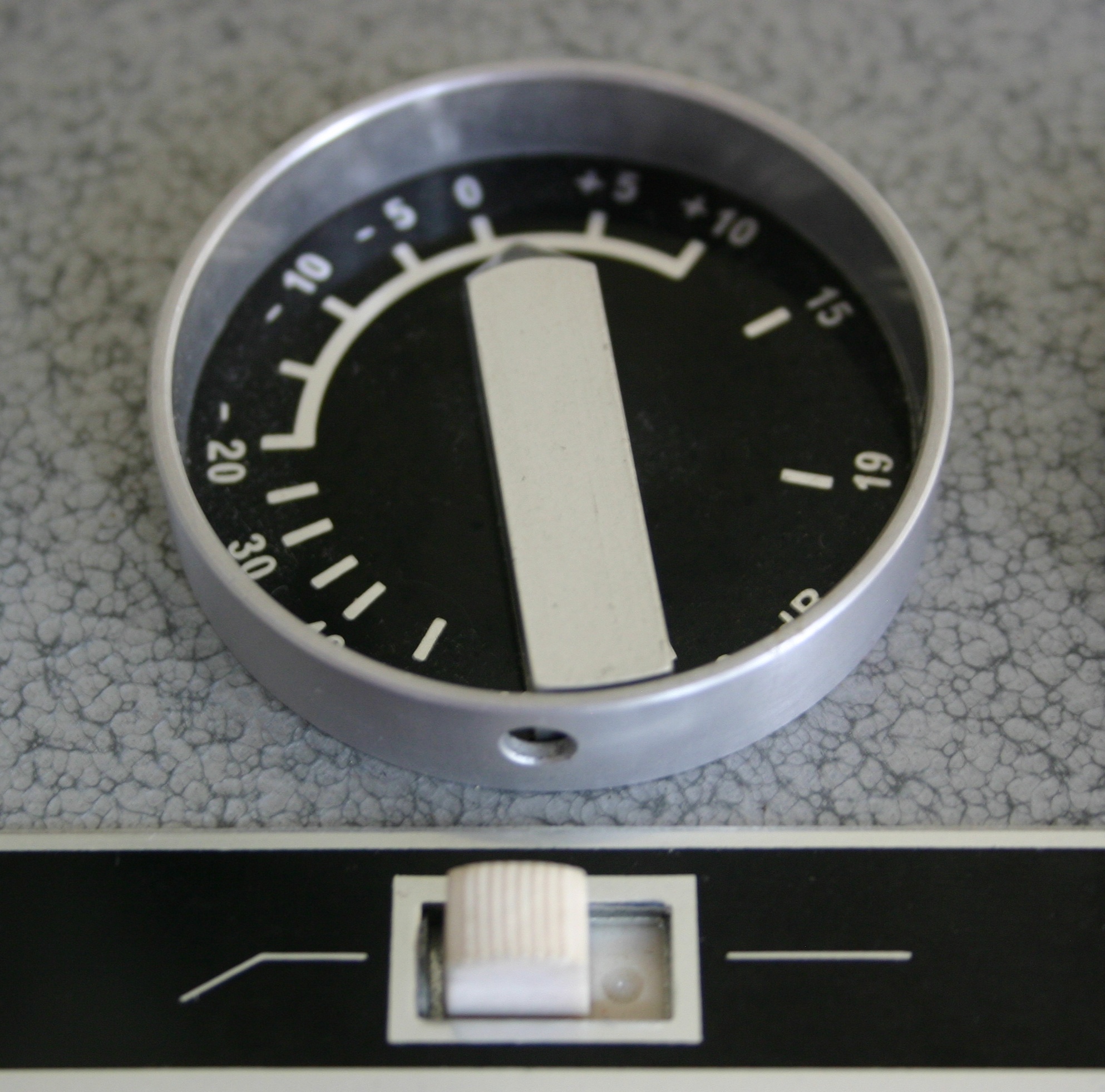
I’ve always coveted these little Nagra BMII audio mixers and but I somehow resisted the urge to purchase one on eBay.  It is a 4 channel mono mixer with simple level and low cut controls.  They come up regularly for around $200 since a fair number were sold (and none were likely disposed of, due to their great cost-when-new). One factor in my hesitance was that *no one is ever willing to confirm that they do in fact work, and/or *no one seems to be able to confirm how to interface them with standard pro audio equipment, and/or *no one seems to be able to confirm what the operational specs are – gain, impedance, i/o format, frequency response.  The BMII was designed and built solely for use with the Nagra recorder, the most expensive, most finely crafted portable analog tape recorder ever built, and the Nagra has somewhat peculiar i/o and power requirements.
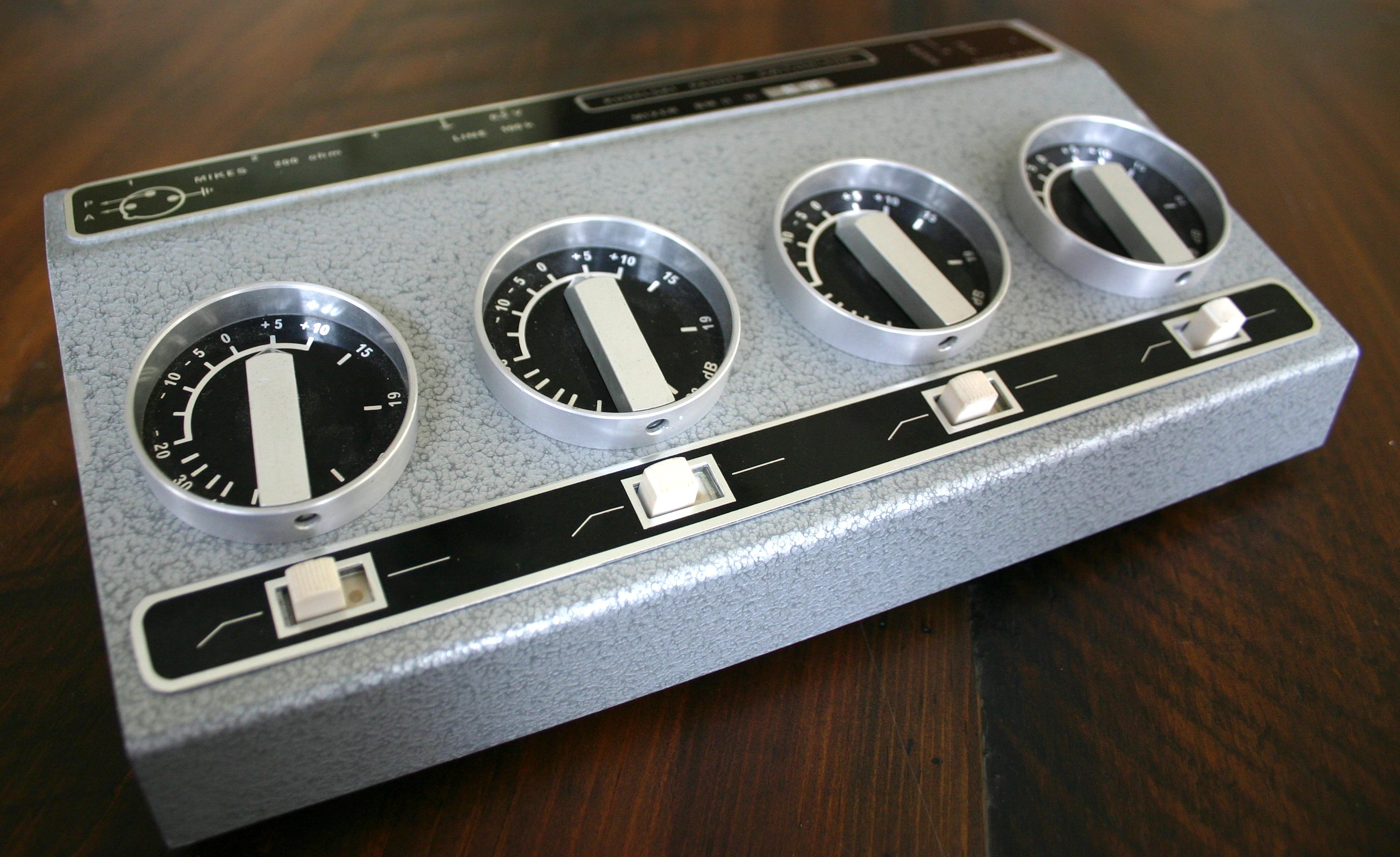
NEways… picked one up at the flea market this weekend for a few dollars; it did not come with a power supply but it did have a couple of the necessary Tuchel 6-pin cables, which will save me the trouble of hacking new jacks into the back of the unit.
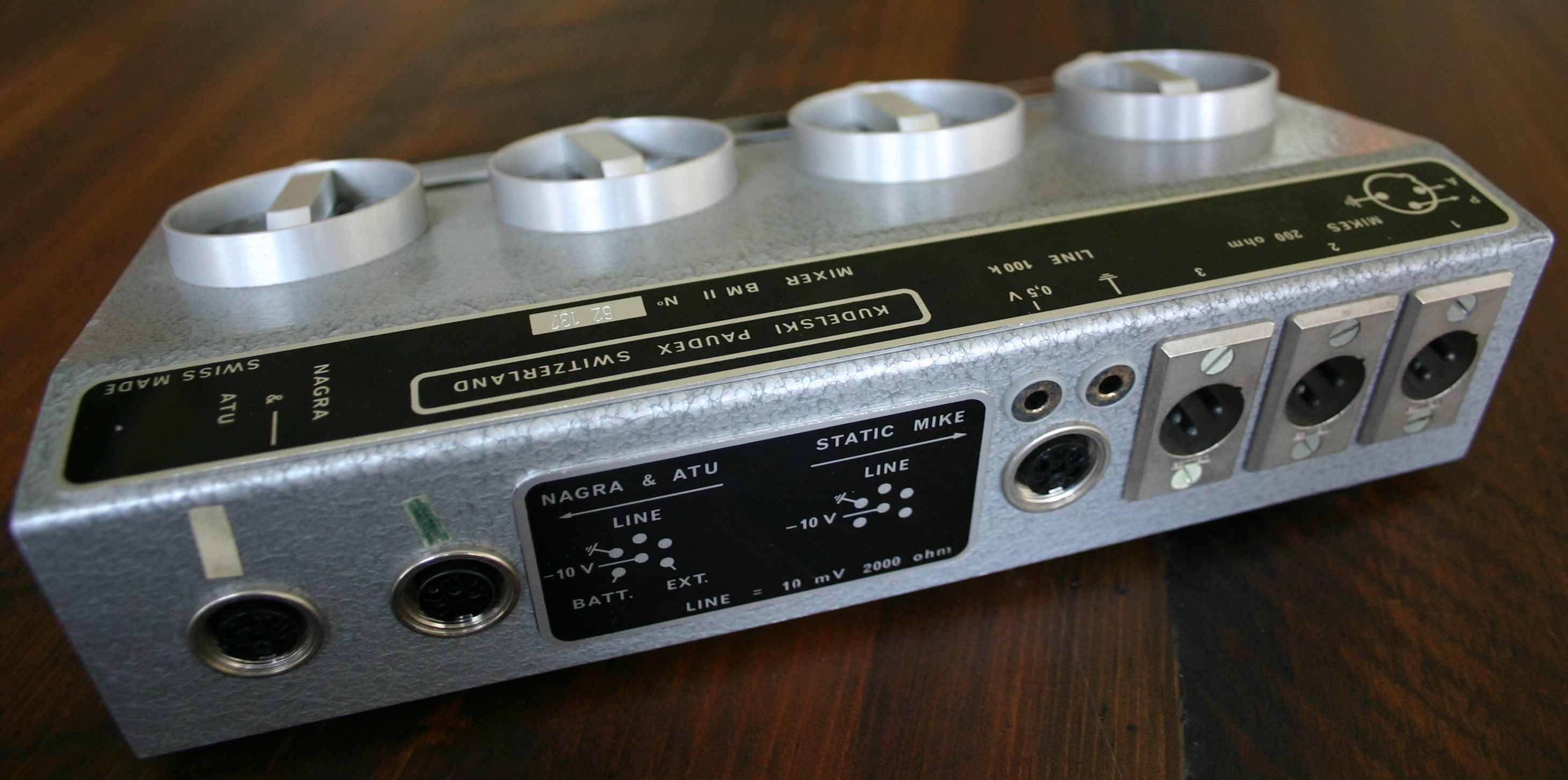
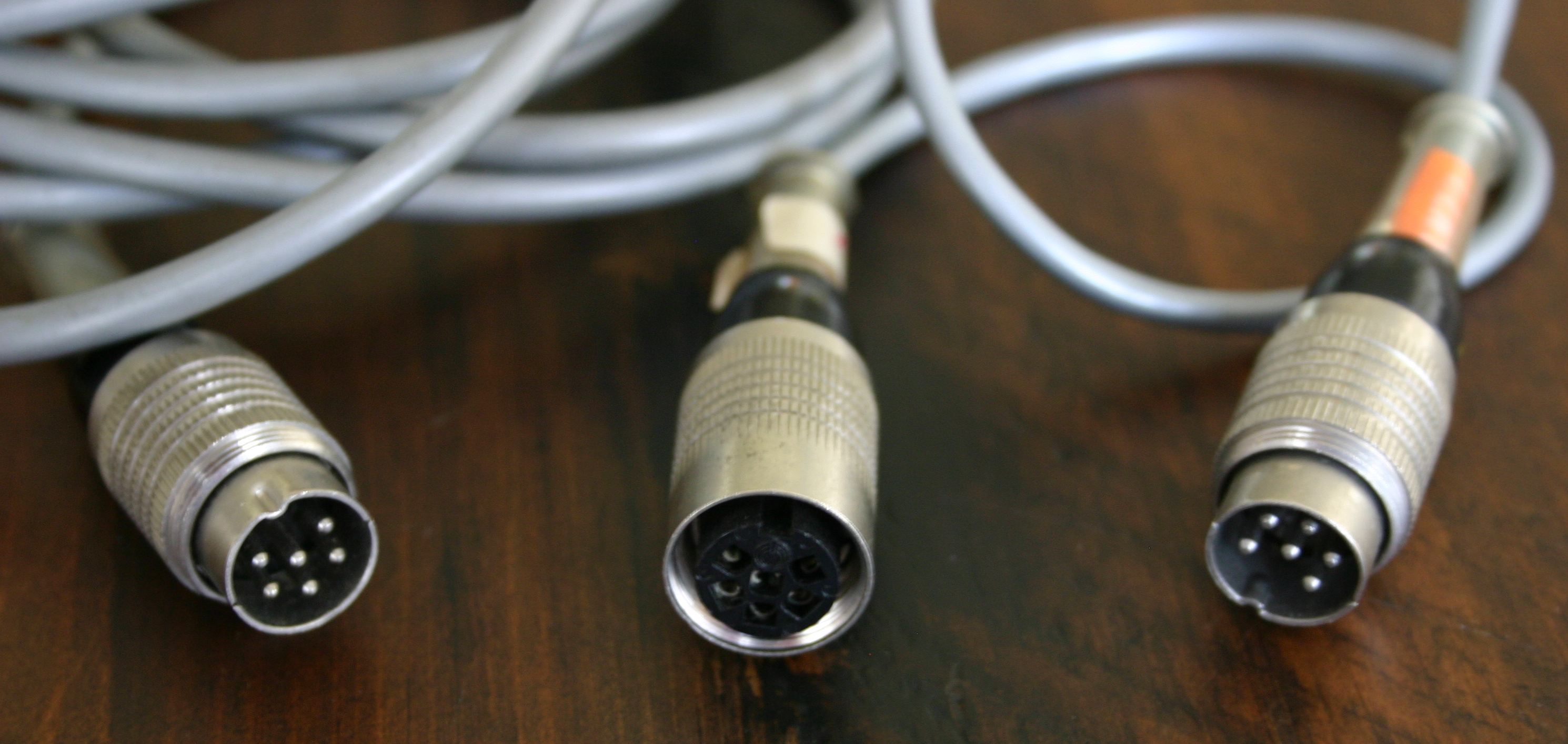
The Tuchel connector was a popular audio-connector format for professional gear in Germany in the 60s and 70s; I have some obscure old Sennheisier mics that use these things.  Anyhow, a quick search online revealed a Nagra recorder manual that confirmed the pinout data on the rear of the mixer:
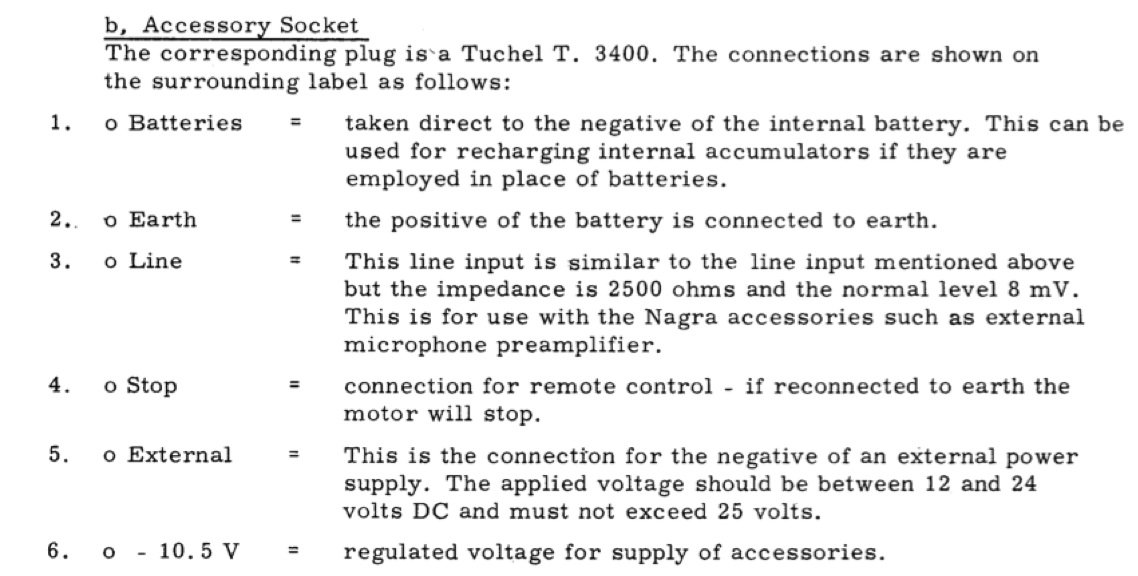
A few things to note: pin two does NOT connect to earth, chassis, or anything else, in the BMII: it only ‘loops thru’ to the other pin 2.  Ground connection is actually achieved only thru the Tuchel shell itself.  The output of the BMII is unbalanced, 2K ohm; this is suitable for connection to consumer ‘RCA’ type inputs.  The inputs of the BMII are 200 ohm, and they seem to be balanced, but since I can’t find a schematic for the unit and there are no input transformers in the unit I can’t be sure.  The entire thing is built on turret boards and the wiring is good… not the best I have ever seen, but very good.  One thing that makes me a little nervous is that all the electrolytics (and there are dozens of them) are they particular translucent-blue brand (anyone?) that always seem to be the faulty component in whatever piece of 60’s pro audio gear I happen to be servicing at the moment.

Alright so… I’m going to build a little power supply for this thing and fire it up, see what happens.  If it does in fact work + sound great, I am thinking I can add a 2K:600 UTC output transformer to make the thing useful for modern interfacing.  Since the BMII was designed for ultra-critical location recording of major film productions, I am hoping to be impressed with the sound…  soon…
Categories
Uncategorized

UPDATED: Link: Live Radio Interview Friday 5.11 8AM *** 89.5 WPKN Bridgeport

Tomorrow, 5.11.12, I’ll be a guest on Del’s “In Transition” show in the eight o’clock hour.  We’ll be listening to some recent productions I’ve put together at Gold Coast Recorders and talking shop about music, audio, love, loss, and life.  In addition to being a radio host and rocknroll aficionado Del is a veteran audio tech with a long resume that includes many of the greatest recording studios in NYC.  So it promises to be an interesting chat.   Listen in at 8AM tomorrow EST at 89.5FM in the New York Metro Area or stream it live at www.wpkn.org.

UPDATE: This segment has aired and can now+forever be streamed from the WPKN archive.  Click on this link to listen. My bit comes in around the sixty-minute mark.   One correction: in the piece I state that my tenure at SONY began in 1991; this is not correct.  I started in 2001.  Blame it on the A – M.


Categories
Uncategorized

Guitar Synths of the late 1970s

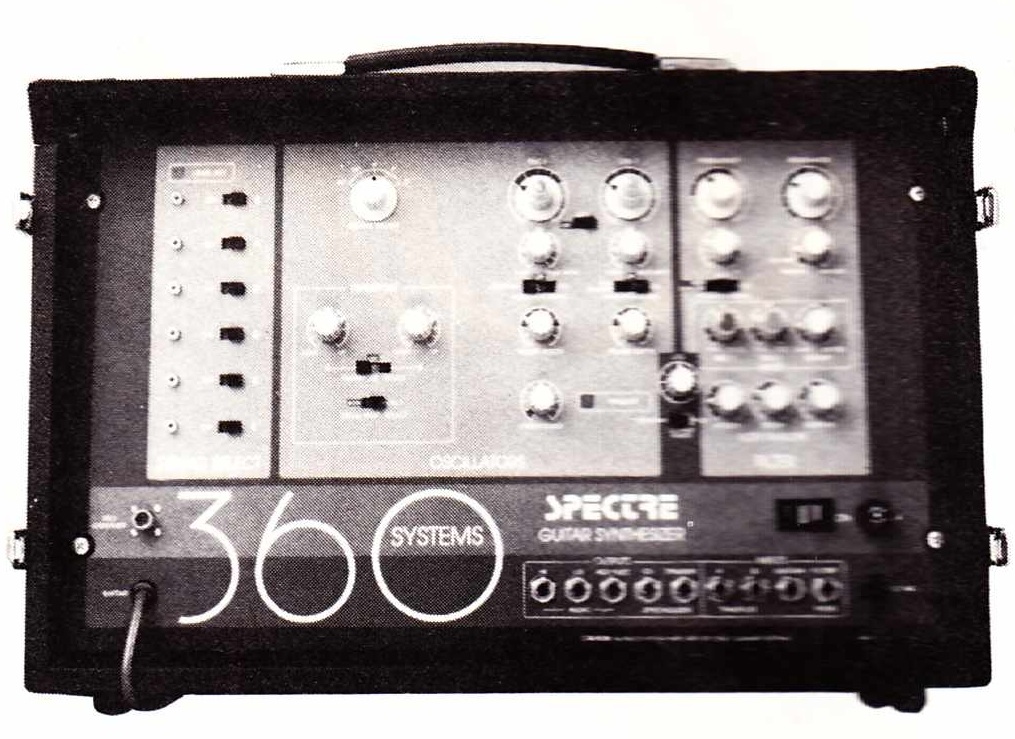
The 360 Systems ‘Spectre’

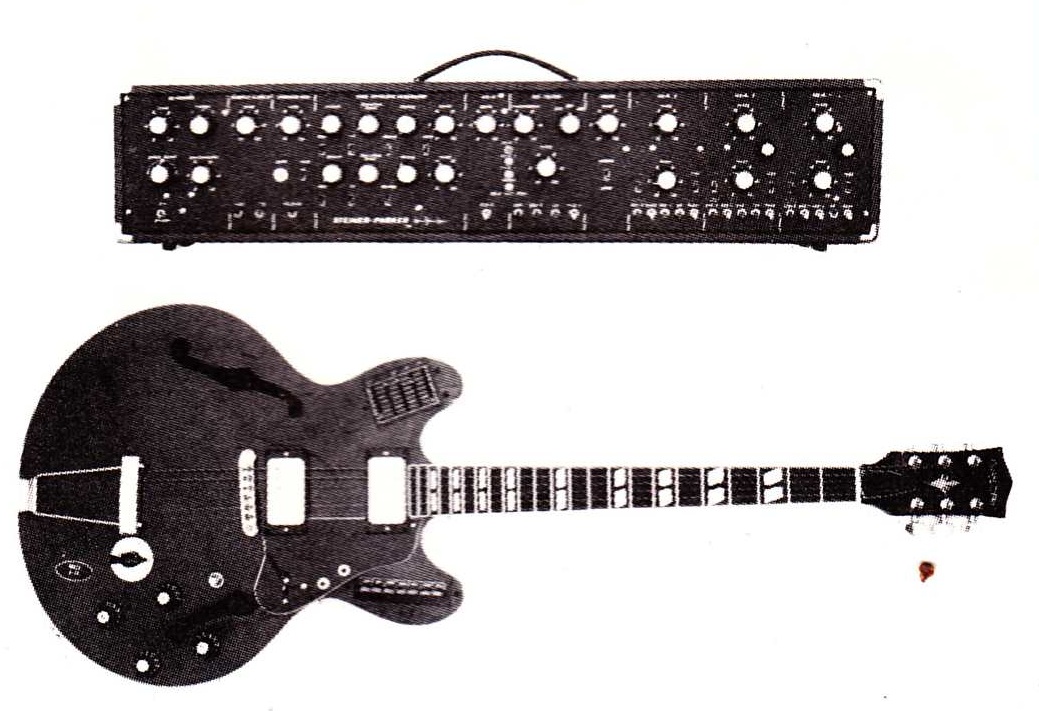
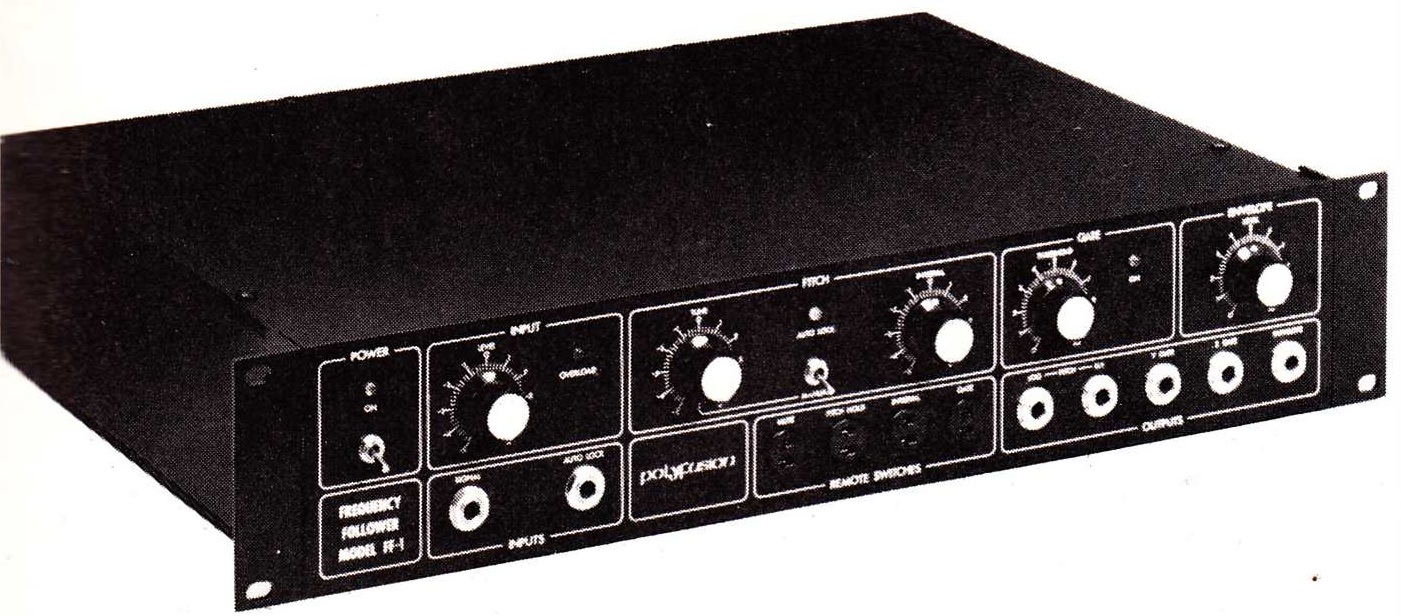
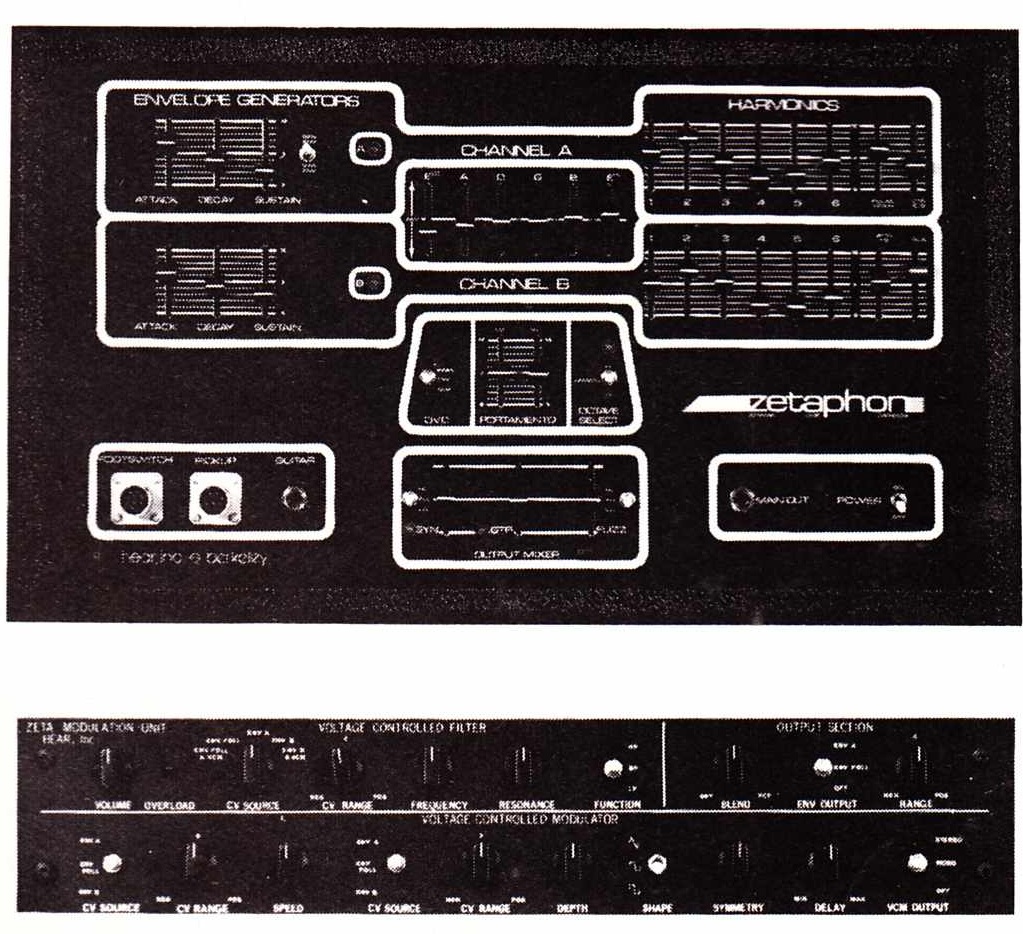
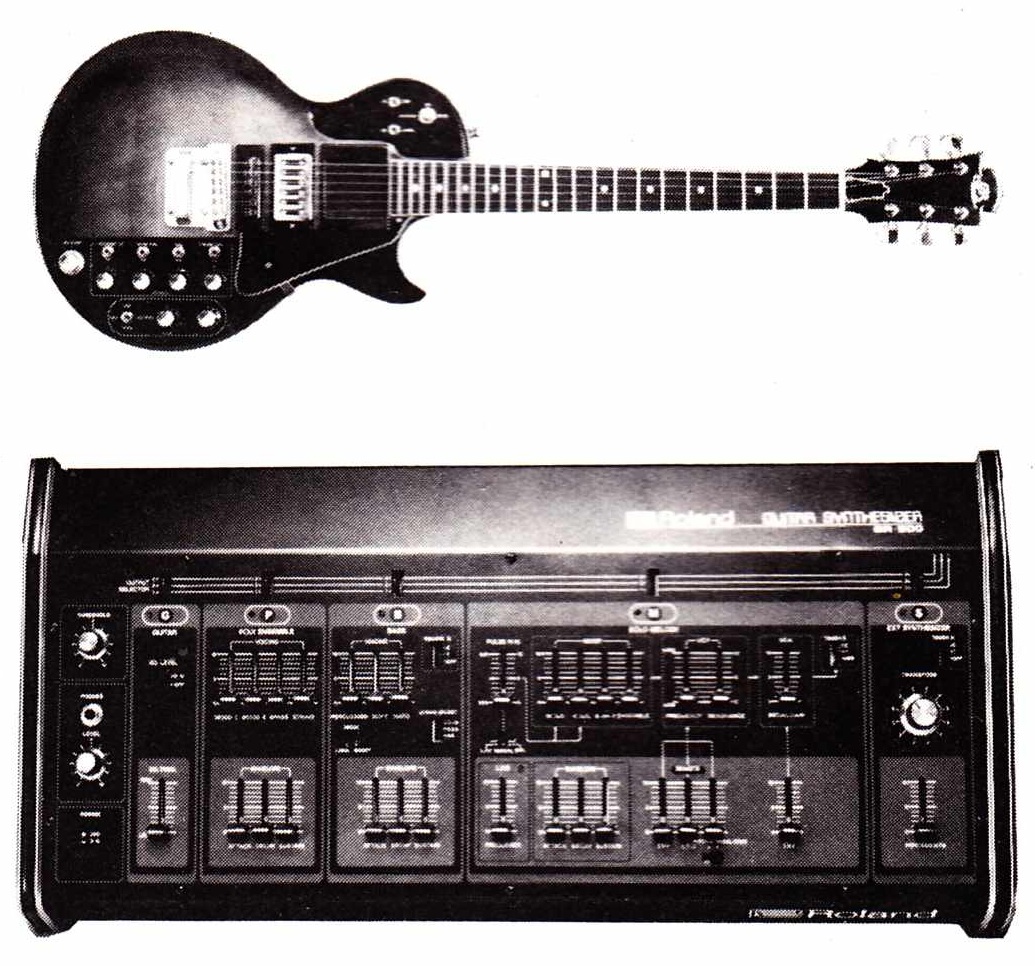
Today as PS dot com: a quick look at the then-new product-category of Guitar Synths circa 1979.  A great number of small manufacturers sprung up to offer these devices, and a few of the big names got involved as well.  What is required for a guitar synth?  Well, at minimum, independent pitch-to-CV and envelope-to-gate tracking and conversion for each of the six strings, and then some sort of synthesis engine (x6) to create the actual sound that you hear.  Some of the units covered in this post were only the first part of the equation, and you could certainly find monophonic pitch/gate-to-CV modules going back to the early 70s (anyone know the release dates of the specific Moog and ARP modules that did such?).  But putting it all together in a package that a guitar player might want to buy: this took some time.  Guitar synths never really caught on, probably due to the cost initially, but even as prices came down it really seems like the vast majority of players were just happier with a bunch of effects pedals.  In addition, there is something inherently retrograde with performing on the electric guitar regardless; it is very much a signifier of the 1950s and 1960s; so why muddy the waters of yr joyous celebration of the past with so much technology?

If anyone is still using any of these things on-stage or in productions, drop a line and let us know…

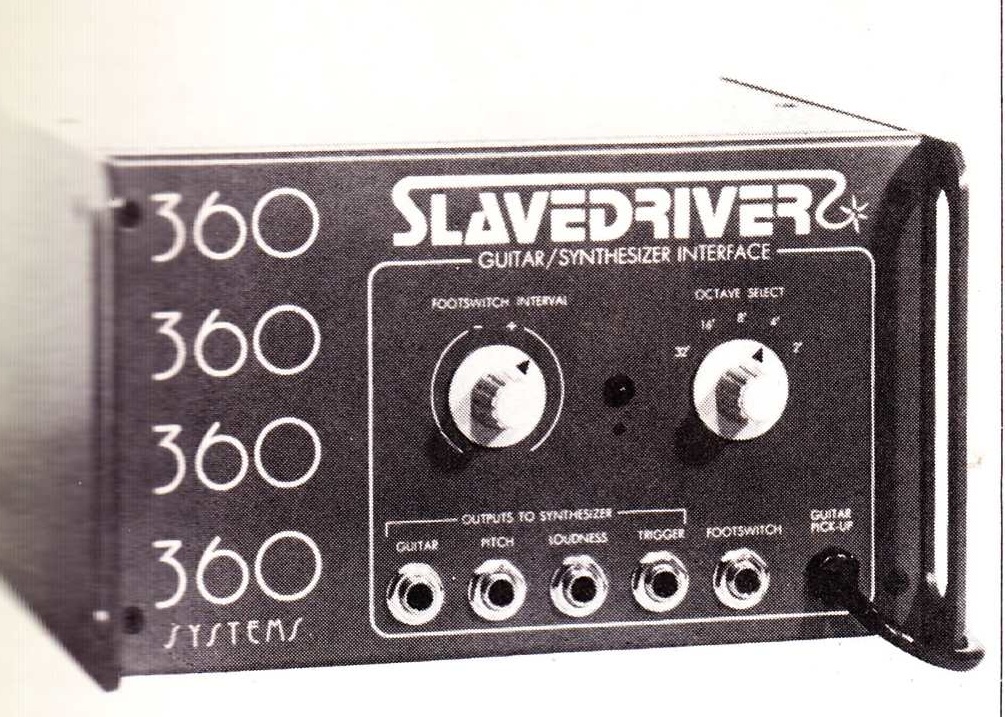
The Slave Driver, also from 360 Systems

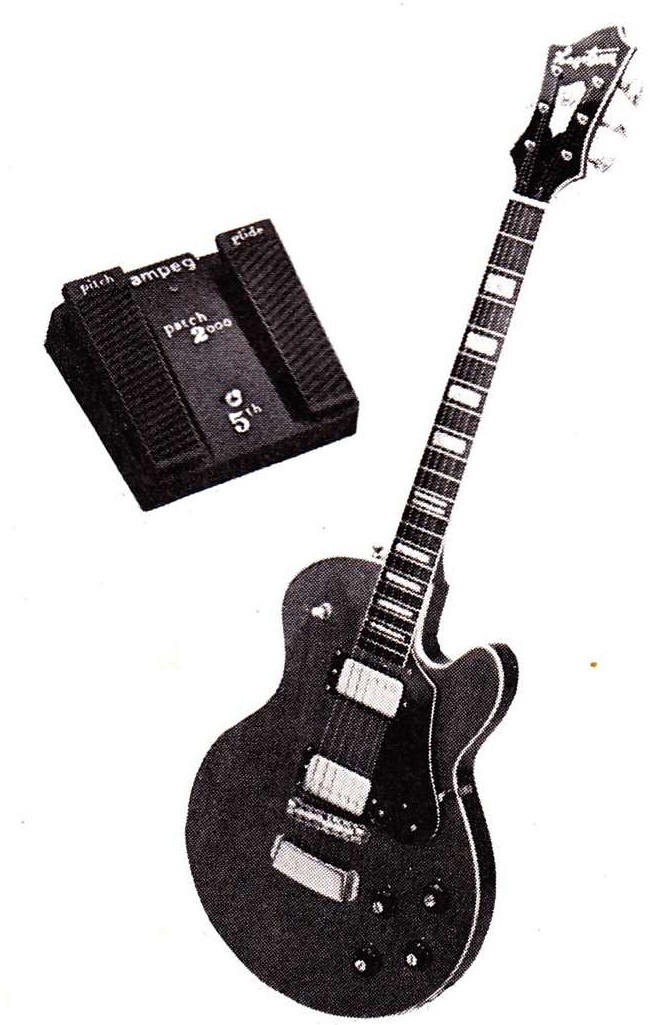
The Ampeg Patch 200: Note Hagstrom-Swede.

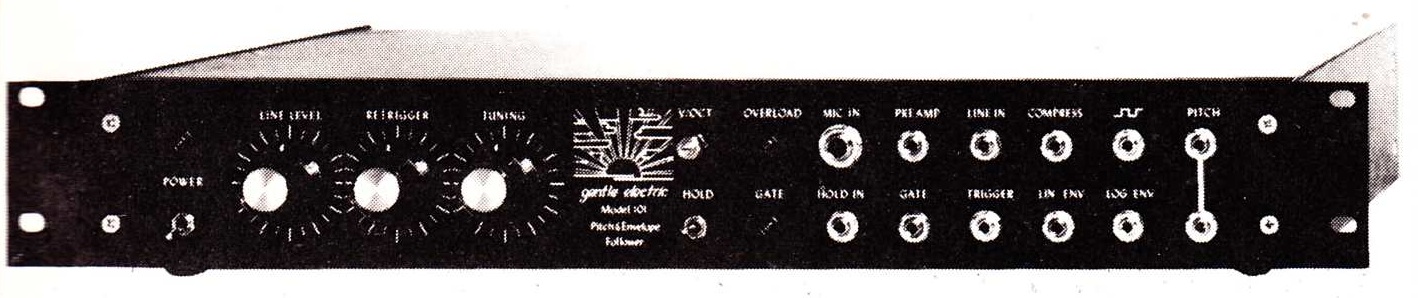
The Gentle Electric (love that name…) model 101 pitch/envelope follower

The MCI B-35S system.  Anyone?

The Polyfusion FFI frequency follower.  Click here for previous Polyfusion coverage at PS dot com.

The Zetaphon

The Roland GS500 and GR500: early products in a line that is still being produced today, over 30 years later. 

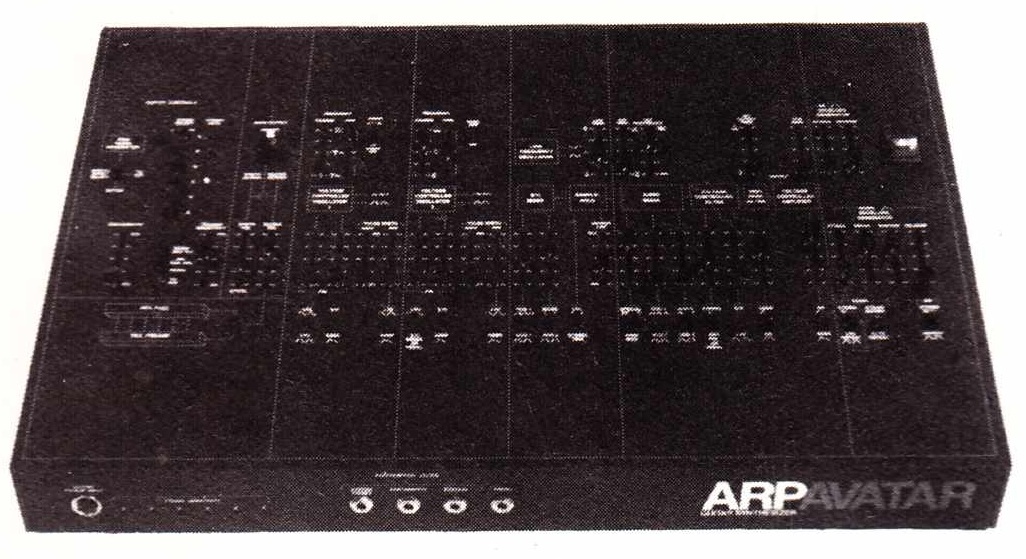
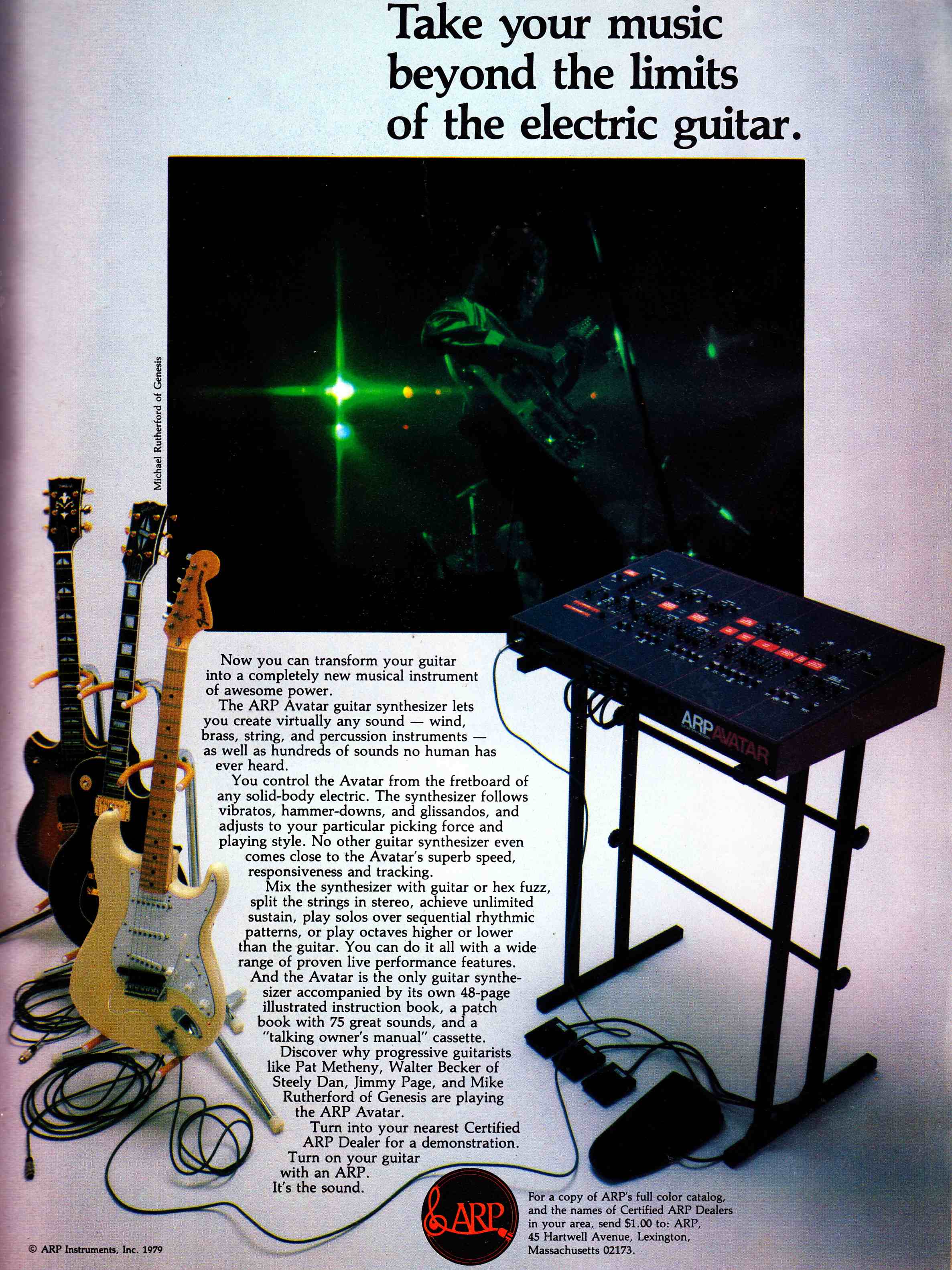
The mighty ARP Avatar.  Below, a period advert…

…and click here to view the same-period ARP full-line catalog available for download at PS dot com.

Categories
Uncategorized

Excellent Tape-Editing Primer c. 1976

Download a five-page article by Mortimer Goldberg as first published in DB magazine, 12/76:

DOWNLOAD:dB-7612-CBS_Radio-Art_of_Tape_Editing

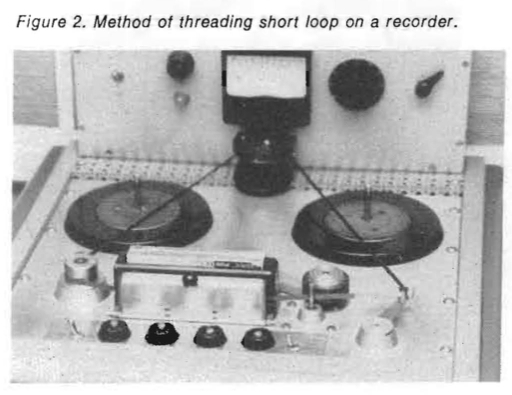
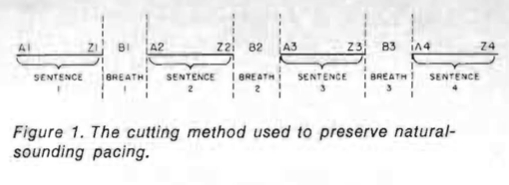
Many thanks to T.F. for sending us this wonderful piece.  Anyone who is involved with editing audio or video should give this a read.  Goldberg gives an explanation of what goes into making ‘natural’ sounding dialogue edits, and my god he’s really got it down to a science.

Goldberg was a technical supervisor for CBS for over a quarter-century, and everything that he offers here is still very applicable to modern DAW production.  I was fortunate enough to learn these techniques first-hand from some of the wonderful audio-post engineers at the now-vanished SONY Music Studios in Manhattan, and the applications extend way beyond dialogue and into music production.  Even if you never do audio-post work, remember that our minds are incredibly attuned to human speech; if you can learn to make perfect, in-detectible speech edits, your music edits will follow suit.  Also notable: Goldberg offers a very insightful account of why the critical demands of Radio speech-editing are far greater than similar work for Television production.  Great stuff.

BTW, I have not been able to find any other issues of this particular ‘DB Magazine’ (as you might imagine, many publications have been offered under this title).  The full title seems to be “DB The Sound Engineering Magazine” and fwict it was published between 1968 and 1984.  Anyone know where I can get some back issues for a good price?  eBay is asking $14.95 an issue…


Categories
Uncategorized

Pawnshop Classics: off-brand Japanese guitars of the late 70’s

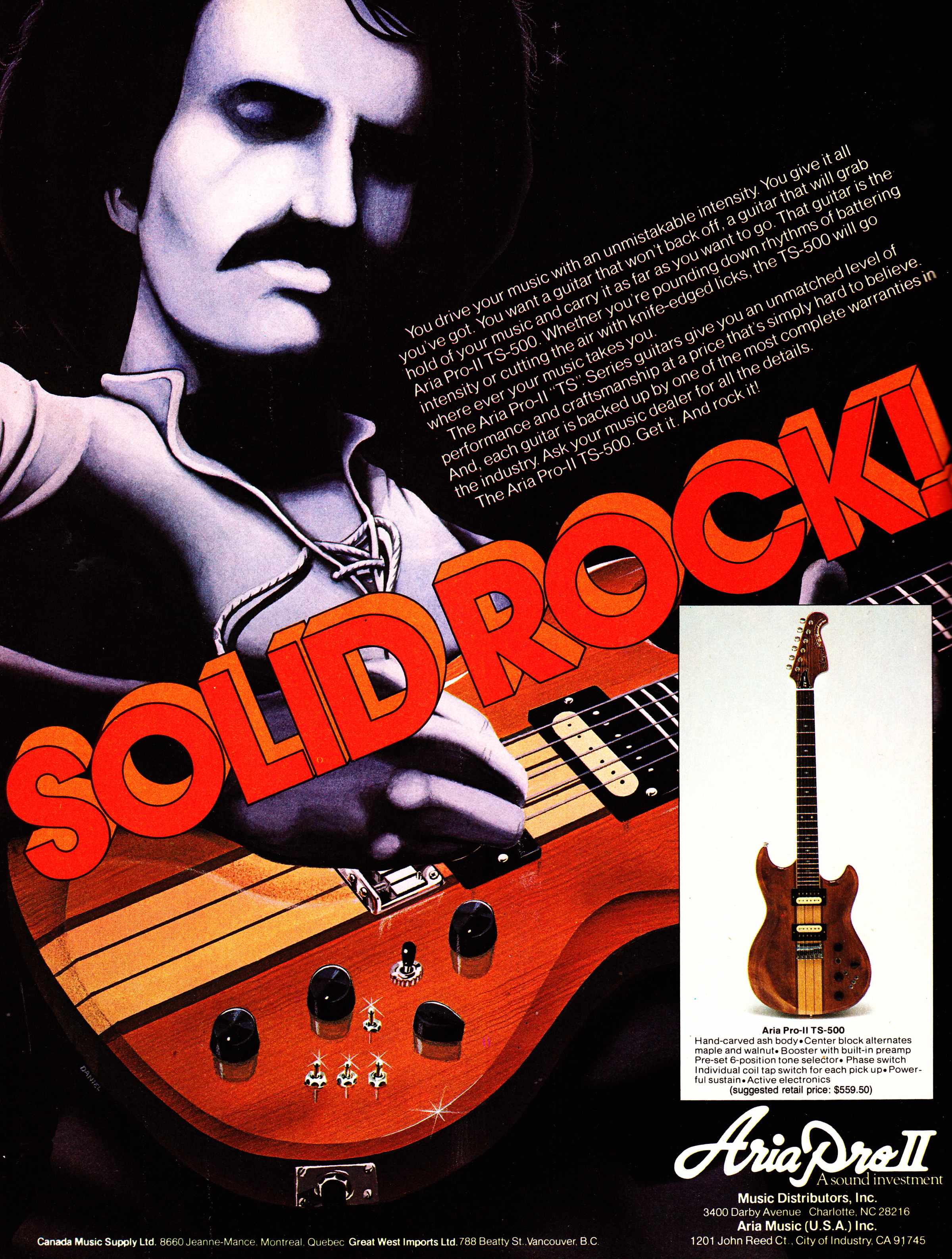
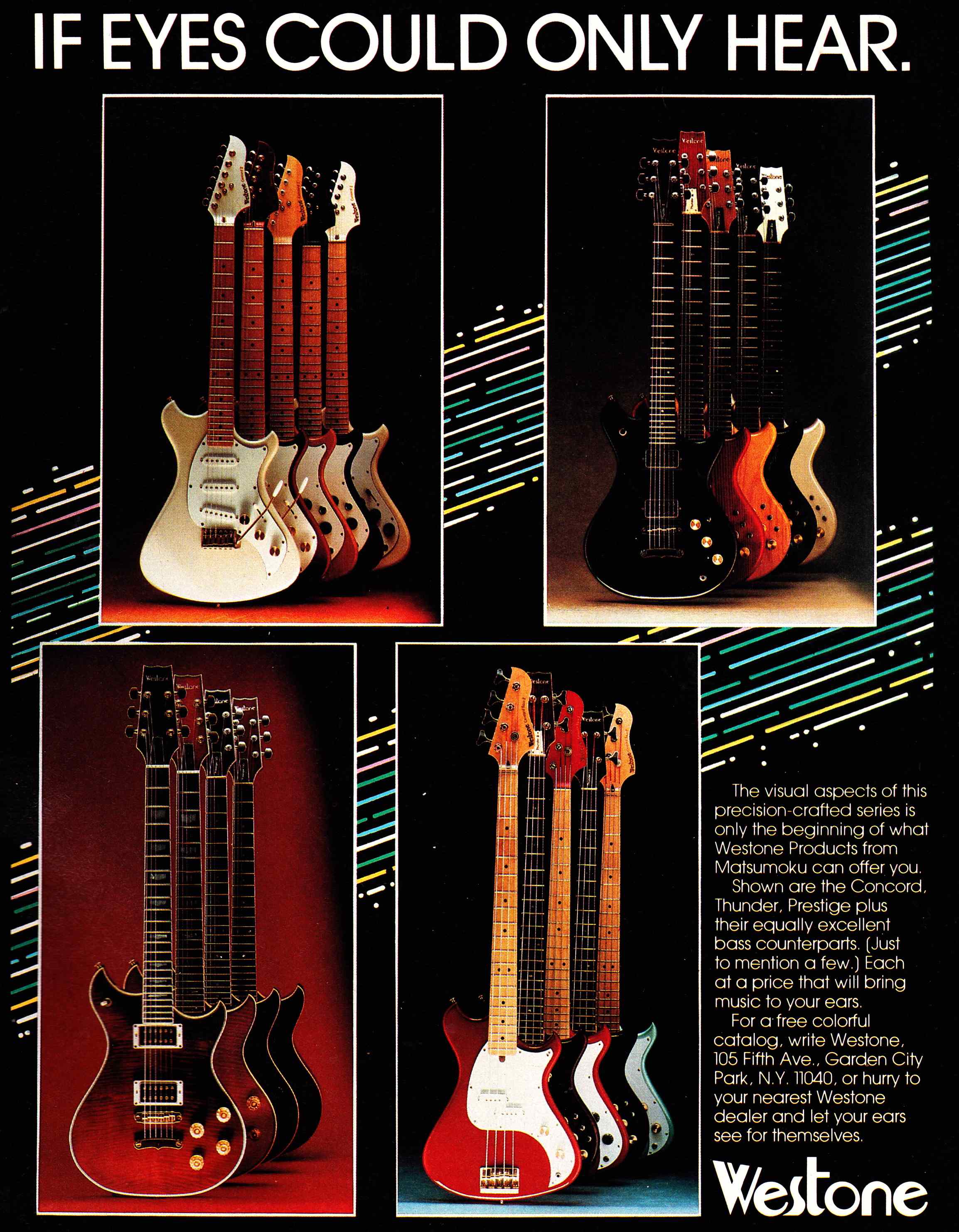
The Aria Pro-II TS-500.  It’s a super-strat, it’s a hippie sandwich, it’s a mock BC Rich…  Aria II was better known for their basses but plenty of guitars were sold as well.  All of the guitars in this post were once common sights at pawn shops and ‘somewhere in the back’ of yr neighborhood music store.  Many were made by the Japanese Matsumoku corporation and then sold in a variety of brand-names around the world.  I don’t see them too often any longer, except for the occasional flea-market appearance.  Since they had neither the baby-boomer appeal of Gibson/Fender/Gretsch nor the flash of 80’s shred-axes, these things traded in the $100 range for decades.  Now, like the mustache, some cachet seems to be building around them and prices have risen to the $500 – $1000 area.

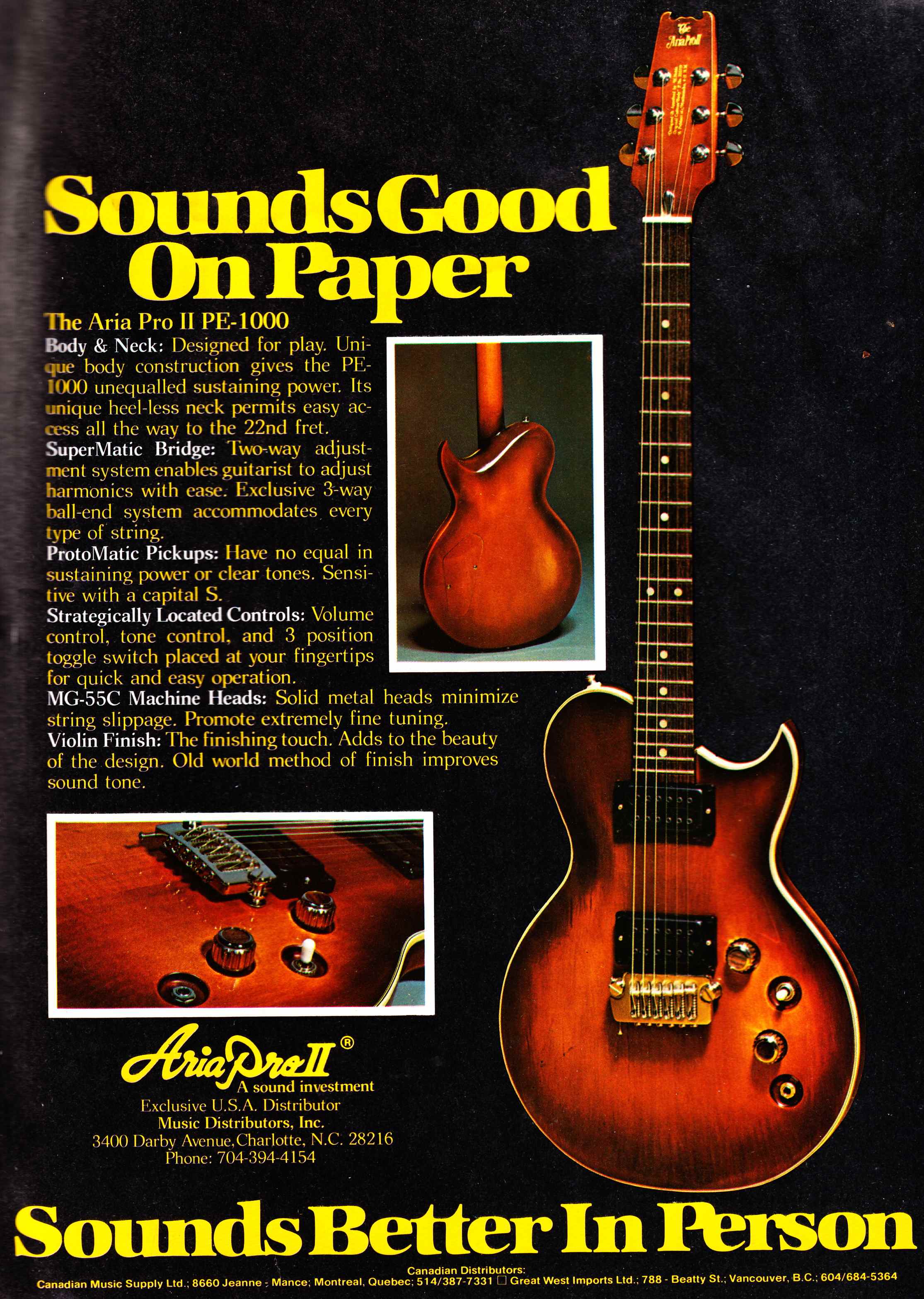
The Aria Pro II PE-1000 of 1979.   I can recall playing some of the PE-series decades ago; they were very fine guitars; note the heelless neck. 

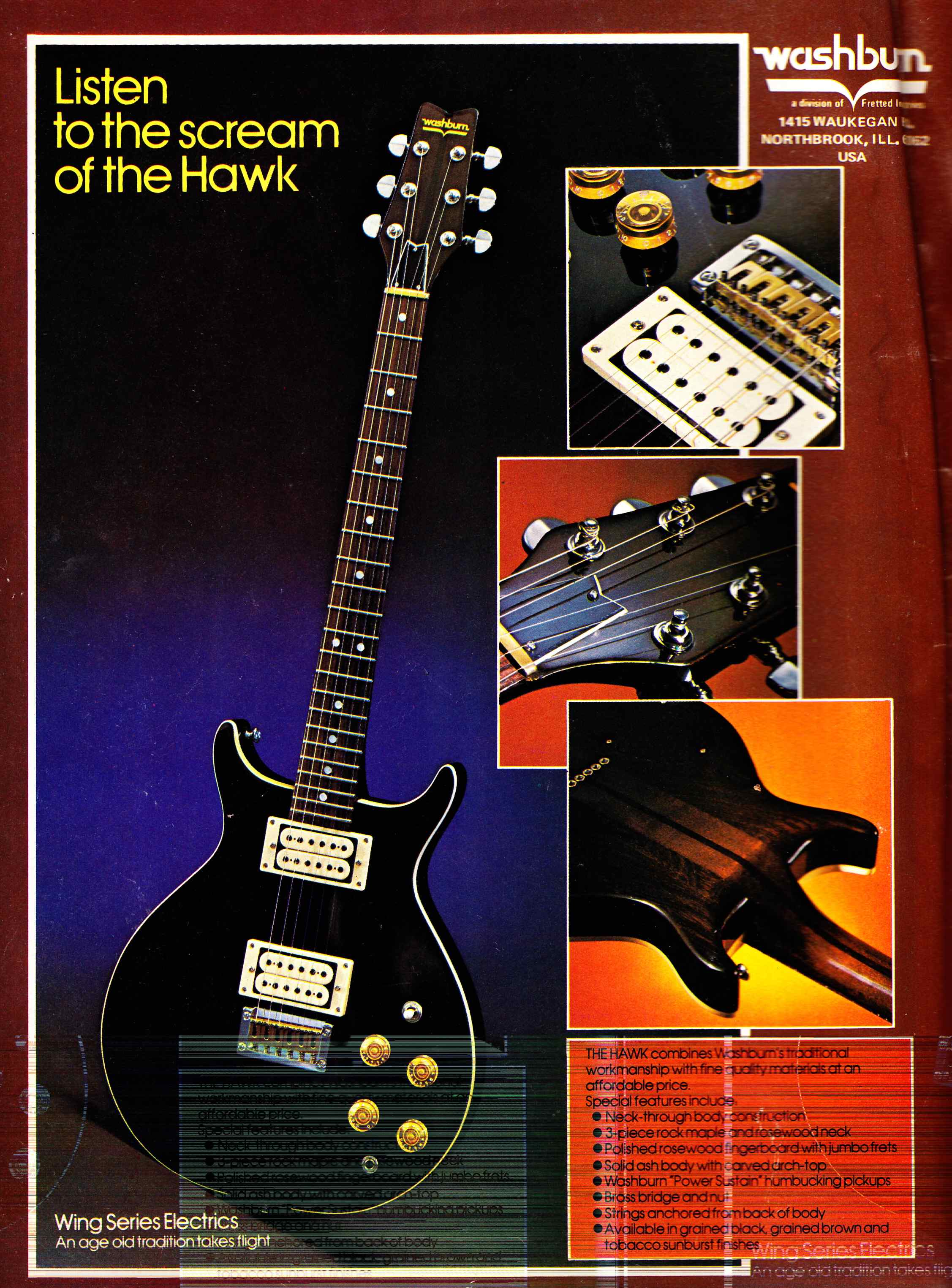
The Washburn Hawk of 1979, a good-quality instrument from their Wing series. 

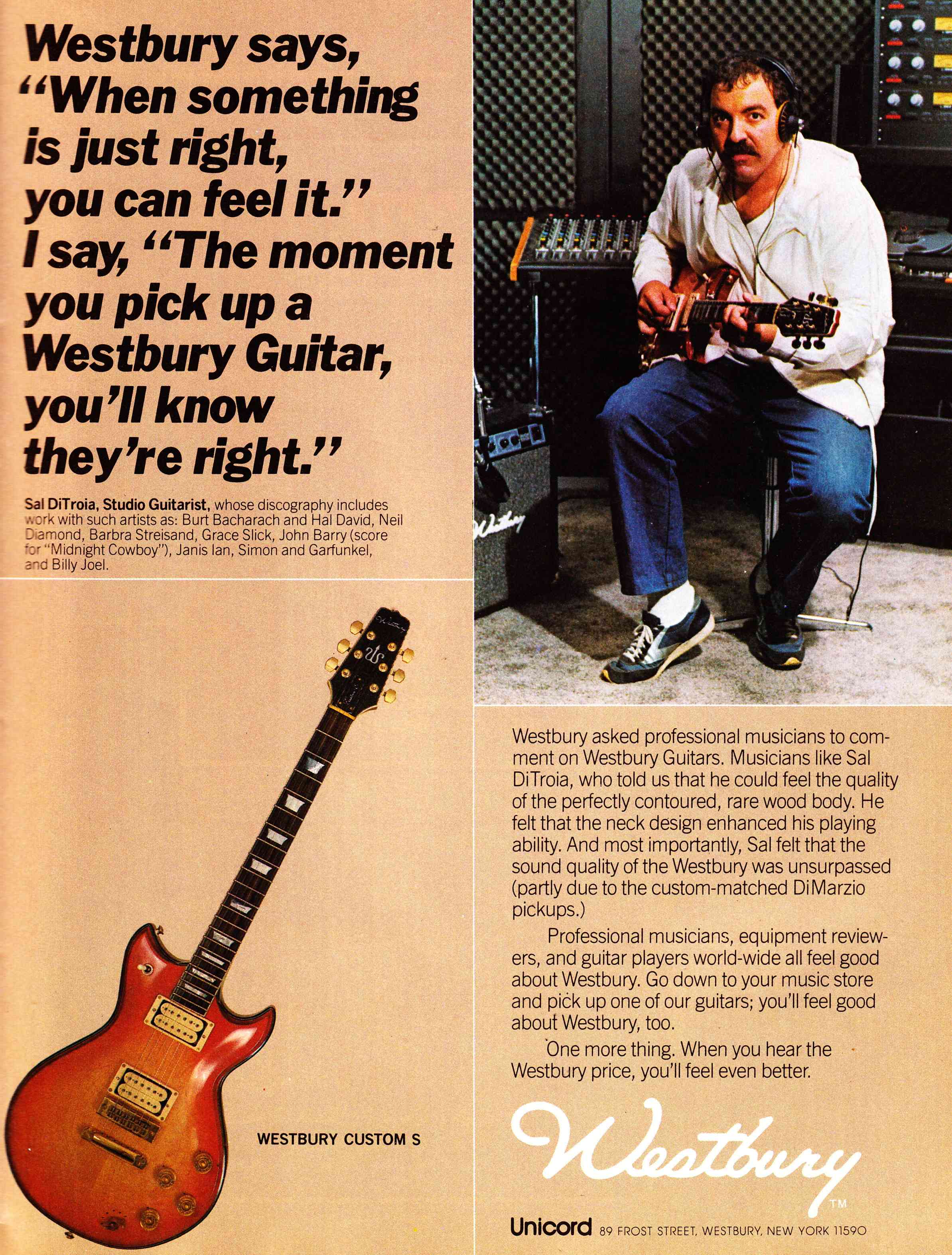
The Westbury Custom S circa 1981, imported by Unicord (importers of Marshall/Korg/etc…).  Note the similarities to the Aria Pro IIs.

The Westone lineup of 1979. 

Any Matsumoku collectors out there?  Any know of any relevant players using these things nowadays?


Categories
Guitar Equipment

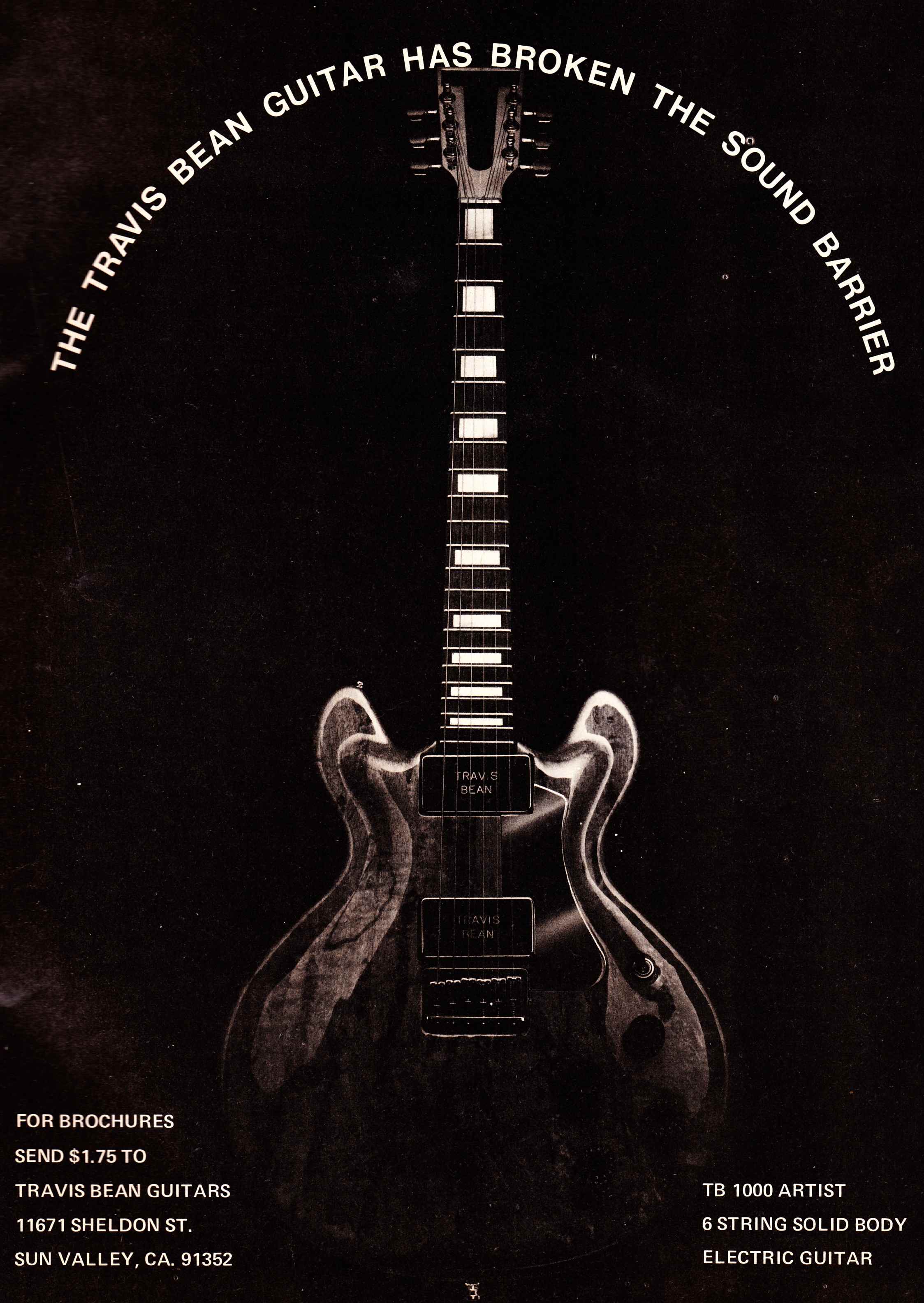
The Travis Bean TB1000 of 1975

Most iconic of the 70’s ‘aluminum guitars,’  the Travis Bean line up continues to remain a valuable collector’s item.  Famous players include Duane Dennison from this classic band.  You can see a more detailed list at this link.  I briefly played the much crappier Kramer aluminum-necked instrument from the same era; it had a terrible two-bolt neck joint that never seemed to stay tight. Frequent unintentional chorus-ing would result.  Any TB fans out there?

Categories
Uncategorized

Electra Guitars of the 1970s

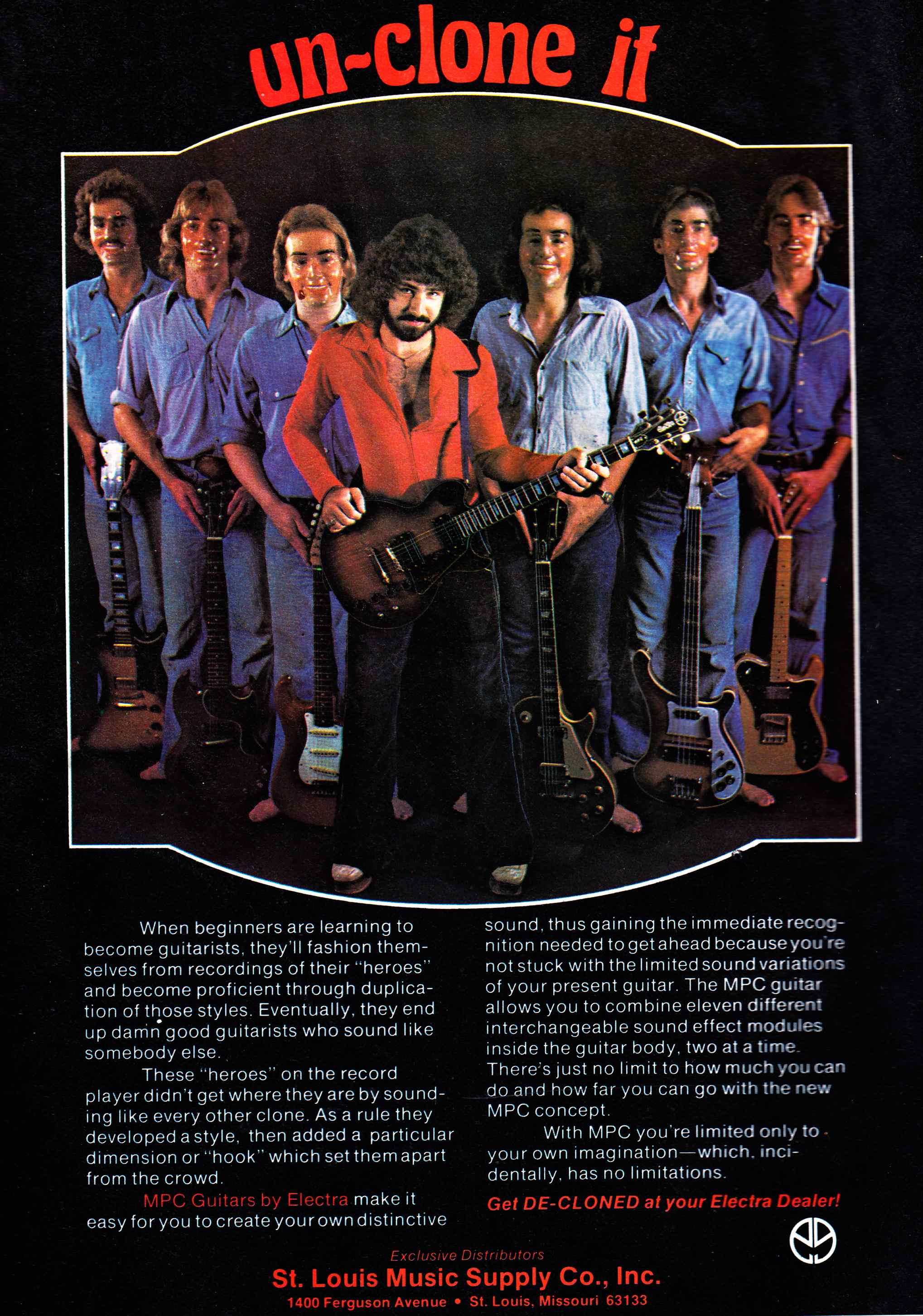
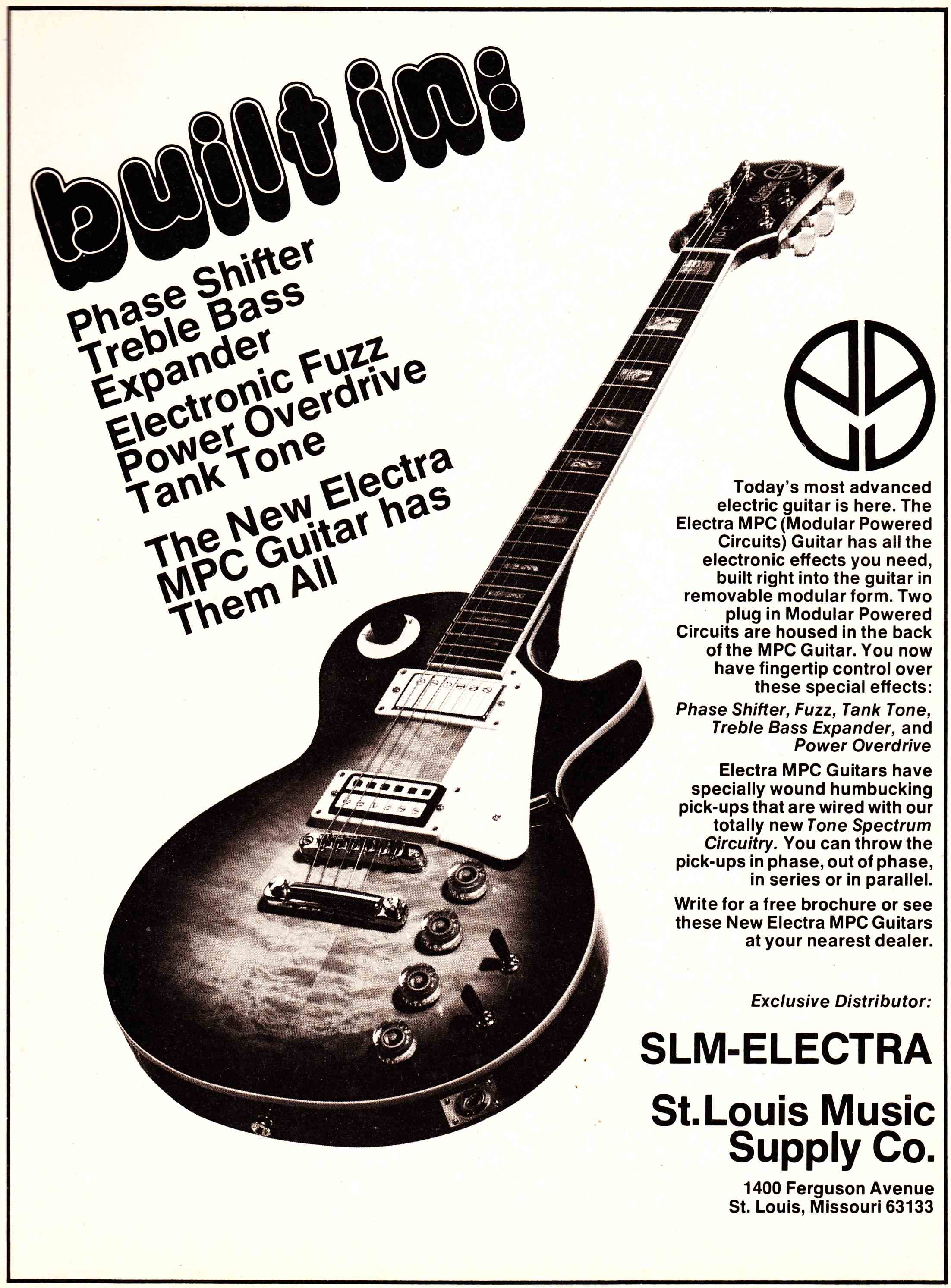
Above: an Electra ad from 1979 which seems to be suggesting that by using their sound-effects controls incorporated into the guitar itself (rather than in foot-effect-pedals), you will develop a unique style and attain success.  Okey…  Anyone using one of these today?  Thoughts? 

Electra was a brand-name for Japanese-made guitars imported by the St Louis Music Co. in the 1970s.  There were also Electra-branded amps:  I had a pretty rad solid-state piggyback with a 15″ driver and footswitchable phaser/reverb/overdrive (i think…) in the early 90s…  pretty good sound for a solid-state amp… Anyhow, I can’t find any info on the amps online but maybe someone can send us a catalog?  As far as the guitars: there is pretty good documentation on the web: start with this page.  These dudes also posted the full 1977 catalog, which is one of the best I have ever seen.  To wit:

(image source)

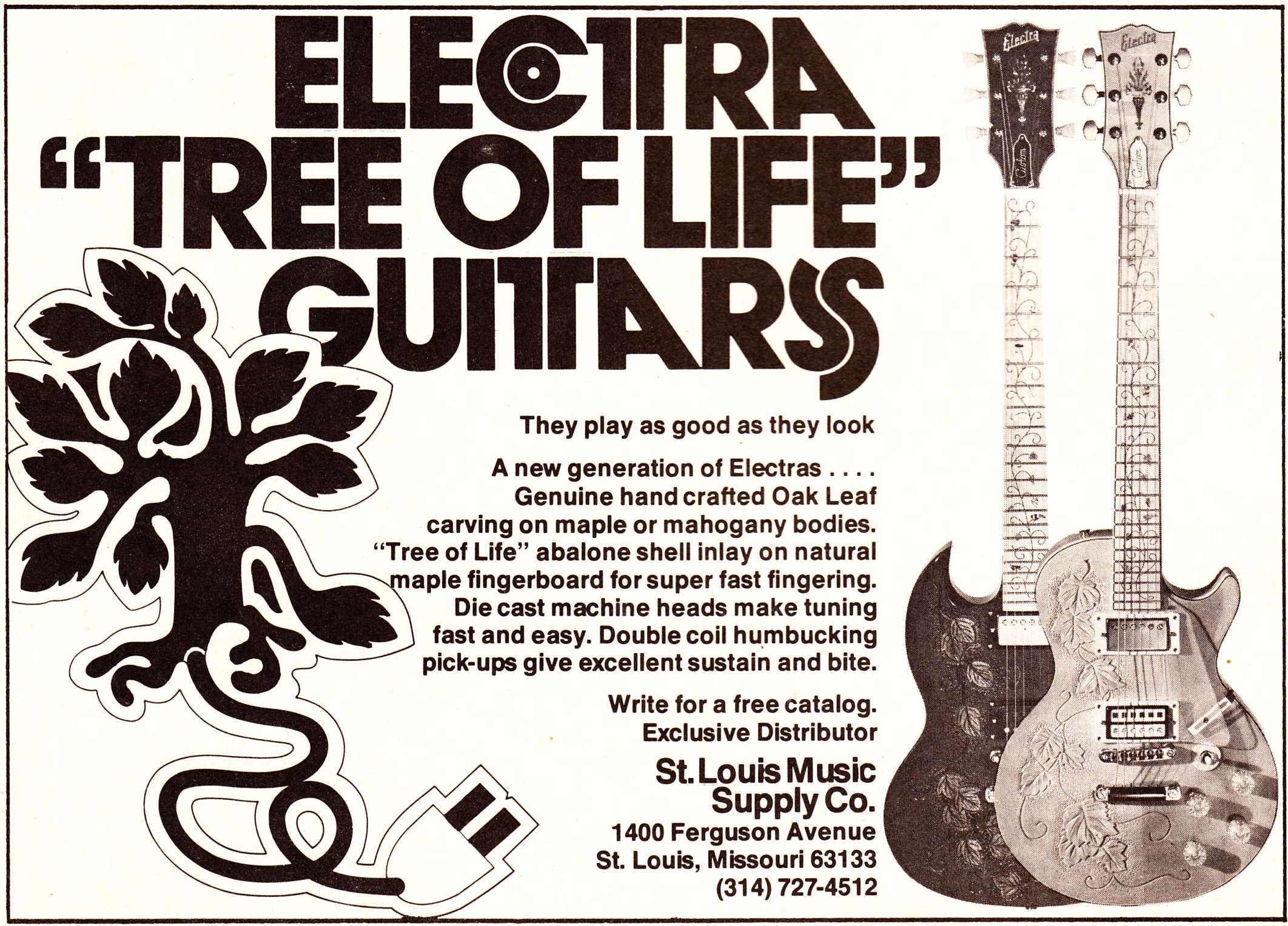
Goddamn hippie cowboy space invader!  Nice.  Anyhow… here are some more interesting Electra ads from the mid seventies which I think no one else has bothered to upload yet… enjoy…

The Electra MPC guitar with modular electronic-effect plug-ins.   Gimme TANK TONE baby.

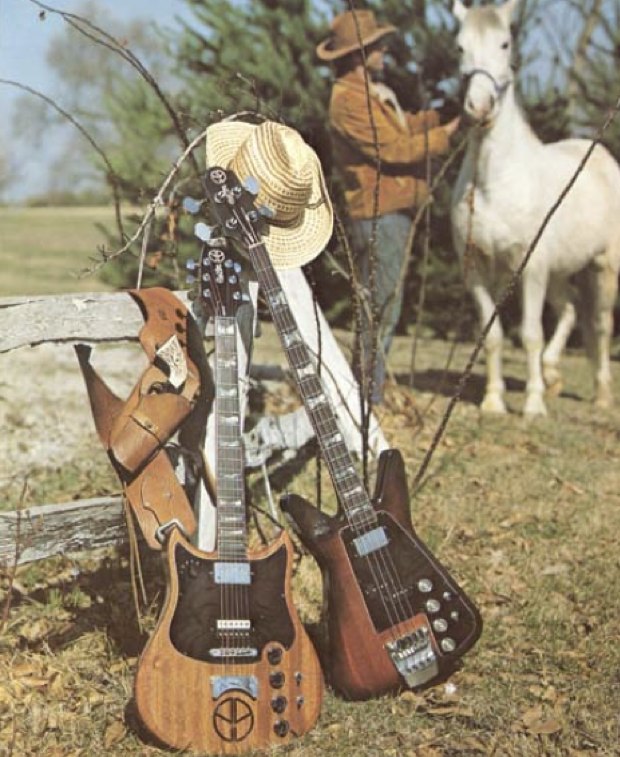
The Electra ‘Tree of Life’ guitars, part of a larger ‘carved-top-design’ trend in the 70’s…  see here for another example.

Categories
Synthesizers

Key Break

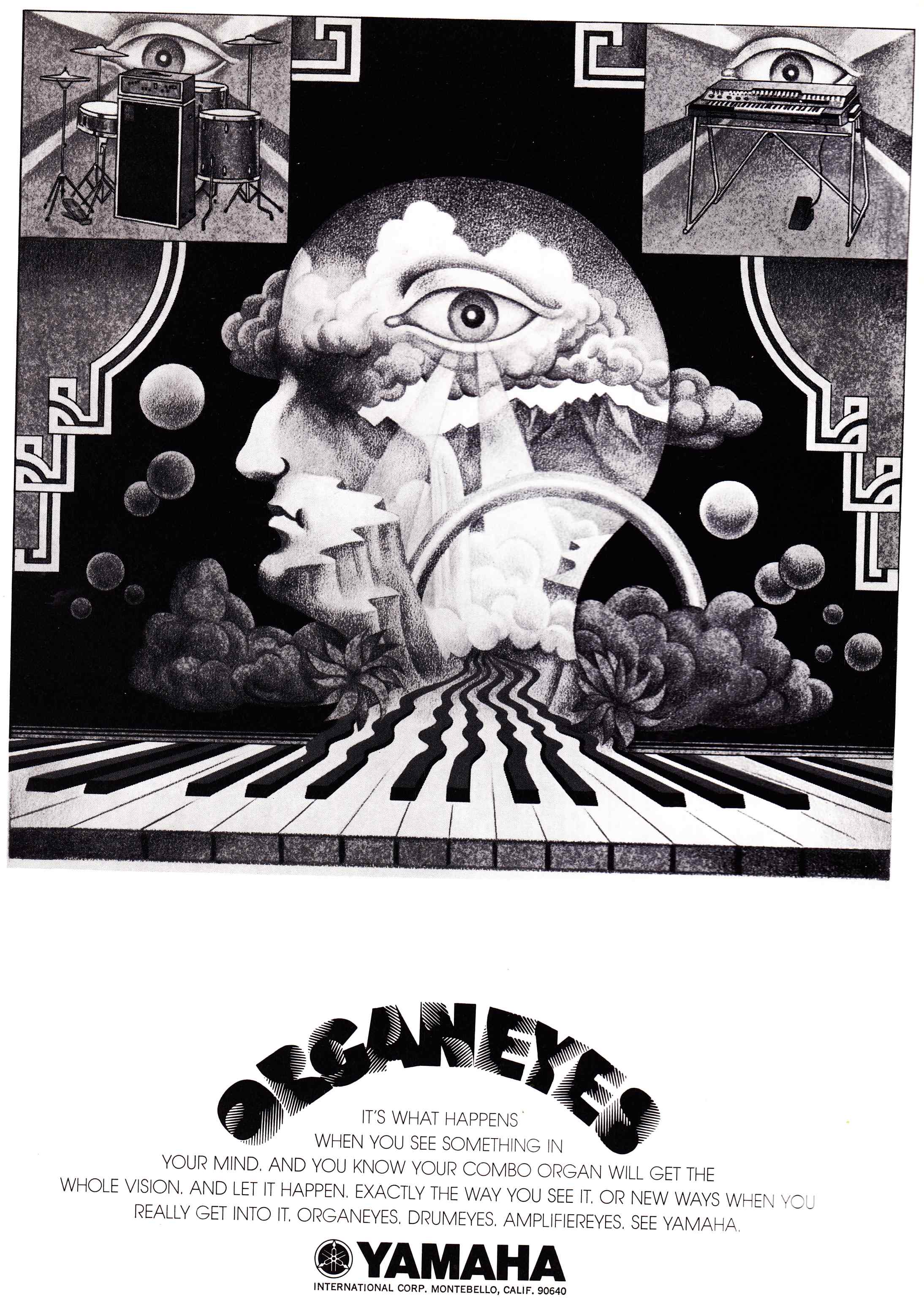
Man I love this image.  Yamaha YC Combo Organ advert circa 1971. “Organ Eyes.  It’s what happens when you see something in your mind.” Nice.  We briefly used a Yamaha YC20 In our band before we started touring.  It was just too damn heavy but wow are those things cool.  They were also dirt-cheap.

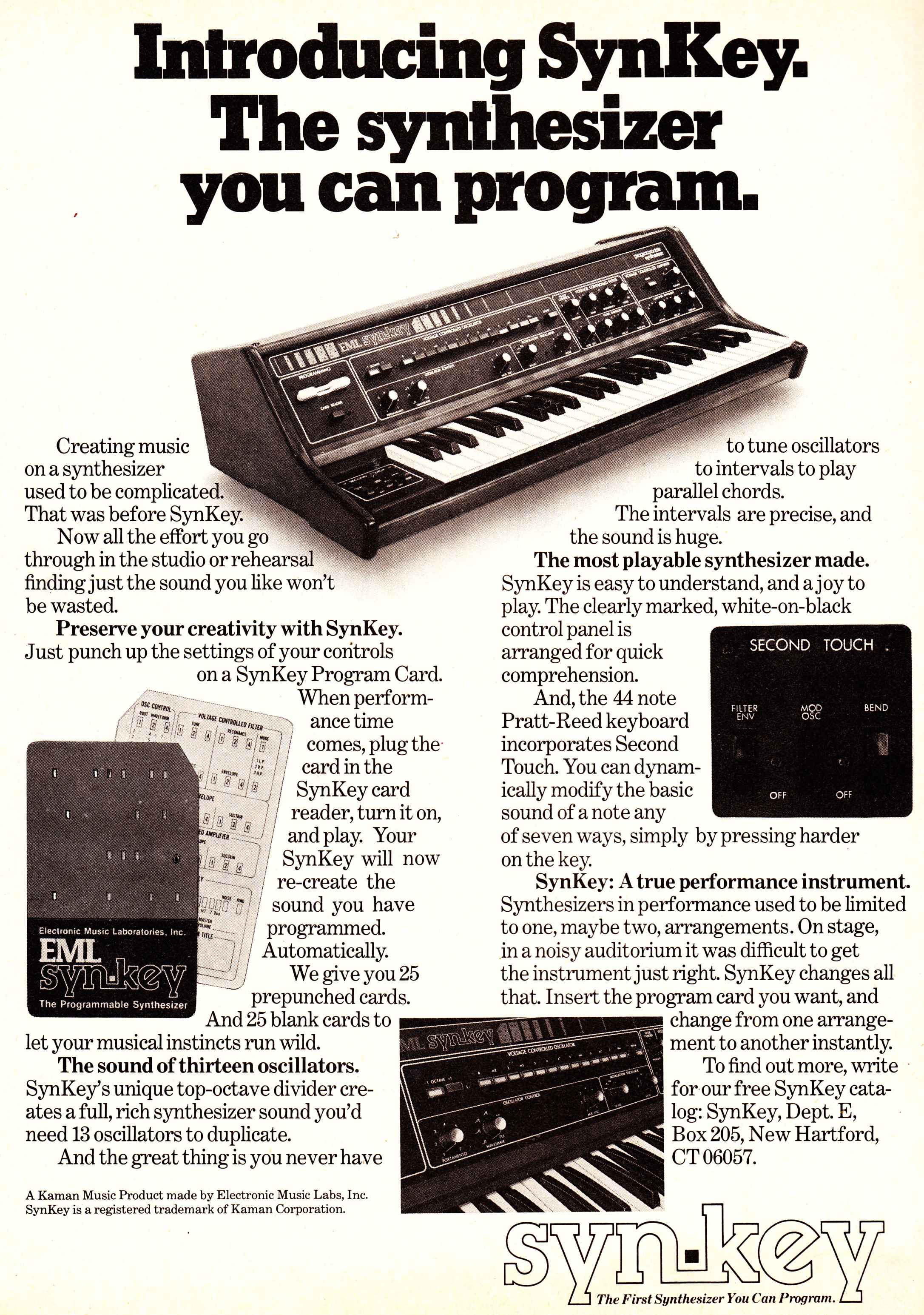
Today: some random bits of 70’s keyboard culture.  If yr using any of these pieces in the studio these days, drop us a line and let us know…

Above: The EML synkey circa 1976.  Touted as being the first user-programmable synthesizer, this piece also has a fairly unique feature for it’s day:  Aftertouch! Or as EML terms it, “Second Touch.” This advert also solves a little mystery for me… I was wondering what ever did happen to CT-based Electronic Music Labs (EML), and it looks like they ended up as part of the CT-based Kaman musical empire.  Click here for some previous EML coverage at PS dot com.

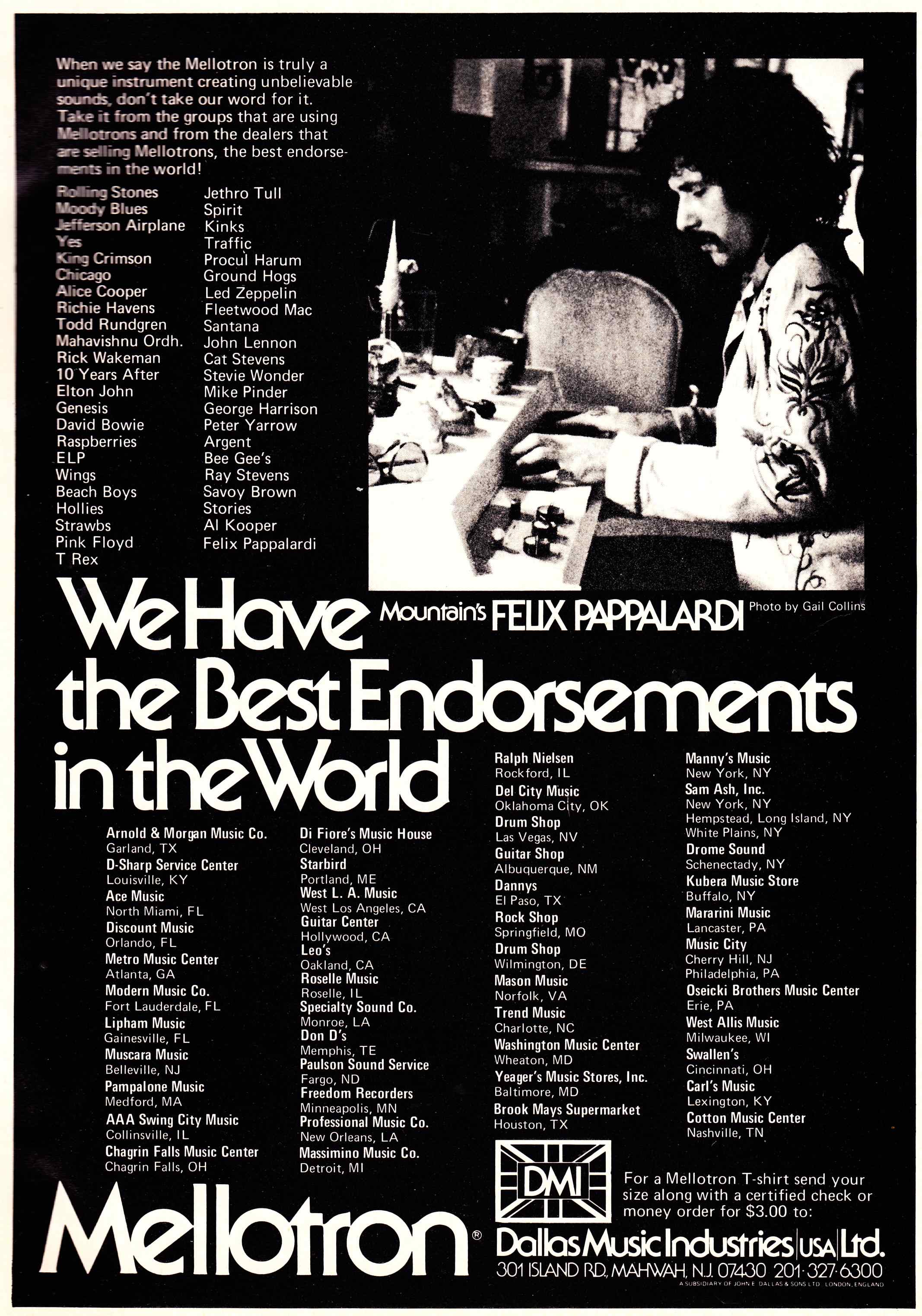
Above: Felix Pappalardi endorses the mighty Mellotron.  These things are so classic that it seems almost unbelievable that these things were once advertised, stocked in shops, etc…  For those unfamiliar, the Mellotron was a very early sampling keyboard.  It accomplished this feat in the pre-digital-audio era by using a separate tape playback mechanism for each key.  The tape was not looped, but rather a spring-loaded strip of eight-seconds length, which has the unintentional effect of requiring unusual playing techniques for any musical passage with long sustained chords.  Get the whole story here.

Categories
Uncategorized

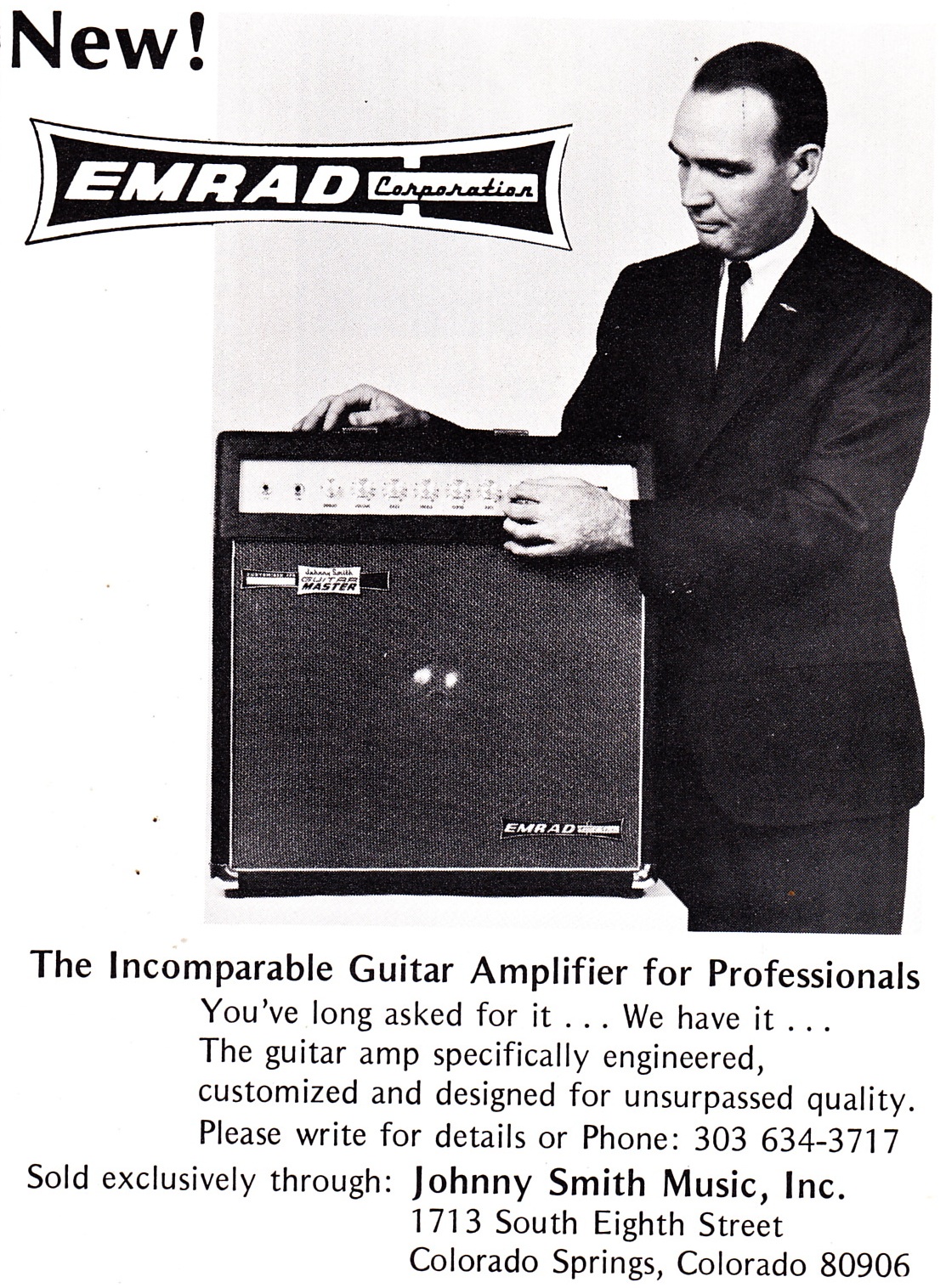
The Obscure Emrad Guitar Amplifier circa 1971

The Emrad amplifier was designed to the needs of jazz-guitar great Johnny Smith.  Handmade in a Colorado workshop, these 100-watt solid-state combos were soon also used by Sugarloaf, performers of this genre-defying 70s classic.

I rank this track with other ‘it could only have happened in the early seventies’ hazy-vibed jams such as Ride Captain Ride and Brandy.  Is it rock music? Pop? Lounge music?  The Emrad saga was a brief one; follow this link for the details.

Categories
Uncategorized

Preservation Sound Dot Com is now on Tumblr

With the estate sale/ flea market season upon us, I thought it might be an interesting experiment to try a Tumblr account. I’ll be posting images, sounds, and videos of the various audio-historical related flotsam that I happen upon across this great land of ours.

You can check us out at:  http://exploitandindustry.tumblr.com

…or follow us, if you are a Tumblr user – it’s super easy, fast+free to join.  Just go to Tumblr.com.