 In a previous post, I discussed the late great American magazine Audio, published between 1947 and 2000. Audio combined equipment reviews, listening tests, music reviews, and DIY tech into a single publication. It’s cessation has left a great absence in the American audio-scene that the internet has luckily filled (chicken or egg?).
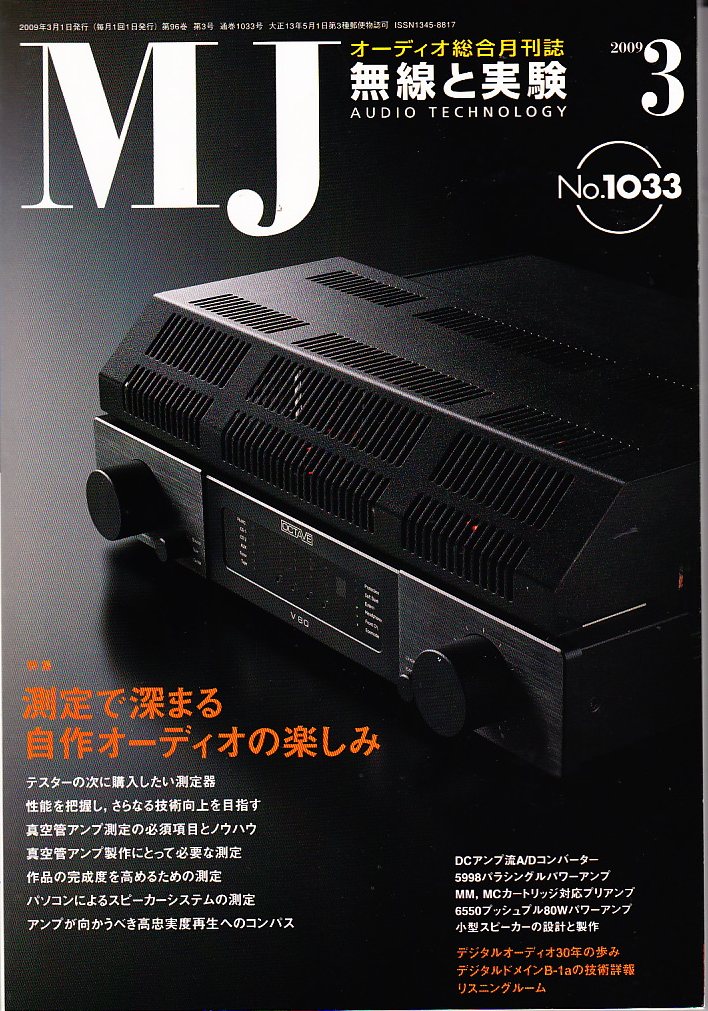
MJ Audio Technology magazine is the closest Japanese equivalent to Audio. However, MJ has been in print since 1924 (!) and it is still being published. Amazing. Here is a brief history of MJ, taken from the DIYaudio listserve (member tiefbassuebertr):
“This magazine, founded in 1924 by Mr. Mitsugu Tomabeji, is one of the earliest and most influential radio magazines that I know. In the early years it was Radio experimenter’s magazine (Musen to Jikken = Radio and Experiments). The early publisher of this magazine was the currently brand ITO and the currently publisher now is Mr. Seibundo Shinkosha. In general this magazine is a DIYer magazine and is very technical but is full of great articles on electronics and speaker design, room acoustics, audio history, as well as reviews, news, show reports, etc.”
(Web Source)
Even if you can’t read a word of Japanese, this is a great magazine to pick up if you are interested in audio DIY at all. Recent issues can be purchased at Kinokuniya in New York City. I would bet that the several Kinokuniyas on the west coast stock it as well.
Here is an example of a project from the 1033rd issue.
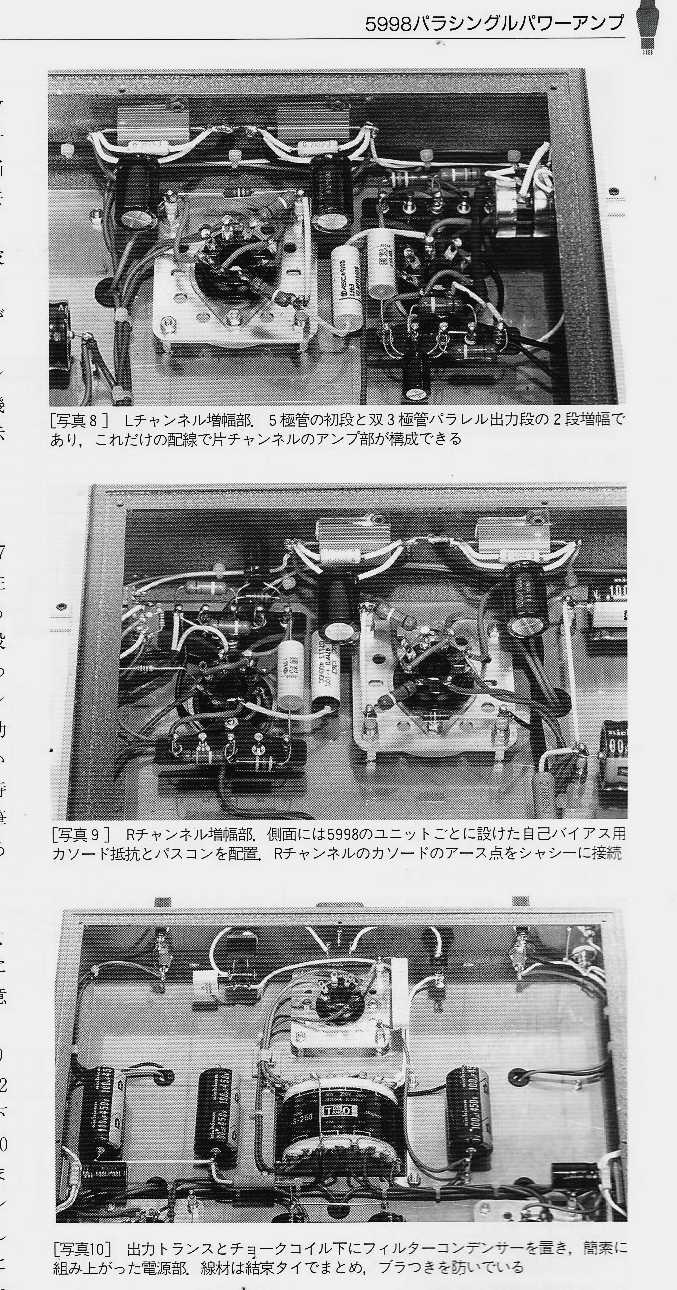
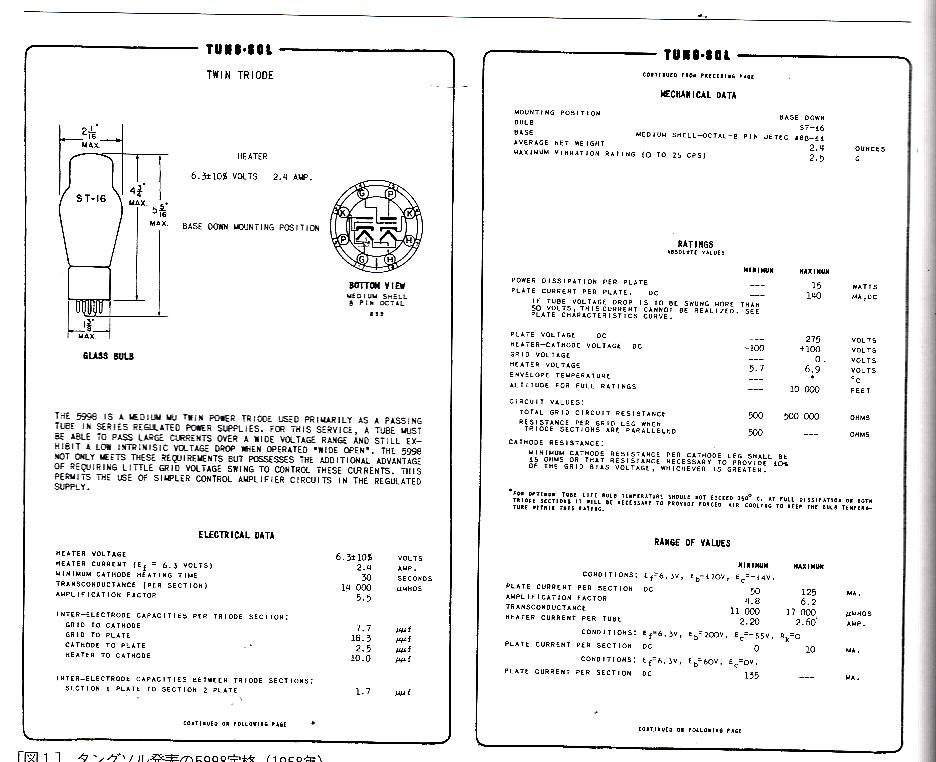
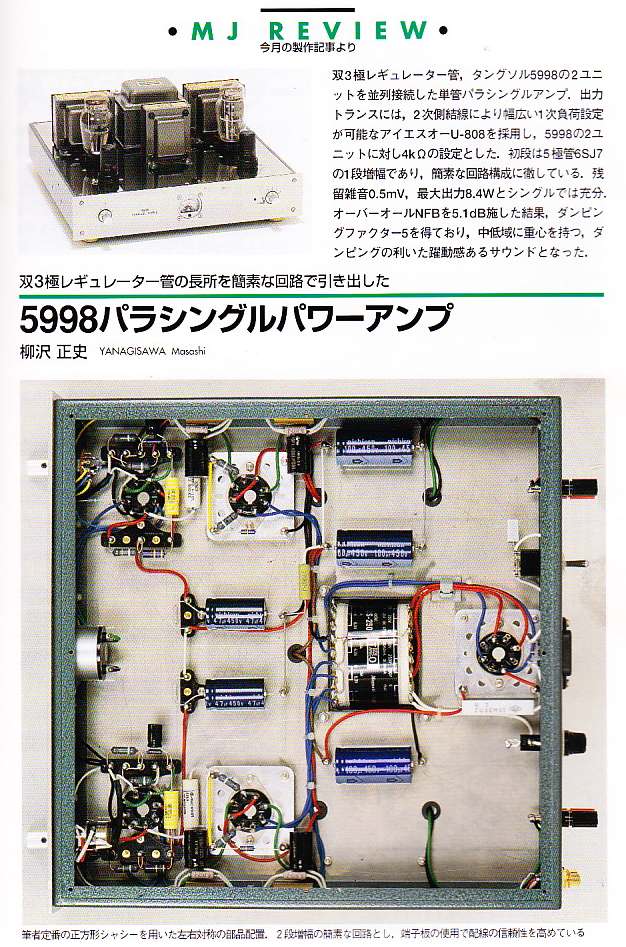 …Here we see a beautiful build of a Single-Ended parallel stereo amp which uses the very unusual 5998 twin-triode tube. This is a tube that I had not been aware of, as it was never intended as an audio tube by the manufacturer. Nonetheless, MJ has based this project around it. We are offered the tube data sheet…
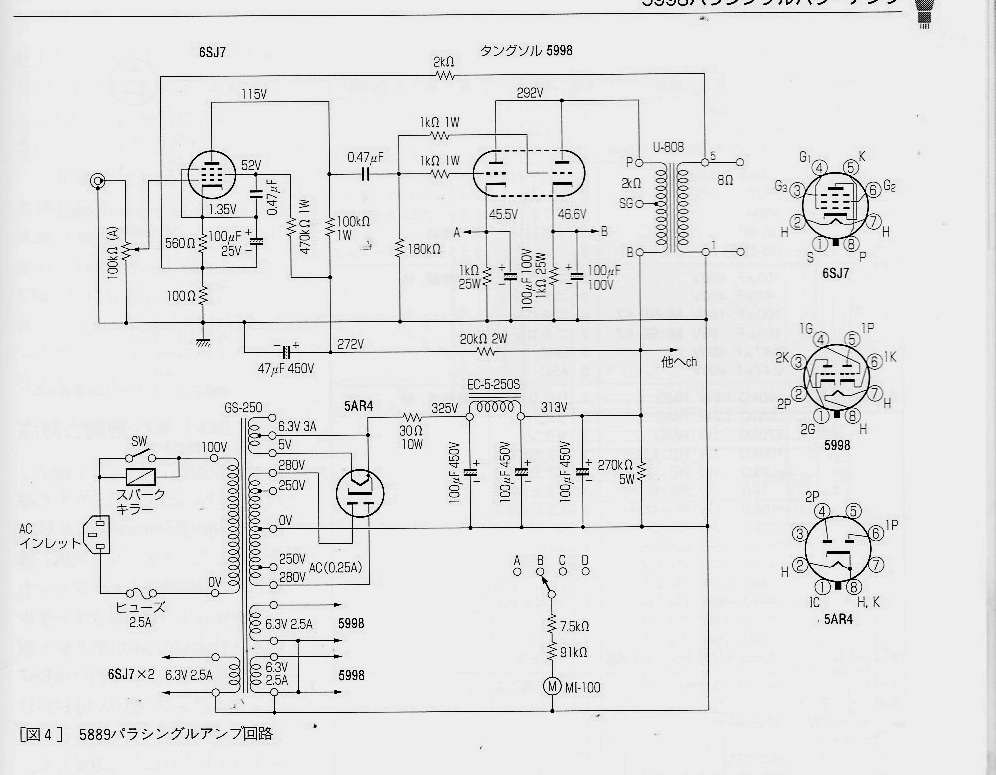
 A very clear and well-illustrated schematic,…
 …Layout details,…
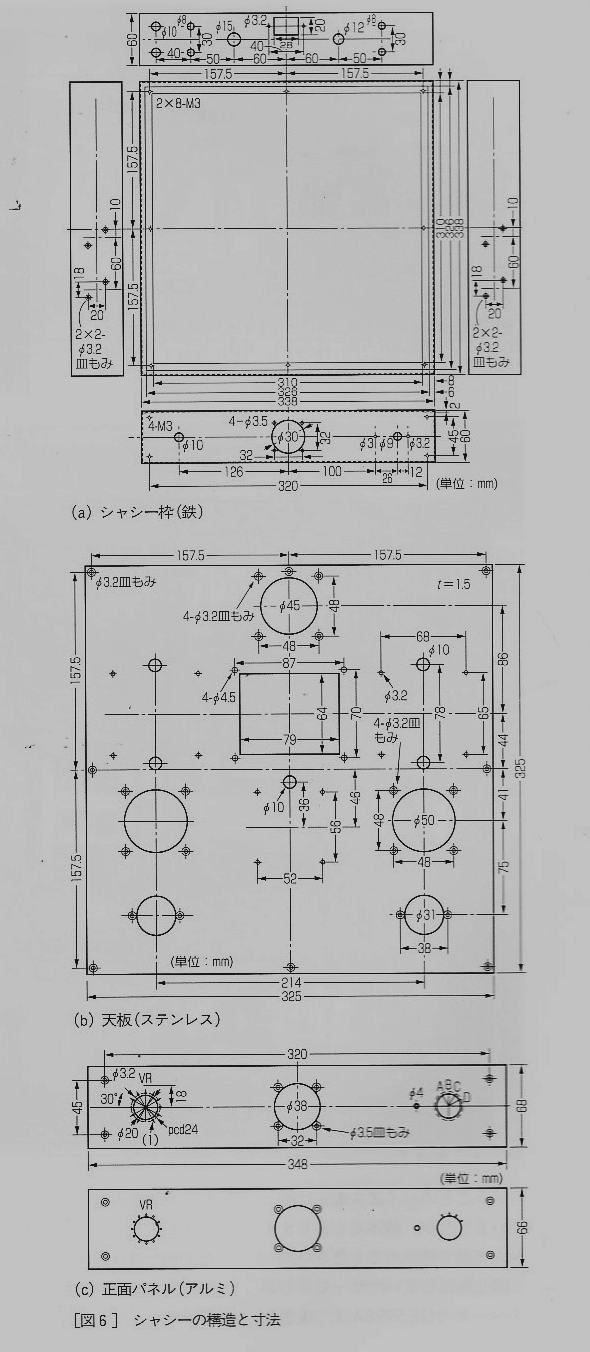
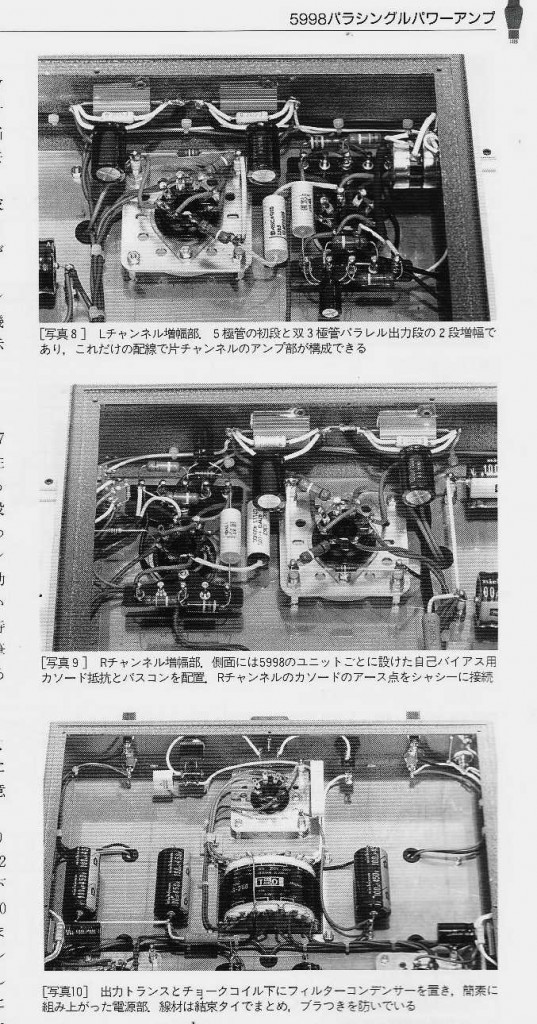 …And even chassis-fabrication guides.
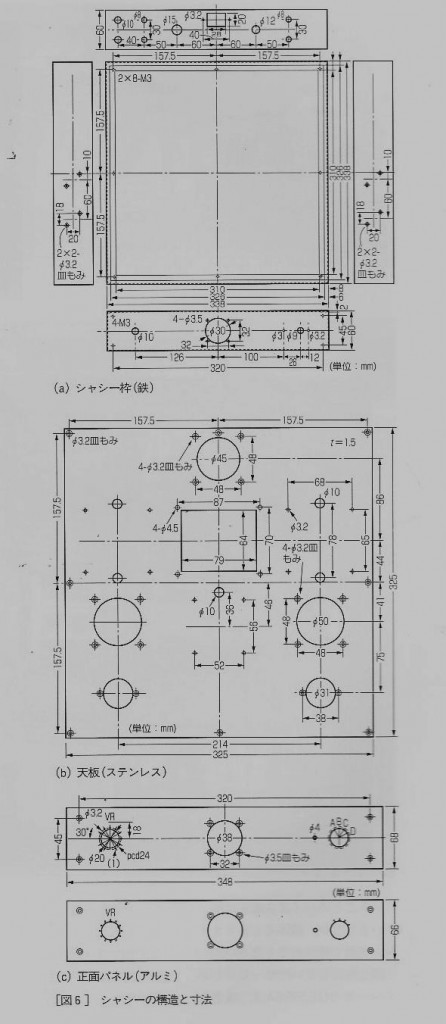 Overall, the level of quality and attention-to-detail most reminds me of the old Mullard “Tube Circuits For Audio” book (also excellent). Finally, the technical performance specs, and listening tests. These listening tests generally seem to involve the singing and/or playing of pretty-yet-demure women.
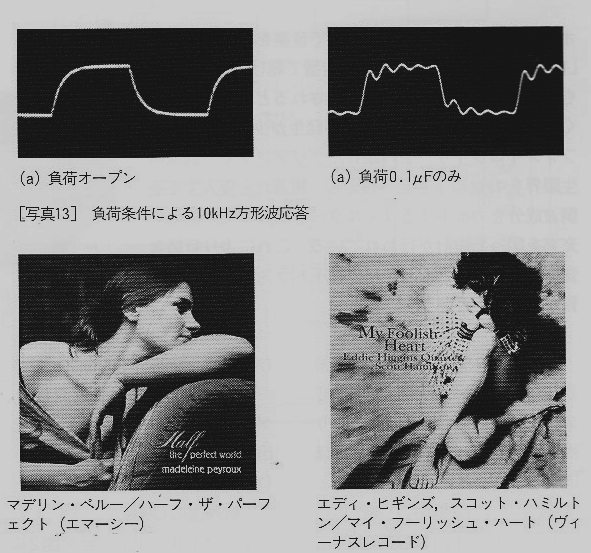 This project is given much greater detail in the magazine than I am providing here, and in fact it is only one of several on offer in this issue alone. Check it out if you can.
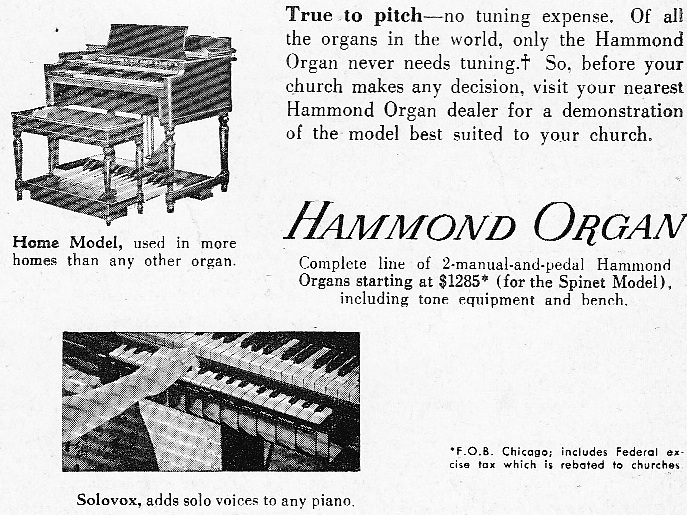 Hammond Times was published by the Hammond Organ Company from around 1938 through at least 1962 (the last issue that I have personally seen is 1962). Click on the link below to download the 12-page issue Vol XV, No. 11, from March of 1953.
 The Hammond Organ’s incredible sound (owing in large part to the rotating Leslie speakers that often amplified it) was intended to be the sound of the heavens… the sound of the Lord. What better way to bolster your Rock-anthem than with the Chords Of God. It’s adaptation to RocknRoll was inevitable.