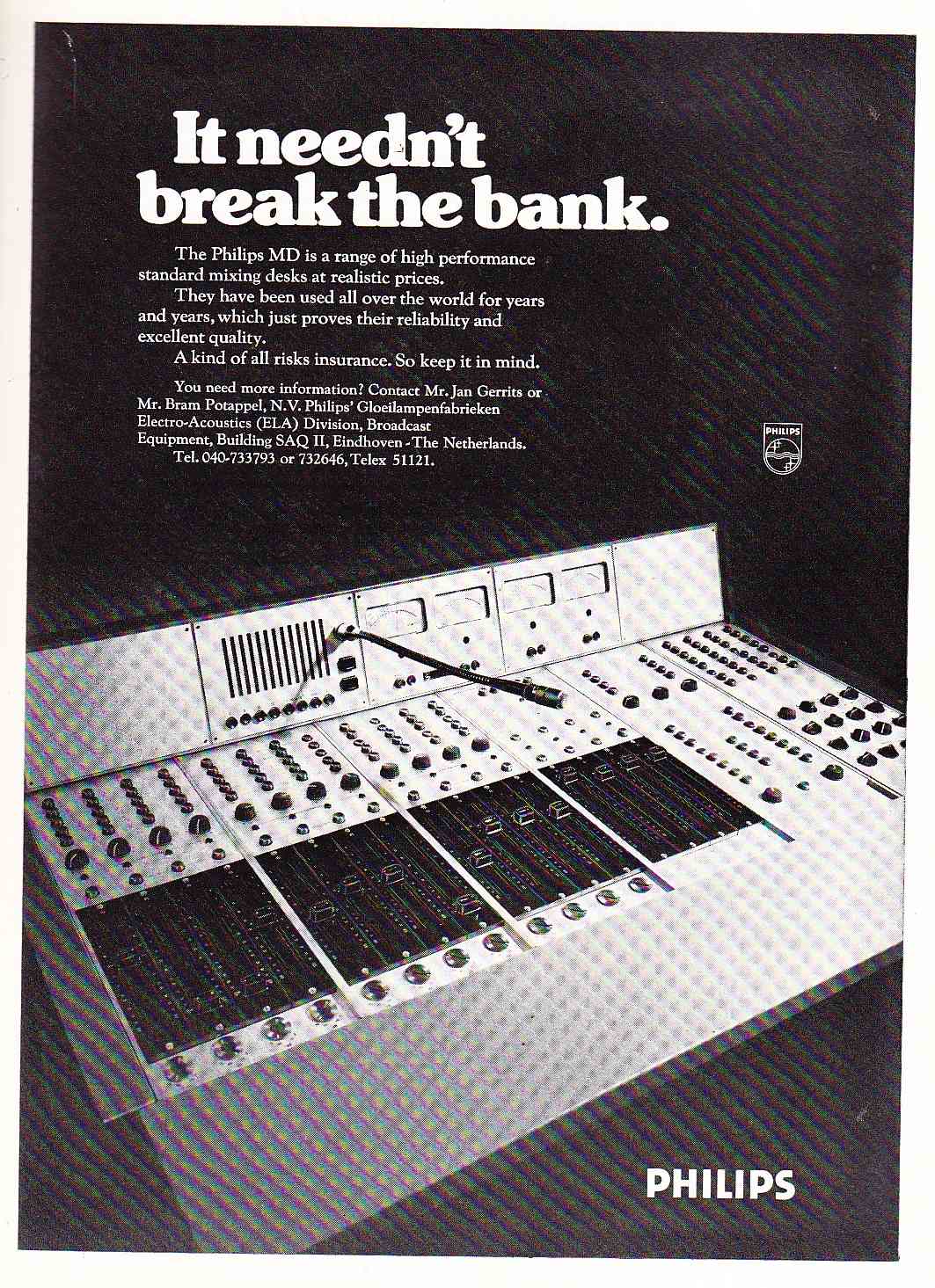
 Philips Mixing Console c. 1974
Since we originally published this post in 2010, several folks have written in to provide more information about these desks.
Update 1:
Tom H. in Sweden sent in a picture of his Philips MD console.
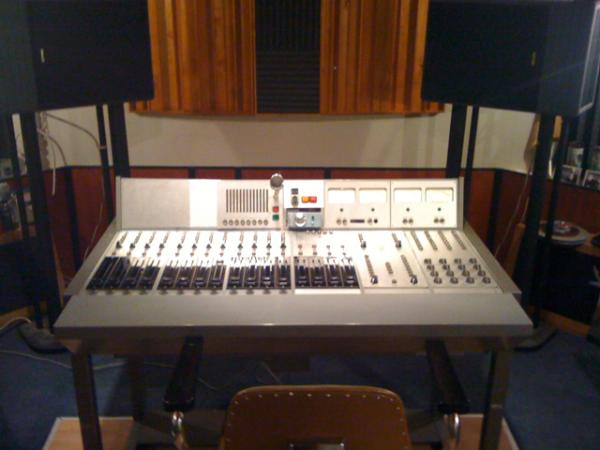
From Tom:
“I got it from NYC… Had to recap it and go thru it… Sounds fab.
Germanium Transistor based, and sounds very nice to me… It’s quite limited but the sound makes up for it… 12/4 configuration, one Aux send, no pans! Left/Center/Right by switches… 4 EQ’s w/ 10K, 100Hz boost or cut + presence boost available on tracks 5-12… I use external valve mixers and micpres, basically I use it with my Studer A80 1″ 8-track, mixing to a Studer C37 1/4″ machine.”
Update 2:
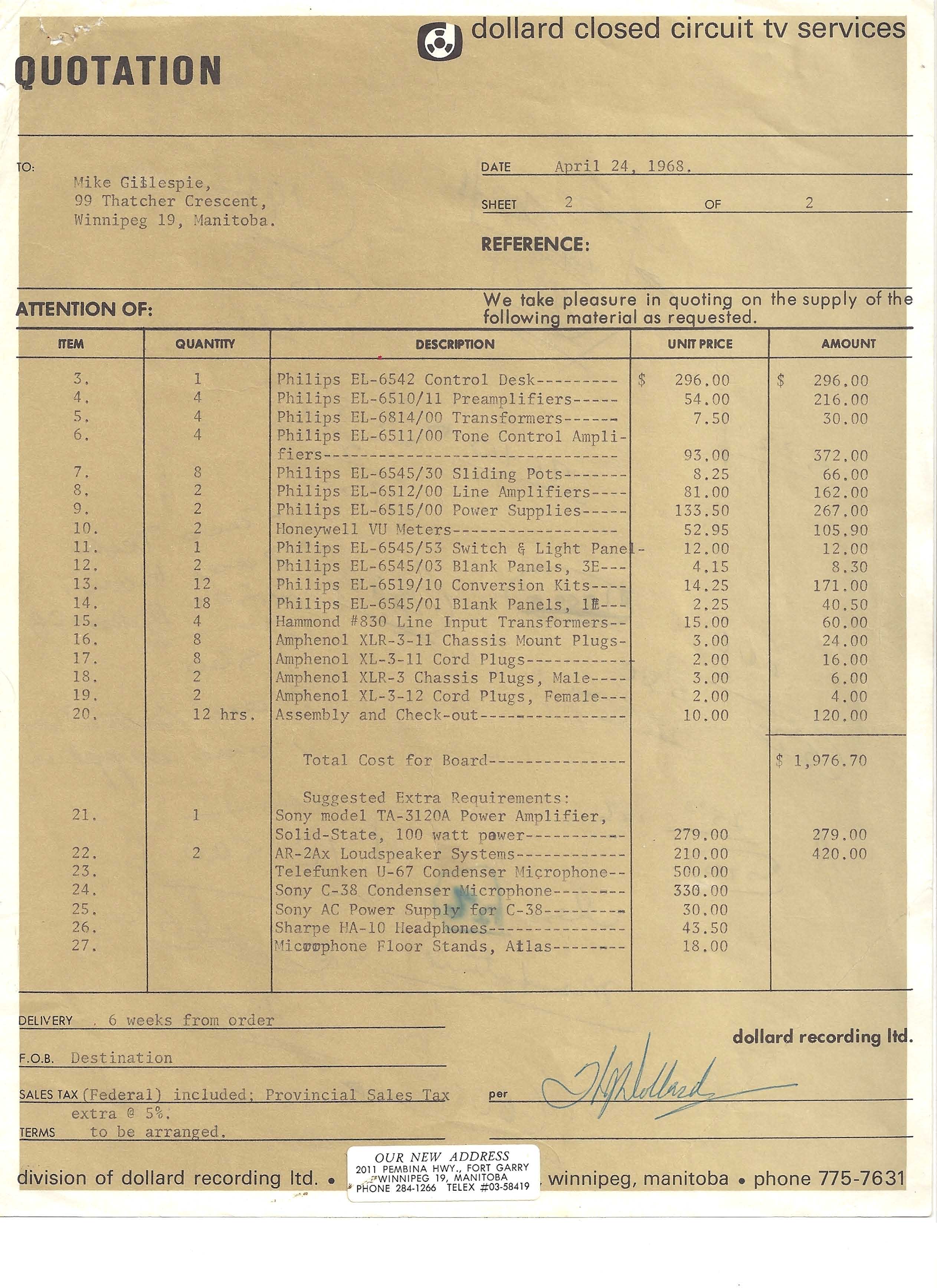 Above: courtesy of PS Dot Com reader M.G. in Canada comes this document from 1968 which outlines all of the part numbers for the Philips console components. MG writes: “I came very close to buying a Philips “Control Desk” in April 1968… (this) is the quotation I received at the time listing all the Philips part numbers…“
*************
*********
***
No big theme today. Instead: a quick look at some 1970’s mixing consoles that caught my eye for one reason or another. Dig in, and let us know if you have any thoughts on working with these various oddities.
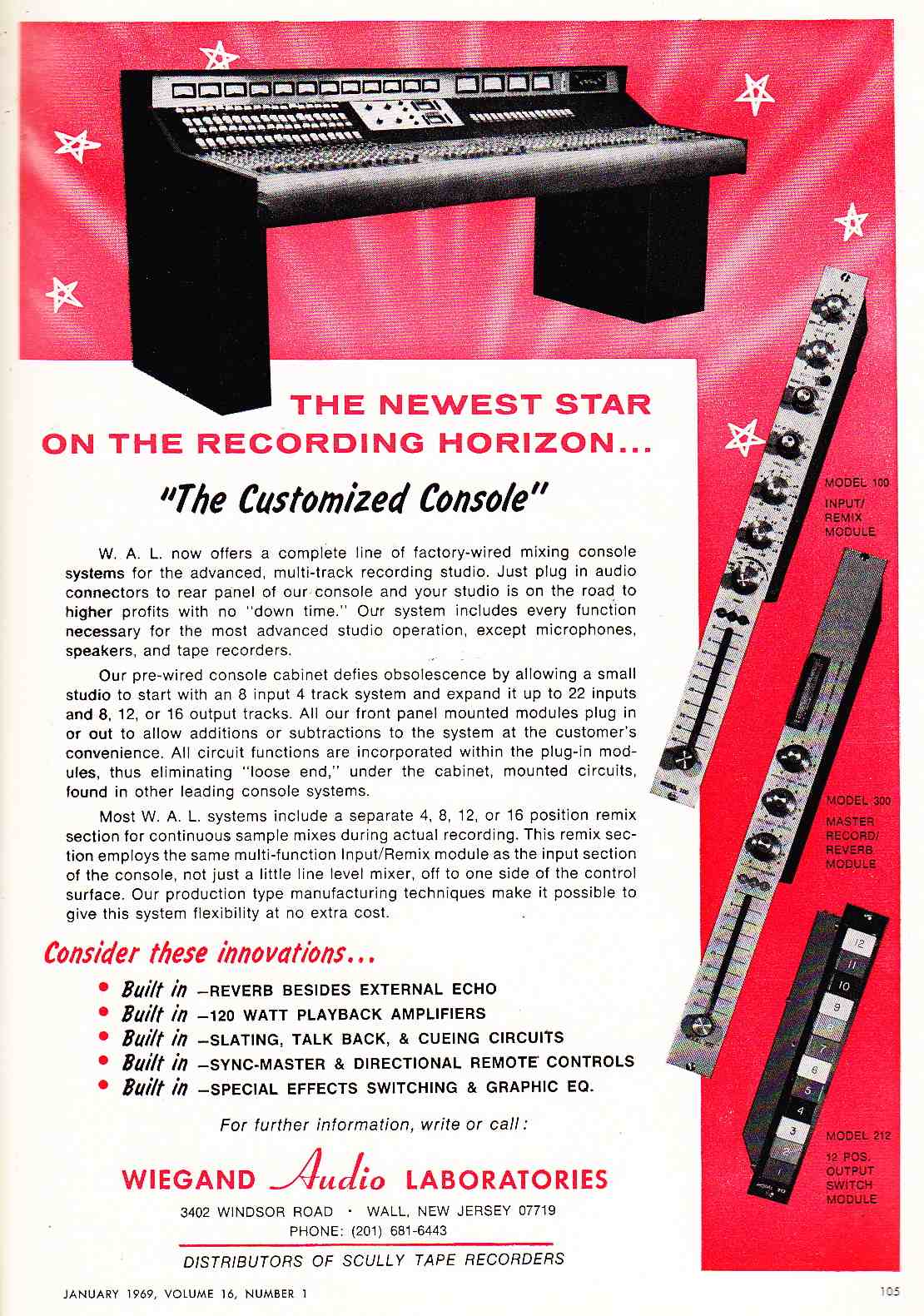 I cannot find any information on Wiegand Consoles. Looks to be serious kit though. A quick google search puts Midas at the head of the results, no reason indicated: perhaps Wiegand is part of the early Midas story? Anyone?
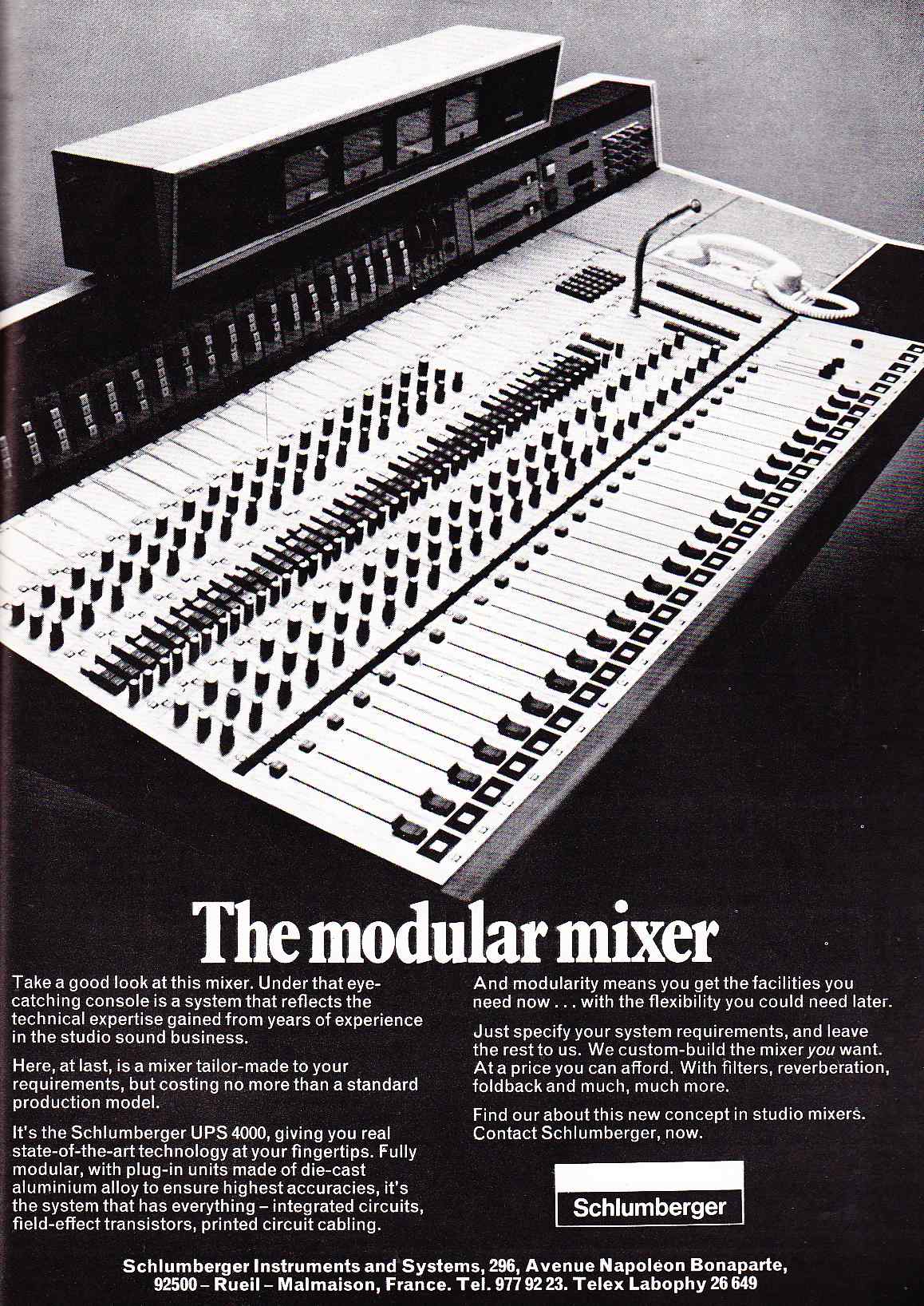 Schlumberger consoles seems to have generated some heated discussion on the G*****tz forum not so long ago. No one could agree where they were built. Germany or France? Probably not too common in the USA.
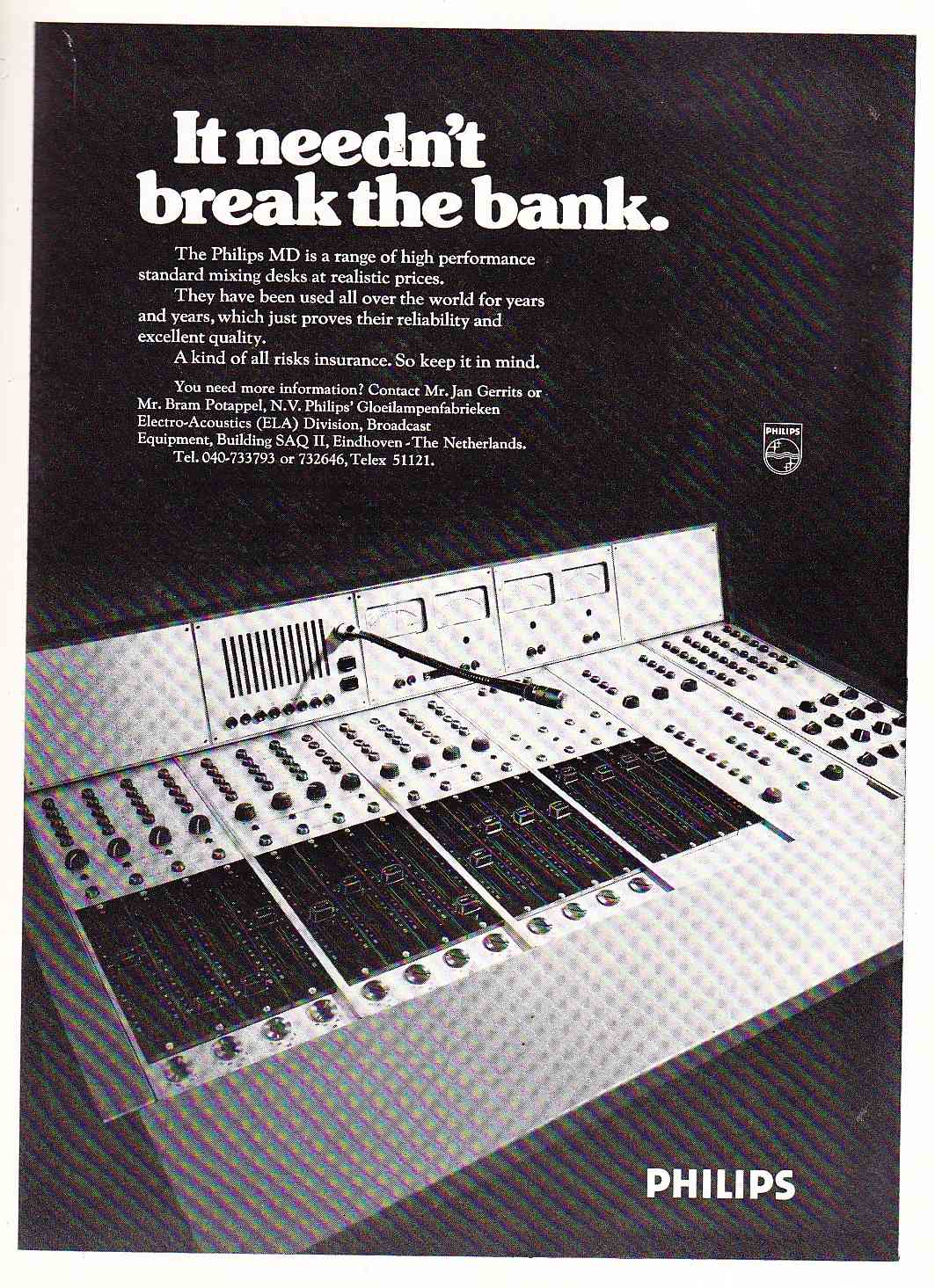 Style for miles. Philips MD mixing console. Sign me up.
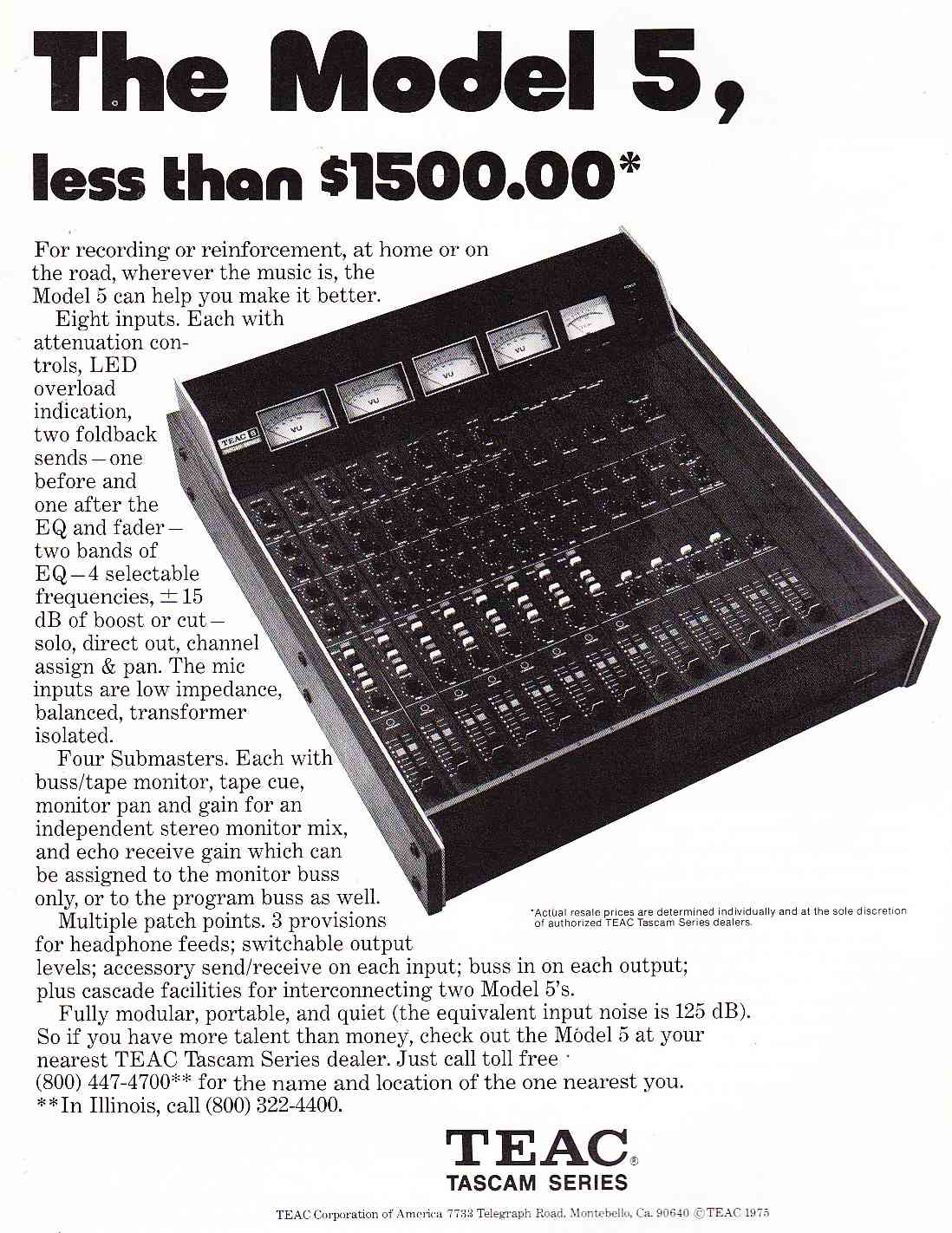 From the pages of the AES journal, an early appearance of ‘pro-sumer’ ‘home-recording’ kit. I recently purchased a near-mint TASCAM Model 5 EX expander unit for a few bucks at a yard sale (Not yr average yard sale: I also picked up a few P+G faders, VU meter, sequential tone generator, and a mile of balanced belden cable).
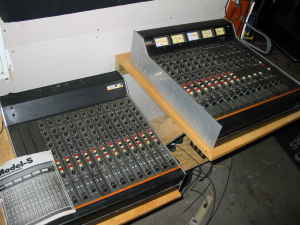
The Model 5 EX is basically 12-channels of Model 5 minus the meters, buss masters, and stereo master. So you’ve got 12 inputs (mic inputs have Tamura transformers!) with 4 unbalanced buss outputs plus 2 aux sends. It certainly would be possible to create a stereo mix on the model 5 EX, but the intent was to use it with a model 5. Right now, my Model 5 EX is sitting in the shop awaiting the axe. Eventually I will start to explore ‘upgrading’ the channel cards in the hope of eventually making some channel strips worth racking + selling. The channels don’t sound terrible as-is, but they are more noisy than i would like. As-in broadband white noise.
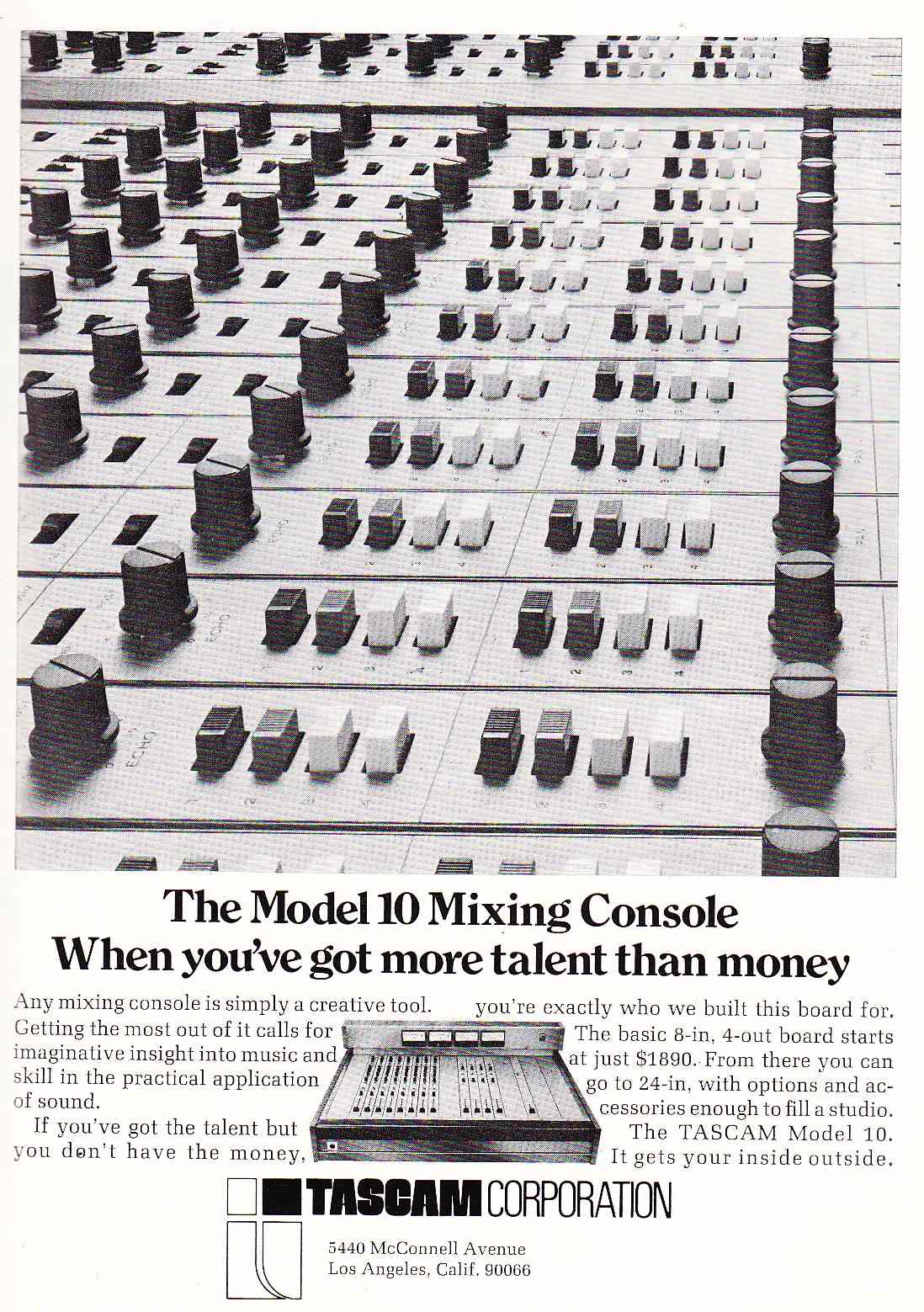 …And the more ‘pro’ TASCAM board of the era. The TASCAM Model 10.
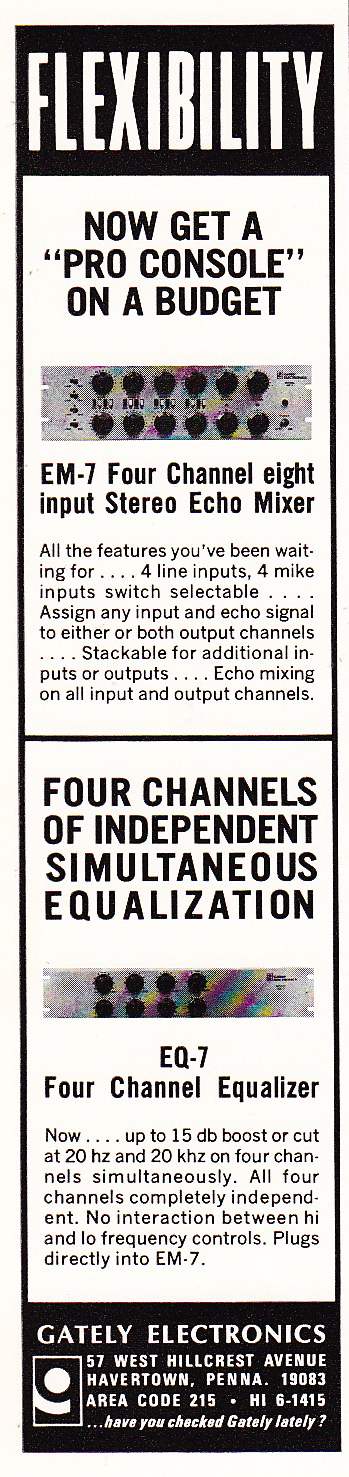 Speaking of ‘mixing’ on a 4-buss unit with no master… I have always been very curious about these little Gately mixers. Hope to get my hands on one soon..
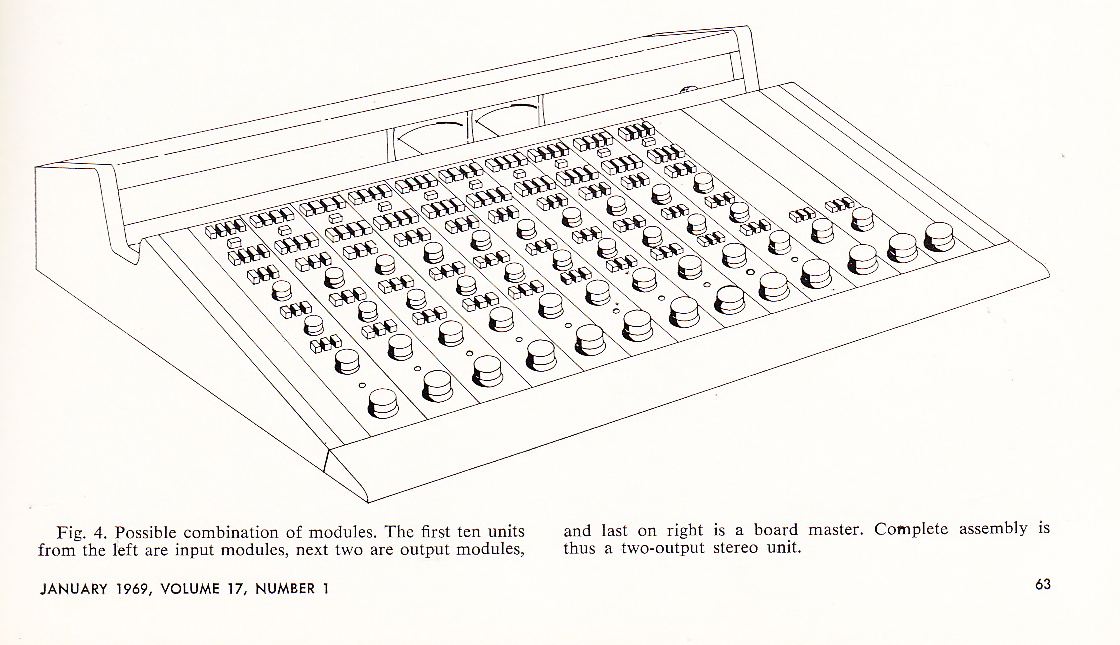
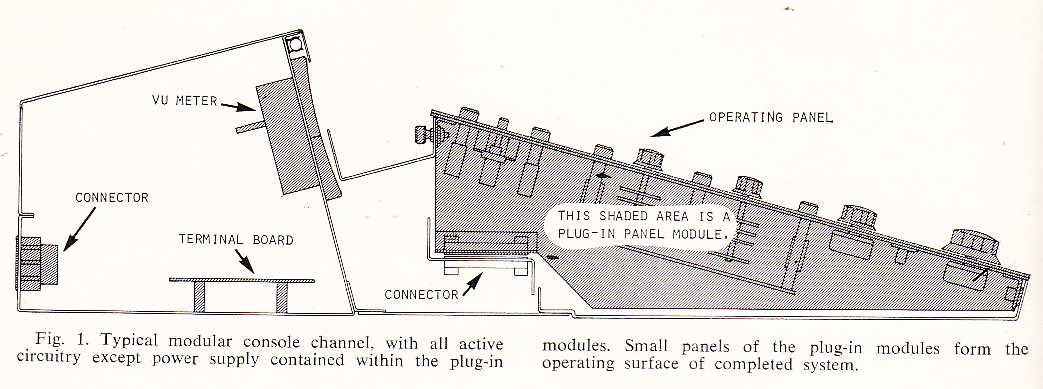 Langevin Engineer John Jarvis describes his methodology for console design in this 1969 AES article. Jarvis left Langevin for UREI shortly after this piece was written.
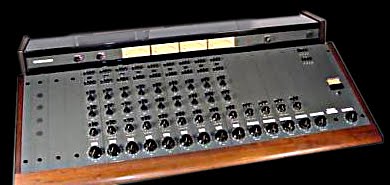

Here is a photo of an actual unit. These are super-cool. If I ever have a spare year I would love to DIY one of these from scratch.
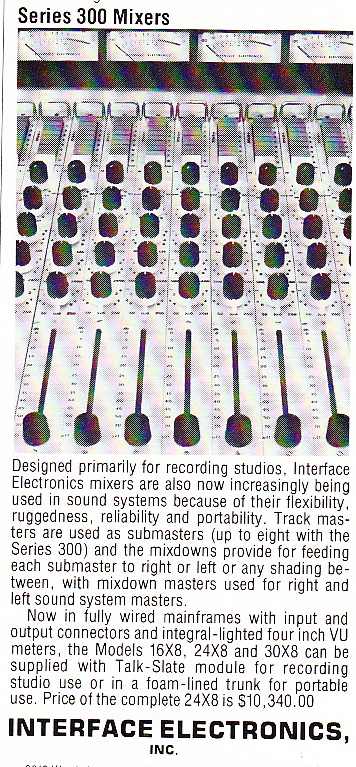 Interface Electronics model 300. Anyone?
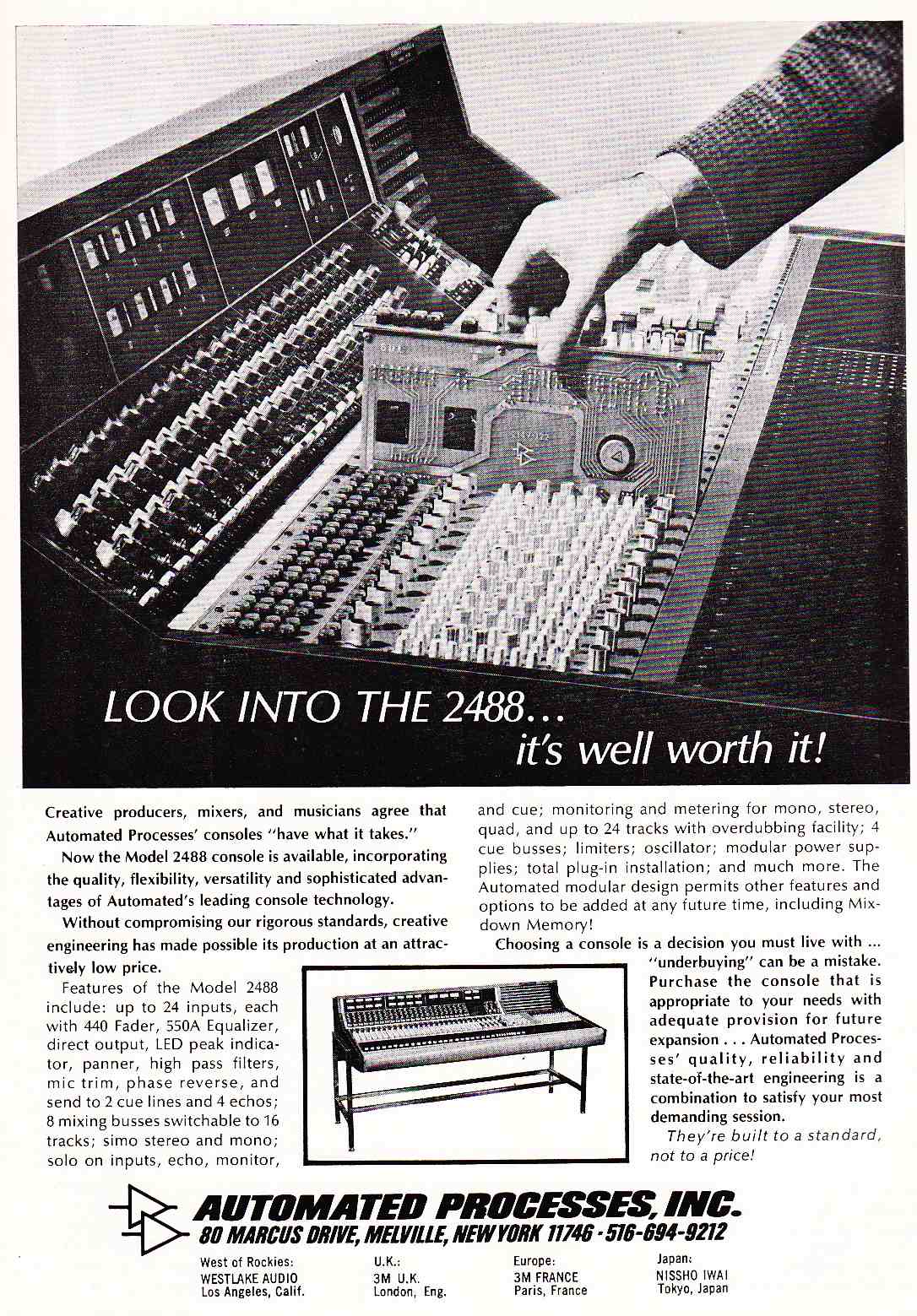 …And the one that became a keeper; a classic. The API 2488. Dan Alexander has a great wealth of information on this piece. Check out his fantastic website sometime.
9 replies on “Mixing in the 70’s – UPDATE 2 -Philips Console Information”
[…] Way back in October of 2010 I ran a short piece about some 1970s audio consoles, and now 70s month rolls on with an extensive image gallery of some iconic and some obscure mixing desks from that decade. I’m a hardware mixer fan; I learned audio production in a studio with a Trident Trimix and my brain often just defaults to finding solutions and working-methods that are faster to do with a real console rather than via a DAW. I would never give up my Pro Tools, no way… but I honestly can’t imagine giving up the flexibility and endless options that a good-sounding, full-featured console offers. At Gold Coast Recorders, our Wheatstone SP6 has been going strong for two years now; I’ve had to replace the control room section due to a weird intermittent issue, but I since I had planned ahead and bought a spares-board it was pretty painless. If you look past the real fetish-brands like API and Neve (great stuff, no doubt) there are a million bargains to be had if you are able to do a little tech work (or pay a decent technician). I bought both of my SP6s for about $1500, TOTAL, with shipping, and put about 60 hours into arriving at a single great-functioning piece, fully cabled to my patchbays, and with a lifetime worth of spares. Considering that these SP6s cost around $40,000 each in the mid nineties, this is a pretty great deal. I guess I’d sum it up this way: if you record bands, if you have the physical room for a console, if you have the patience and/or where-with-all to do some basic troubleshooting, and the board is modular (very important….), I feel like you really can’t go wrong. Given the outrageous prices of vintage outboard gear on the market today, vintage consoles represent an amazing bargain. And a potentially amazing headache. So be careful. […]
I’ve actually got an interface electronics series 300 mixer that is in working condition. If anyone is interested let me know!
Hi I’m interested in your mixer. Thanks Rick
rghgoods@yahoo.com
Happy new year :?)
I have a working MD12 recapped. Anyone interested to buy it ?
12 in 4 out mon section 4xEQ 4 VU and a coax wideband speaker integrated.
Greetz
Kai
How much is it? Do you have pictures?
How does it sound? Can you send me sound examples of mixes done on it?
Please write me to dasundjenes@gmx-topmail.de
Interesting information but PHILIPS has only one L. Minor detail maybe, but PHILIPS is featured in the press ad featured for all yto see. Apologies if you think I’m nit-picking but it’s more about your site being correct.
Hi, I’m interested to buy a old console.
No matter the condition
Let me know! Thanks
this is not that place for that
Sorry Chris!
I thought it could be seeing the previous message