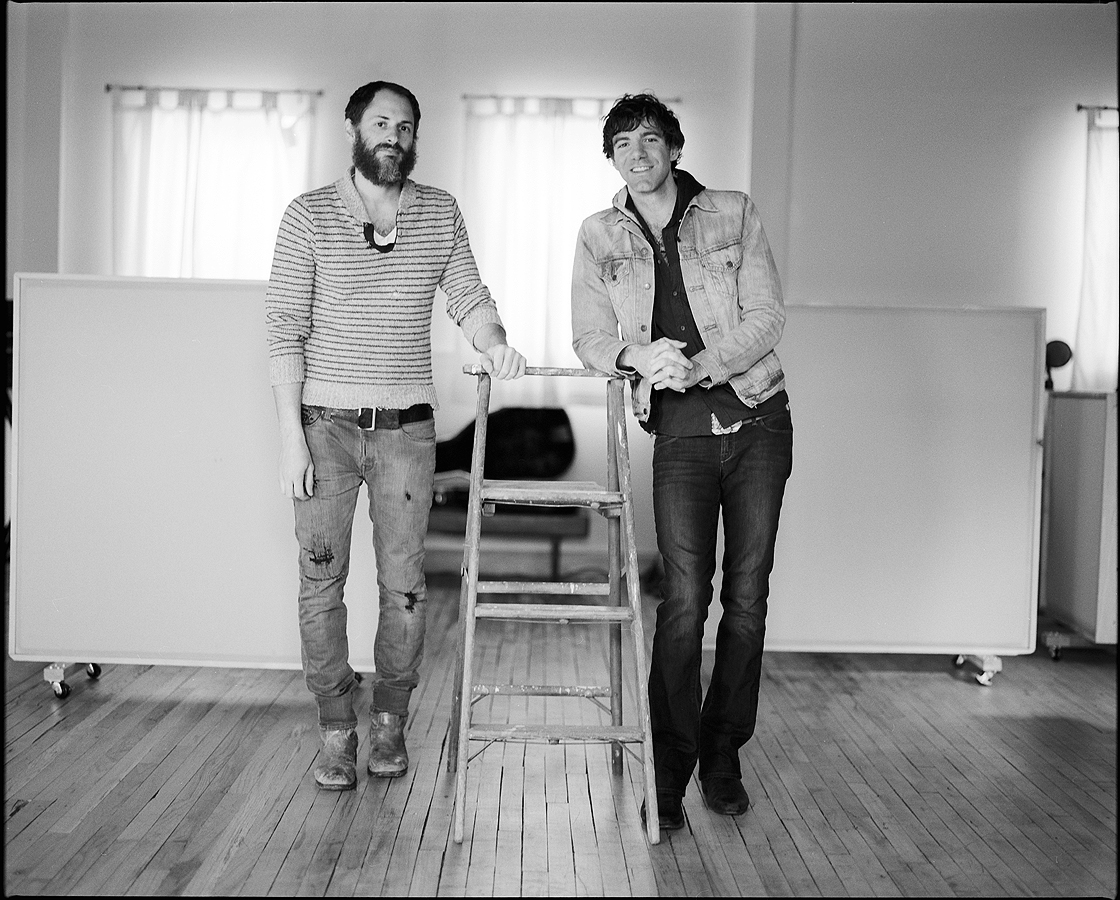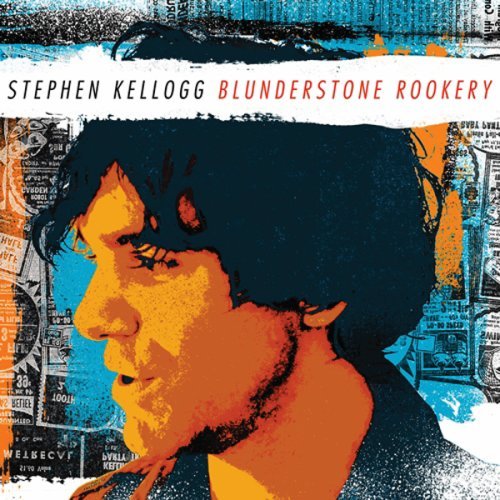
I am very happy to announce that Stephen Kellogg’s new album BLUNDERSTONE ROOKERY is available at all music retailers today. B/R was tracked at our studio Gold Coast Recorders last autumn, and it was a wonderful project to have been a part of. You can read a new interview with Stephen about the album at American Songwriter magazine now.
Download the original 6-page catalog/brochure for the Sound Workshop 1280 12×8 mixer:
DOWNLOAD: SoundWRkShp_1280
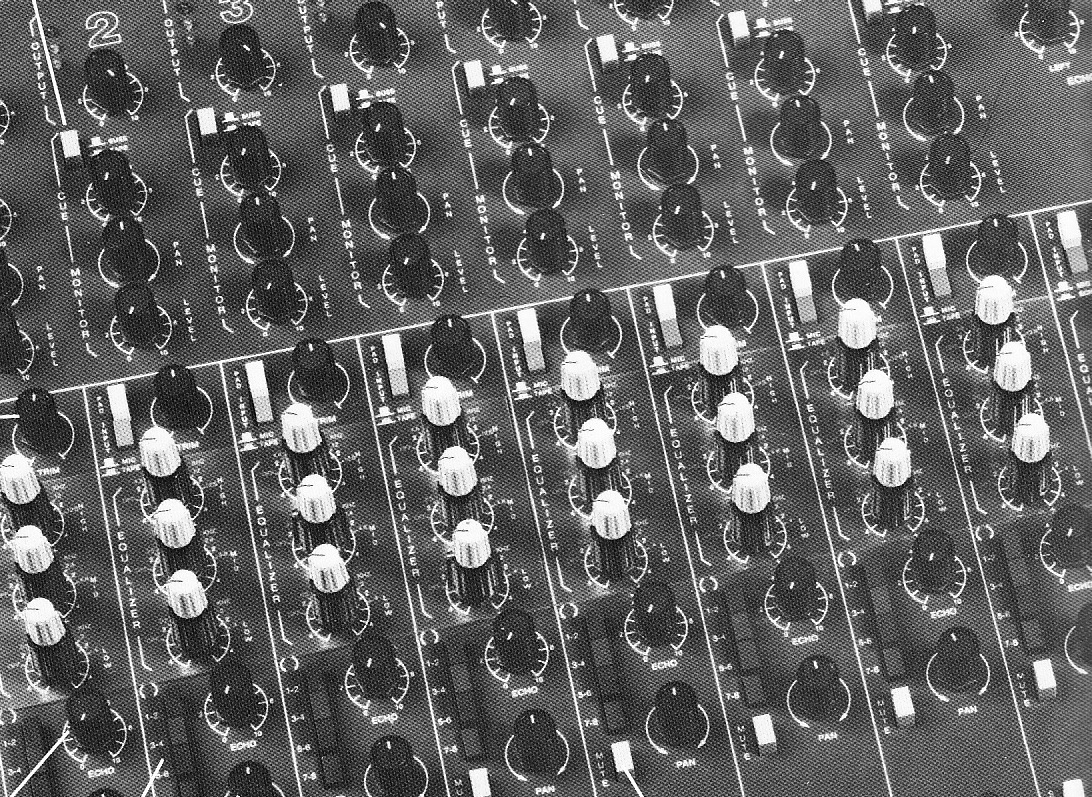
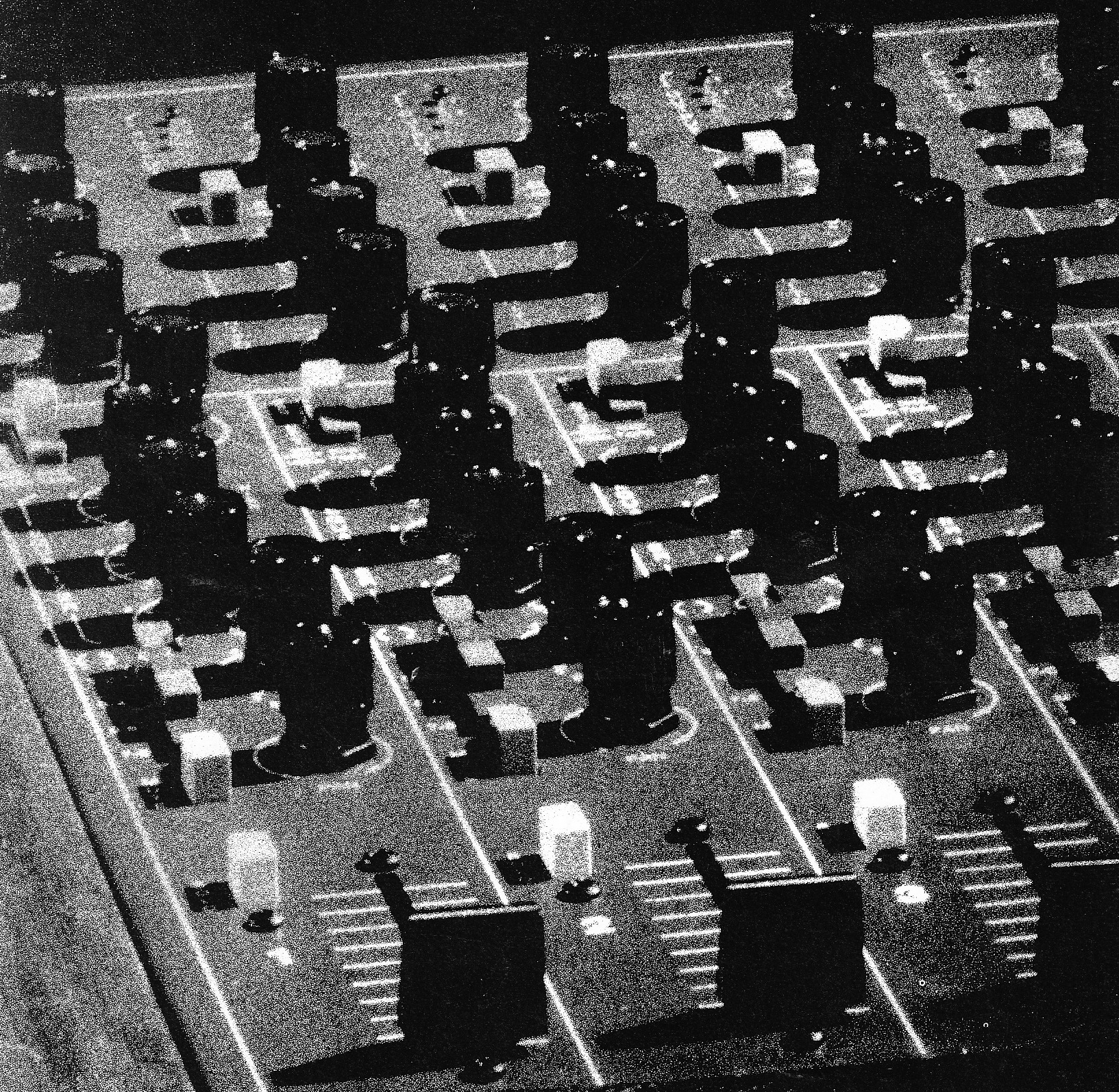
I own+regularly use the Sound Workshop 242 reverb system, but I’ve never used this mixer nor any of the other Sound Workshop offerings. The 242 is OK for certain applications, and it certainly rates high on ergonomics; the 1280 also seems notable in terms of its extreme specificity for 8-track recording. The buss, 2-mix, and and monitor matrices are actually located above the input channel strips, unlike most mixing boards, which tend to feature these controls to the right of the inputs and left of a master section. Also unusual: the master 2-mix is a duplicate of the 7/8 buss, with a few extra controls added. Unusual, but seems like it would work out just fine 95% of the time.
The 1280b ranks fairly high on my list of ‘useless shit that I have always wanted’; maybe someday it will join the legion of other small mixers that people my basement. These things were (supposedly?) designed by former API employees; the mic input transformers are those lil’ Beyers that are found in so much 70s gear.
The most (perhaps) crucial things to glean from this original document: the 1280 came in two different EQ configurations: 3-band fixed frequency, or three-band quasi-parametric (5 frequencies per band). The latter is designated 1280-BEQ. Also: there was a meter bridge option. Also: the 1280A seems to be transformerless, while the 1280B has the input transformers, thereby providing 2db more gain per channel; the document is a little vague on this point, tho, so PLEASE correct me if you know better.
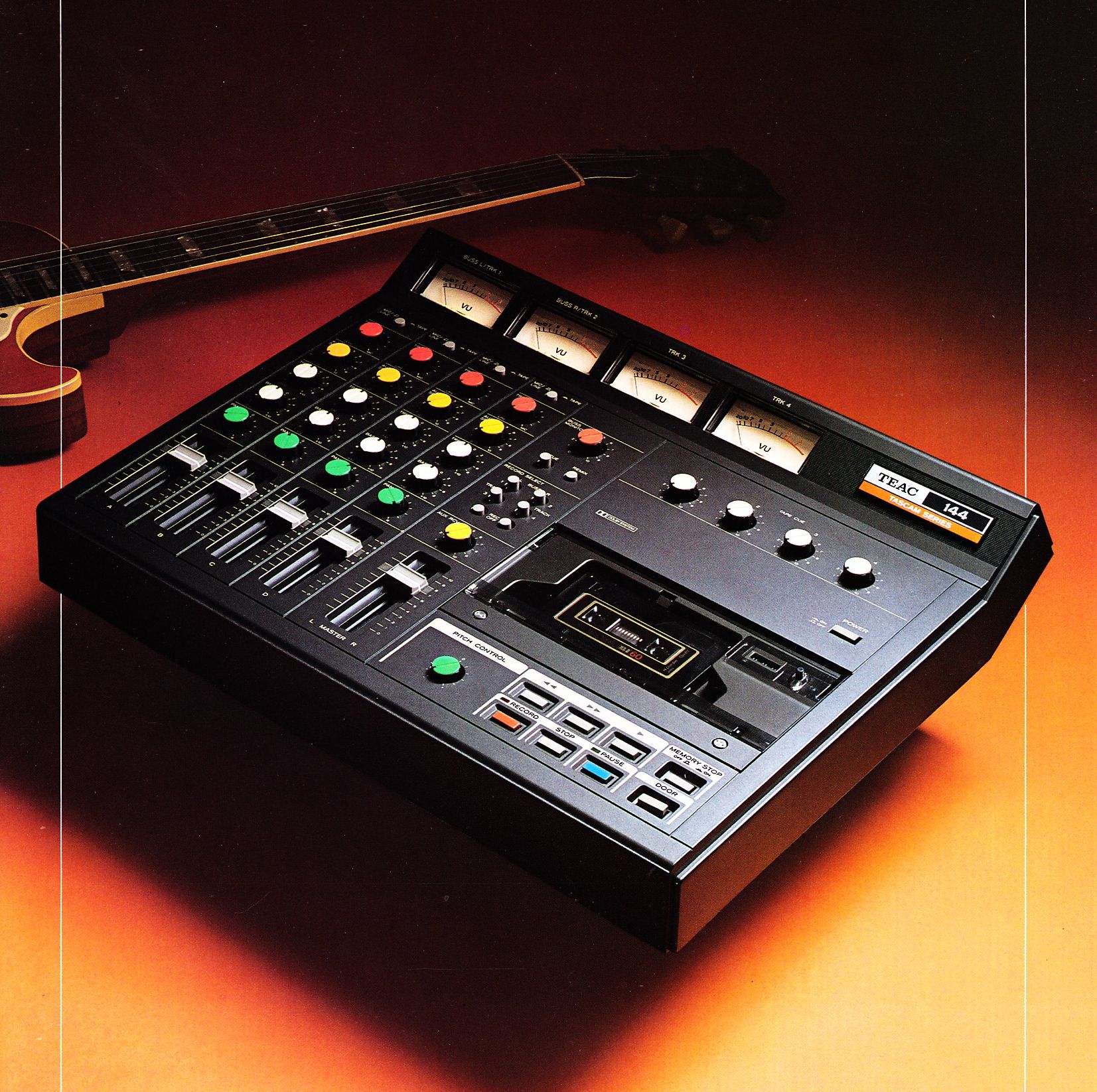
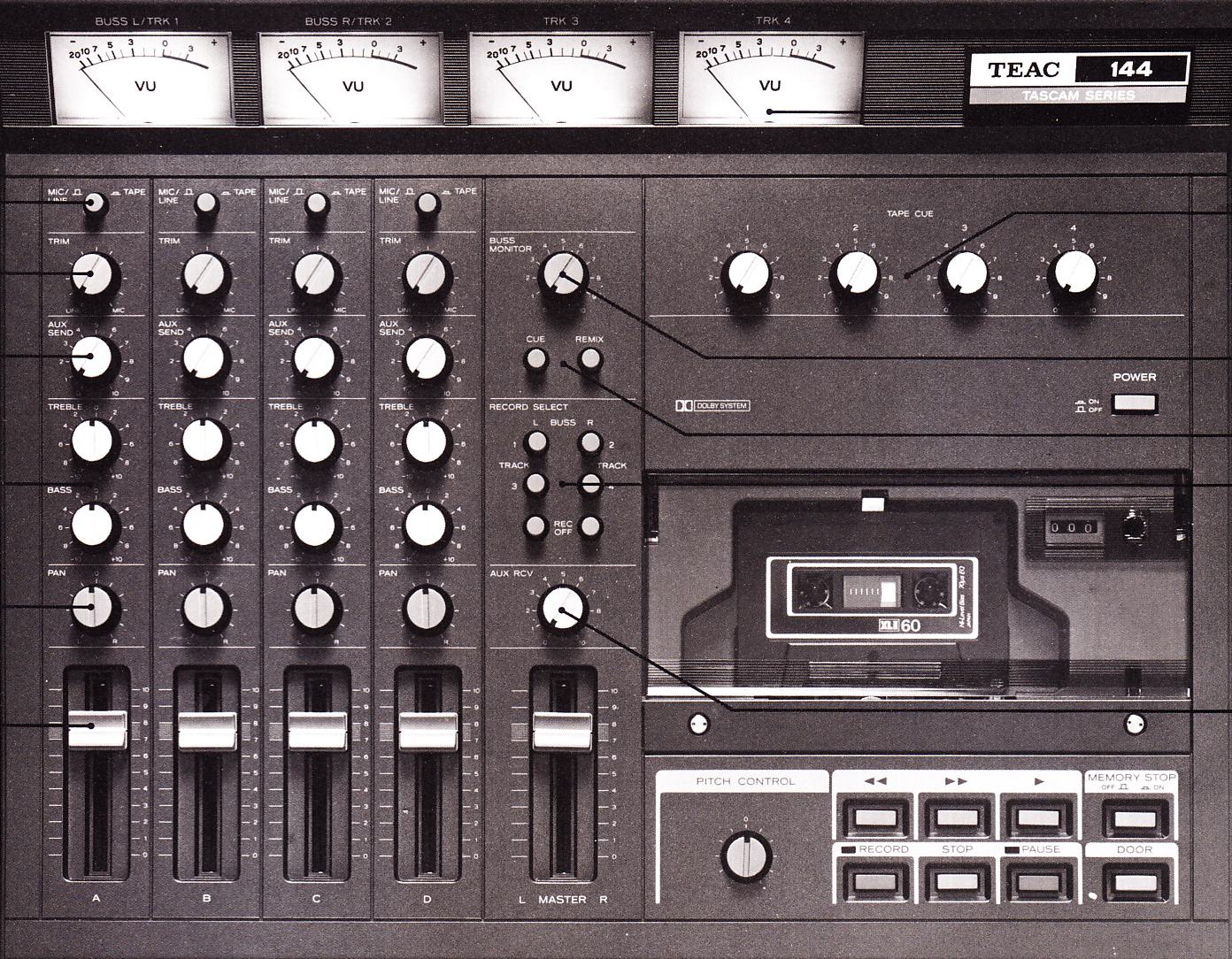
Download the original 6pp brochure/catalog for the Tascam 144, the first ‘4-track’ ‘porta-studio’:
DOWNLOAD: Tascam_144_Catalog
I’m a little embarrassed to admit/realize that this is the third post we’ve done on the 144. First was this article regarding 4-track aesthetics, followed by this post containing the 144 product-launch advertising. I just recently came across this original promo item, and it seems that no one else had bothered to put it online, so what the hell. I’ve already said enough about this crucial, paradigm-shifting object, so I won’t repeat myself here… check the old posts if you care.

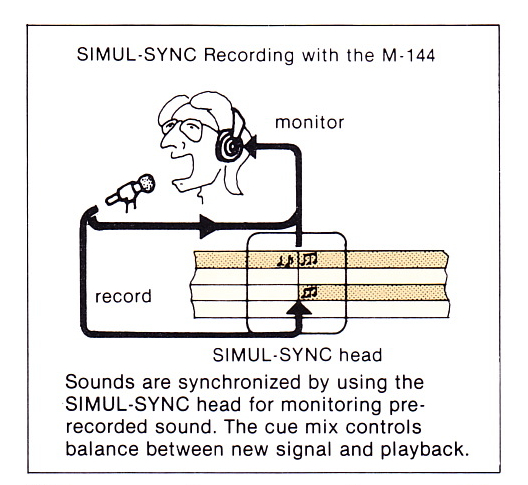
Shit, how did they know what kinda glasses I wear? Oh wait I’m stuck in 1979. Riiiiiiiiiight.
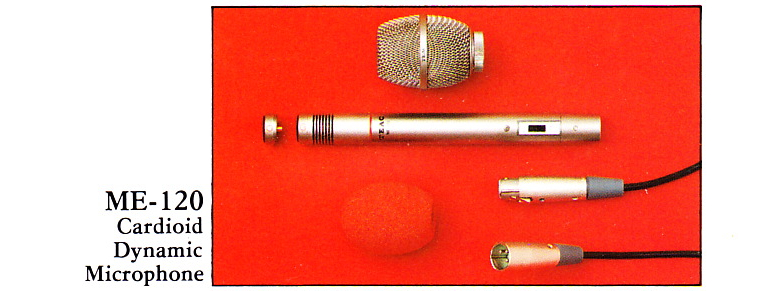
The catalog also contains info on a number of ‘accessories’ that Tascam offered in conjunction with this machine; above, their top-end mic the “ME-120” which came with interchangeable omni and cardiod capsules. Pretty fancy Tascam. I have somehow ended up with just the box and omni capsule for one of these things. WTF?
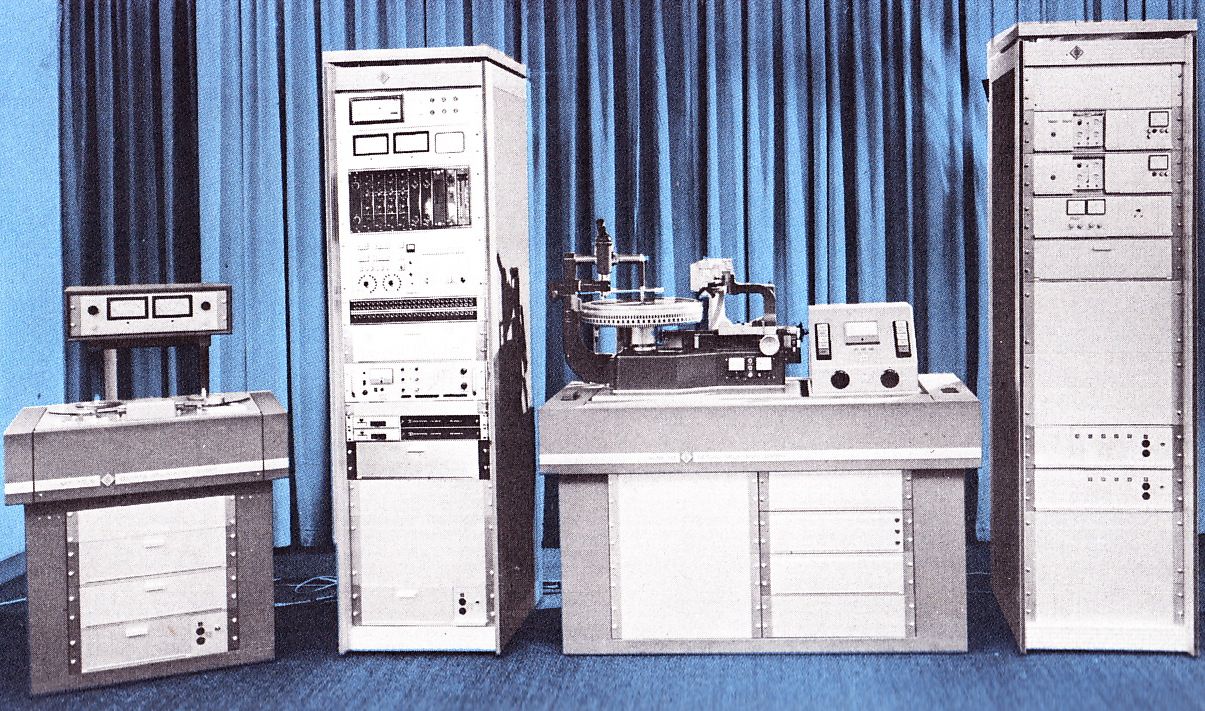
How are y’all doing today… got a pretty good one for you today, pretty good, pretty neat… the complete 30 page Gotham Audio catalog c. 1972.
DOWNLOAD: GothamAudio_1972_cat
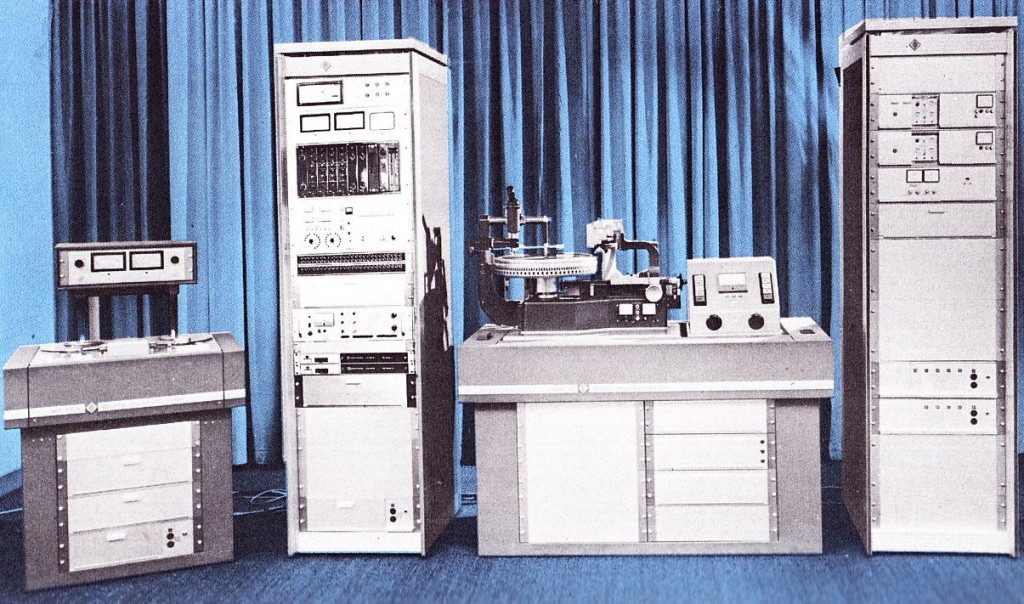
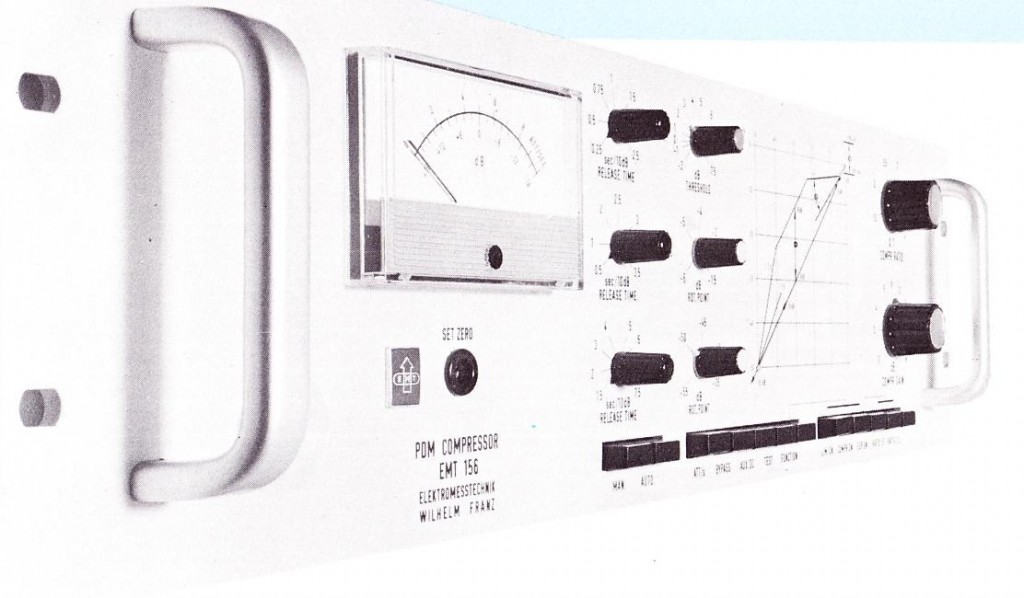
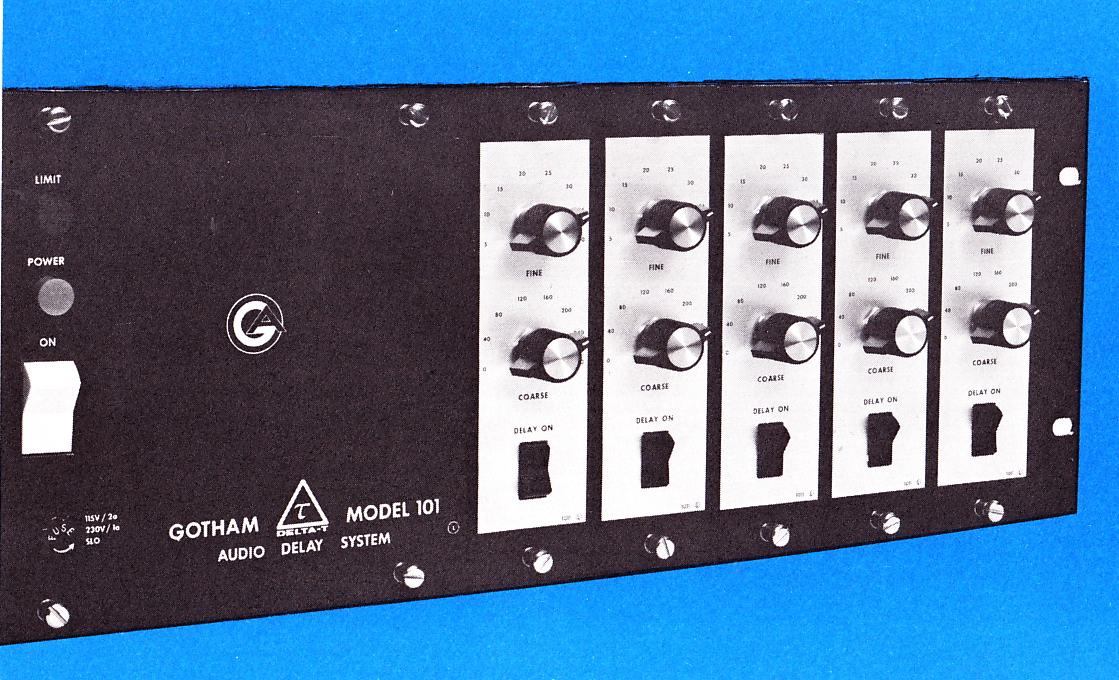
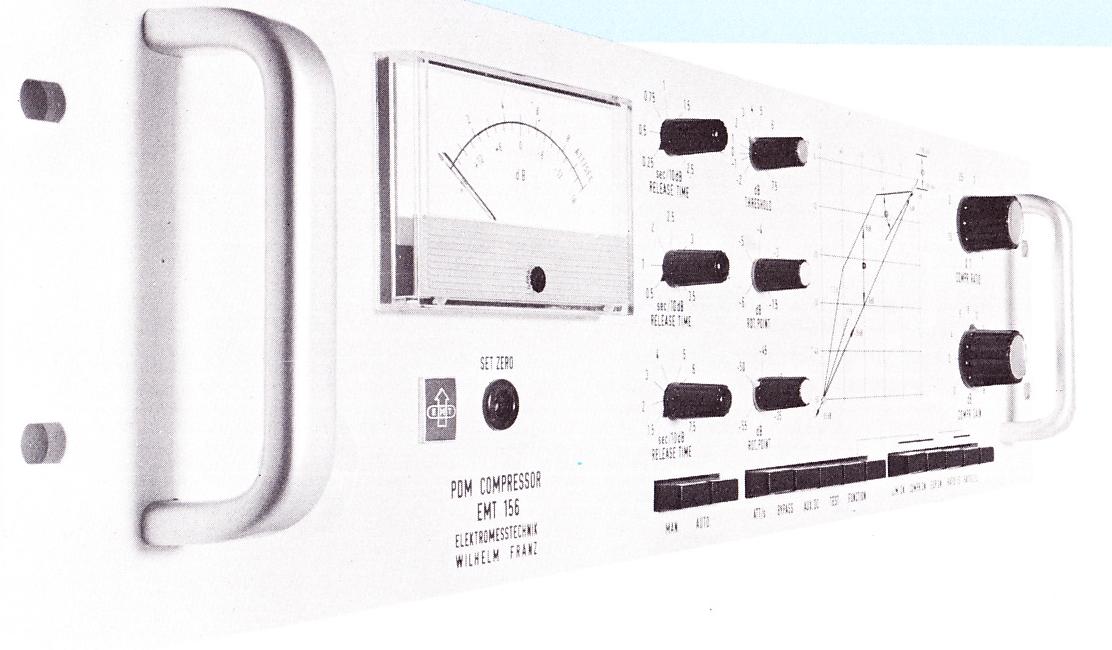
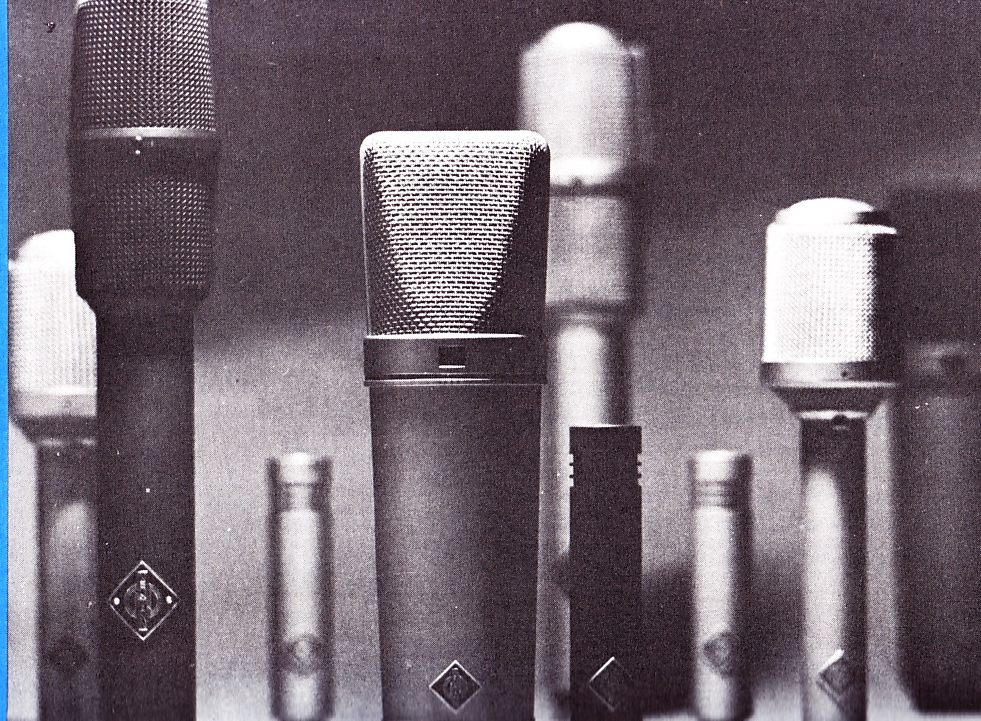
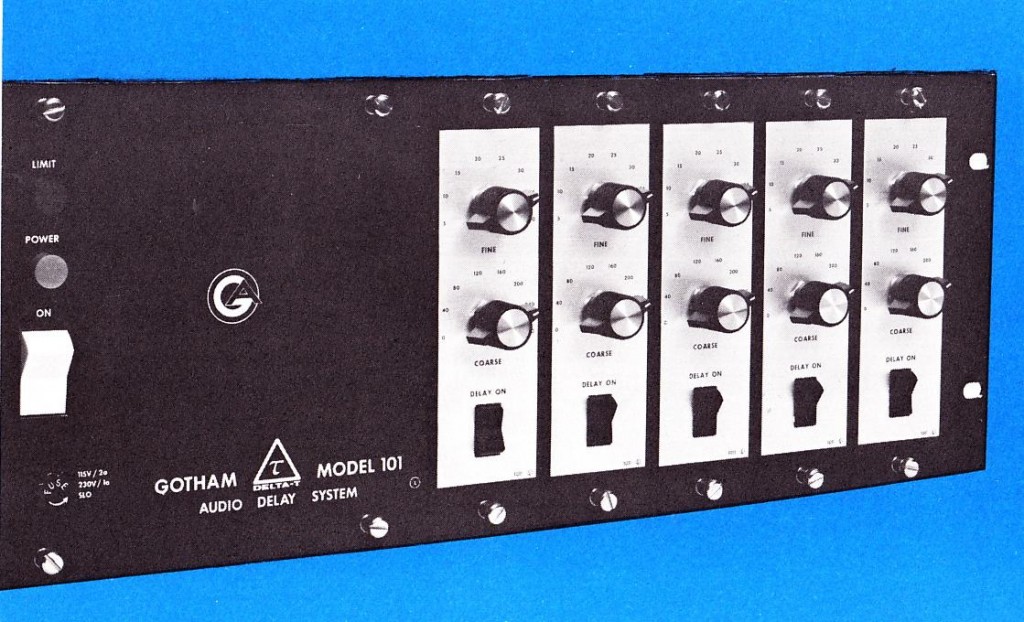
This lil document makes for a fascinating look at the true high-high-end of audio circa 1972, forty long years ago. Products featured include: Gotham Delta-T signal delay model 101, Neumann U-87, KM-86, KM-84, KM-85, KM-83, SM-69FET, KM-88, and KMS085 microphones; Gotham/Neumann custom consoles, Neumann VMS-70 Lathe, SP-71s and MT-70s Transfer system, TS-66 tracing simulator, SX-68 stereo cutterhead, and VG-66s drive system; EMT 140-TS plate reverb, Stellavox Sp7 tape recorder, Studer A-80 multitrack, Studio 089 and 189 consoles, Studer B062 tape machine, EMT-156 PDM compressor, EMT-256 compressor module, EMT-930st turntable, Gotham model OY powered monitors, plus a variety of tech equipment.
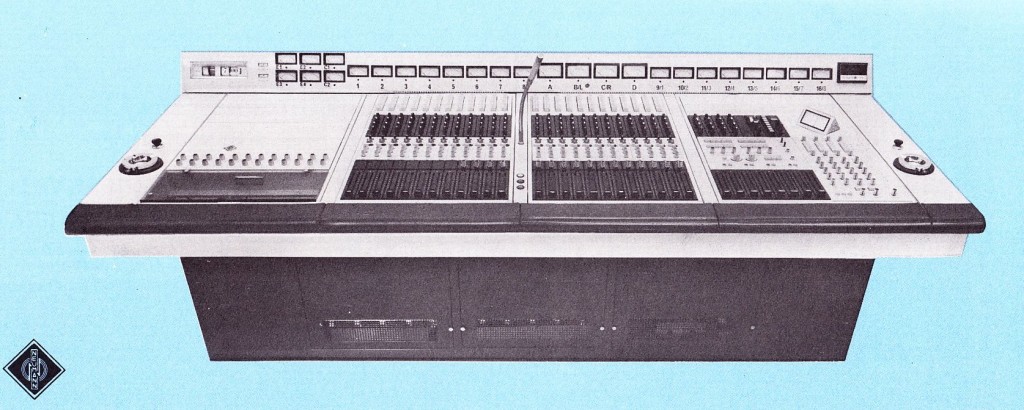
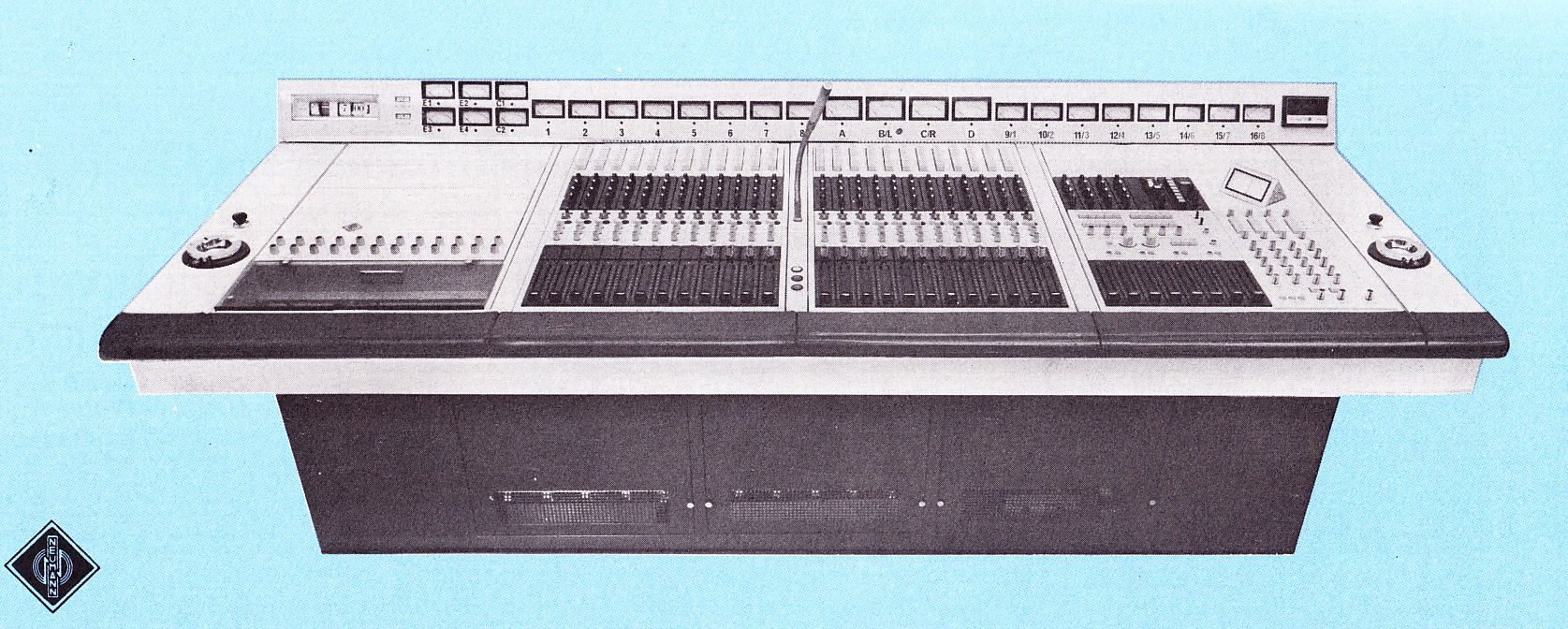
Above: the Neumann Console c. 1972; either end was fitted with both an ashtray and an electric cigarette lighter manufactured by the Rolls Royce company.
Good lord talk about ‘serious studio infrastructure.’ But for real. The kinda odd thing is that if you forget about the editing ability and convenience (and the huge range of aesthetic possibilities that this opens open) of the DAW revolution that began with digital audio around 1980… reproduced sound quality itself hasn’t really improved very much since this super-high-end kit was made in 1972. Sure its gotten a lot a lot a lot cheaper and a lot easier, but at least at this VERY high end, the basic ability of this gear to record, modify, and playback sound is pretty damn near what we expect from modern studio equipment. Well, the lathes aside. There are obvious limits to LP playback, regardless of how ‘charming’ we may find ‘that sound.’ I for one do not regret the CD. Now MP3s, on the other hand, I could have done without.
But getting back to the fact that this super-hi-end 40-yo kit still impresses: Does audio only ‘need’ to be ‘so-good’? I, for one, am NEVER motivated to set the clock at 96k and record that way; frankly, I am not sure I can tell the difference at the end of the process, once all is mixed and mastered. Are there still avenues of audio improvement to be made? What would need to change? Playback systems? Playback environments? Consumer expectations?
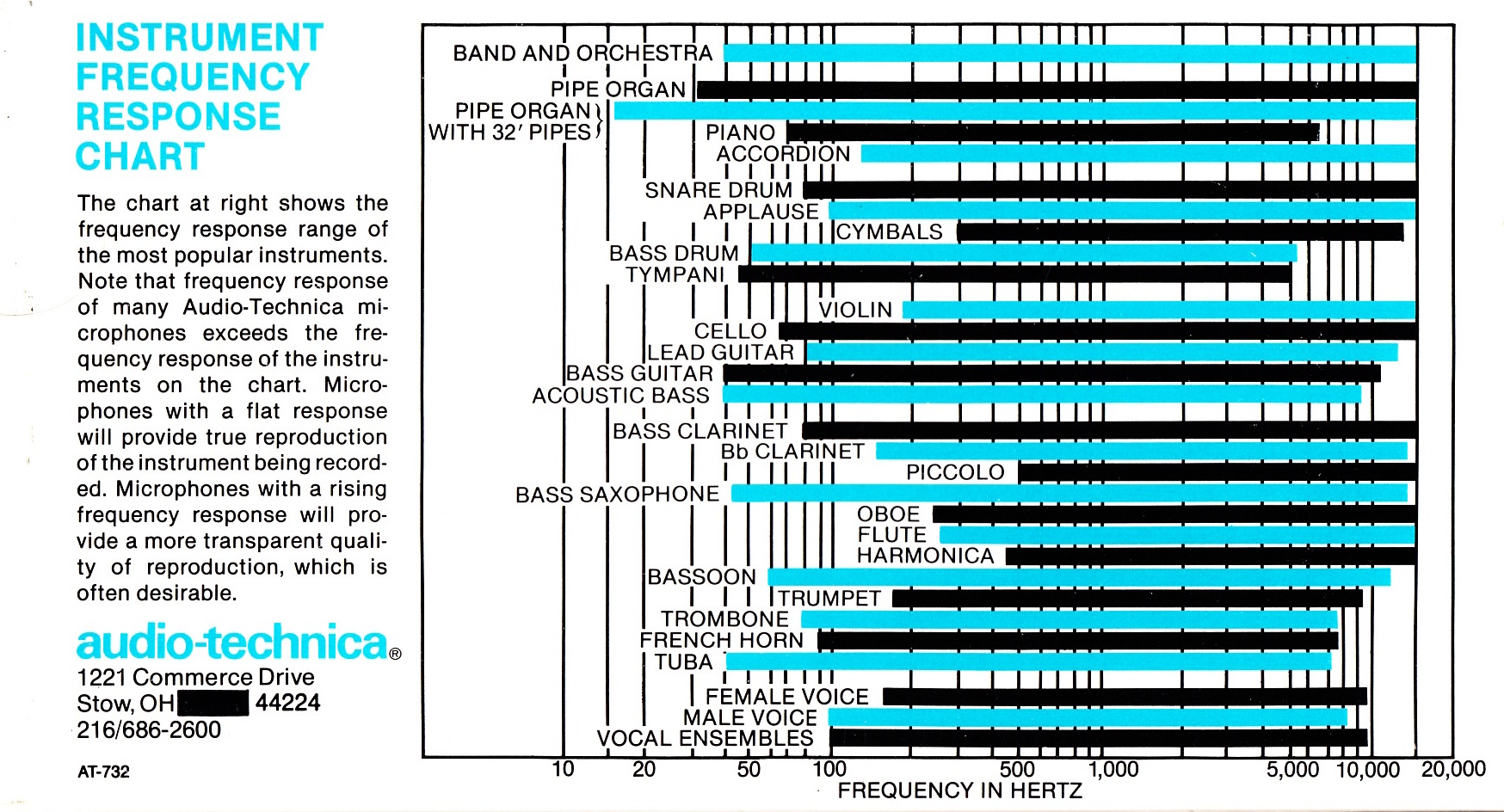
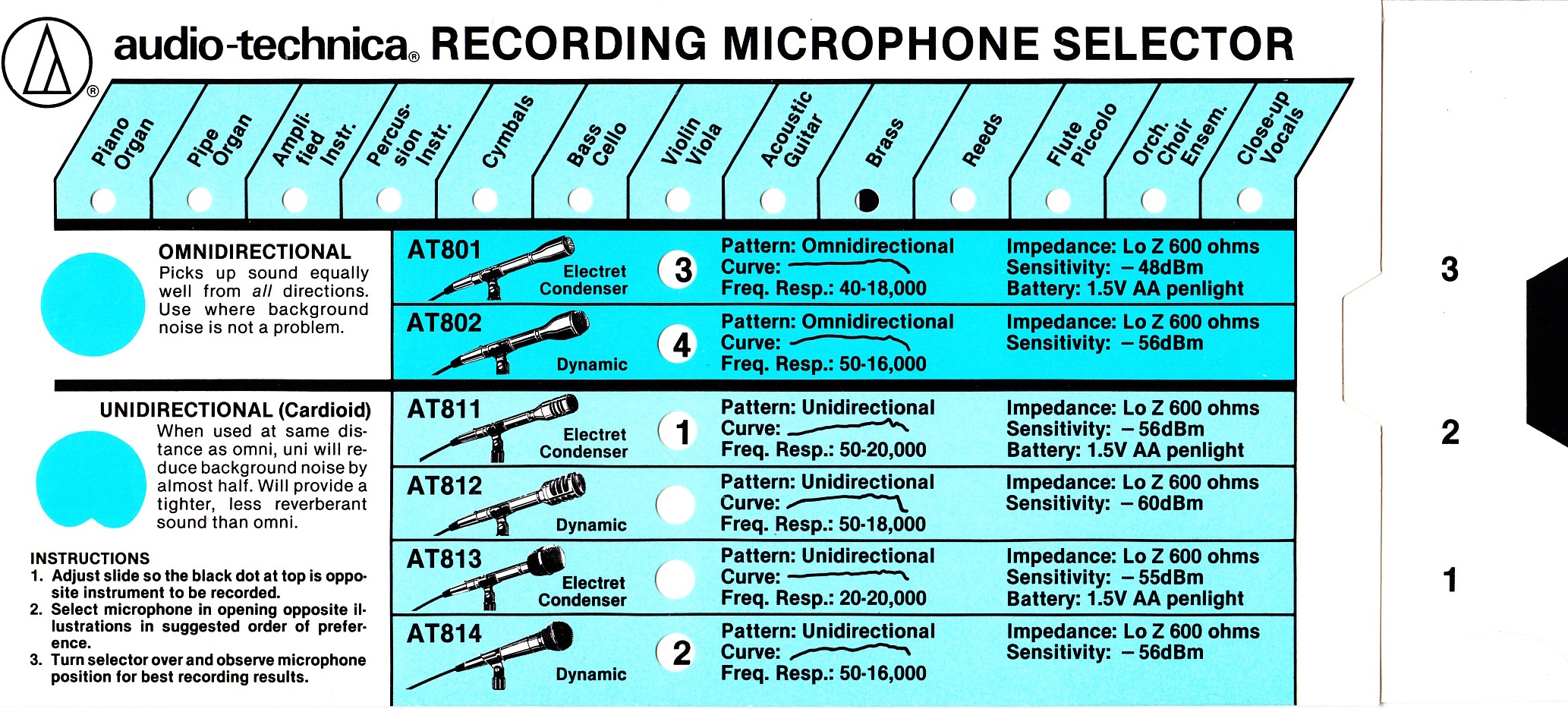
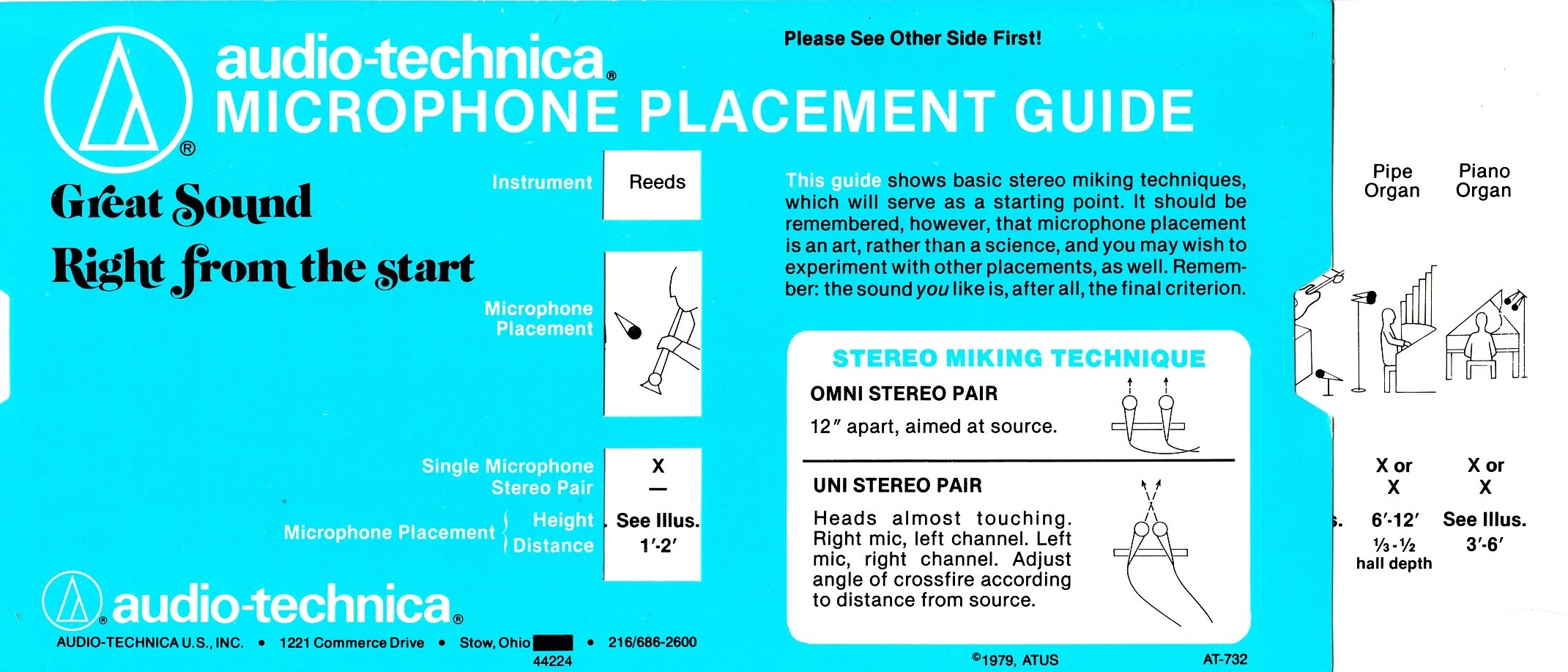
Came across this charming lil ‘Recording Microphone Selector’ interactive marketing-gimmick.
Inside the cardboard sleeve (which offers frequency-distribution information regarding various musical devices/situations) is a two-piece device. When pulled/tugged, the device responds by suggesting which A/T offering might best suit your needs.
The rear of this slide-rule goes so far as to then suggest where-to-stick said microphone.
Nice to see that my A/T 813 rates so highly in this competition, garnering numerous “Number-Ones.”
On a more serious note, tho, despite my initial lack of enthusiasm over my $50 eBay-d 813, it seems to be proving its mettle… it gets used weekly for acoustic slide gtr and mandolin in conjunction with my DIY’d REDD47 mic pre… mainly because it does not require phantom power, true, but it’s hanging tough alongside the much more expensive AKG 451 nonetheless. Gotta get around to that SDC shoot-out one of these days…
eBay Alert
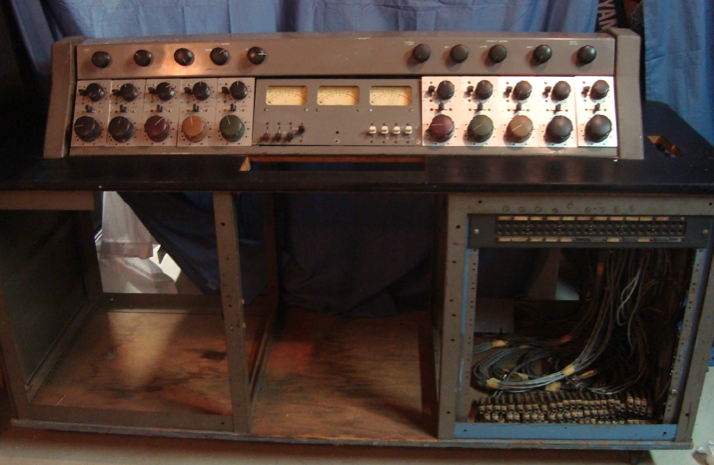
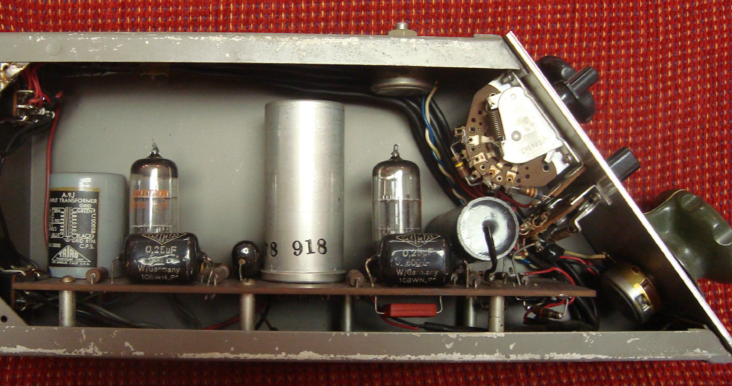
This is pretty rad. 10×3 (plus echo send) console circa 1955 built for one Jimmy Carroll, who we apparently have to thank for the 10,000,000,0000 sing-along-with-mitch LPs that clog every Salvation Army record-bin from here to Timbuktu. ANYways… check it out here… Dude seems a tad optimistic with the price, considering what the legendary Kearney Barton console went for. (also see here). Cool to check out, nontheless. Here’s one of the preamp modules:
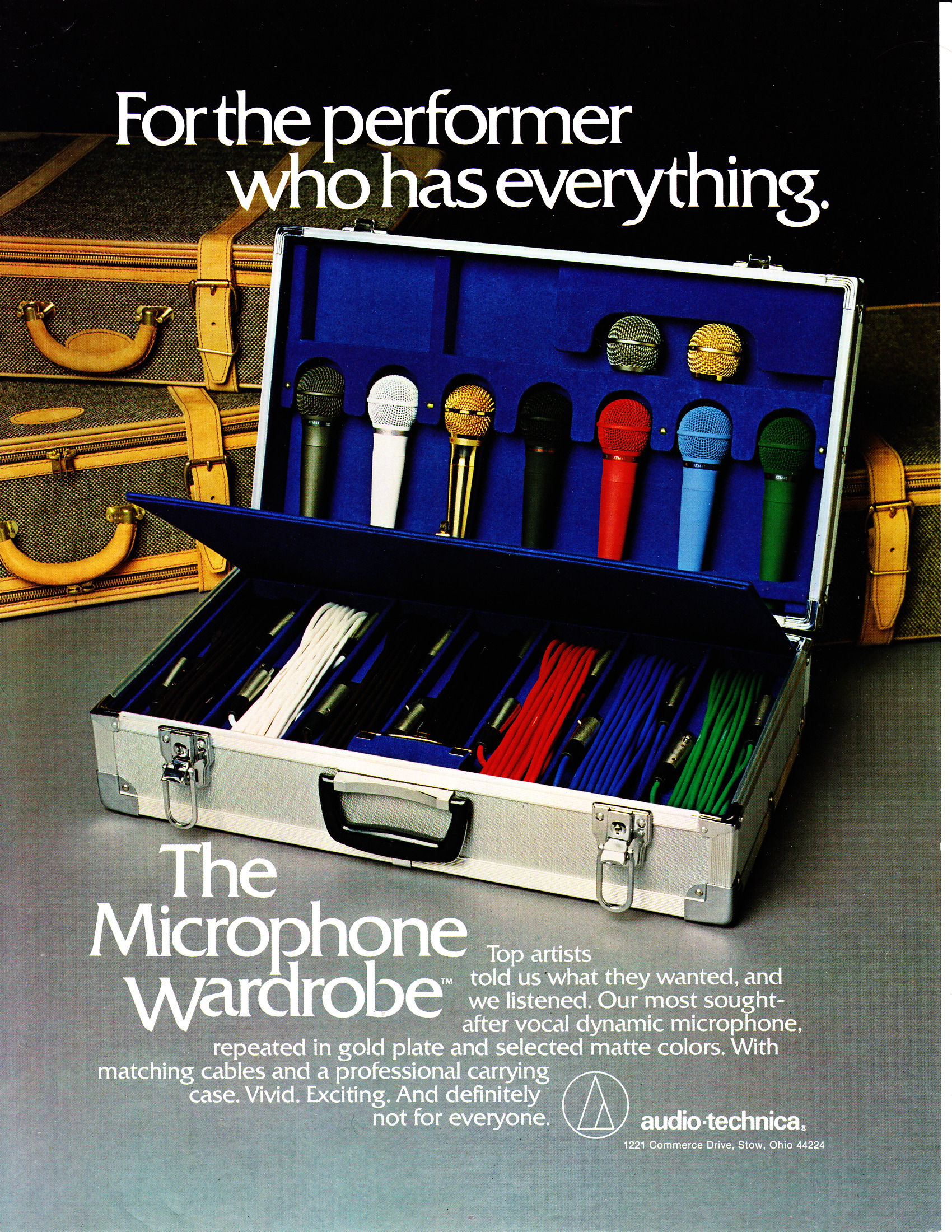
“Top artists told us what they wanted, and we listened.”
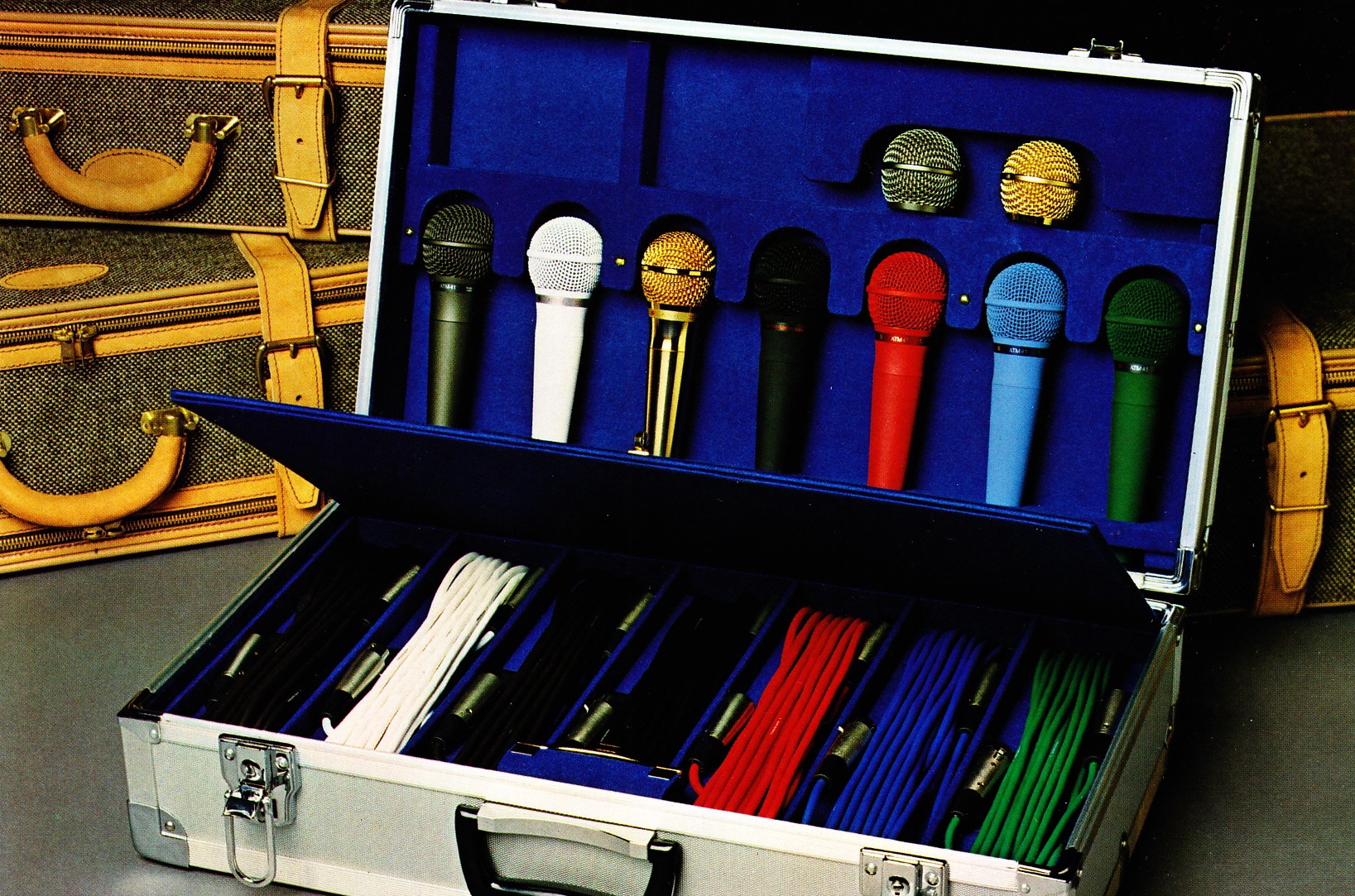
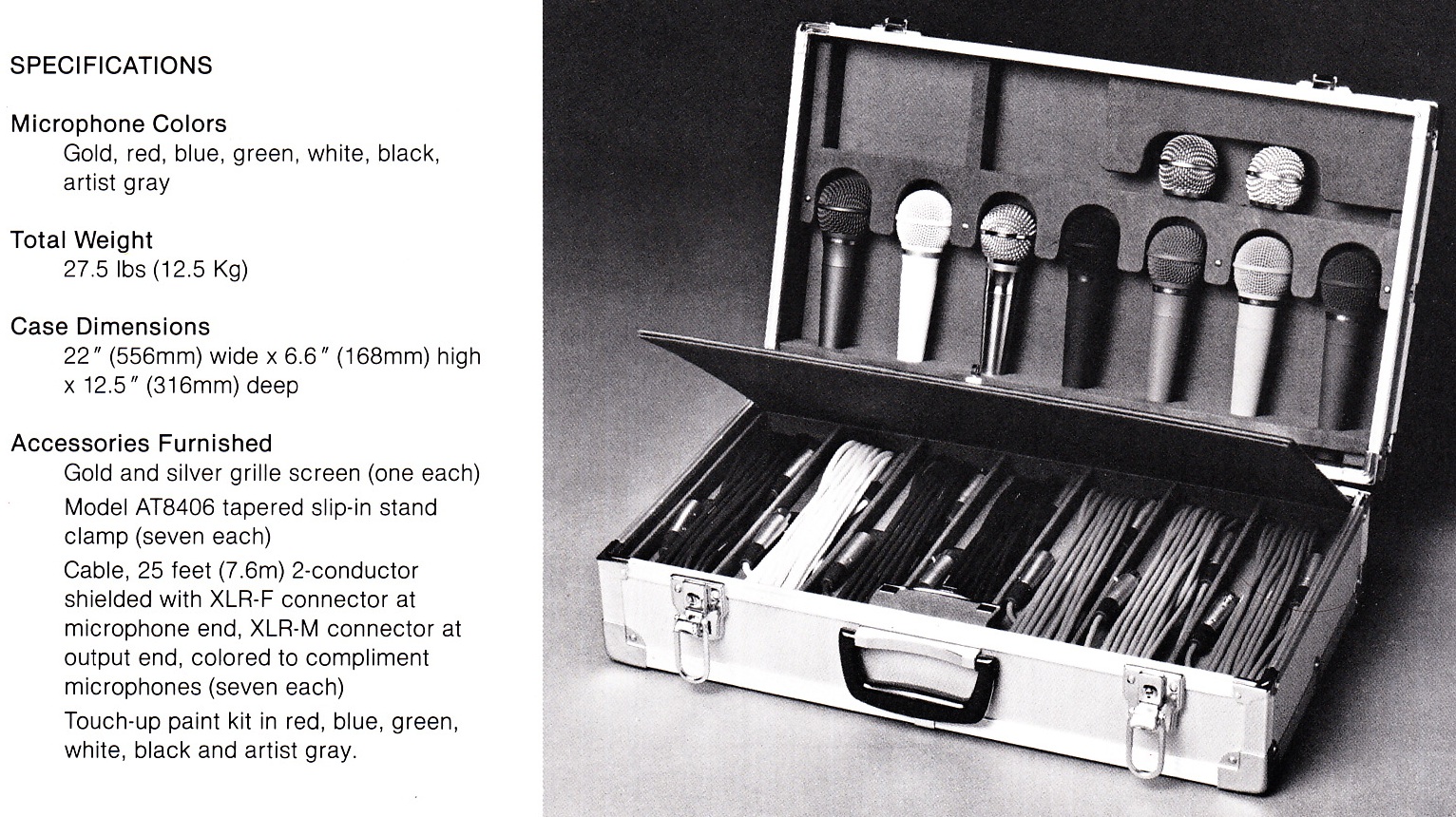
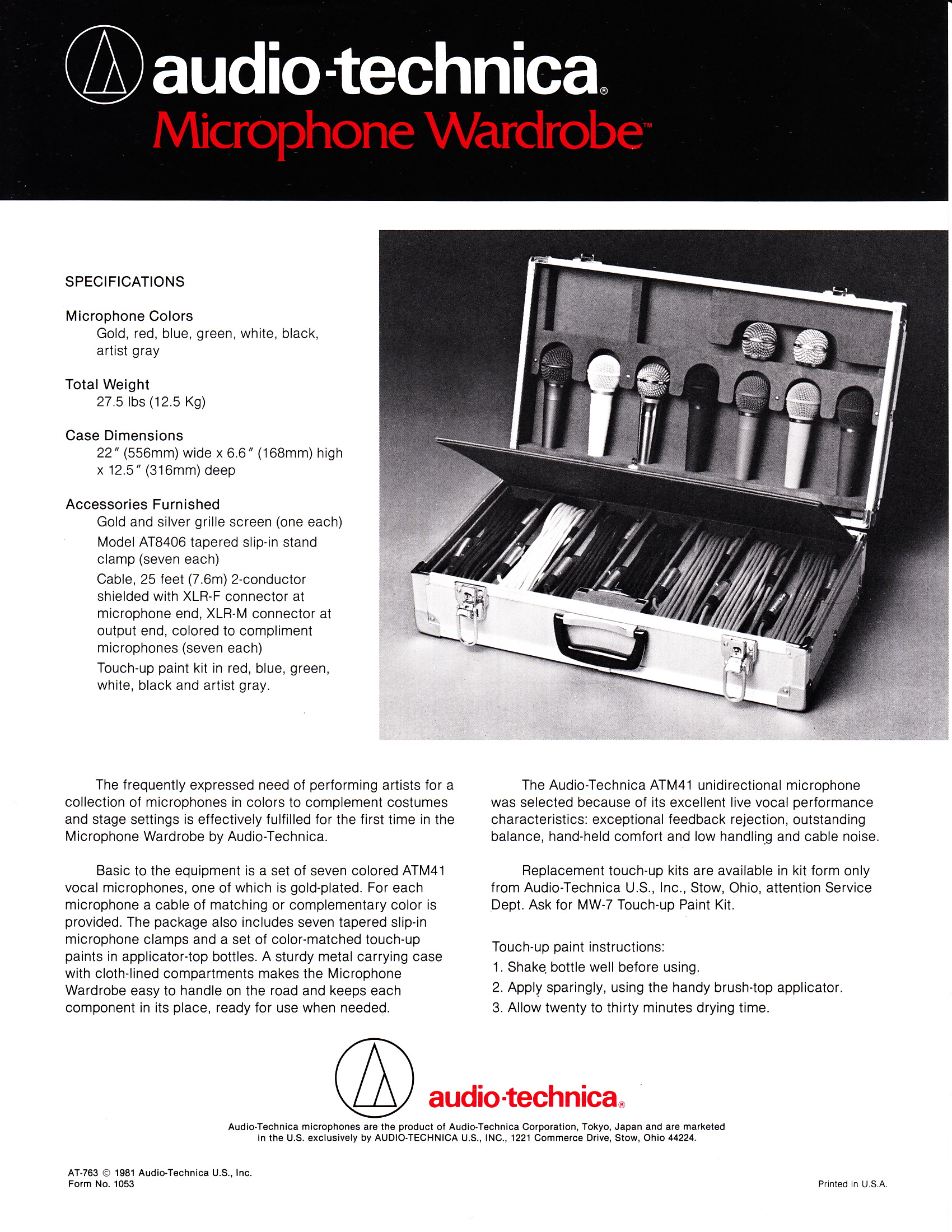
In 1981 you could apparently purchase an Anvil-briefcase loaded with seven ATM-41 mics, each in a different color. Seven corresponding mic cables were also included, as well as… touch-up-paint. The price of admission to this zenith of vanity? $1595 (list), aka $4080 at the pump this week.
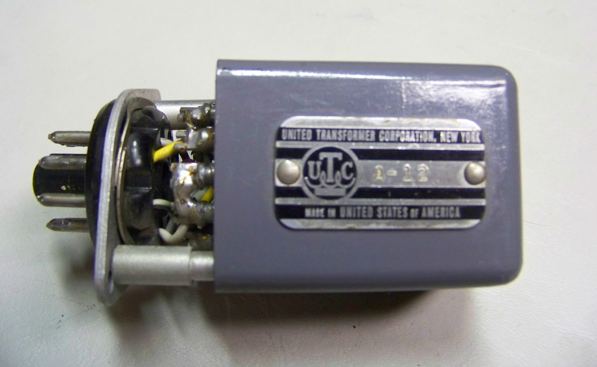
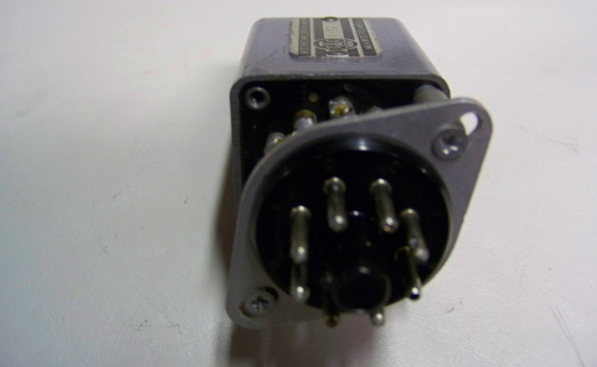
Via this eBay auction: a UTC A-12 mounted on a plate-retained octal plug, with the pins wired to correspond to the pin-out of an Altec 4722 input transformer.
It had simply never occurred to me that the mounting-diameter of a UTC A-series corresponded to the mounting-diameter of those octal-mount plates. Well done sir. Great idea if you have an Altec 1567, 1566, or ANY piece of old pro audio gear that uses octal transformers – and a great many do. RCA, Newcomb, Ampex, the list goes on….
Download a 4-PP chart from Sennheiser, circa 197*, on the subject of choosing the appropriate model of microphone for your application. Sample topics: Will you be recording animals?
Download now. It’s all very logical. Sennheiser_Chart
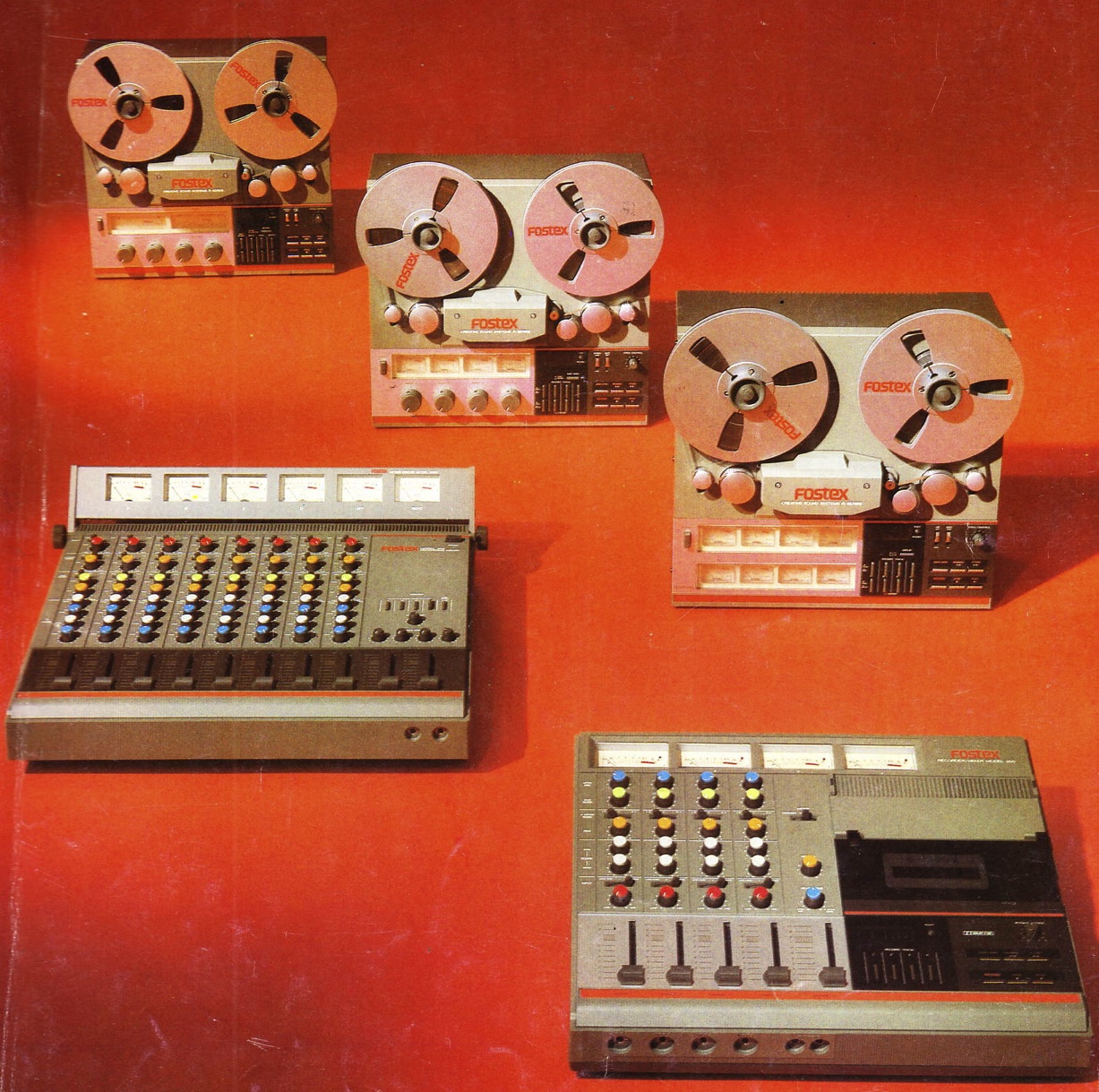
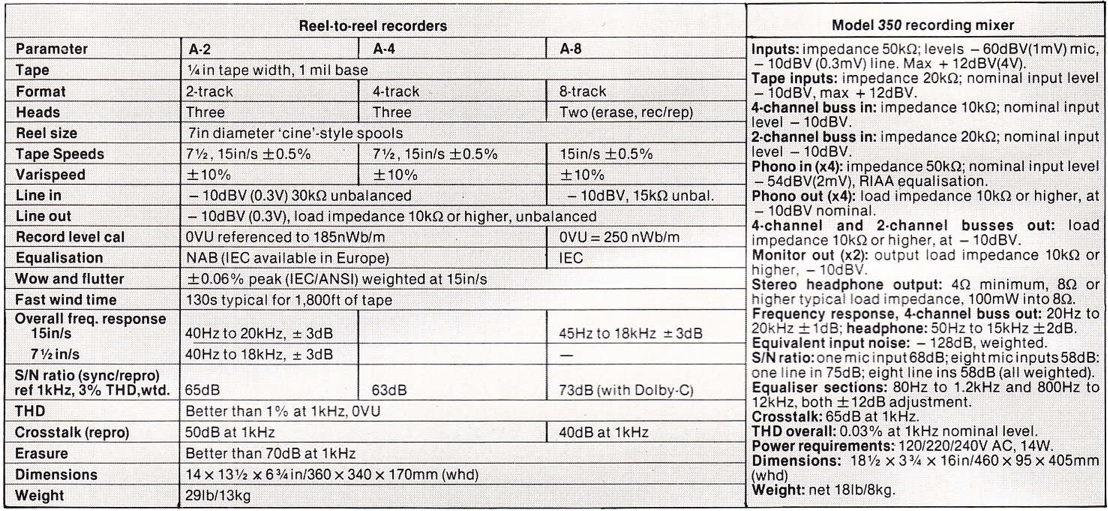
Download a 5pp review of the Fostex home-multitrack range circa 1981. Published in British magazine STUDIO SOUND, the review covers the Fostex A-2, A-4, A-8, as well as the Fostex 350 mixer. Review is by one G. Chkiantz.
DOWNLOAD: Fostex_A_range_1981