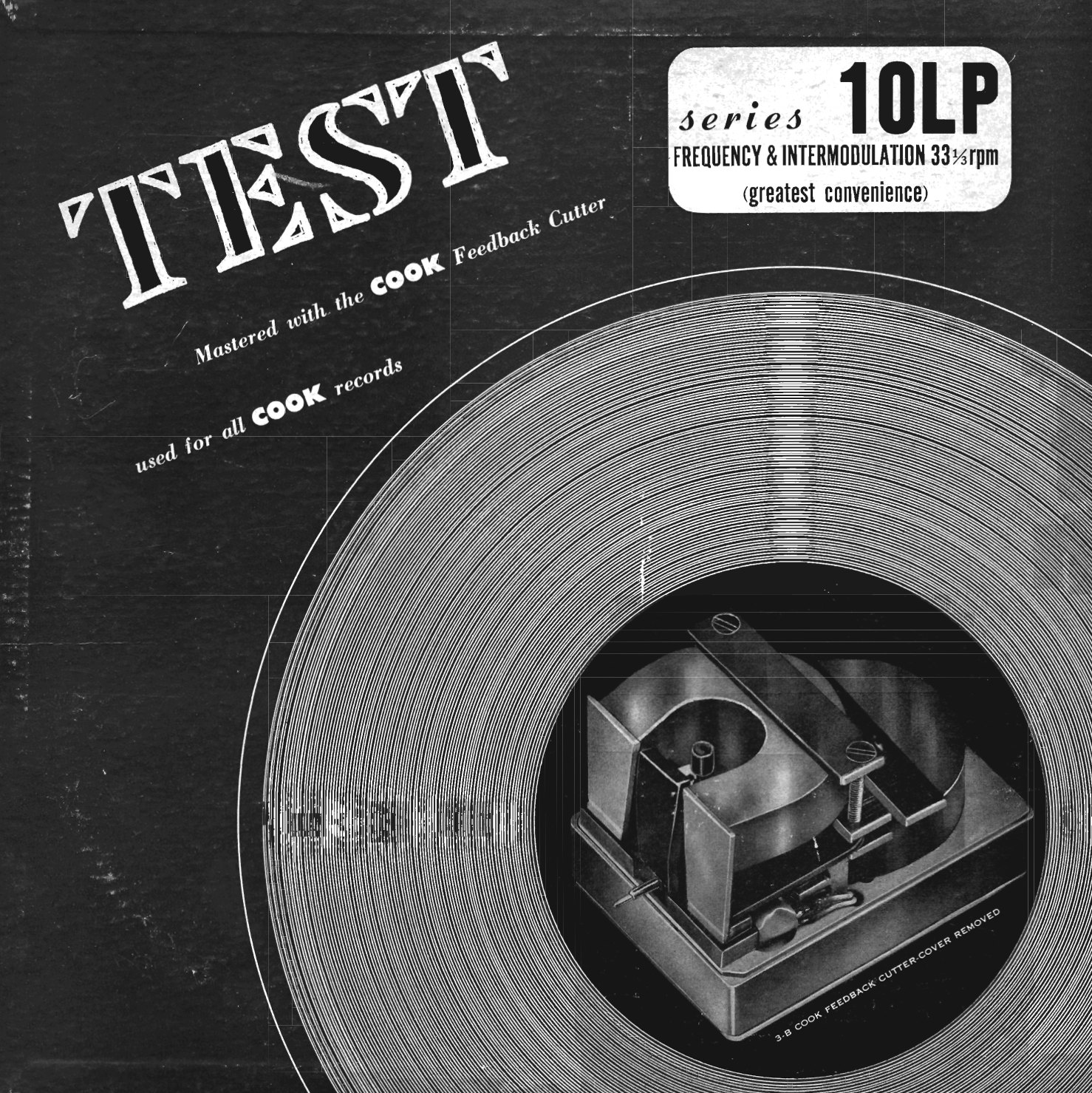
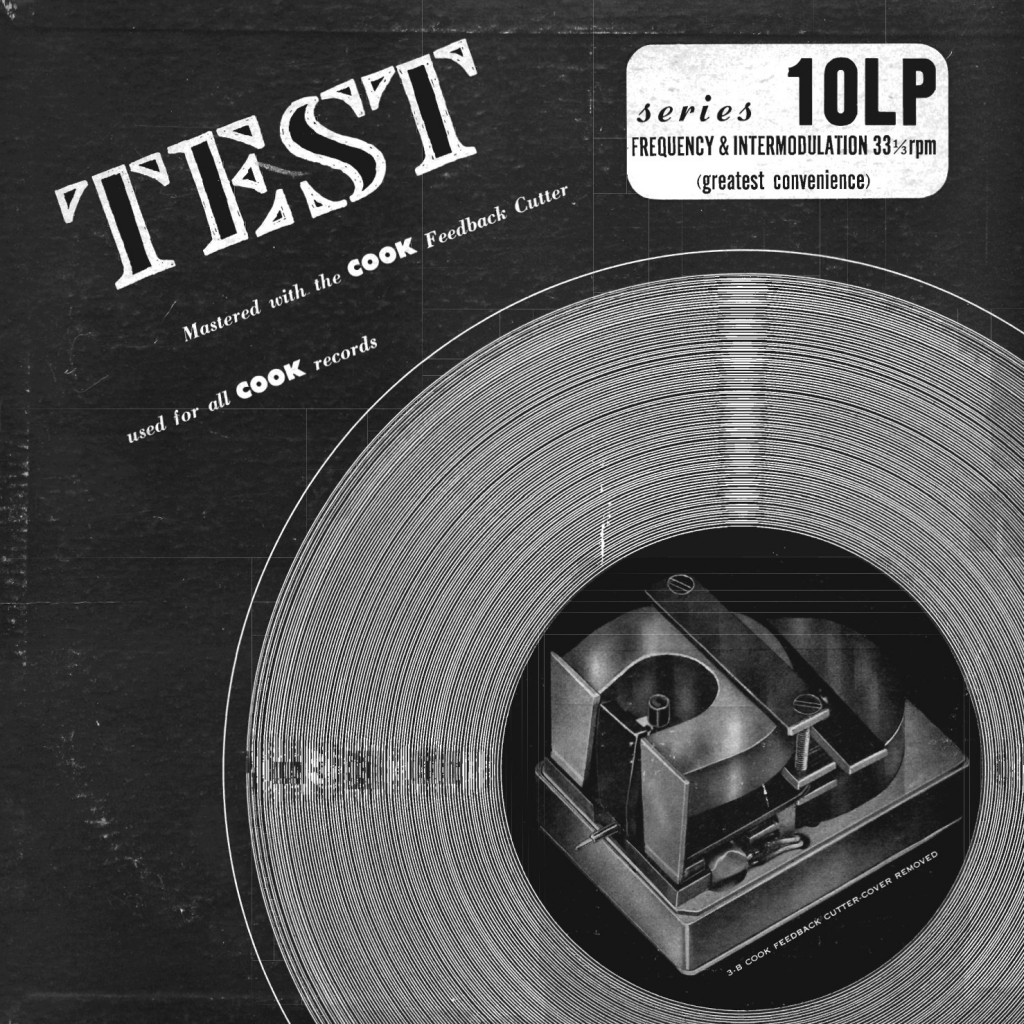
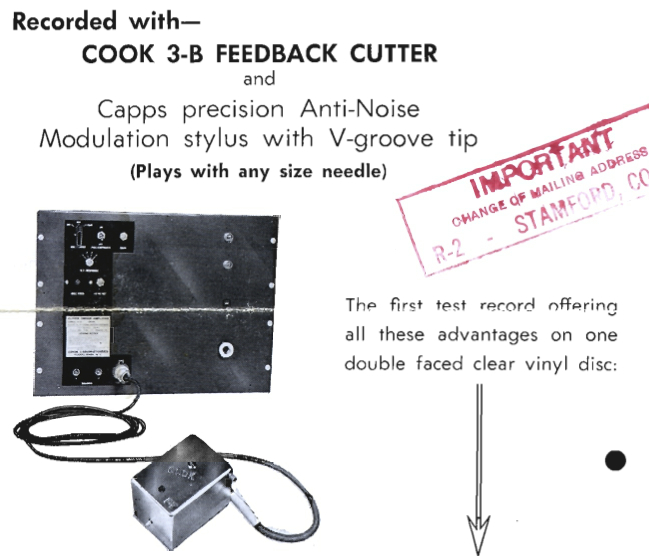
 Several weeks ago I ran an article on Emory Cook, binaural recording pioneer and Connecticut entrepreneur. Click here to read that piece. T.F. contributed the wonderful and very-hard-to-find resources for that article, and we follow up today with some scans of a notable early Cook Labs product: the LP10 test-record. You can download several of these resources here:
Emery Cook – Test Records brochure
Emery Cook – Series 10LP test record sleeve
Emery Cook – Series 10LP data sheet
Emery Cook – Series 10 Test Record Technical Bulletin
 ************
*******
***
I have a small collection of Test LPs myself, but I know nothing about the history and development of this type of product. T.F. graciously provided some background in the comments section, and I have reproduced that text here to facilitate easier reading:
“The way I understand the history (of test records), both RCA and Columbia produced microgroove test records when they developed their microgroove formats (45RPM 7″ disk for RCA, 12″ and 10” 33 RPM disks for Columbia). But these test disks were for professional mastering places, playback equipment designers and manufacturers, etc.
The Cook record seems to have been aimed at both professionals and serious hobbyists who were building and/or setting up phono playback equipment. Cook was also clever with marketing, this record proved the quality of his cutting equipment. In the early days of the microgroove, I don’t think there were very many other options for the hobbyist beyond the Cook record.
In 1954, when the industry adopted the RIAA curve, a bunch of semi-professional “test and demo” records came along, sometimes including calibrated test tones and sometimes just including “tracking challenge” music and sound effects. There was another bevvy of “test record” releases when the stereo LP debuted in 1958. In the 70s, we had more.
From the early days of the stereo LP, the CBS Labs test records were the standard device for designing and building playback equipment. The Command Stereo Test Record was made at Fine Recording. It includes calibrated tones to set level and check frequency response, as well as a phase test and a silent groove to test for rumble. Side two is a narrated tour of some Command pop tunes pointing out what to listen for, to determine if the cartridge is tracking correctly.
The most recent calibrated test record is from Analogue Productions. Its levels test out to be accurately described and it is well calibrated to the RIAA curve, so it’s quite useful for setting levels, balance and testing the frequency response of a cartridge. It’s also got a useful test for wow and flutter and a speed-check tone (which shows that many of the modern lower-priced belt-drive turntables don’t hold 33.3RPM due to cheap motors and cheap platter bearings). The Analogue Productions record is very well manufactured, on quite and pretty much tick-free vinyl.
One big thing that test records have shown me is how many cartridges have uneven channel-to-channel levels and sometimes uneven frequency response. In the lower priced world, you can’t beat the Denon DL-110, it’s super-flat and nearly identical channel-to-channel (3 different units tested, manufactured over a 10-year period).“
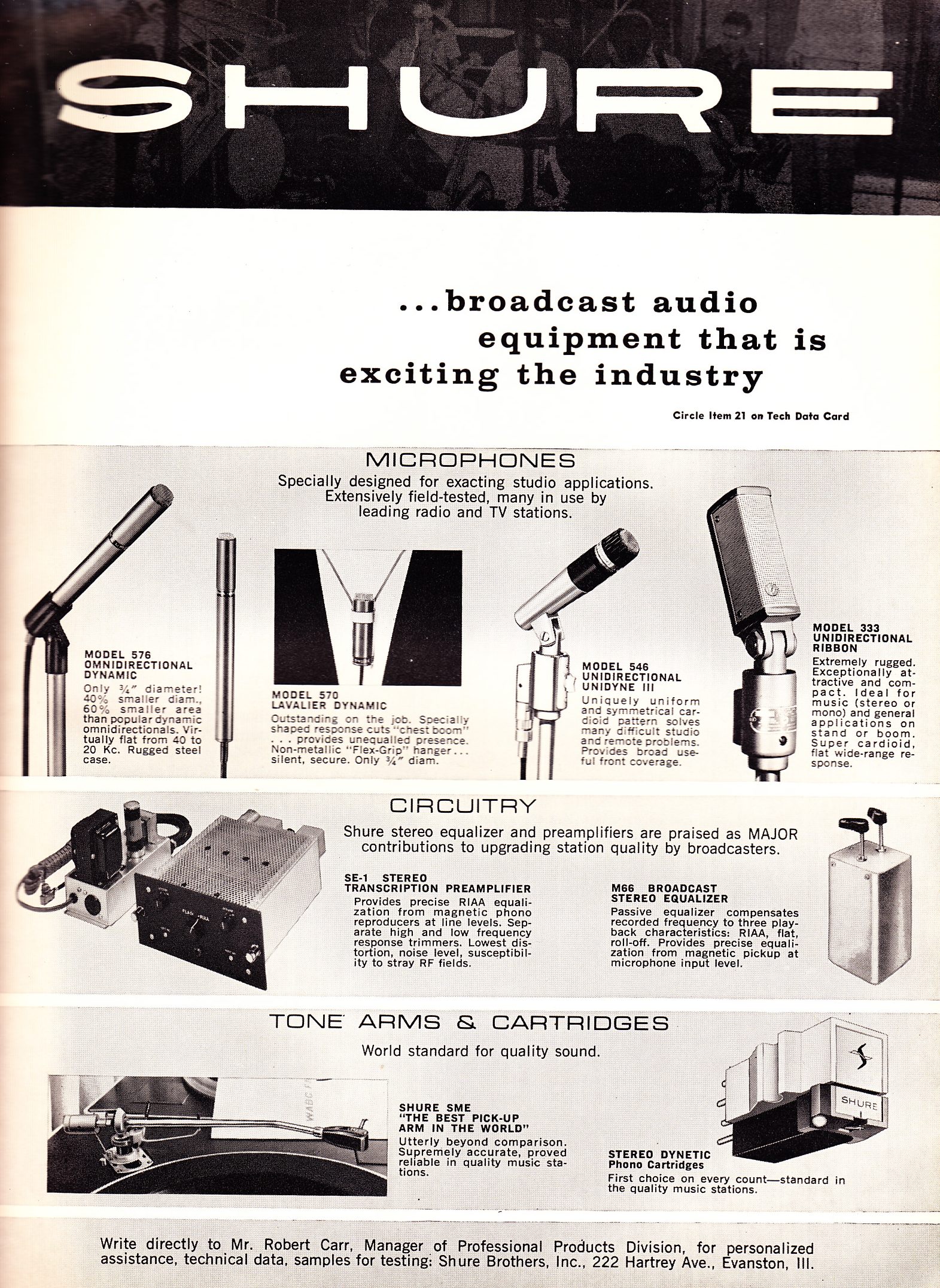
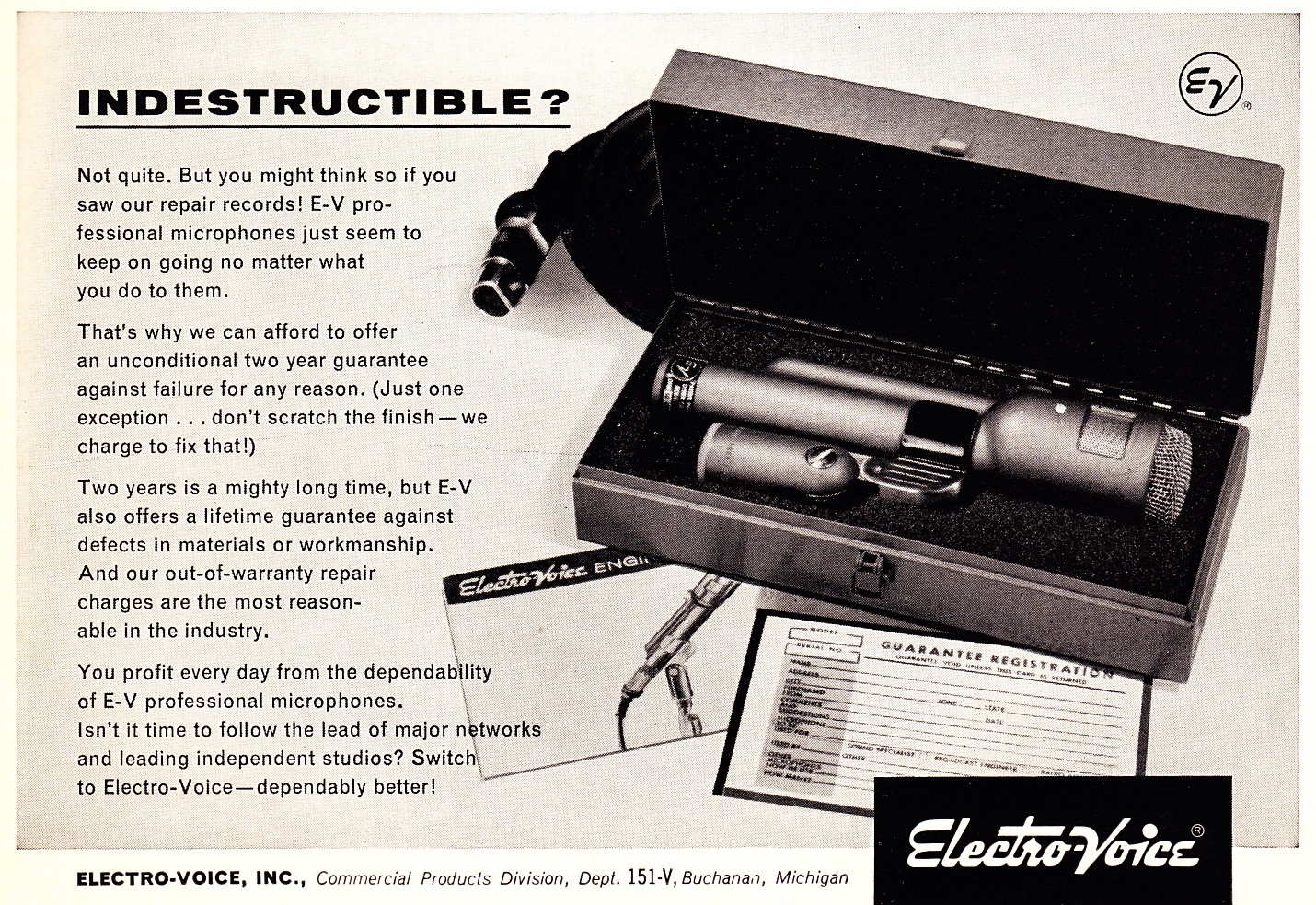 EV (electrovoice) 666. I think I have mentioned this one about a million times already: it’s the predecessor to the RE-20, a mic that I have used+ dig more than almost any other. EV 666’s appear in just a ton of great-sounding old TV music-broadcasts… Miles Davis on PBS comes to mind… I must have bid on these things on eBay about 20 times. No luck yet. Soon enough. Oh but BTW I finally did get an RE15 (and not cheap either…) and it is really, really underwhelming. Still my faith persists…
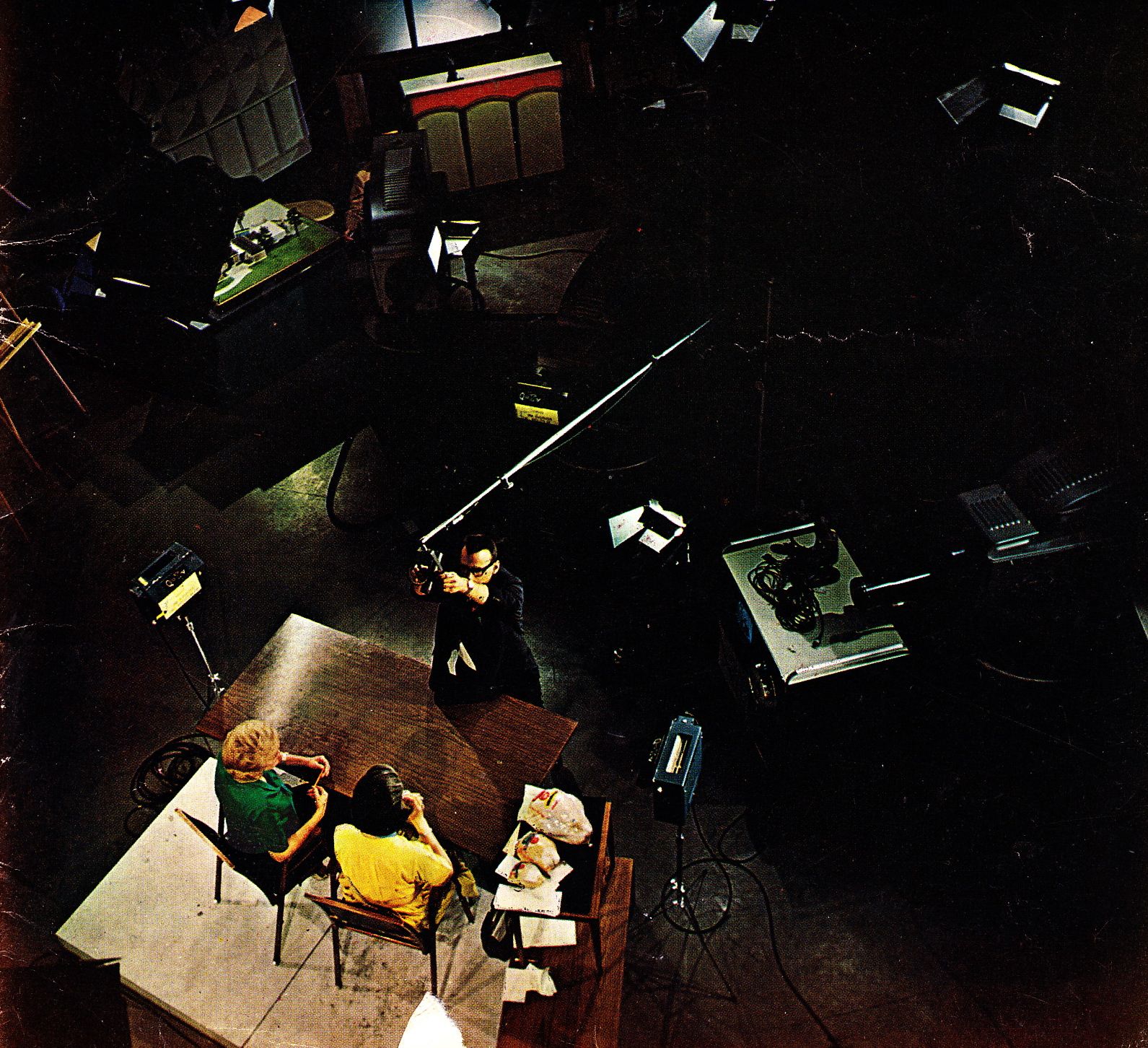
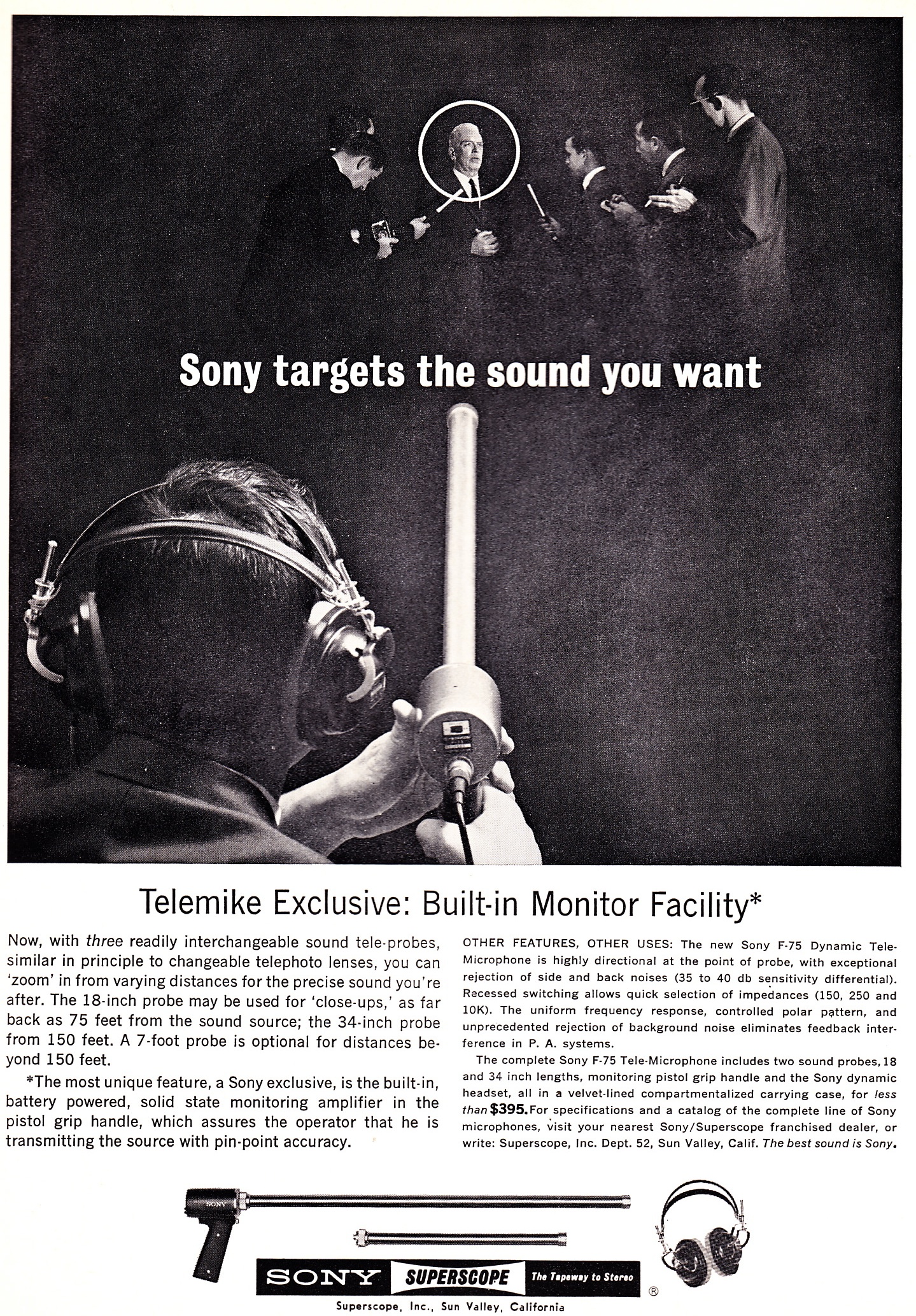 Sony TELEMIKE circa 1964, with an (up-to) seven-foot probe! And it comes with a built-in headphone amp. Wild…
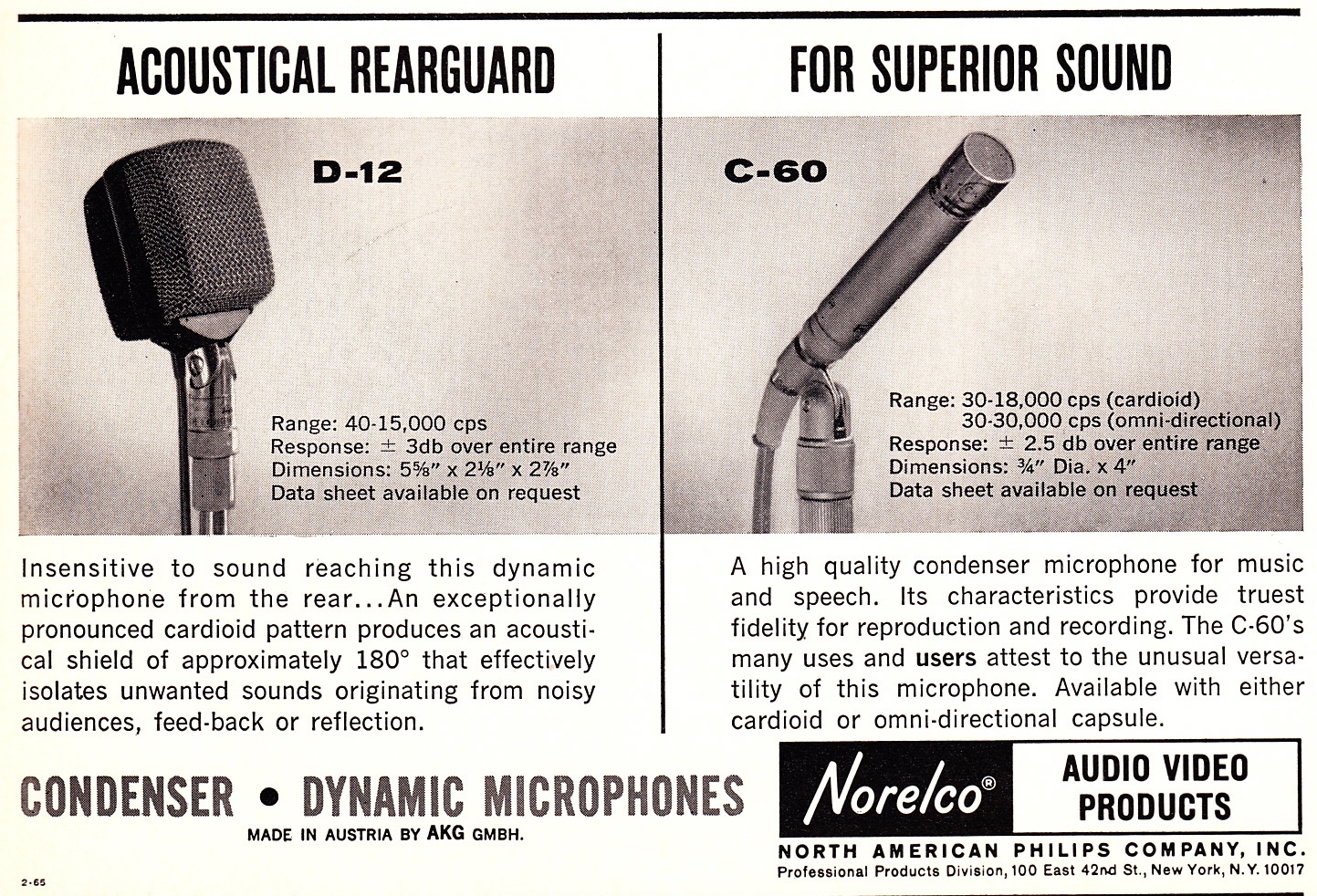 AKG D-12 and C-60 circa 1963, a few years before the D-12 became the industry-standard in kick-drum mic’ing. AKG recently sent me one of their new D-12 ‘VR’ models to review, and it’s pretty great, although not a re-issue in any strict sense… full review to come soon.
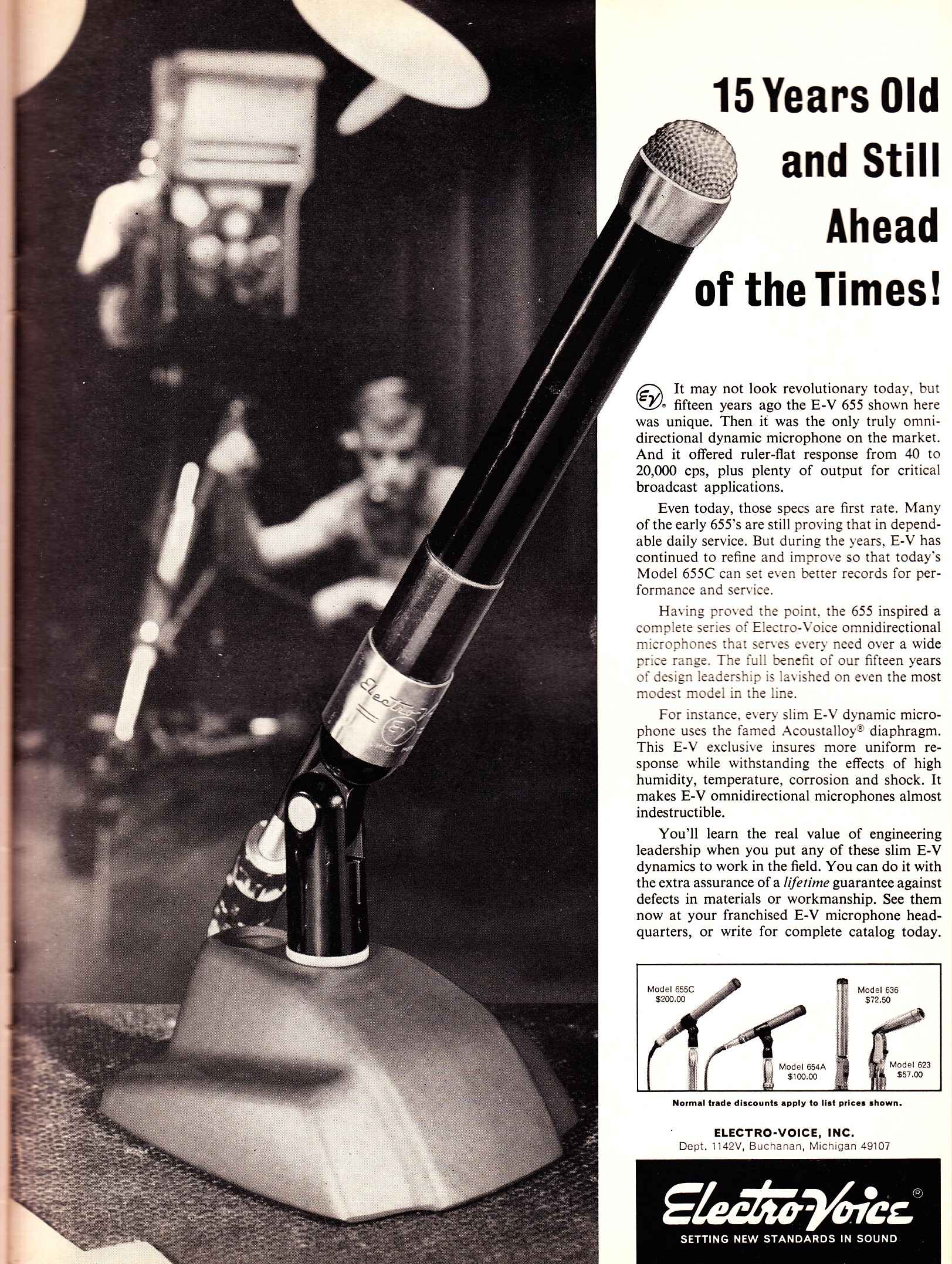 And finally the EV 655, another favorite of mine… just great sounding omni mics, pretty incredible fidelity for units that were introduced in 1951. Lots more on this site about them.