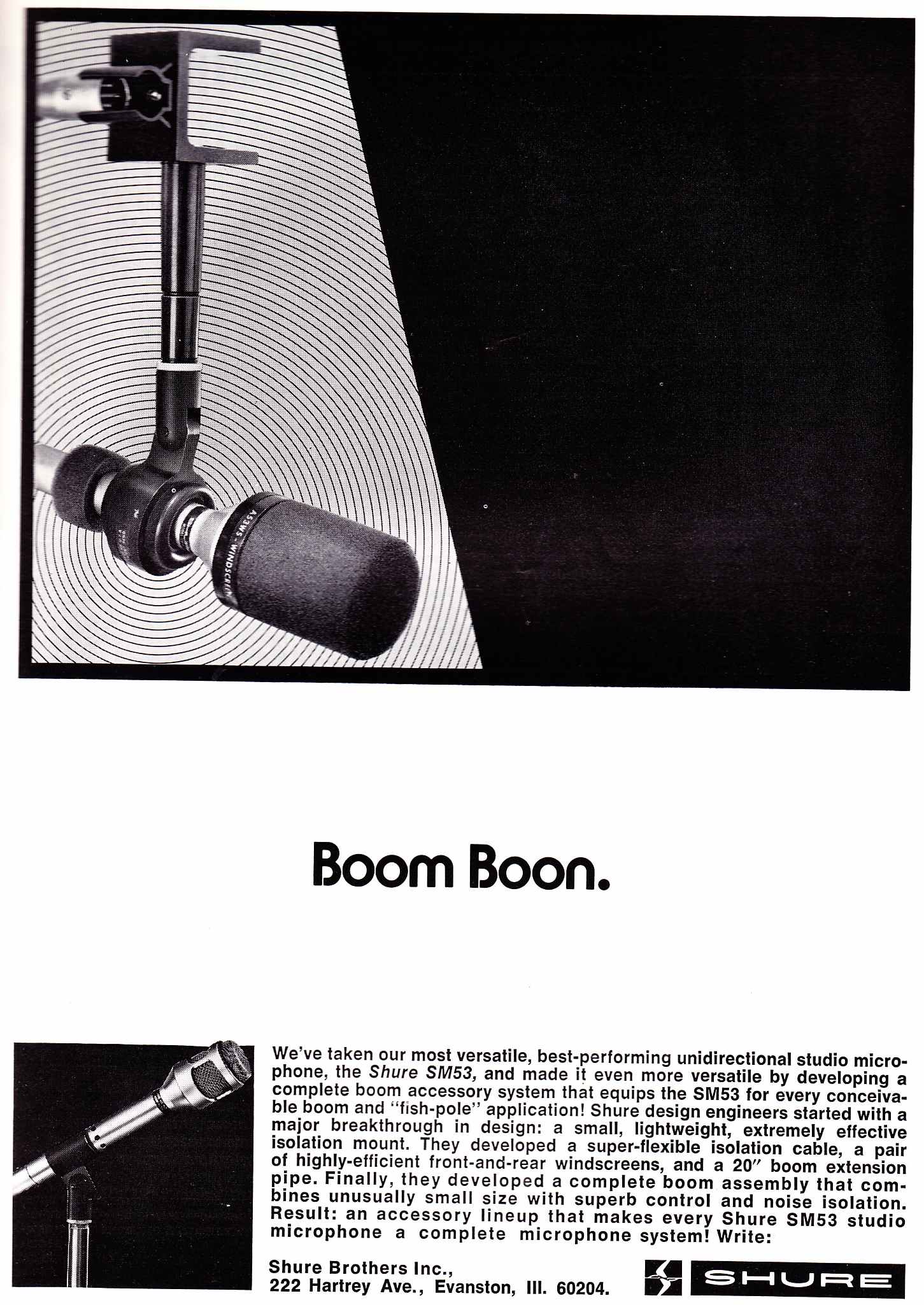
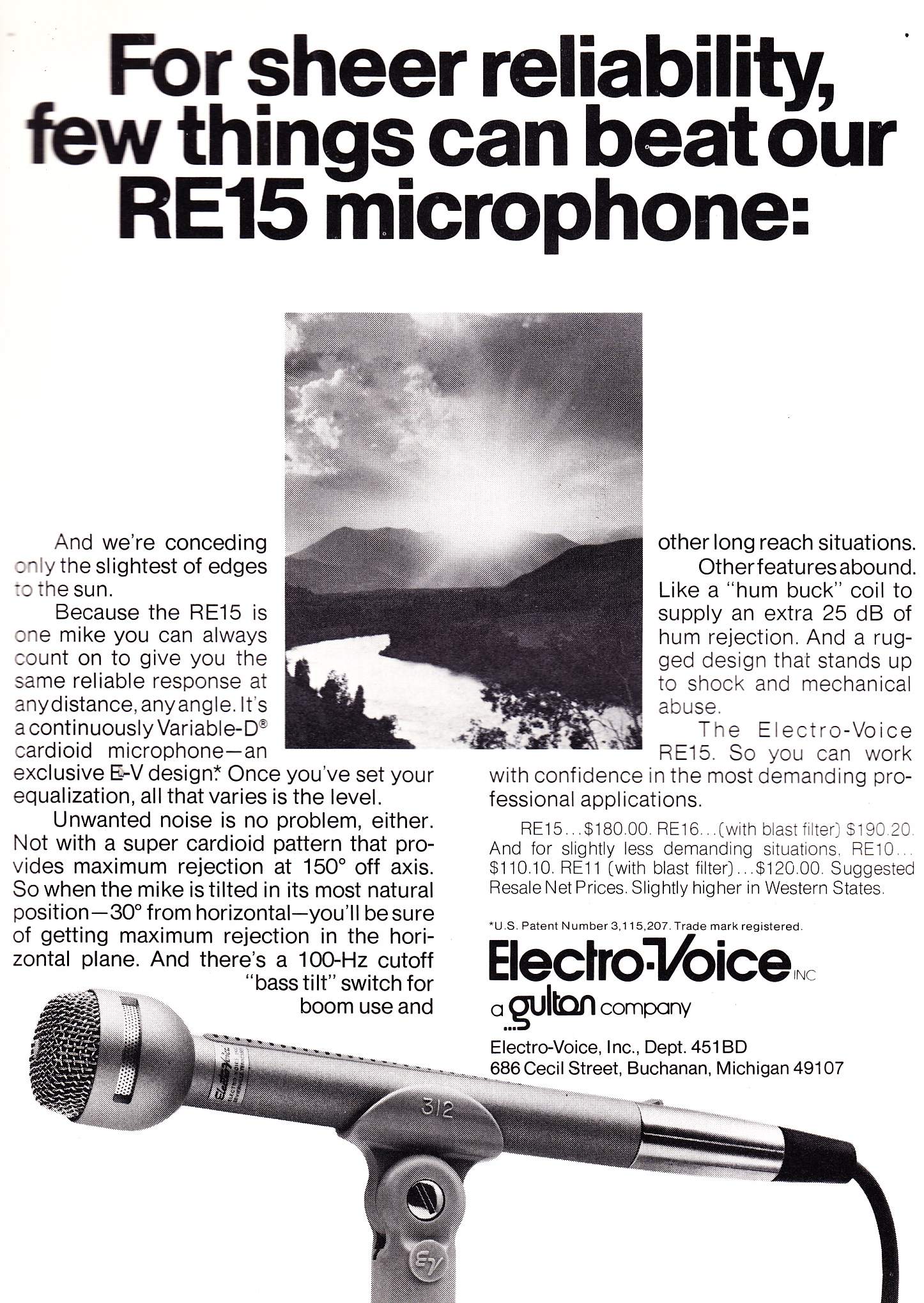
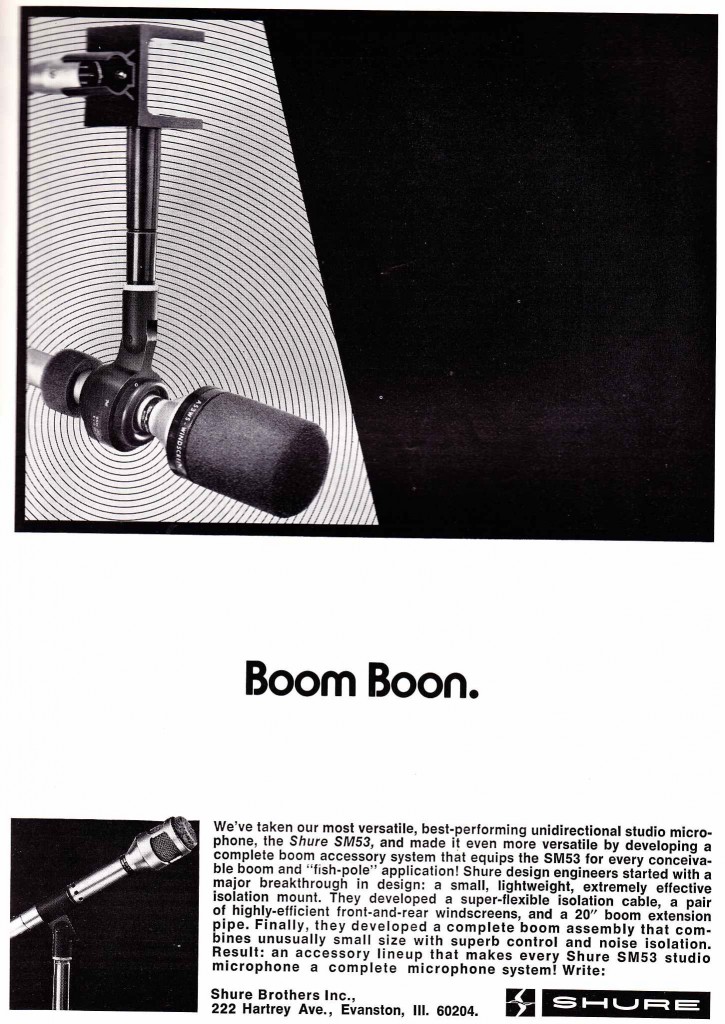
 Today at PS dot com: 70’s month nears its close with a quick look at some promising but lesser-known mics of the 70s. If you are using any of these pieces in the studio these days, drop us a line and weigh in. above: the Shure SM53, a high-end dynamic cardiod that seems to maybe have been Shure’s answer to the RE15? I’ve been trying to pick one these up on eBay, no luck yet… anyone?
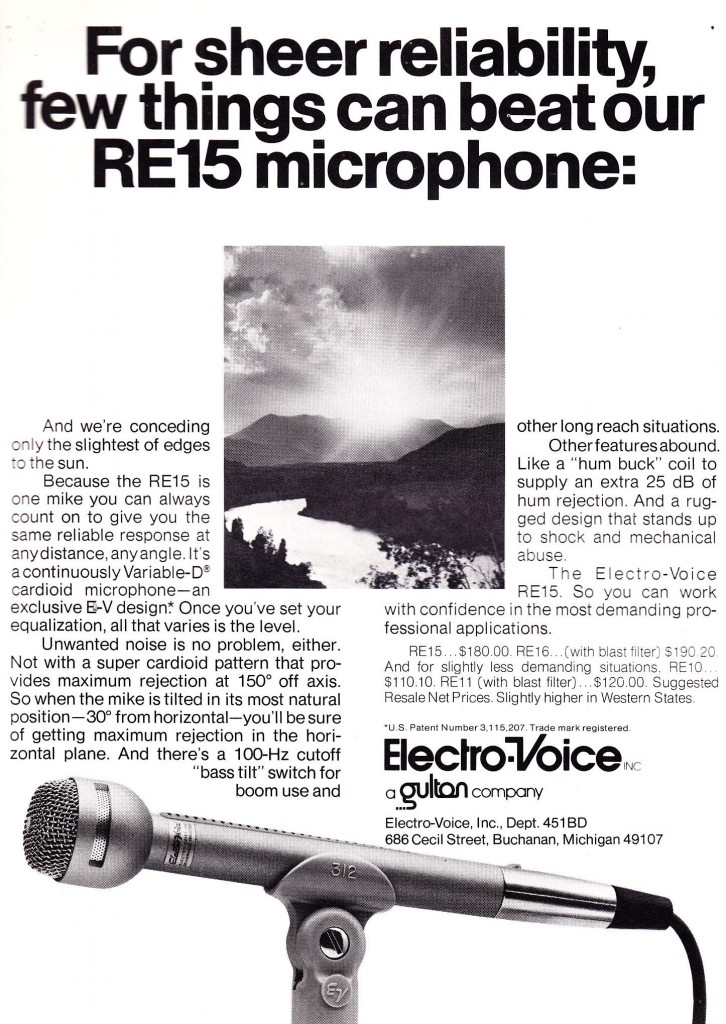 And speaking of the RE15… after watching the prices slowly rise on eBay for the past year, I finally picked up one of these.. expect some audio clips/shoot-out here soon. I always ignored these in the past, i figured, I have an RE20, what’s the point… but I finally had to know. I recently worked with a contractor/tech from a major live-sound company who had 1/2 the stage mic’d with these things, swears by ’em… anyway, I am super-curious. They are apparently very hi-fi with very accurate off-axis response. More to come…
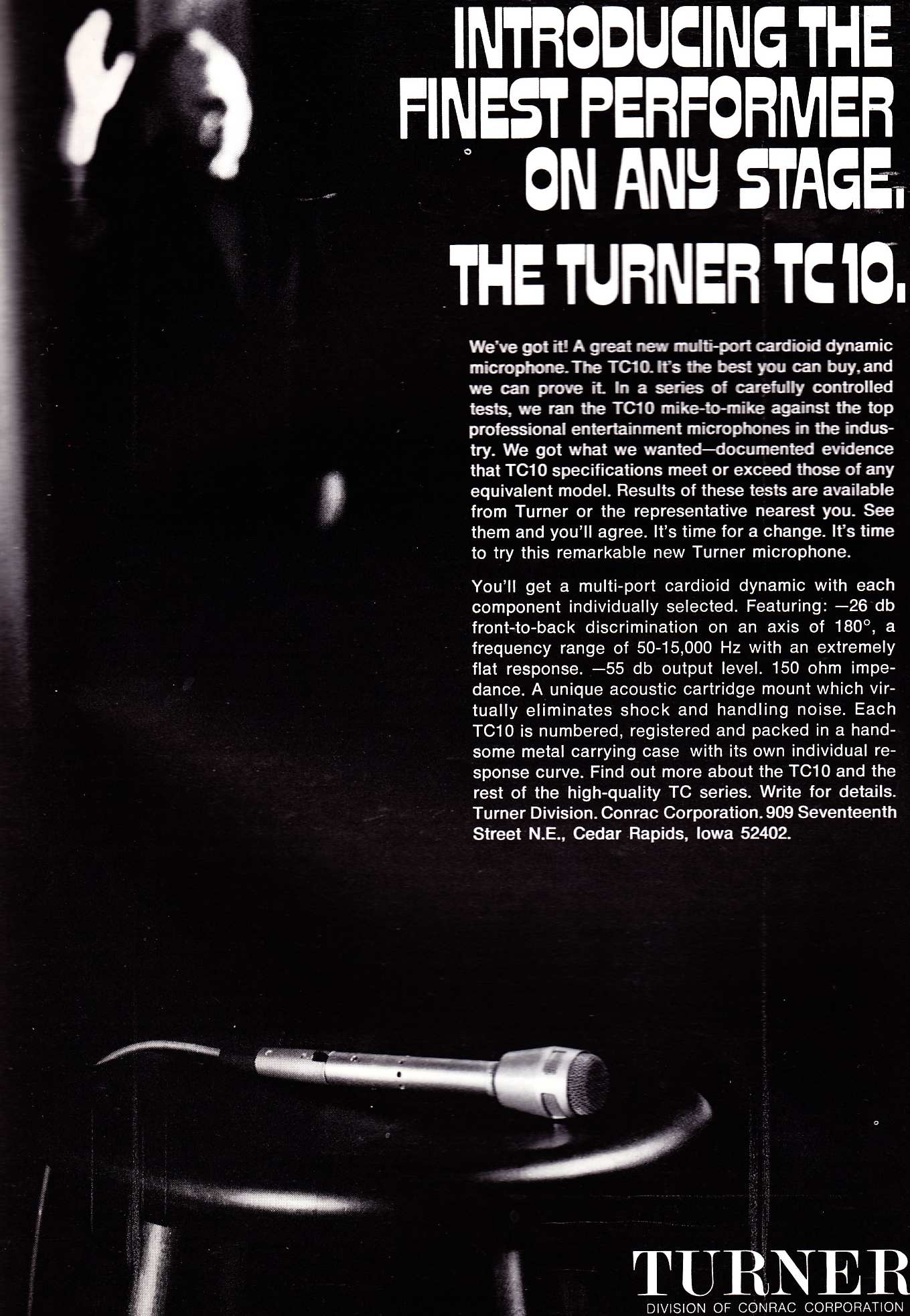
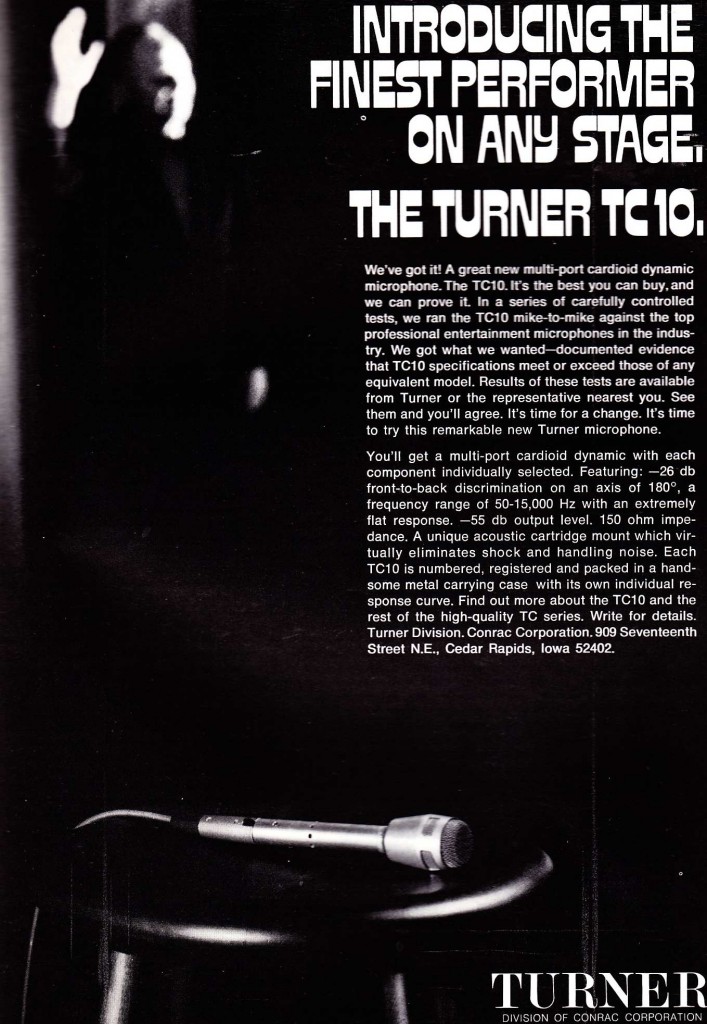 While on the subject of dynamic mics… above, the Turner Model 10 circa 1972. Those of you who’ve been following PS for a while will know that I am a big fan of obscure Turner models, especially the flagship models like the 510… I recently bought my second 510 for Gold Coast Recorders and I have to sadly report that it is not as awesome as the example I have had for years… Anyway, the Model 10 seems to have been a replacement for the 500/510 series… there is a super-rare Model 11 (likely the ‘selected’ hi-fi version of the Model 10) on eBay right now for really cheap… might be a good purchase for anyone looking for more interesting dynmics mics…
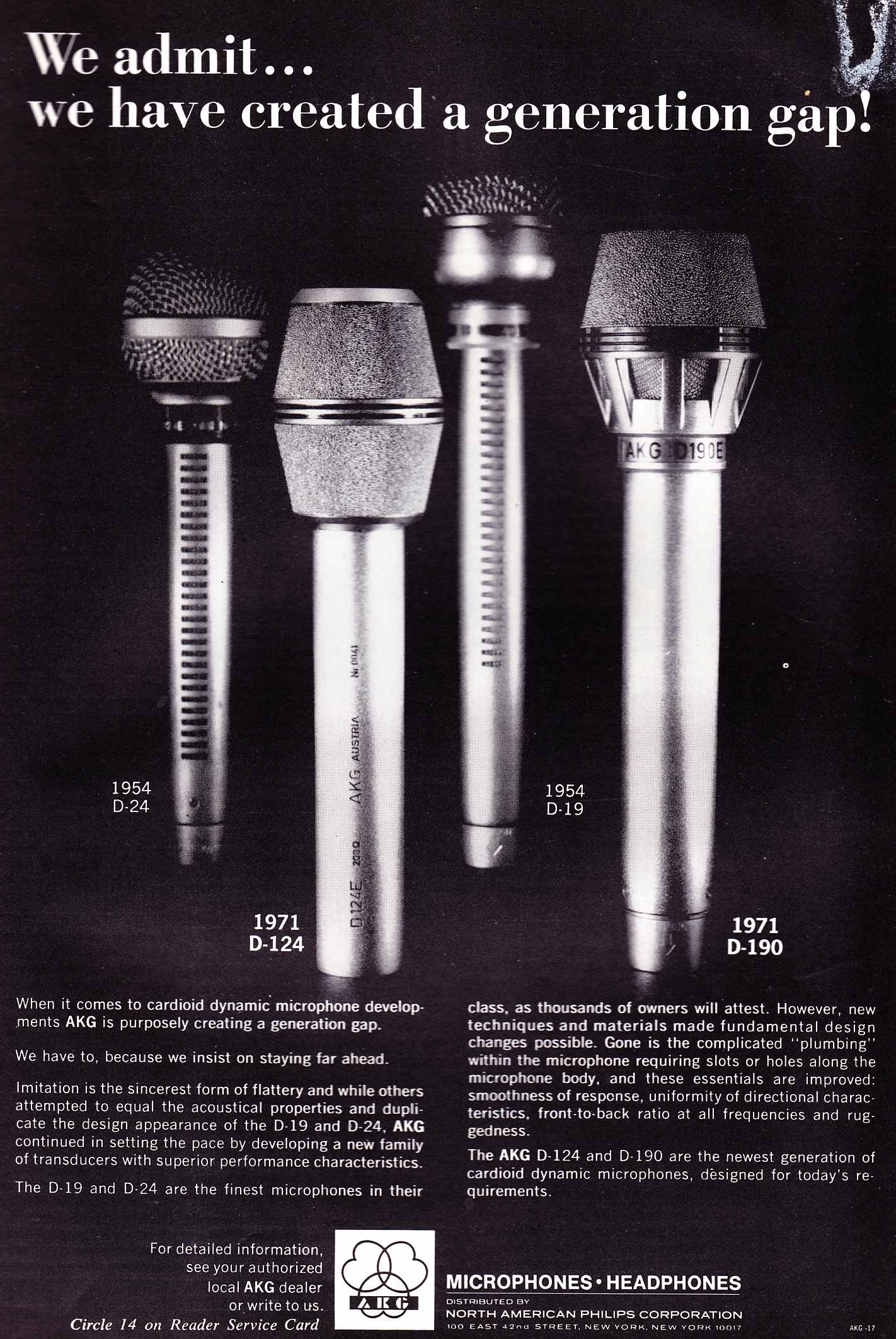
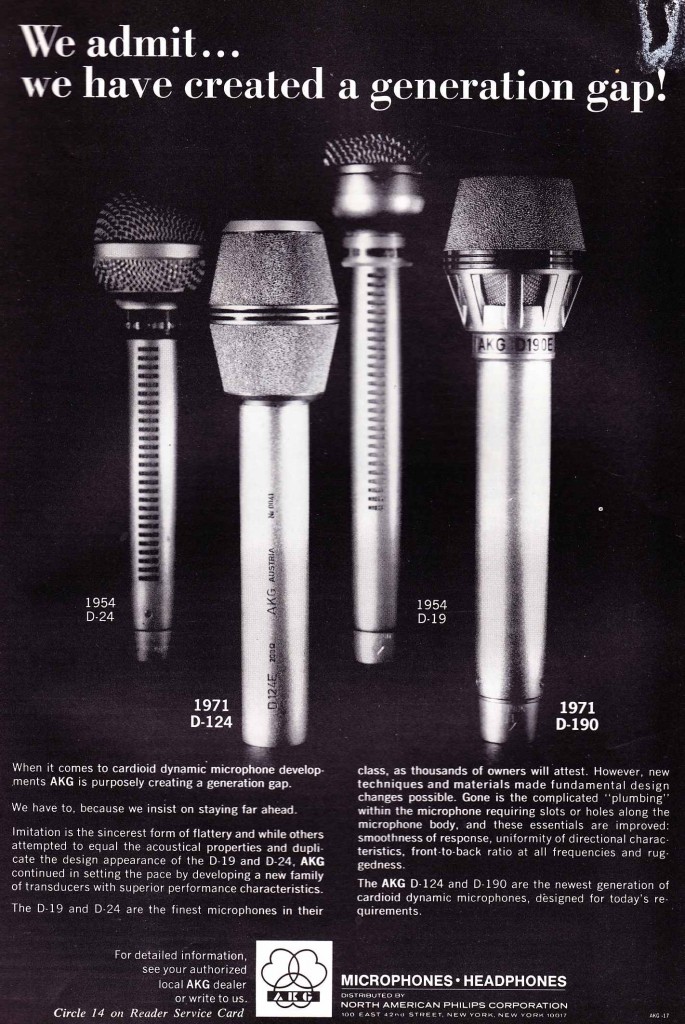 Above, the AKG D190 and D124! Finally some info on the D124… these turn up in my old 70s AKG catalogs (most of which you can download here on PS dot com), and I actually use this as the console talkback mic at GCR, but I had not realized that it was the replacement for the D-24. The D-124 is an amazing little piece of engineering, very nice smooth sound and incredibly small in size. D-190s are much more common, I tend to see these on CRList quite often.
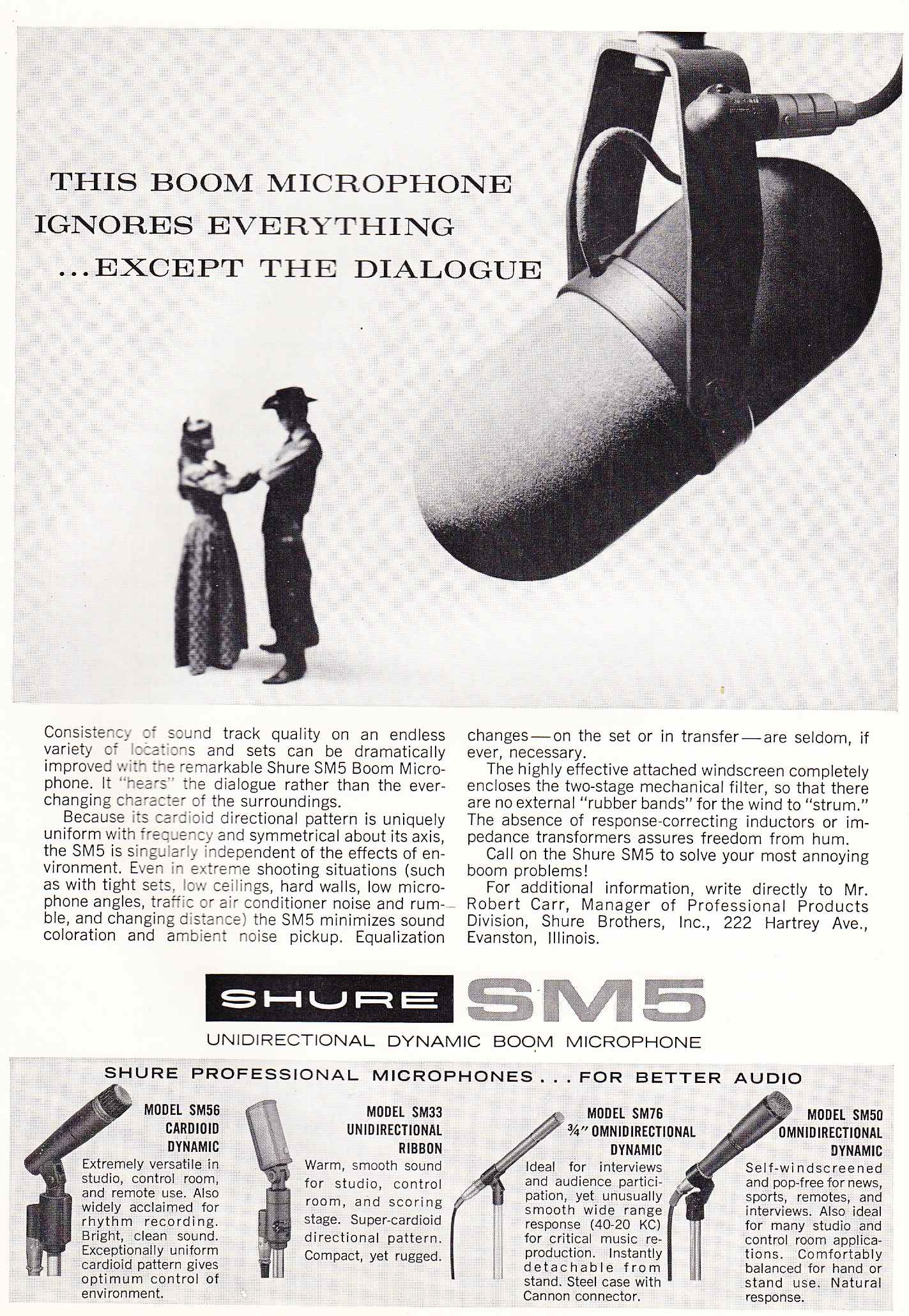
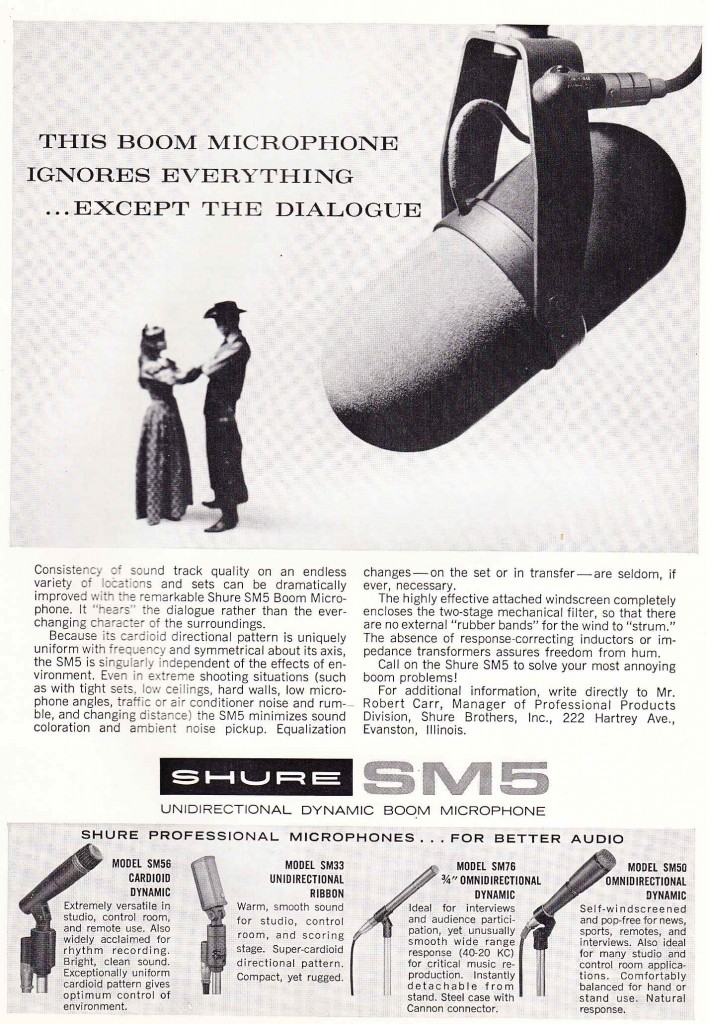 Above: Shure SM5 circa 1969. I love the similar SM7, use it regularly, it seems to have become somewhat of a standard-bearer vocal mic these days… artists actually ask for it in the studio the same way some will ask for an 87 or 47 or 58…. The SM5 is much less common, no longer made, and consequently extremely expensive. Are any of y’all using SM5s for music or vocal recording these days? Thoughts?
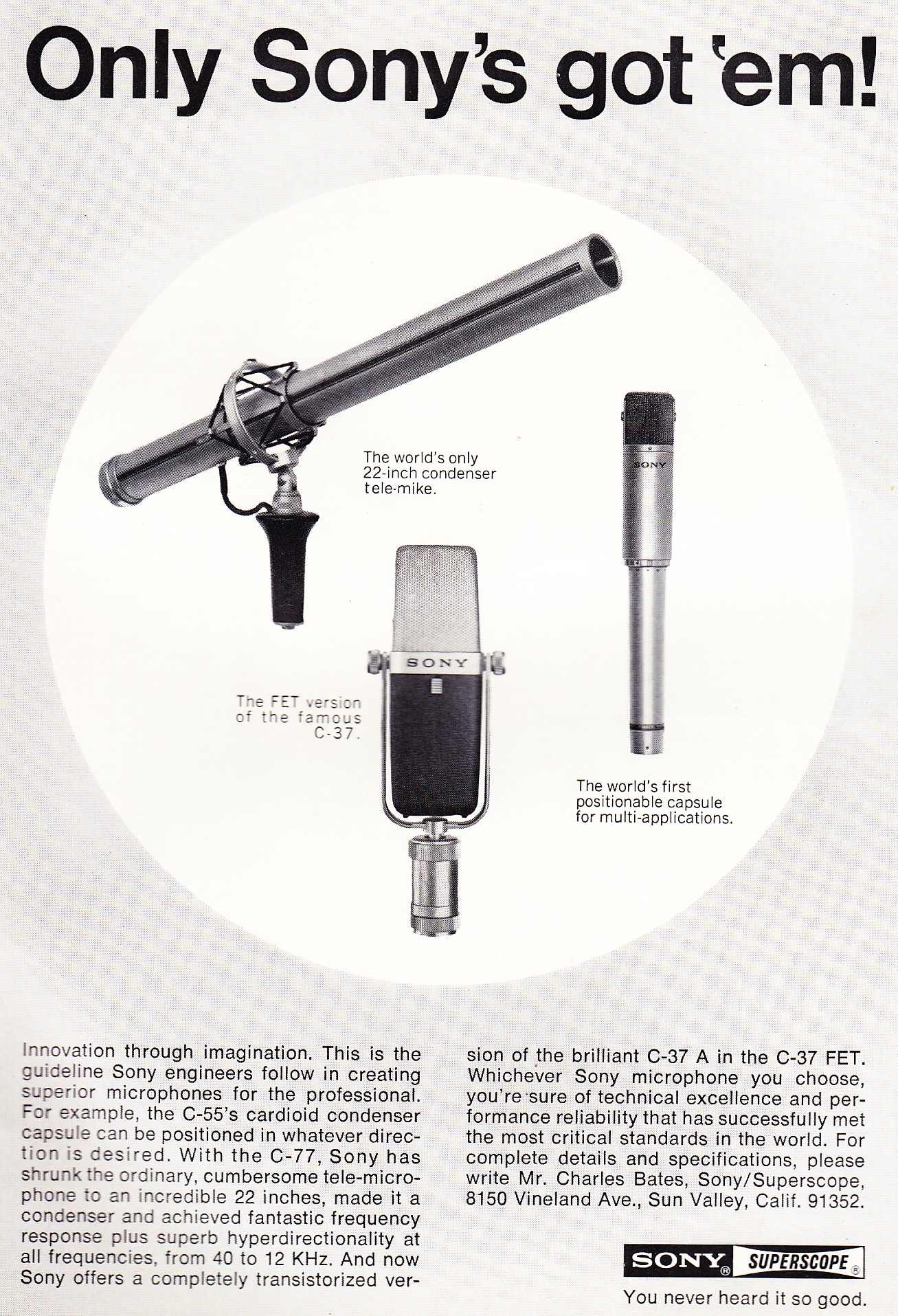
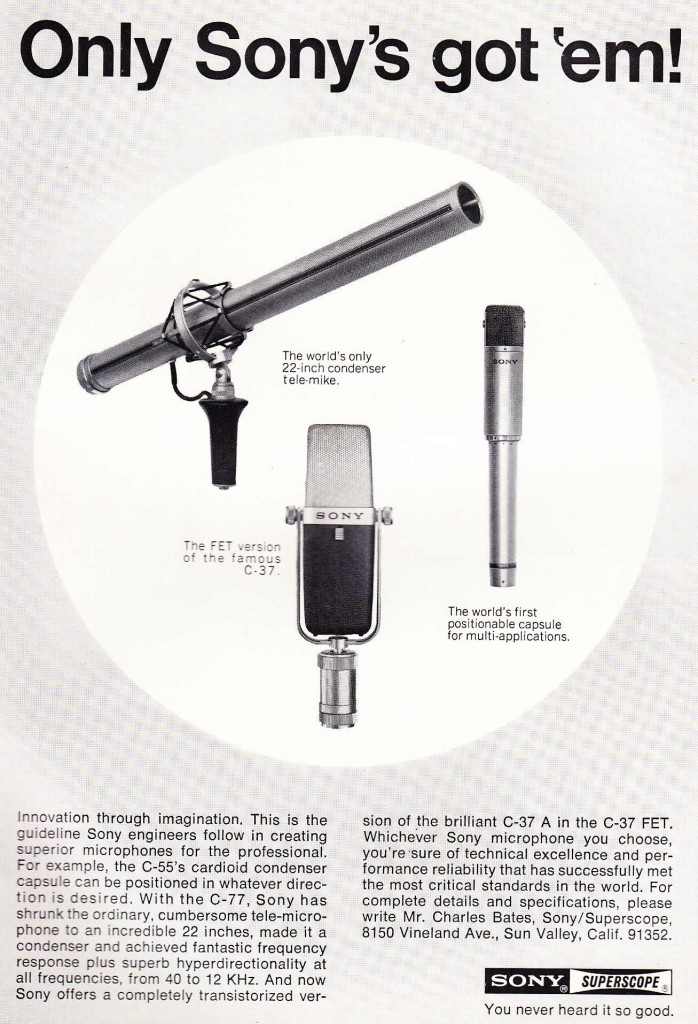 Above: Sony ‘Superscope’ branded C-77, C-37, and C-55 circa 1969. A C-37 or C-37 Fet is very high on my wish-list… Never used any of these models.. anyone?
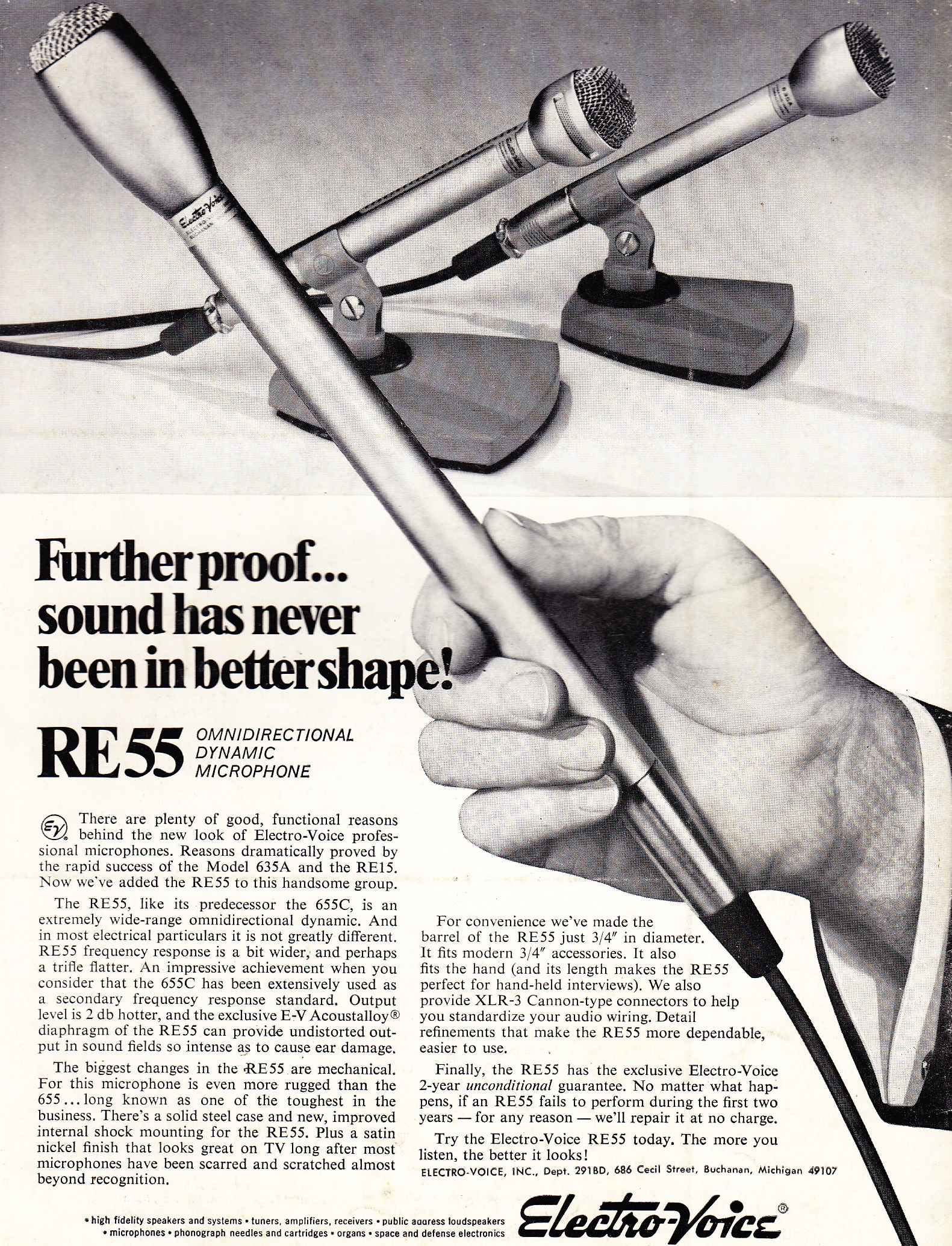
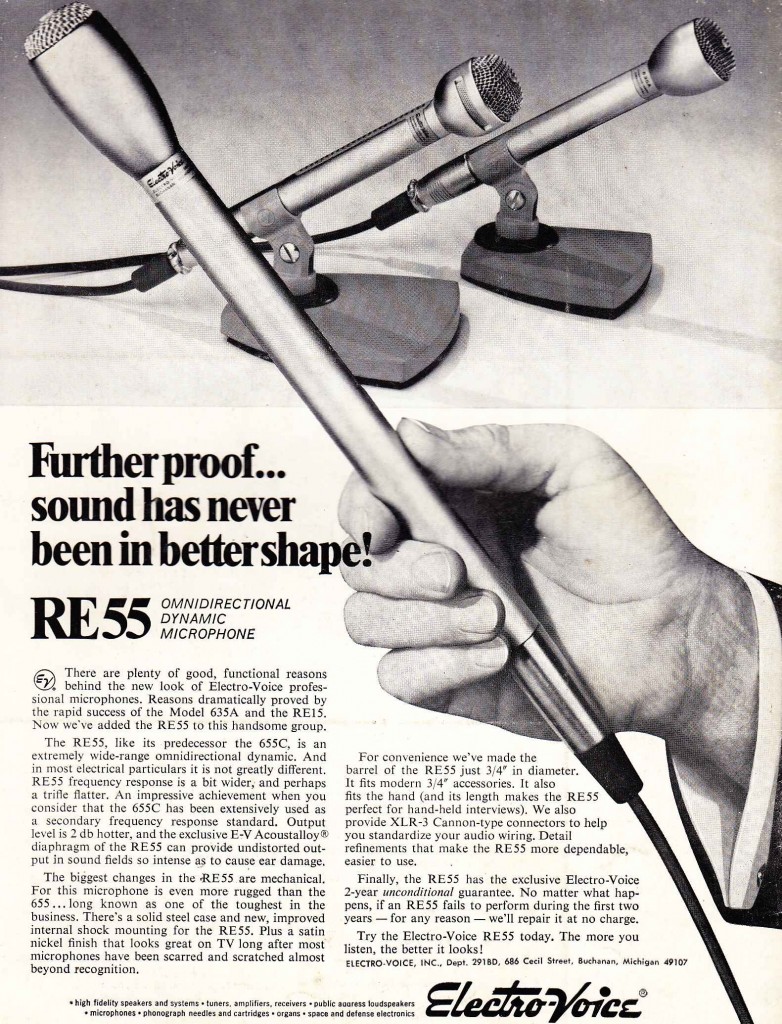 Above: the Electrovoice RE55 is introduced (1969). Interesting to see that the RE55 was the successor to the 655. I have a pair of 655 at GCR, very very old pair circa 1950, and wow they sound great. Fairly high self-noise for a dynamic, but for drum overheads it’s never a problem. Anyone using the RE55? Seem pretty uncommon…
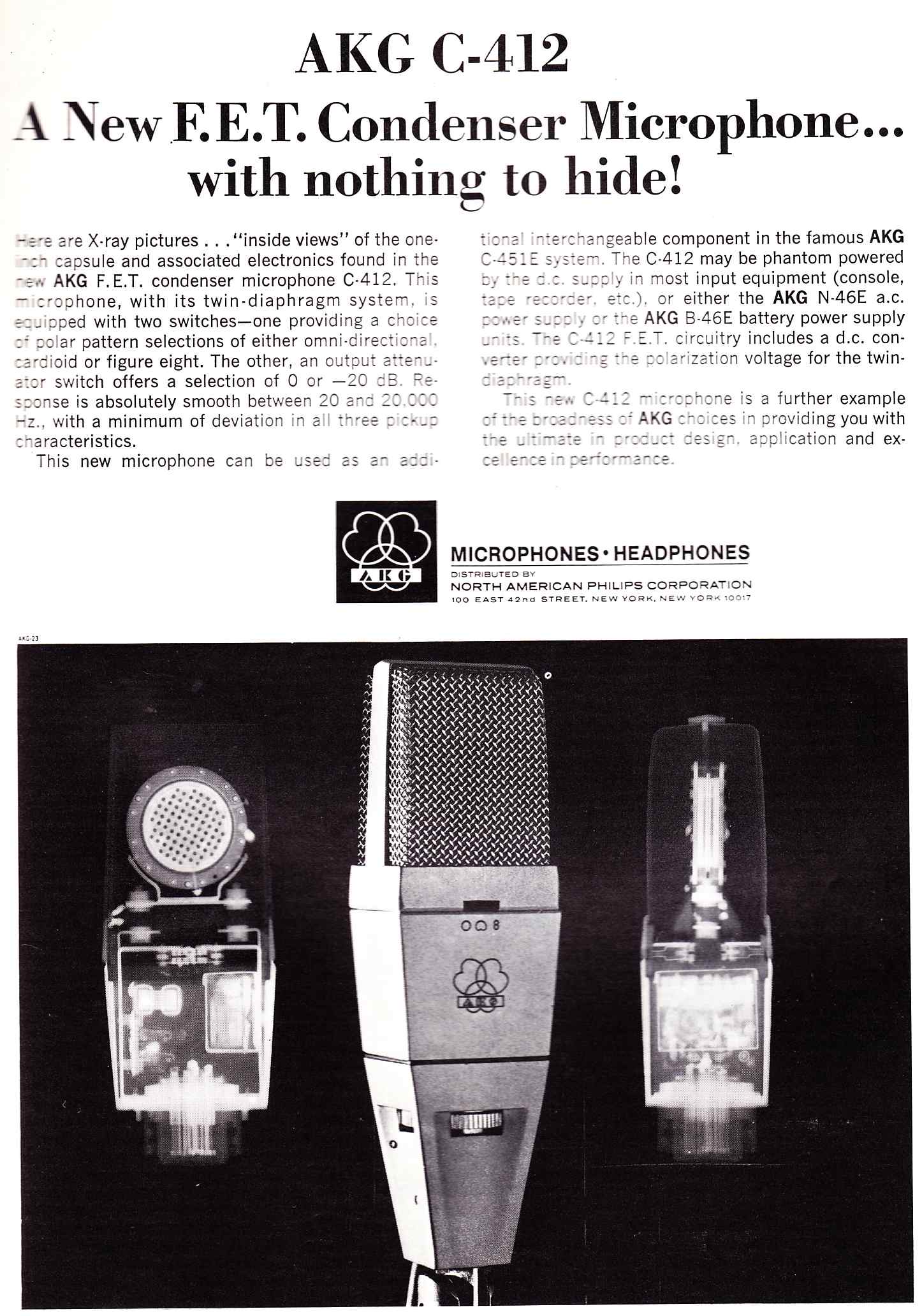
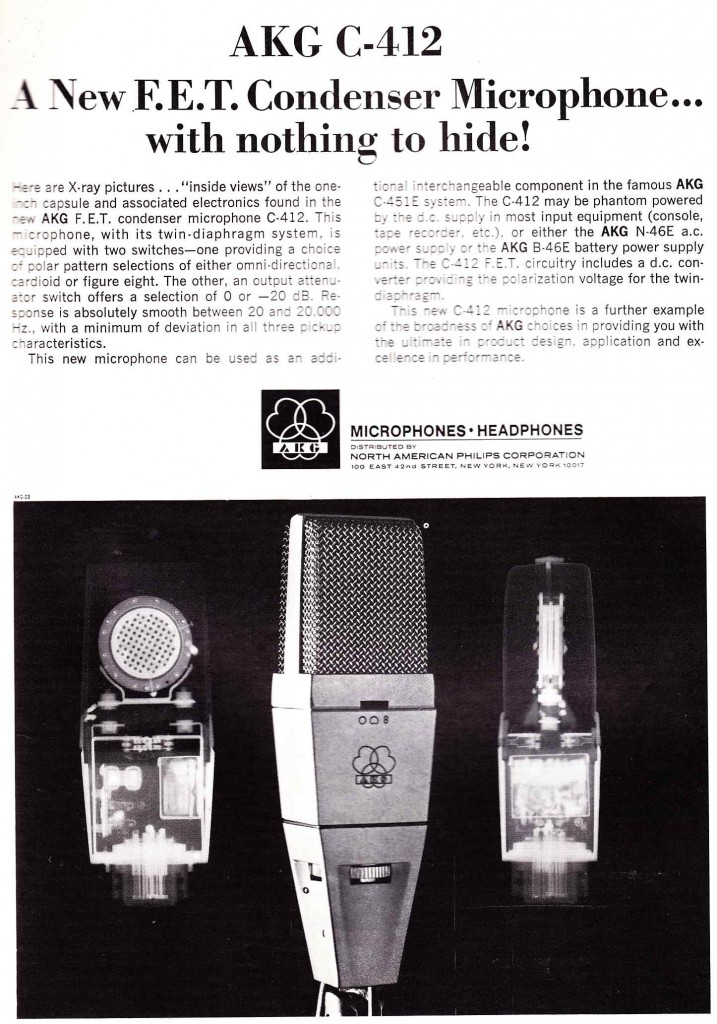 Above: The AKG 412 circa 1972. Seems to be the final evolution of the C12 prior to introduction of the still-standard 414. Anyone using a 412? Is it significantly different than a circa 70s 414?
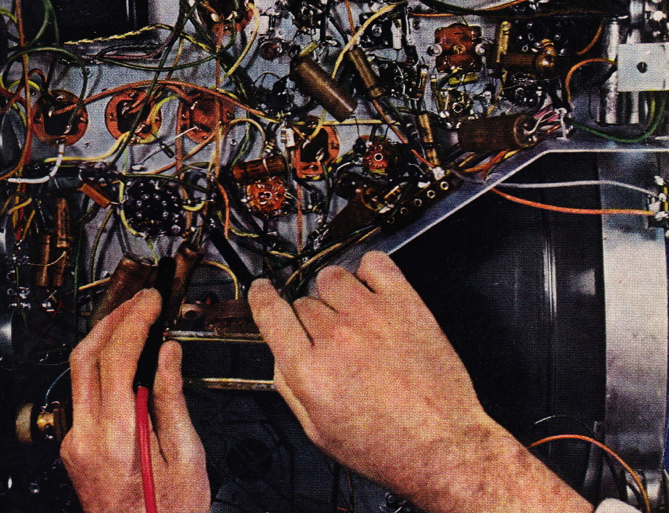 that’s right, git all up in that shit MOTHAFUKKA
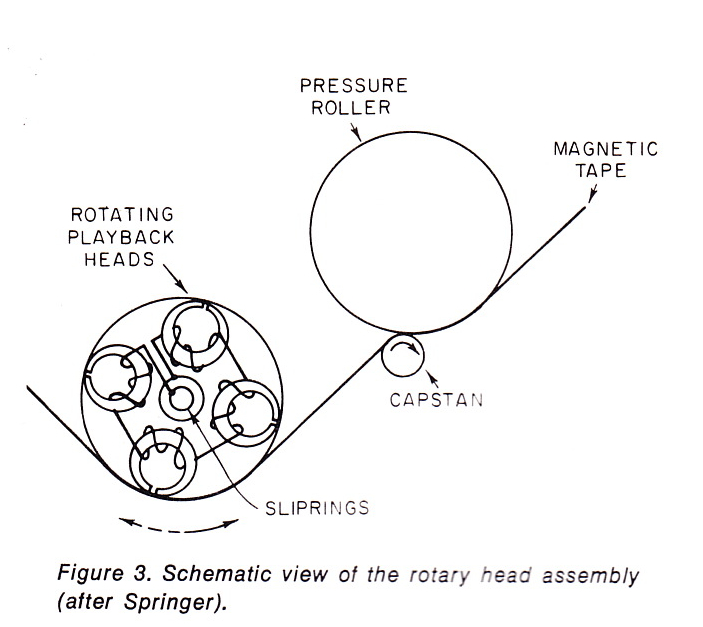
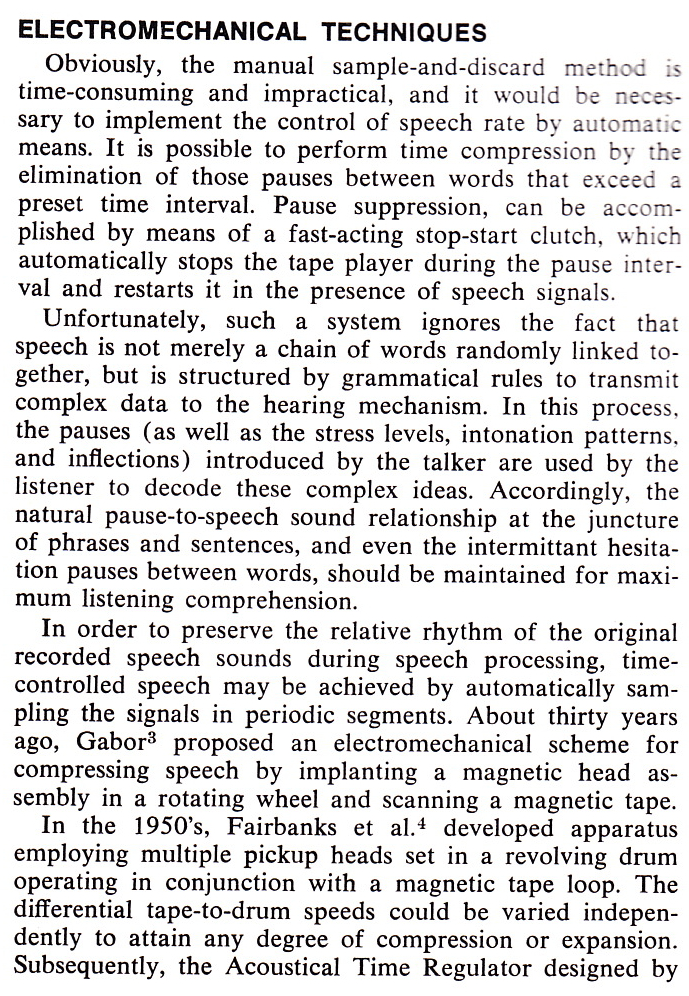
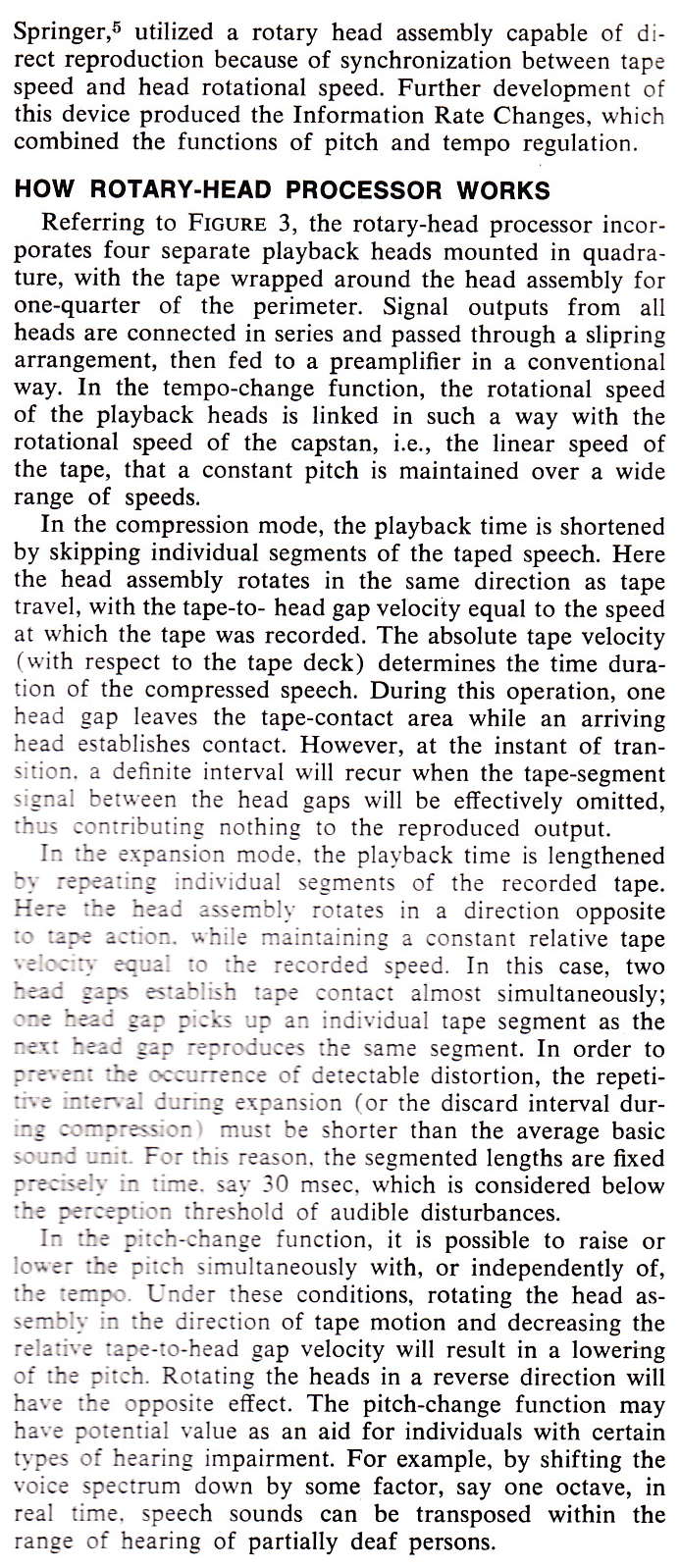
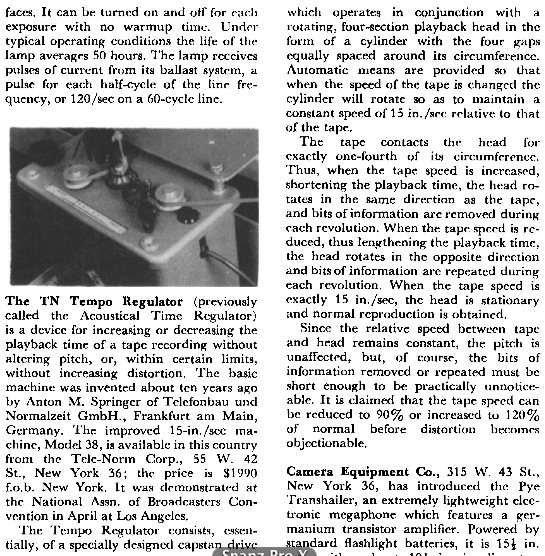
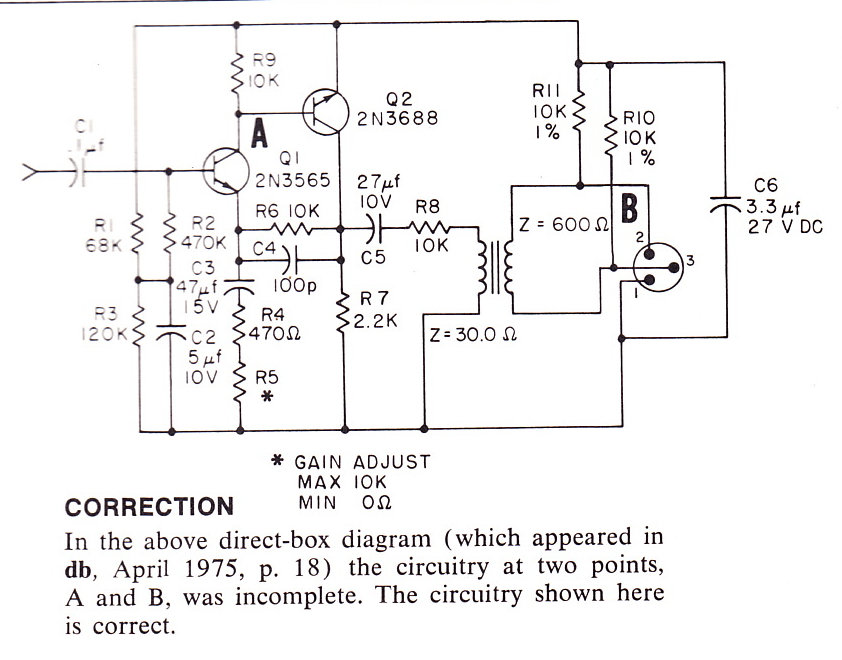
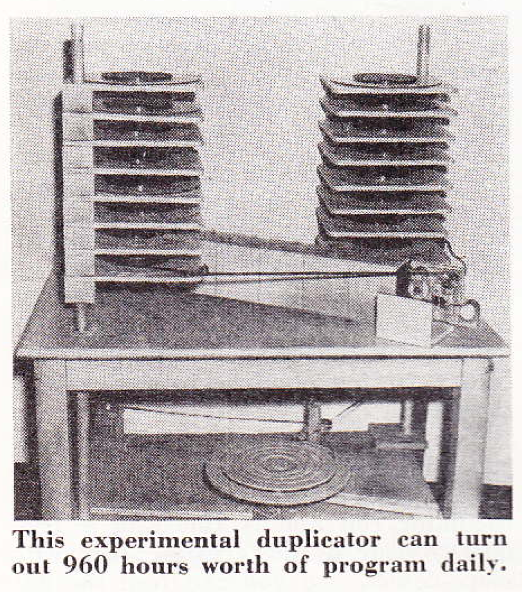 I was in Marin county this past weekend and I met some pretty interesting folks at the yard-sales. First, a dude who made a lot of the DigiRack presets in protools, and hours later, a very old fellow who used to build bridges+road by day and then service musical equipment by night. Hooked me up with some amazing ancient tech-data books. fascinating sorta shit/sorta folks that I don’t seem to find too often out here East. Anyhow… point is… there are so, so, so many weird little roads of audio-production that have not been traveled by plug-in designers… so many paths still unexplored digitally. Every weird dead-end of commercial audio production awaits a potential rebirth in the plug-in age… Via: someone make a magnetic-transfer-field simulator already?