Categories
Pro Audio Archive Recording Studio History

Consoles of the 70s : part 2

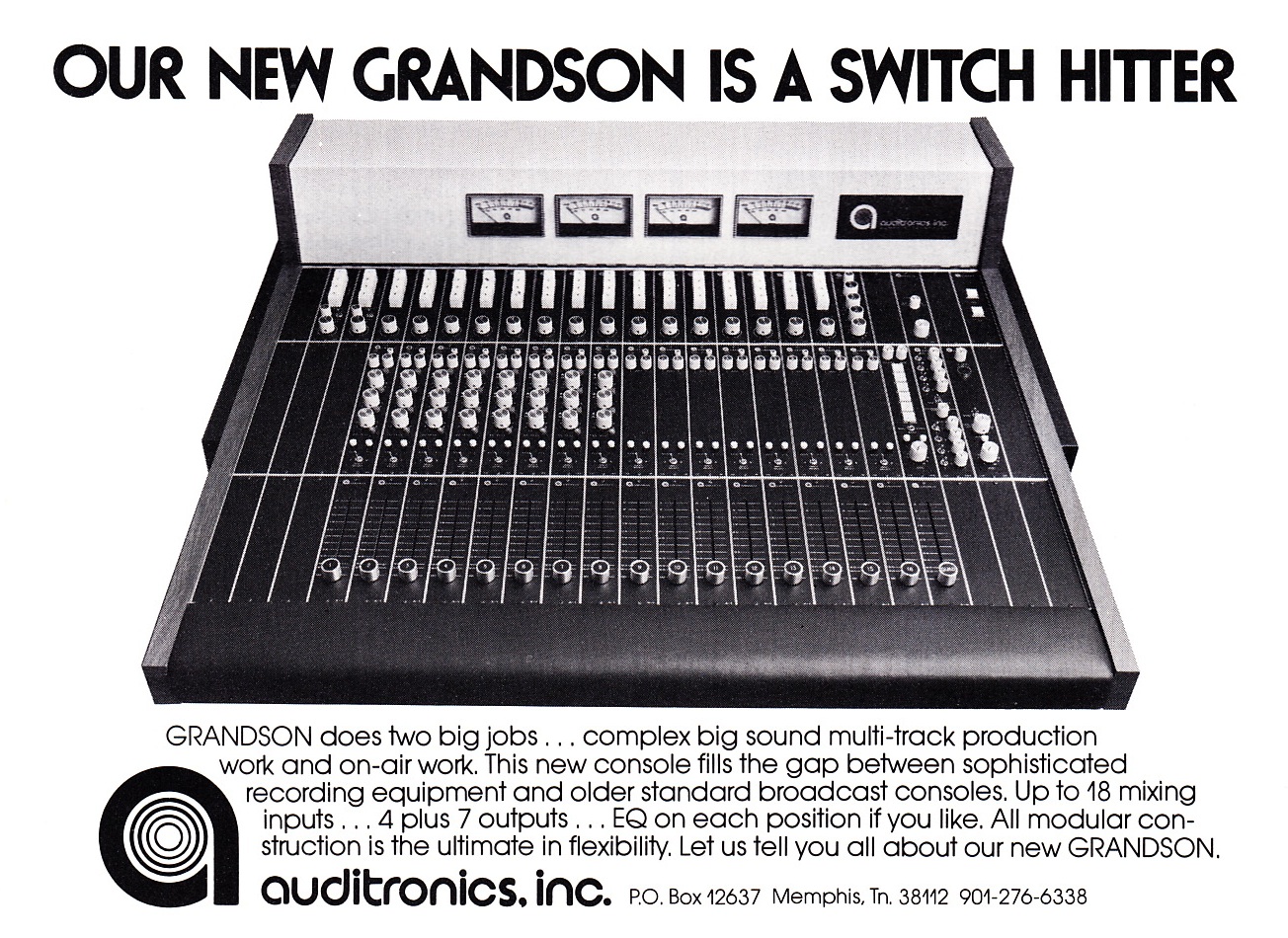
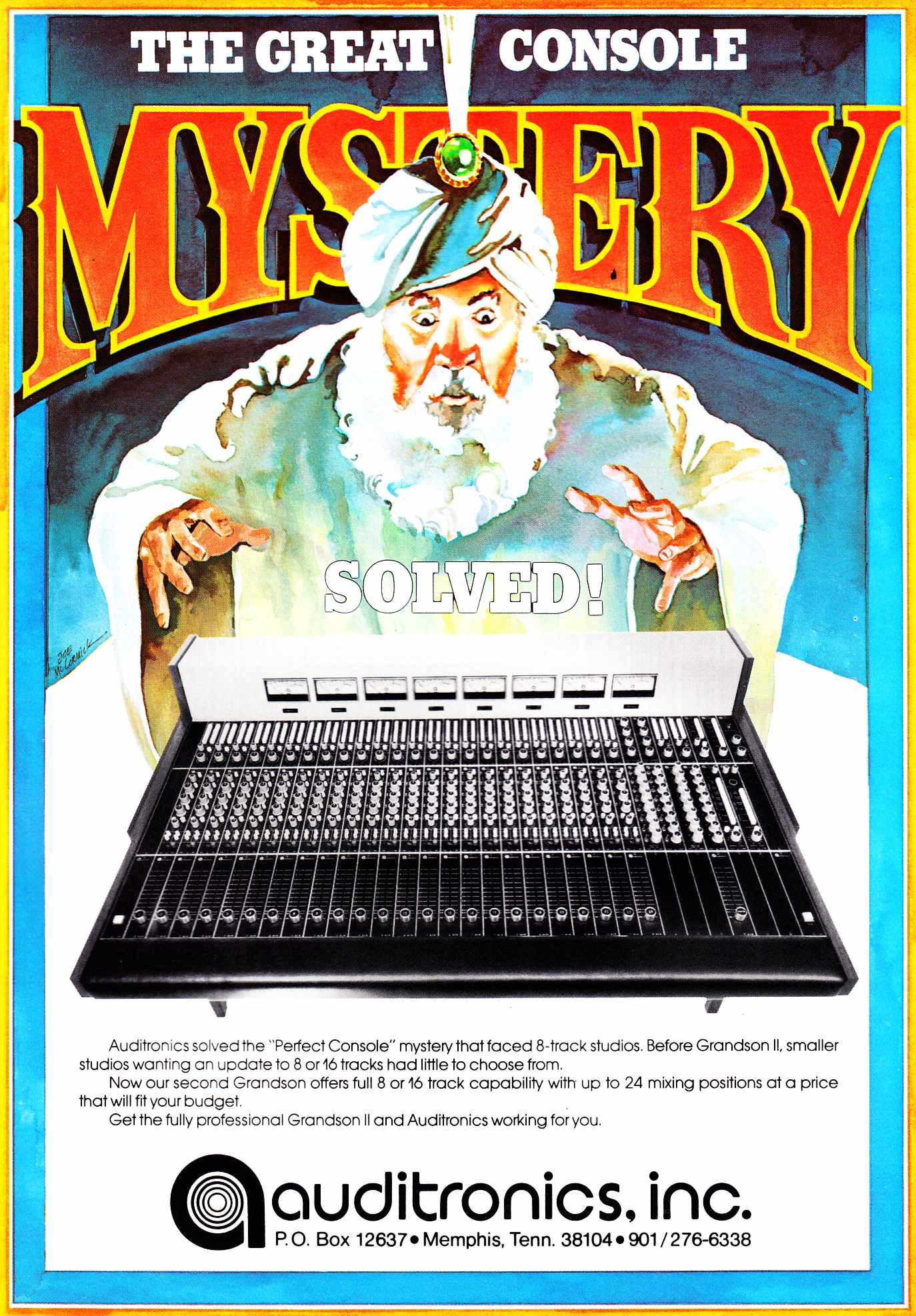
Auditronics_Grandson2_1975Above: the Audiotronics Grandson II console circa 1975

Way back in October of 2010 I ran a short piece about some 1970s audio consoles, and now 70s month rolls on with an extensive image gallery of some iconic and some obscure mixing desks from that decade.  I’m a hardware mixer fan; I learned audio production in a studio with a Trident Trimix and my brain often just defaults to finding solutions and working-methods that are faster to do with a real console rather than via a DAW.   I would never give up my Pro Tools, no way… but I honestly can’t imagine giving up the flexibility and endless options that a good-sounding, full-featured console offers.  At Gold Coast Recorders, our Wheatstone SP6 has been going strong for two years now; I’ve had to replace the control room section due to a weird intermittent issue, but I since I had planned ahead and bought a spares-board it was pretty painless.  If you look past the real fetish-brands like API and Neve (great stuff, no doubt) there are a million bargains to be had if you are able to do a little tech work (or pay a decent technician).  I bought both of my SP6s for about $1500, TOTAL, with shipping, and put about 60 hours into arriving at a single great-functioning piece, fully cabled to my patchbays, and with a lifetime worth of spares.  Considering that these SP6s cost around $40,000 each in the mid nineties, this is a pretty great deal.  I guess I’d sum it up this way: if you record bands, if you have the physical room for a console, if you have the patience and/or where-with-all to do some basic troubleshooting, and the board is modular (very important….), I feel like you really can’t go wrong.  Given the outrageous prices of vintage outboard gear on the market today, vintage consoles represent an amazing bargain.  And a potentially amazing headache.  So be careful.
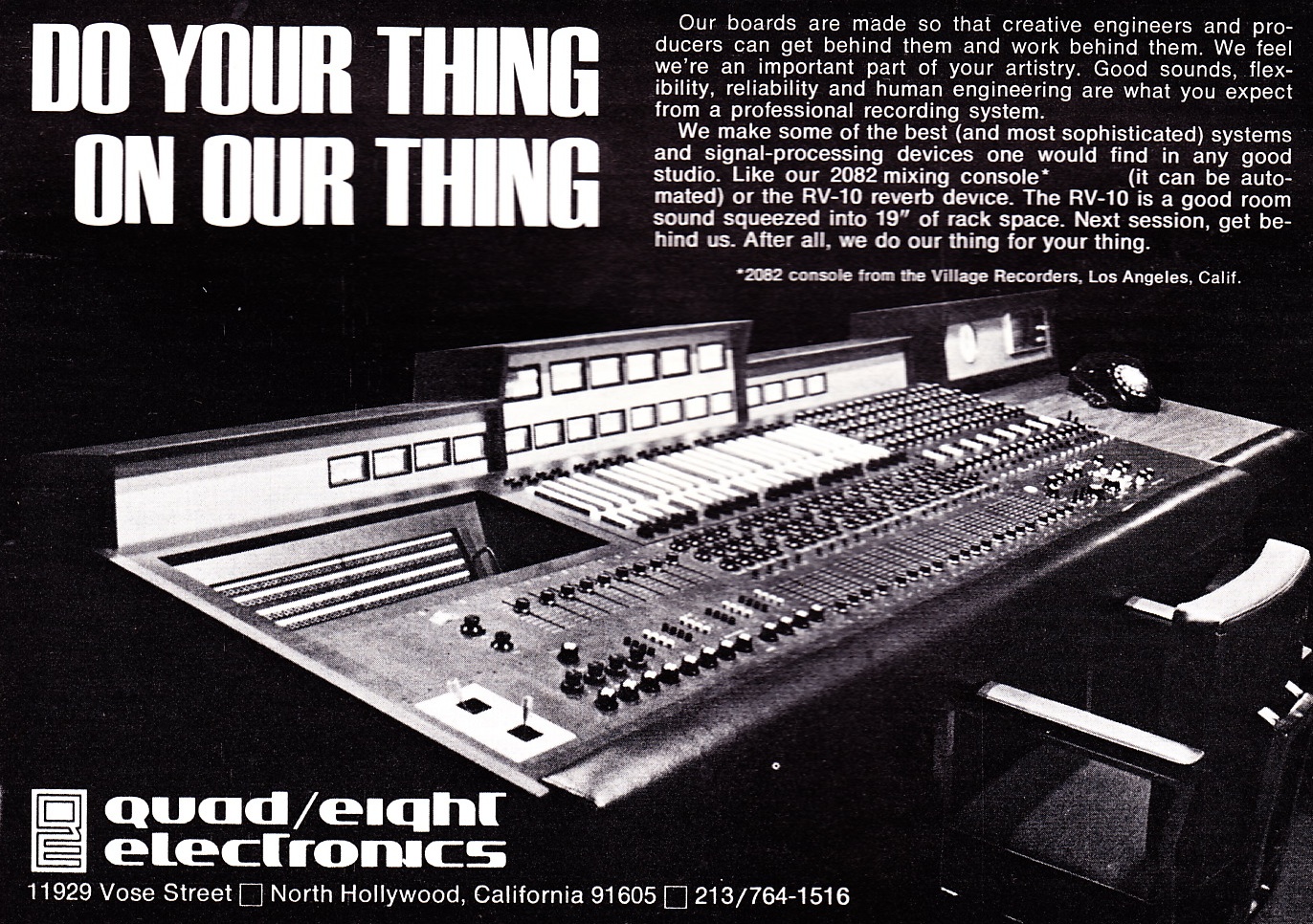
Quad8_2082_Console_1972Above: Quad/eight 2082 console circa 1972
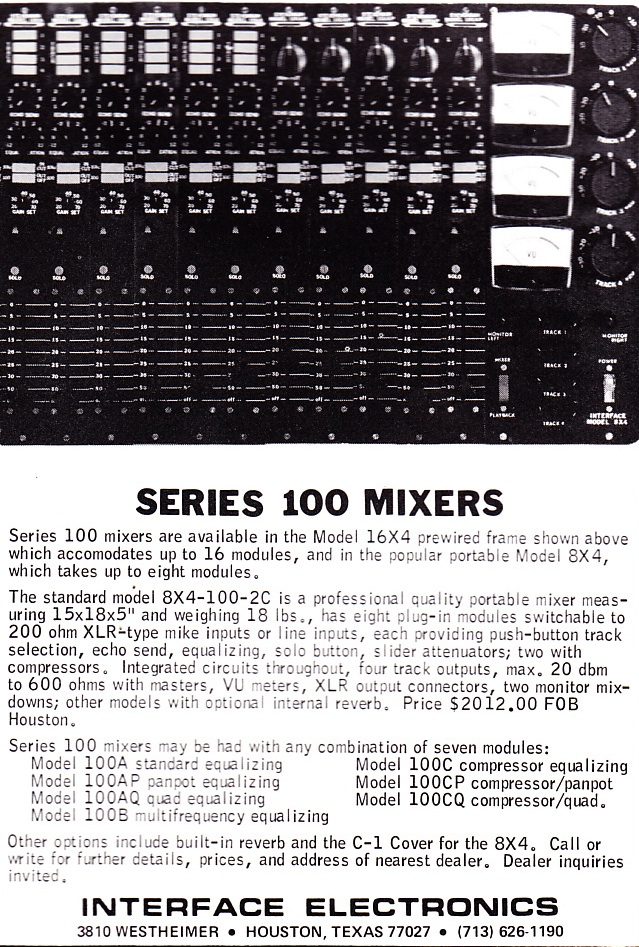
Interface_series_100_mixer_1973Above: Interface Electronics Series 100 console circa 1973
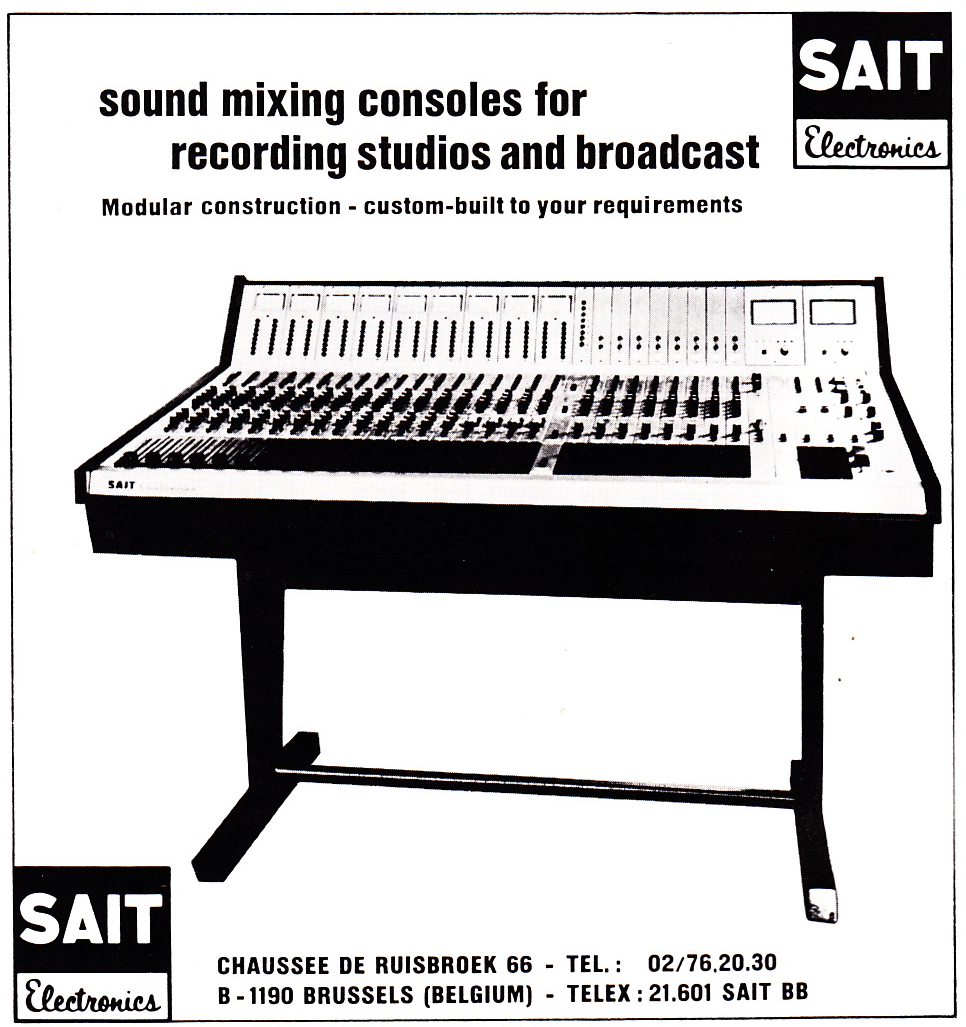
SAIT_Console_Belgium_1973Above: Sait, a Belgium maker, offered this board in ’73
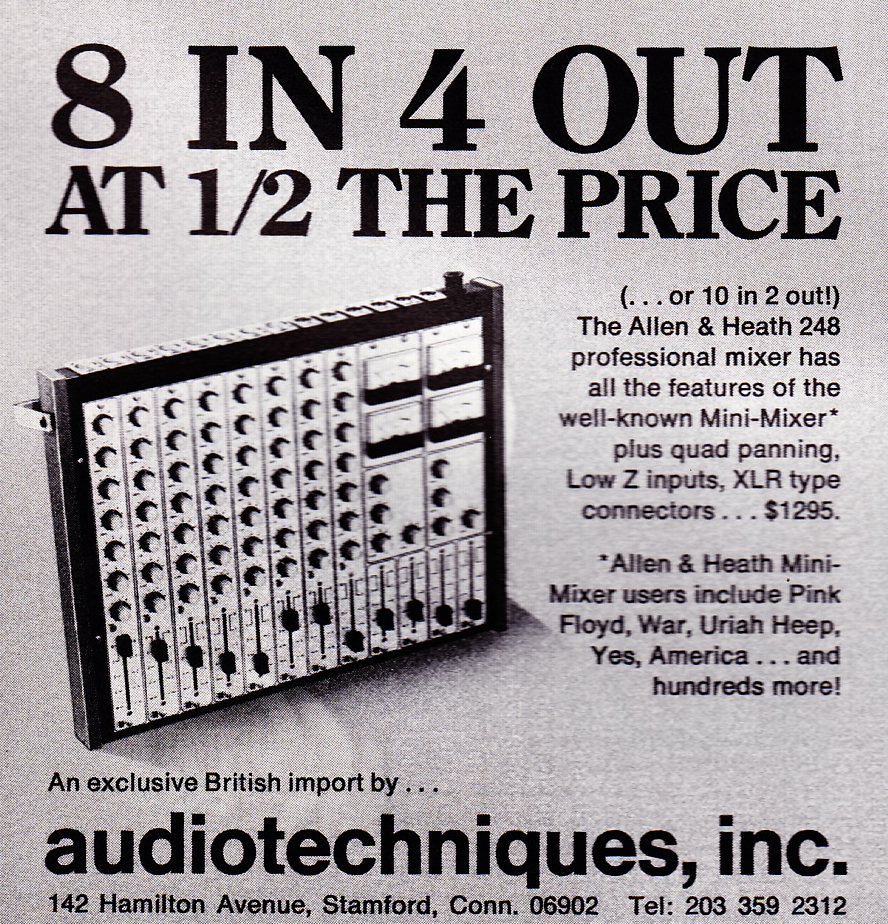
Allen_Heath_248_1973The Allen+Heath 248 portable mixer circa 1973
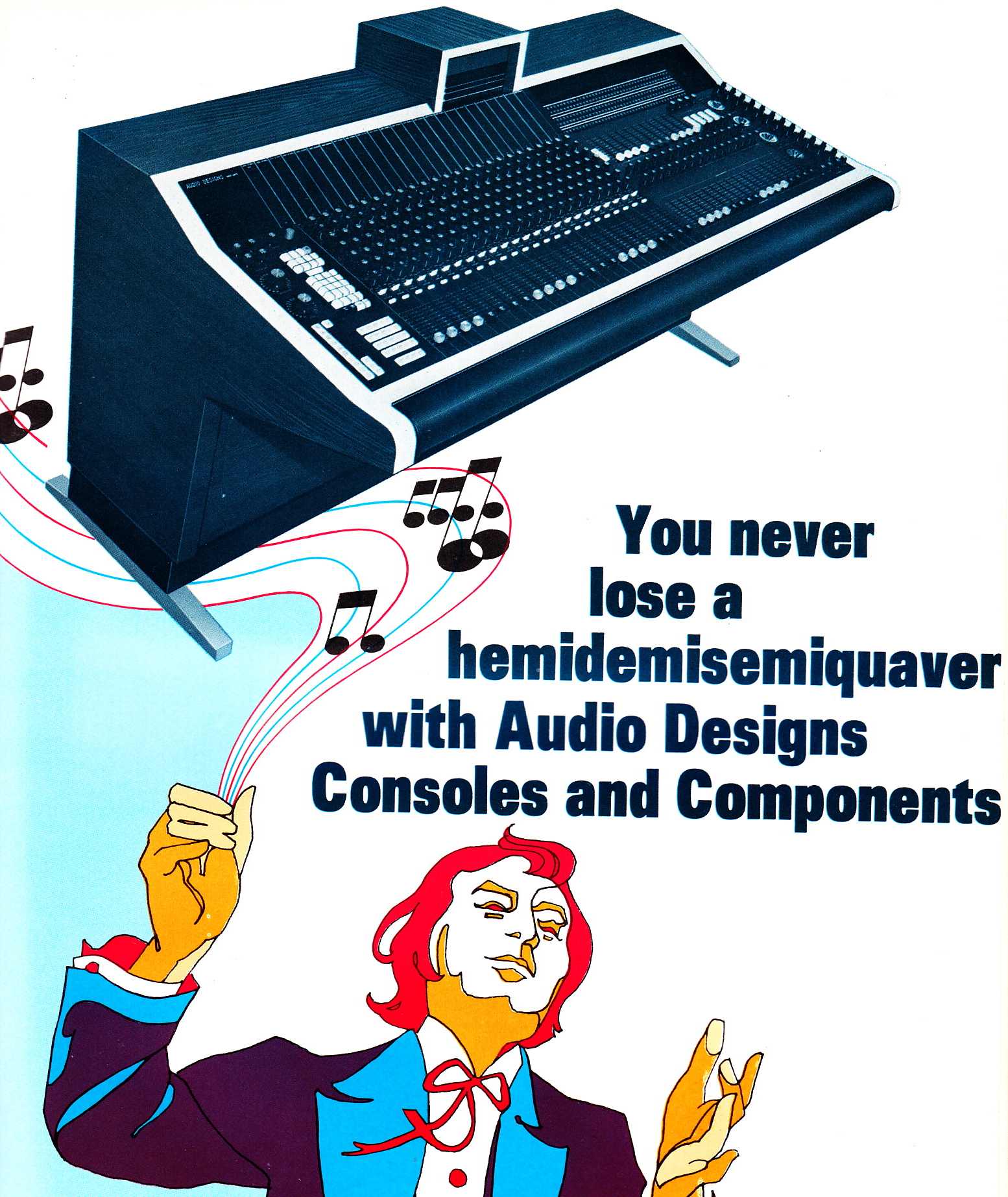
ADR_Consoles_1973ADR console circa 1973

Auditronics_Grandson_Console_1973The earlier iteration of the Audiotronics Grandson, this one from 1973
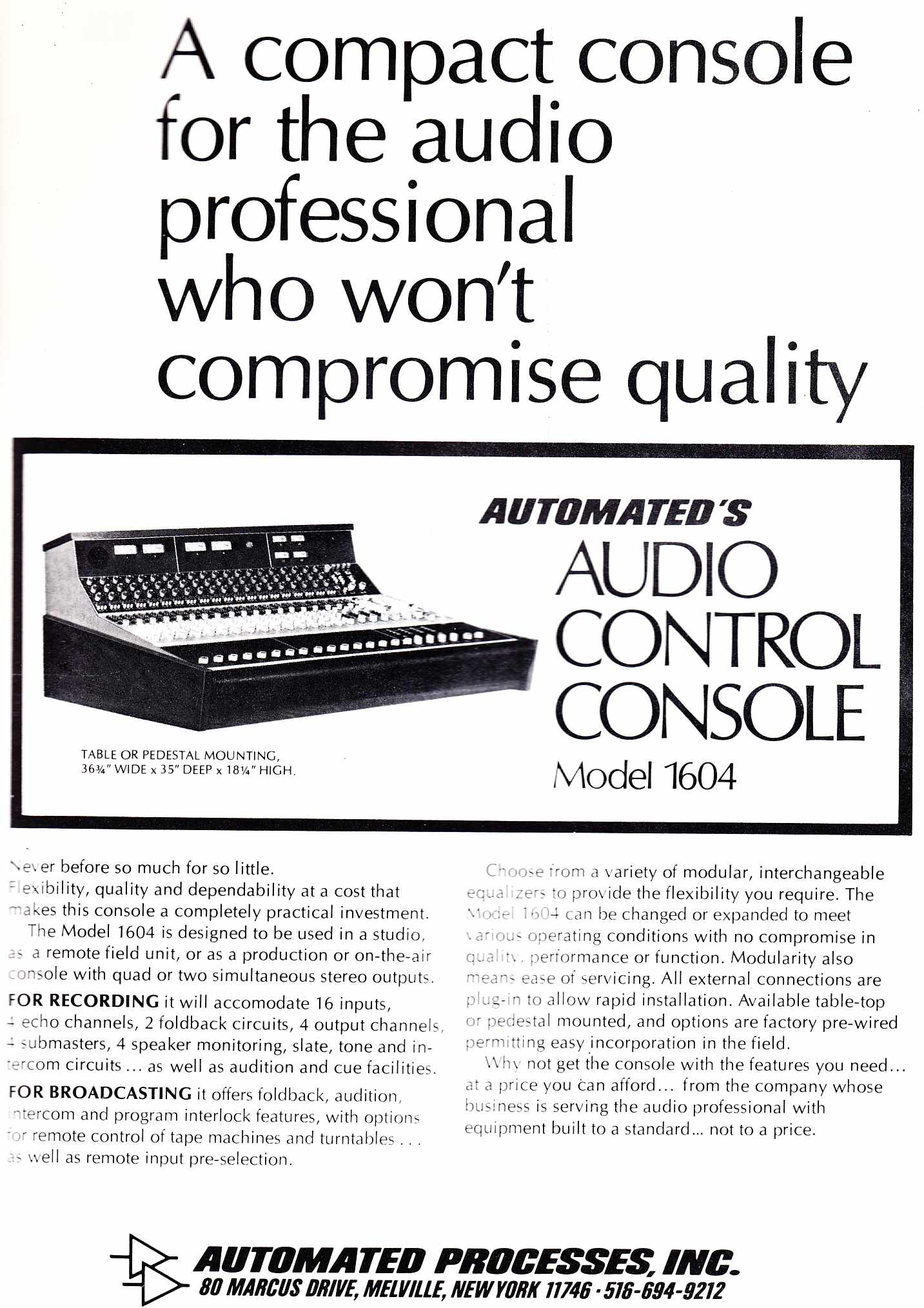
API_1604_Console_1974The API 1604 as-seen in 1974, and as still-seen in studios worldwide
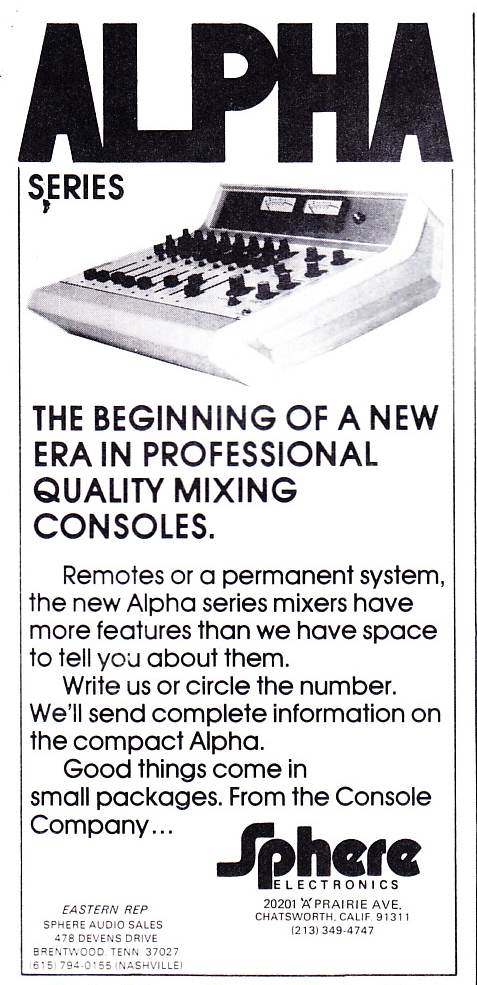
Sphere_Alpha_Mixer_1975Sphere was a high-end console-maker that I know almost nothing about; here we see their ALPHA, a compact model from 1975
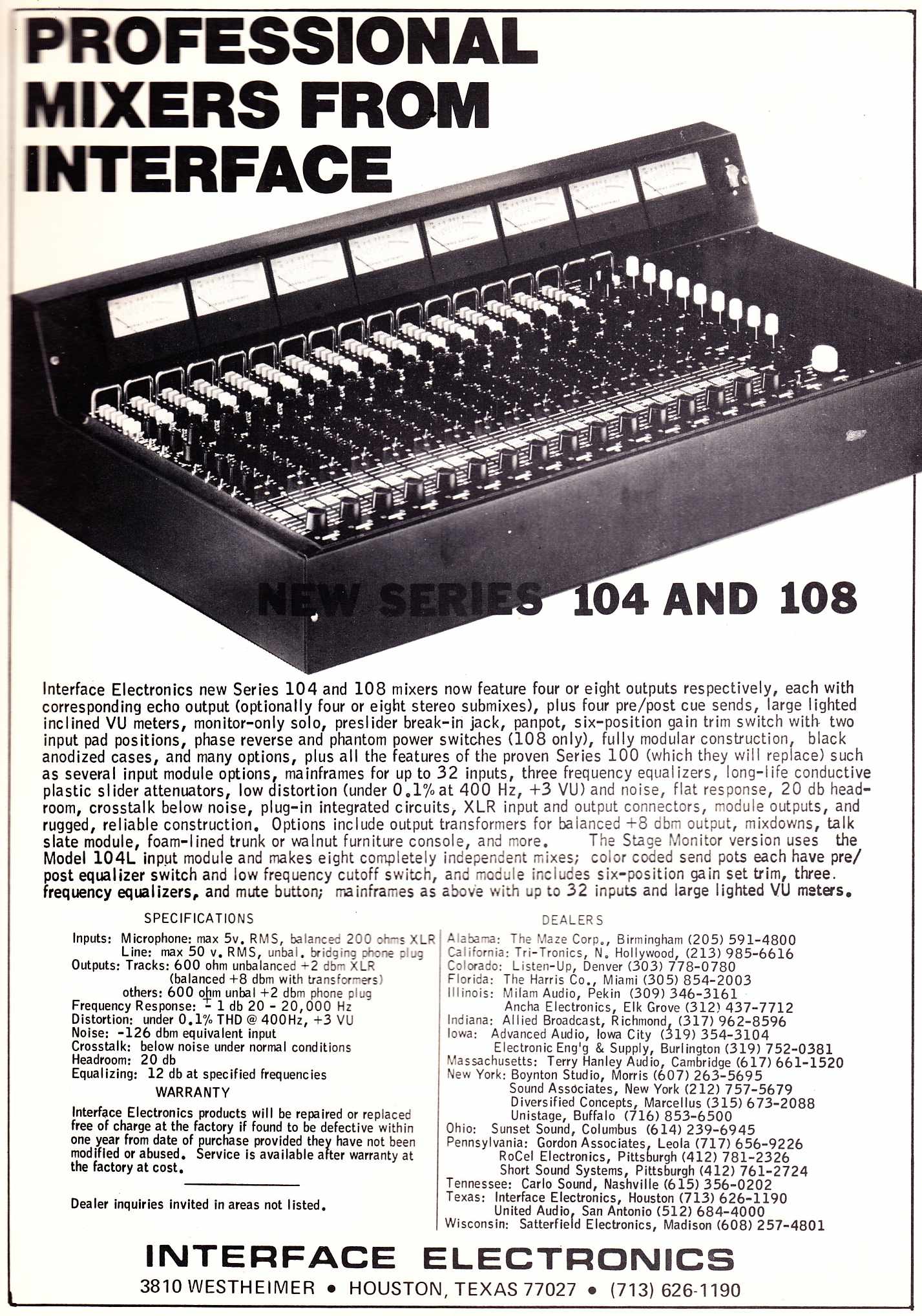
Interface_104_108_1976In 1976 Interface offered the 104 and 108 series consoles
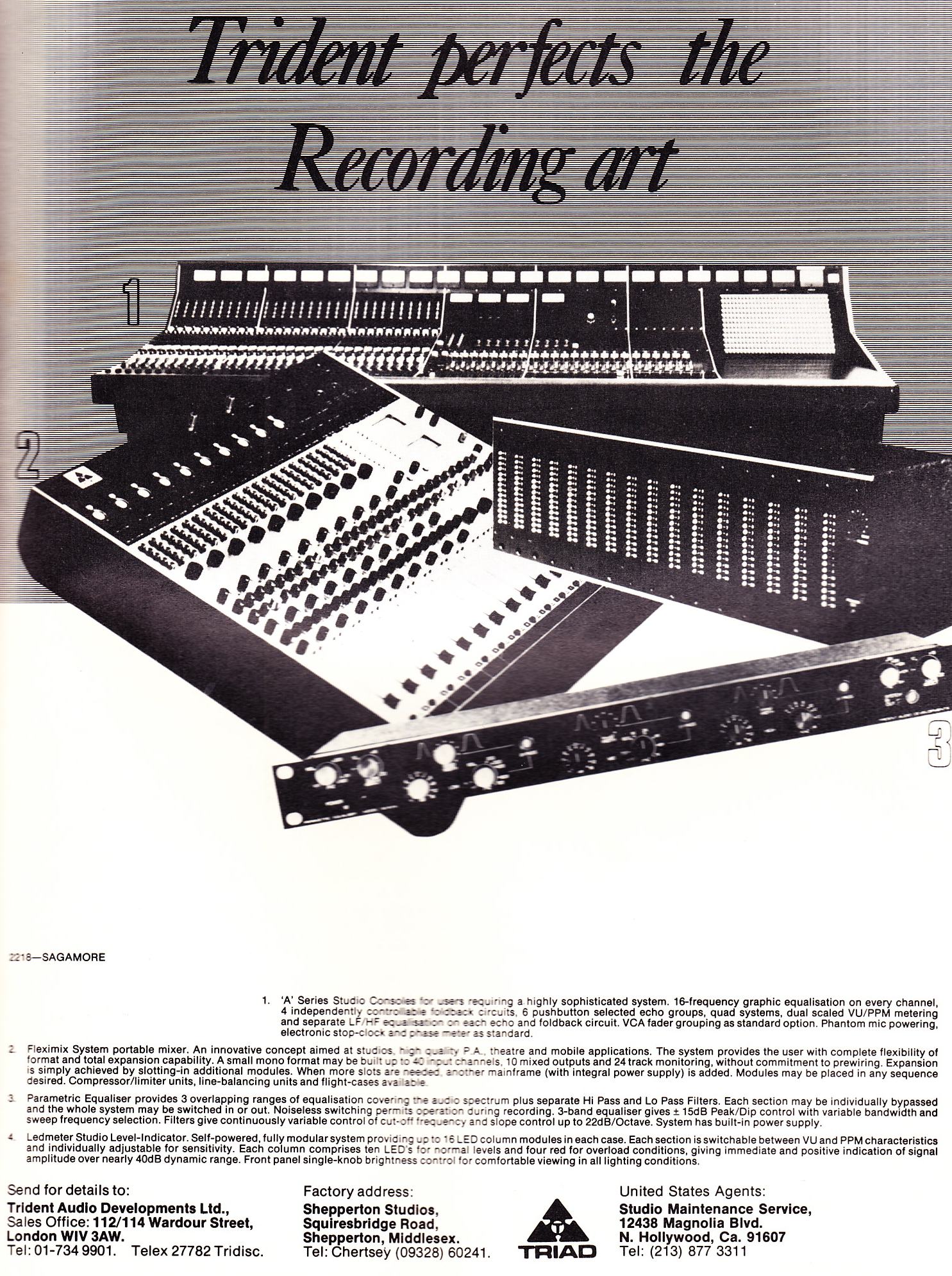
Trident_1977Above: the Trident range circa ’77.  Apologies for the poor scan, I think I may need to invest in a new scanner.  As I mentioned at the head, I learned on the Trident Trimix, which was a ‘portable’ unit (portable but still around 150lbs!) that was offered a bit later.  I later learned the dark side of the Trimix is that…  aside from the mic inputs, none of it is balanced and the signal-to-noise ratio is very poor.  Which brings up a good point: before investing in one of these things, research the specs.  What I hadn’t known then is that the Trimix was originally conceived of as a live console… designed especially for Queen, if I recall correctly…Anyhow, yes the EQ sounded amazing and the build quality was high but it was far too noisy for modern productions.
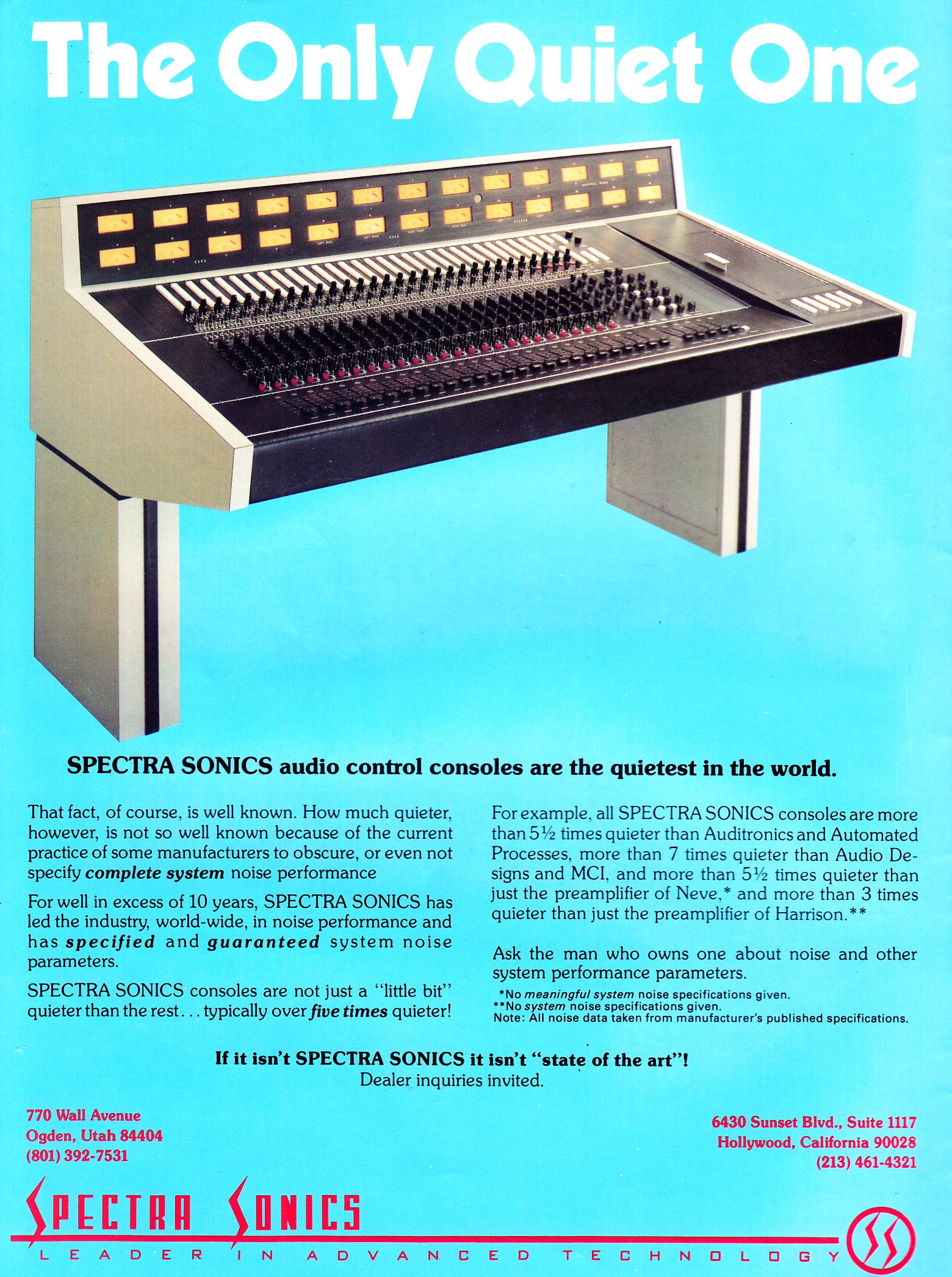
SpectraSonics_consoles_1977Above: Spectra Sonics console circa 1977.
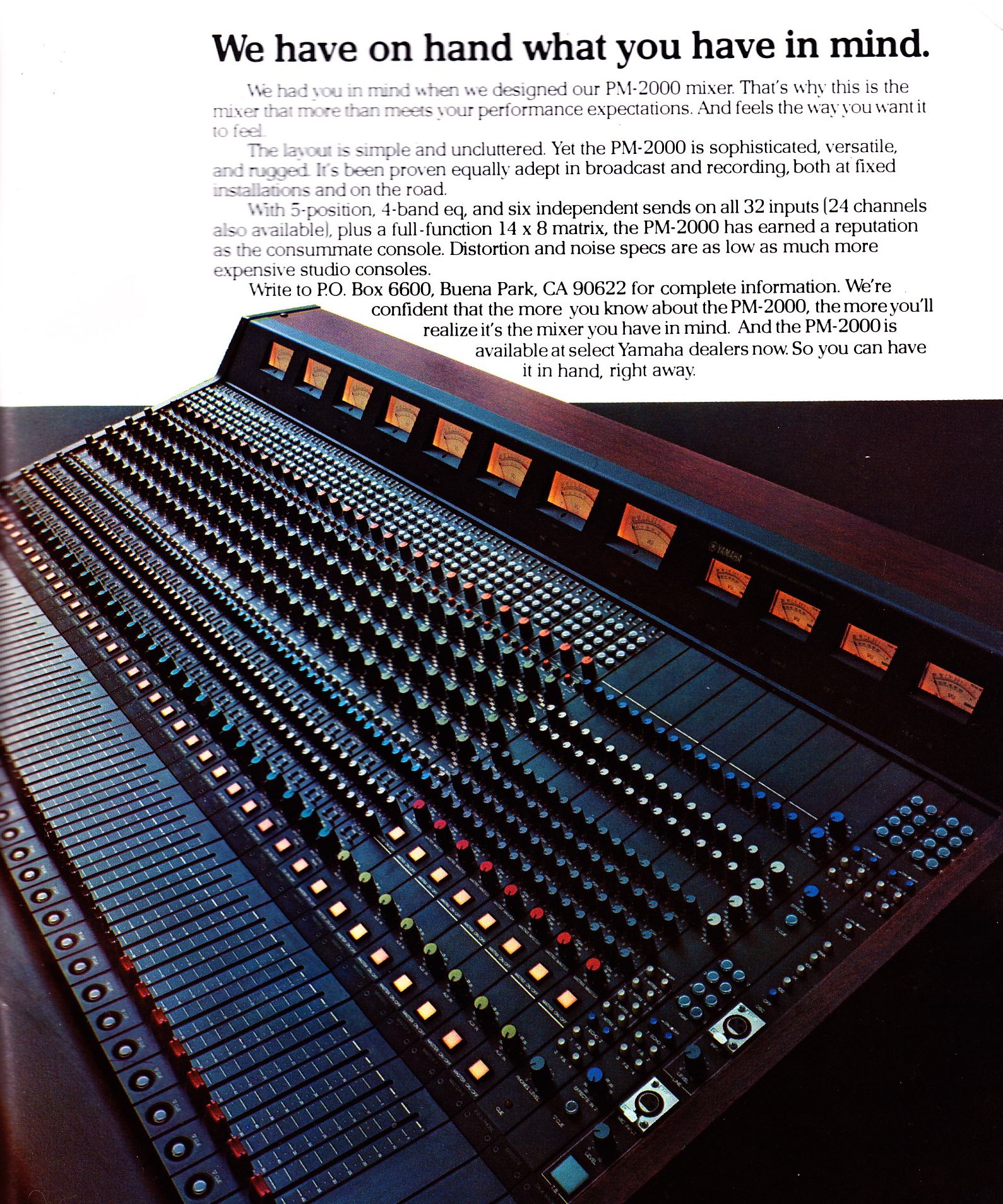
Yamaha_PM200_1980The Yamaha PM2000 of 1980, successor to the -“Japa-Neve” PM1000.  And apparently even better?  Weigh in…
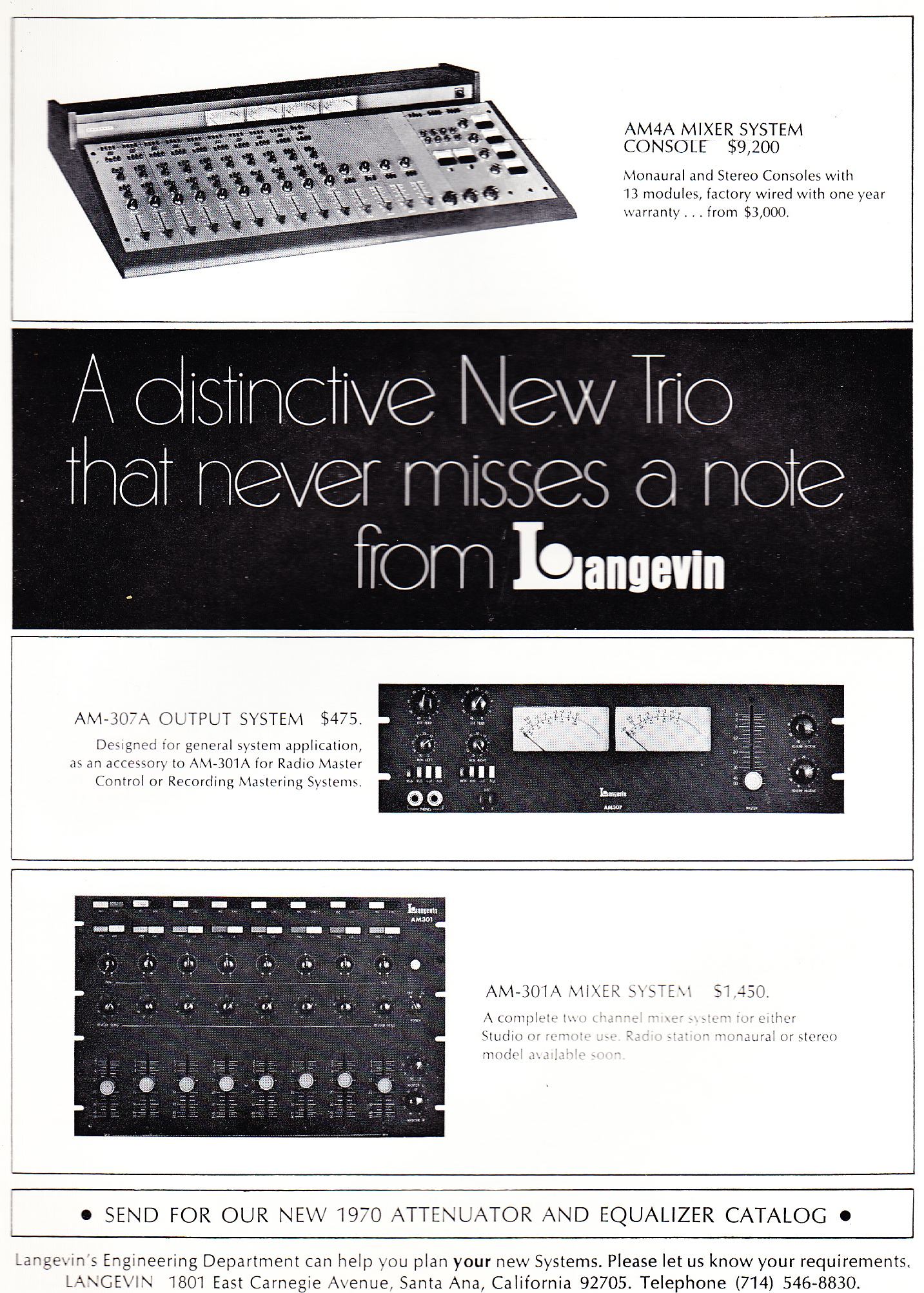
Langevin_Consoles_1970The Langevin AM4A of 1970.

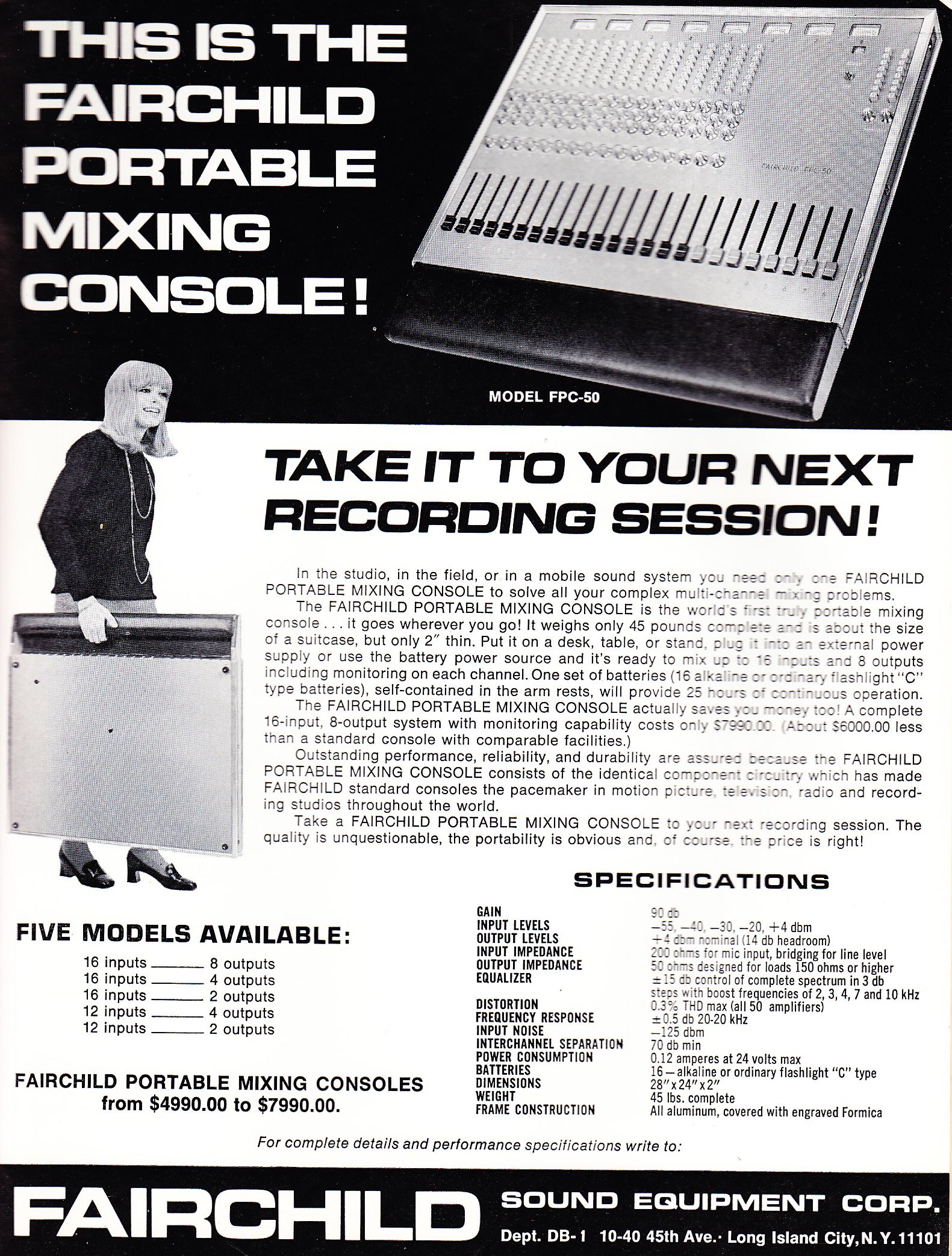
Fairchild_portable_Console_1970Here’s an unusual one: The Fairchild Portable Console of 1970, likely one their last pro-audio products.  I have never seen one of these before.  Anyone?
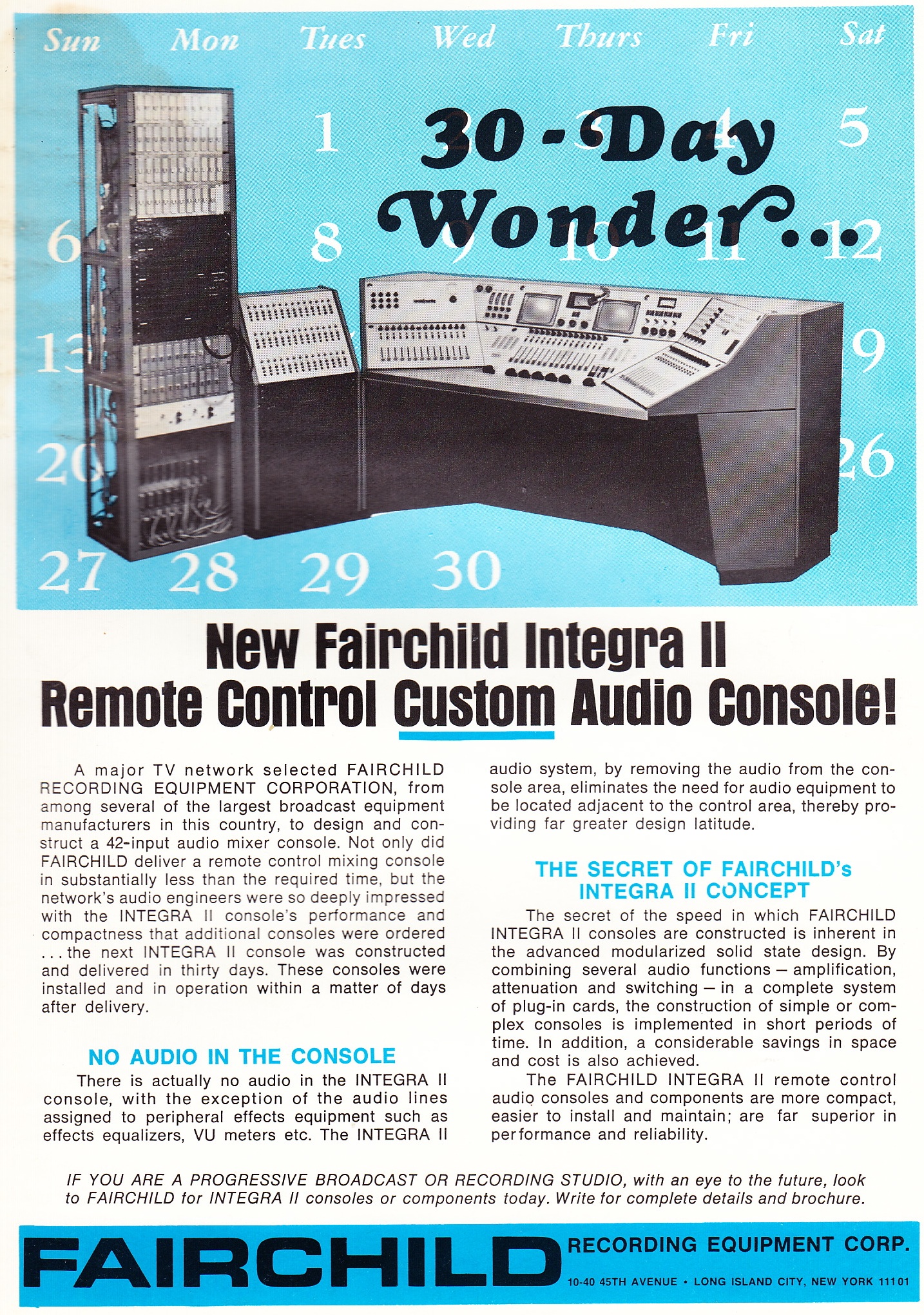
Fairchild_Integra_Console_1968…and not quite the 70s, but…  Fairchild introduces their INTEGRA console, 1968, with the bold notice “No Audio In The Console.”  It’s pretty incredible how ahead of its time Fairchild was.  Anyone ever use an INTEGRA?  Did it sound good/work well?  Bits and bobs from these monsters seem to surface on eBay all the time, but I doubt there is still a complete unit out there.  Anyone?
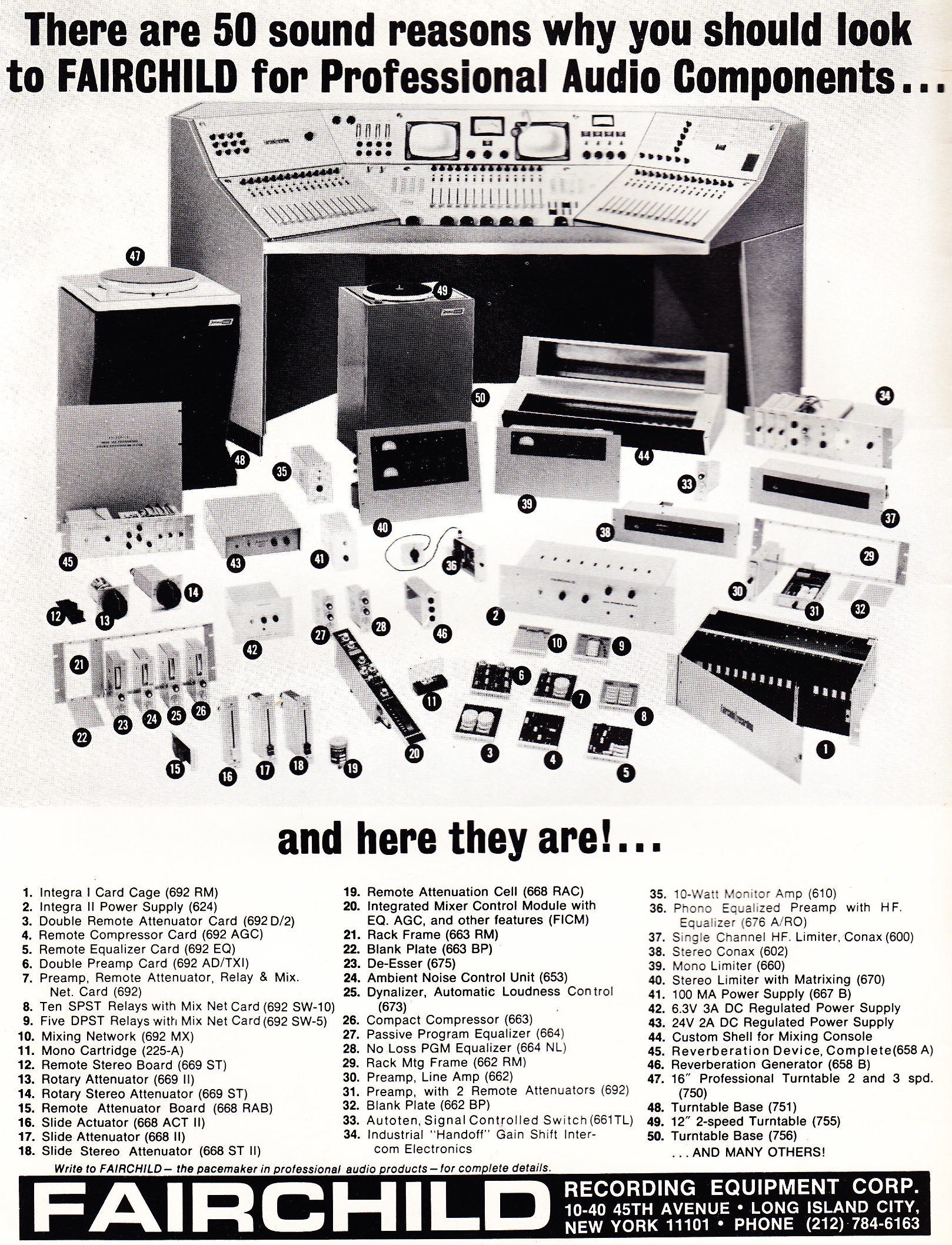
Fairchild_Integra_Components_1968…and here’s a breakdown of all the aforementioned bits+bobs.
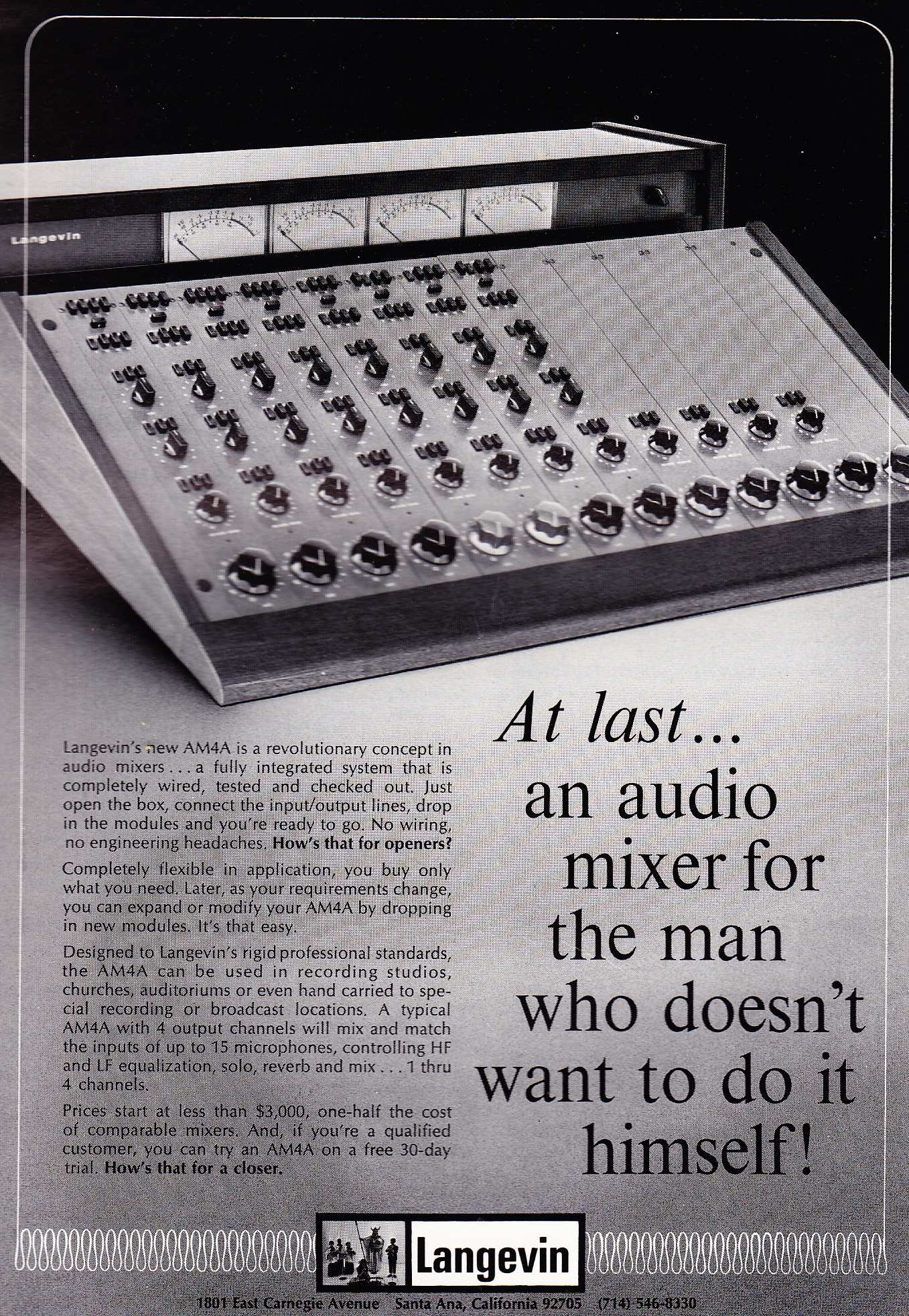
Langevin_AM4A_Console_1968While all of the Fairchild Integras may have been carved up, the Langevin AM4A, certainly the opposite end of the technological spectrum, seems to have fared quite a bit better… I often see these on the market in the $10K range, and I have to admit I have often been tempted…  Can any one tell us how these compare in terms of noise and response to a modern summing mixer?  Anyone using these to mix thru?
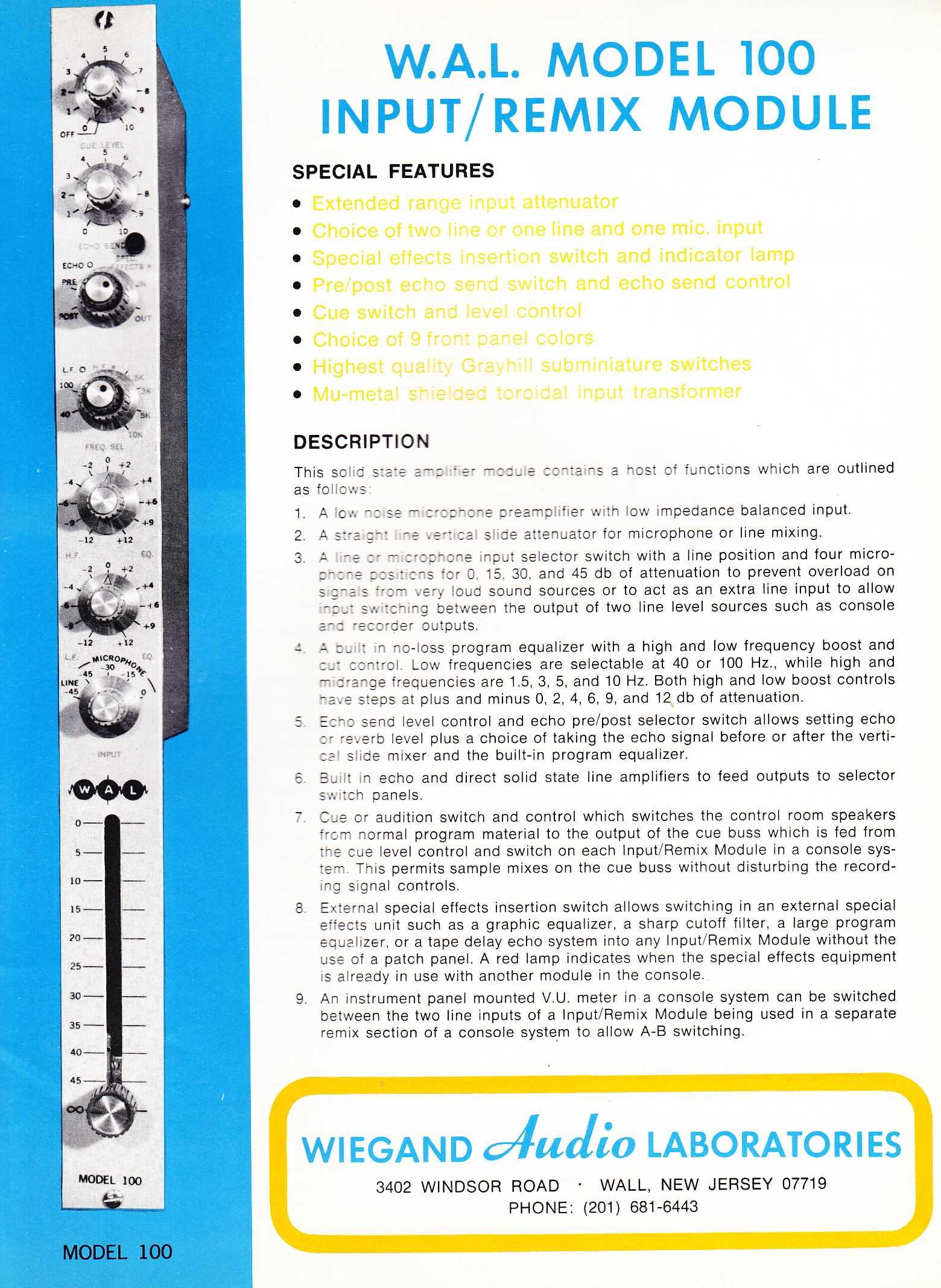
Wigend_WAL100_ChannelStrip_1969Wiegand Audio Labs offered their Model 100 channel strip in 1969
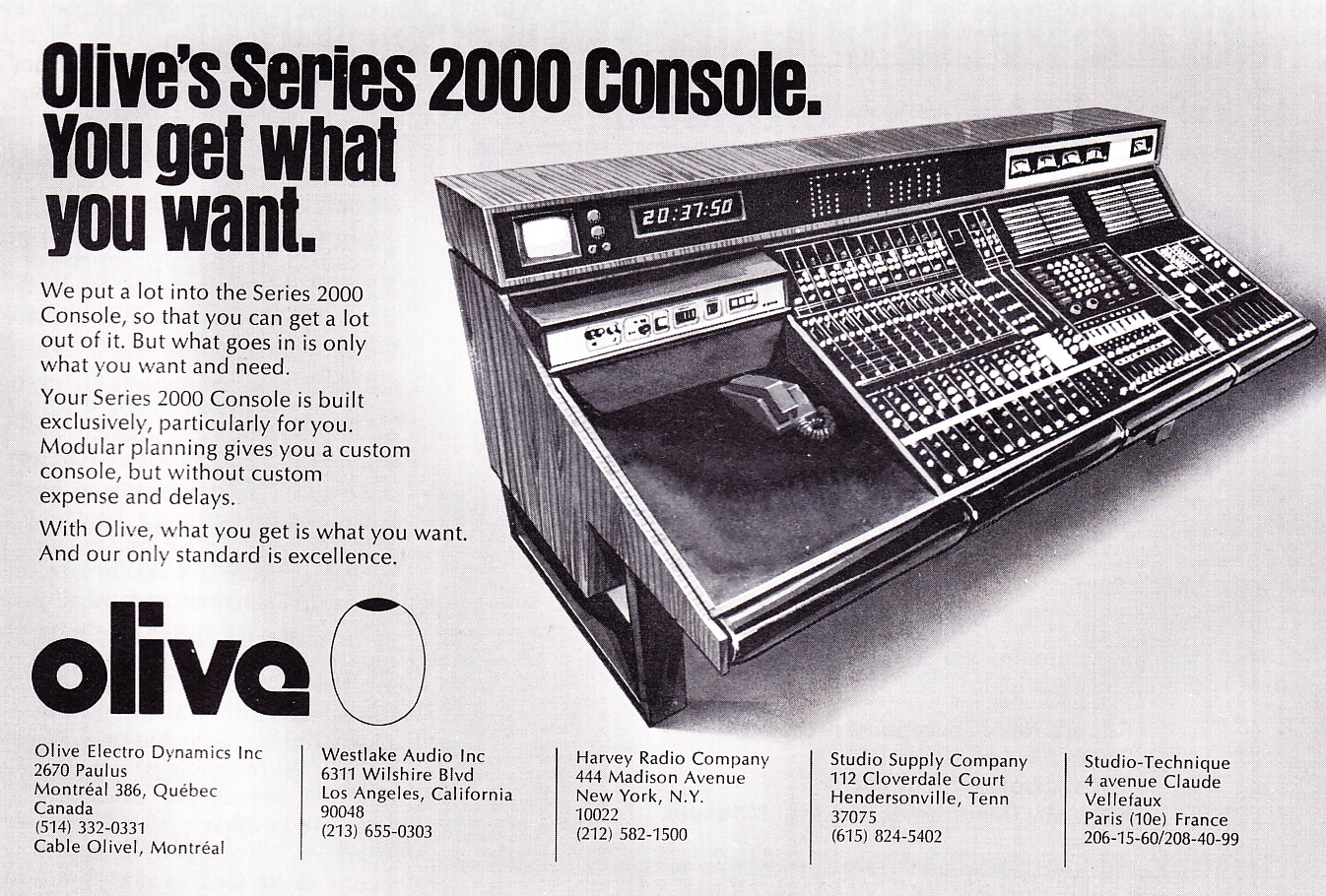
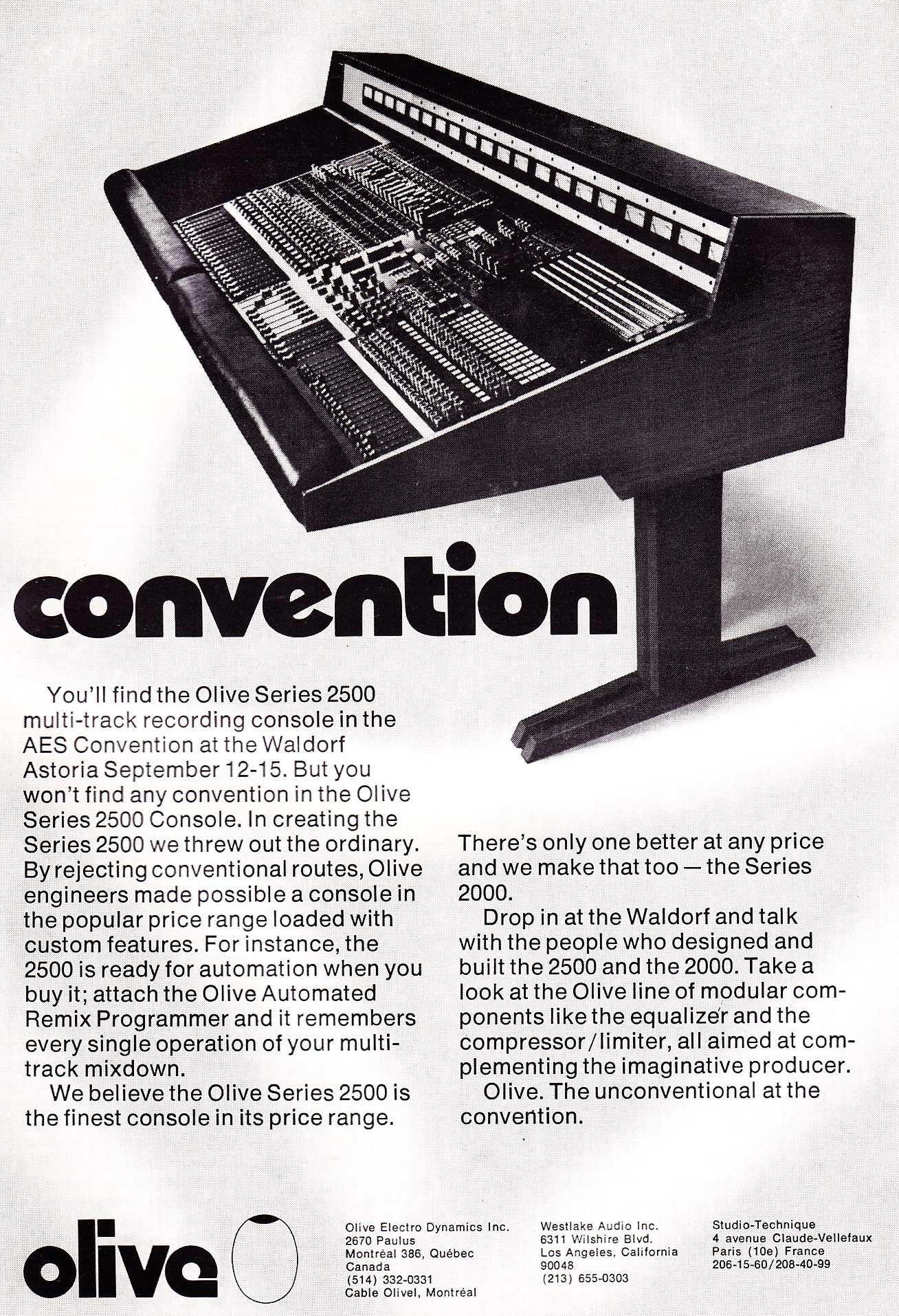
Olive_2000_Console_1972Montreal represent!  I KNEW there had to be a Montreal maker of boards in the 70s… and sure enough, we find OLIVE.  Here’s the Olive 2000 circa 1972.  Seems lost-to-history…  anyone?
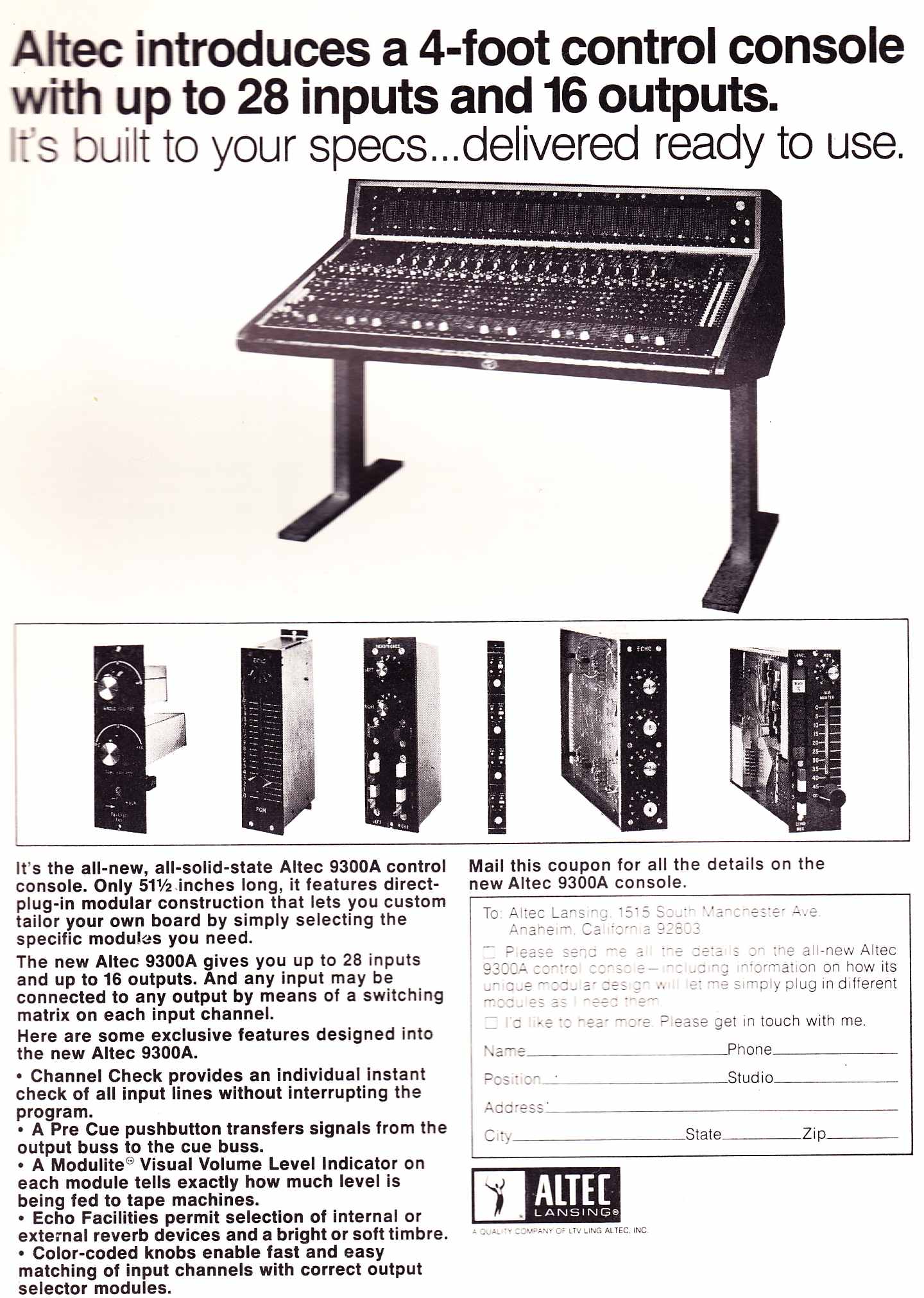
Altec_9300A_Console_1970

Much closer to Langevin than Fairchild, here we see the Altec 9300 circa 1970
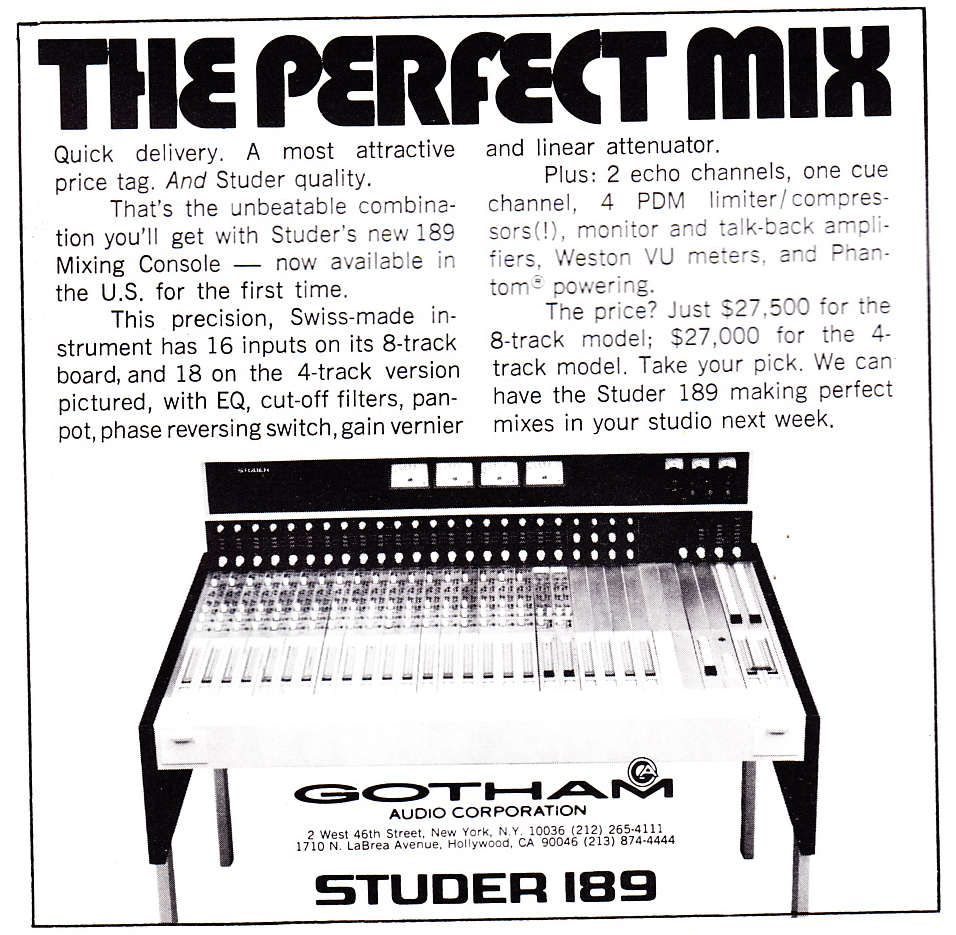
Studer_189_Console_1972Above: Studer 189 circa 1972.  Just $148,000 (no typo) 2013 dollars! 
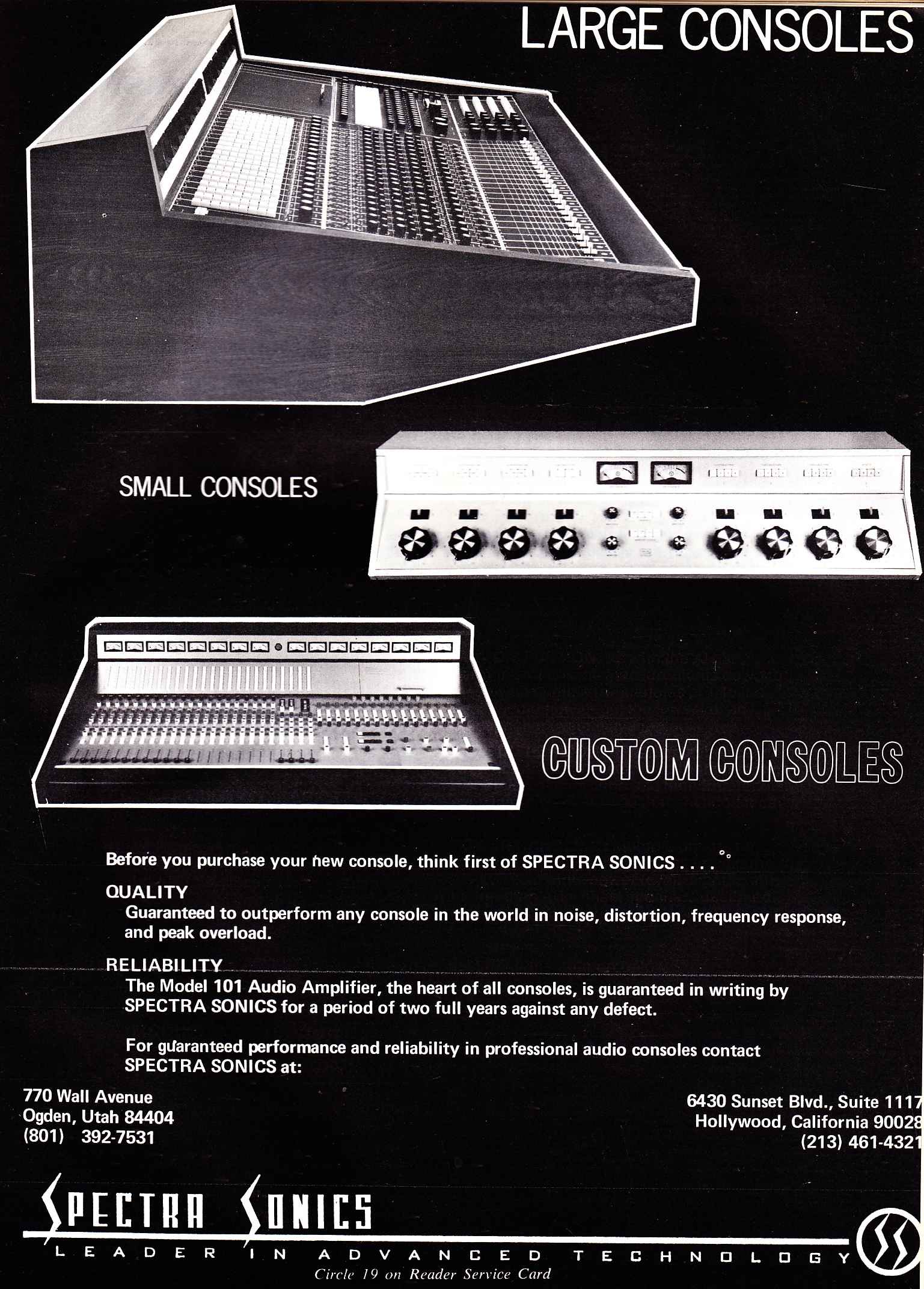
SpectraSonics_Consoles_1972Spectra Sonics 1972

Olive_2500_Console_1972Olive also offered a 2500 model in 1972

*************

*******

***

If any of y’all are actively using any of this stuff, write in and let the world know how they are in terms of sonics, reliability, and general utility.  There is very, very little information online concerning some of these pieces, so you could end up being very helpful to some potential future user of these these machines…
Categories
Altec Pro Audio Archive

Altec full-line 1976 catalog

Altec_1976_Catalog_Cover70’s months at P S DOT COM continues with a fresh scan of the complete 1976 Altec pro audio catalog, complete with pricelist.  Presented in two parts due to file size.

DOWNLOAD PART 1: Altec_1976_part1

DOWNLOAD PART 2: Altec_1976_part2

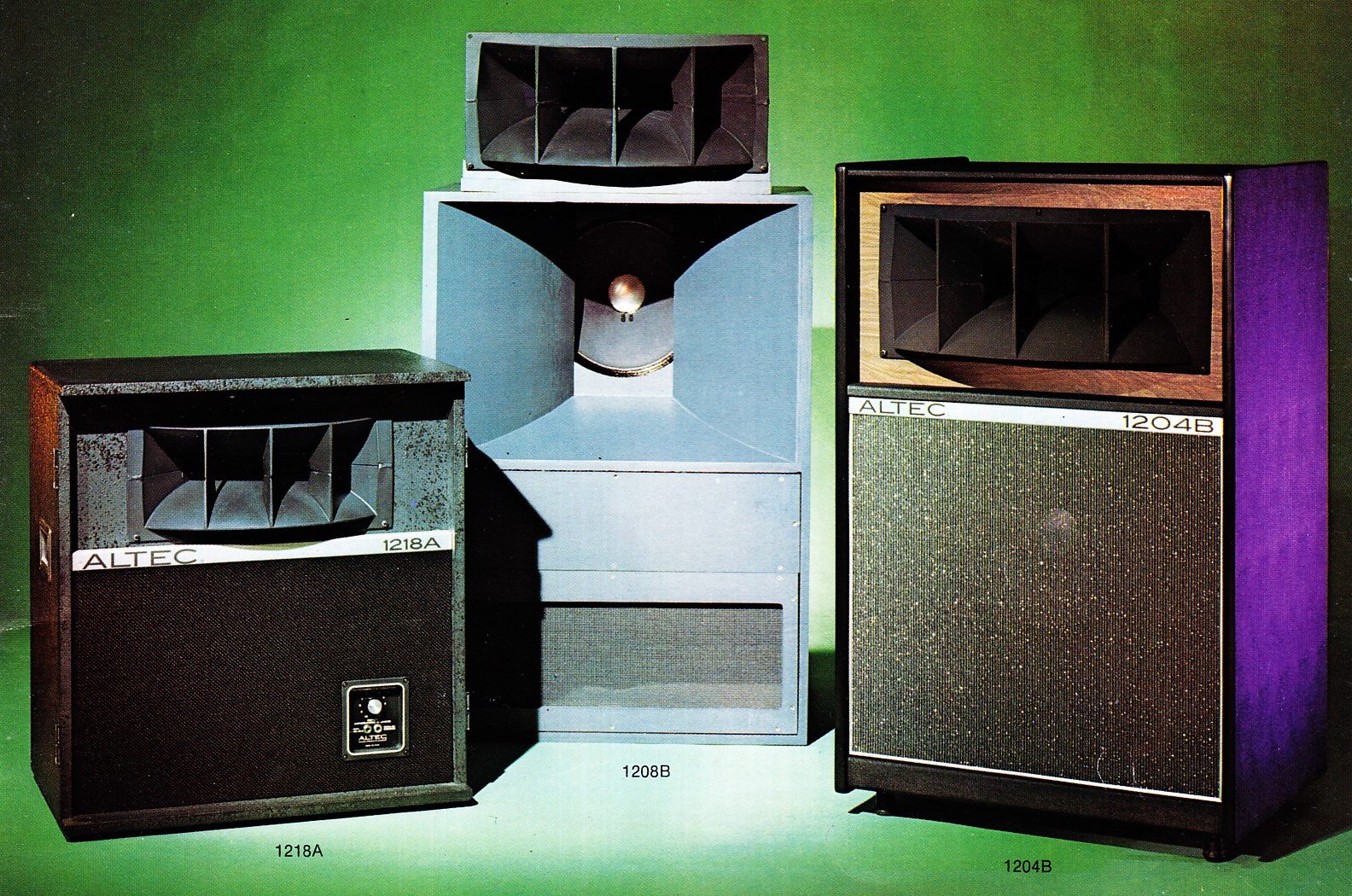
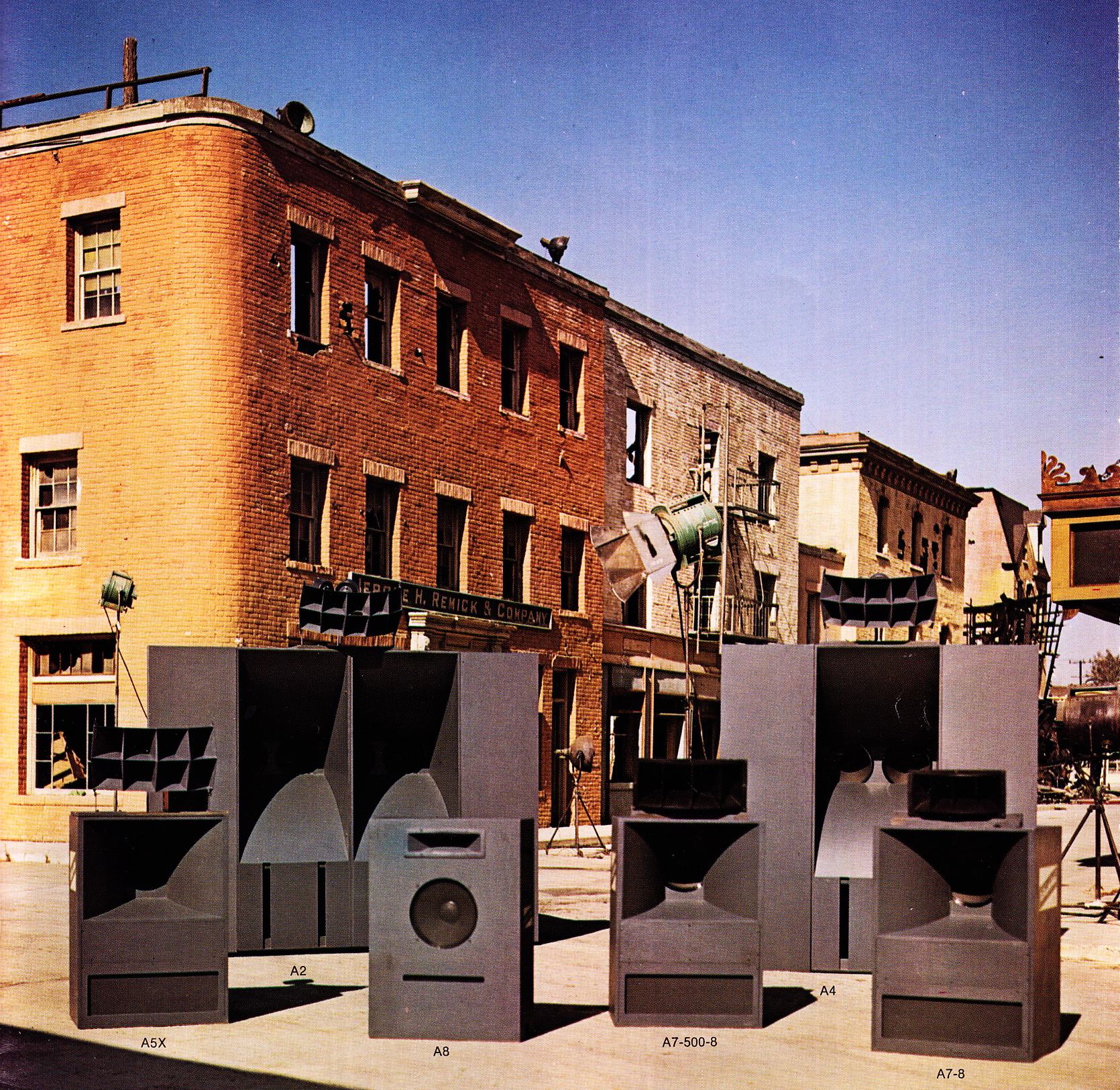
Altec_Cinema_1976Above: Altec’s classic Cinema loudspeakers, including (LR) the 1,300lb A2 speaker.

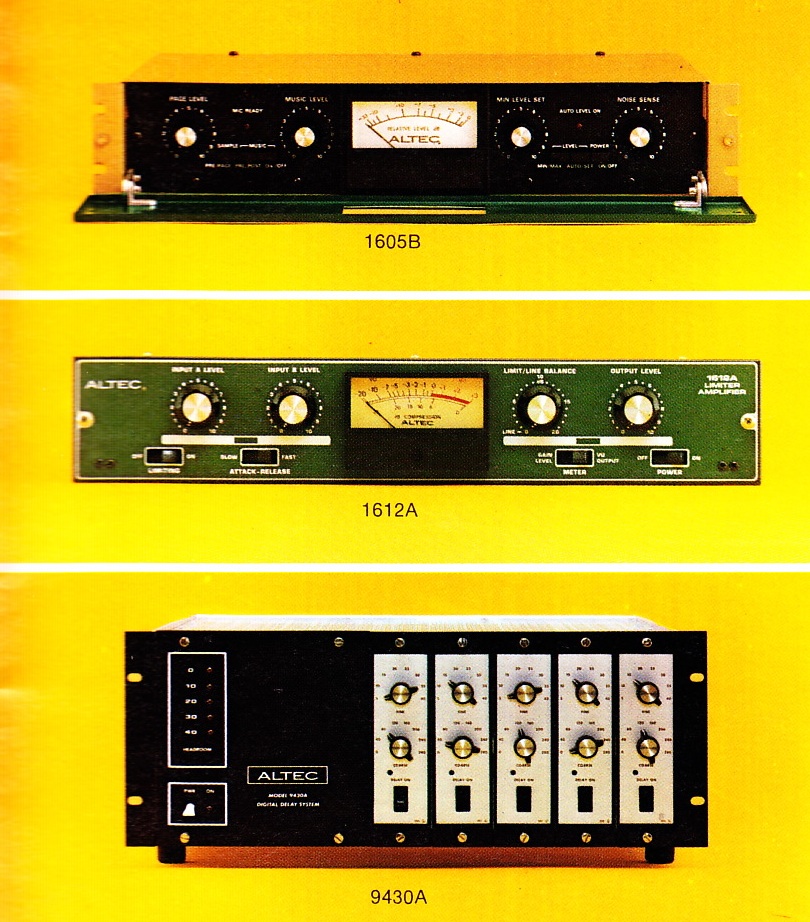
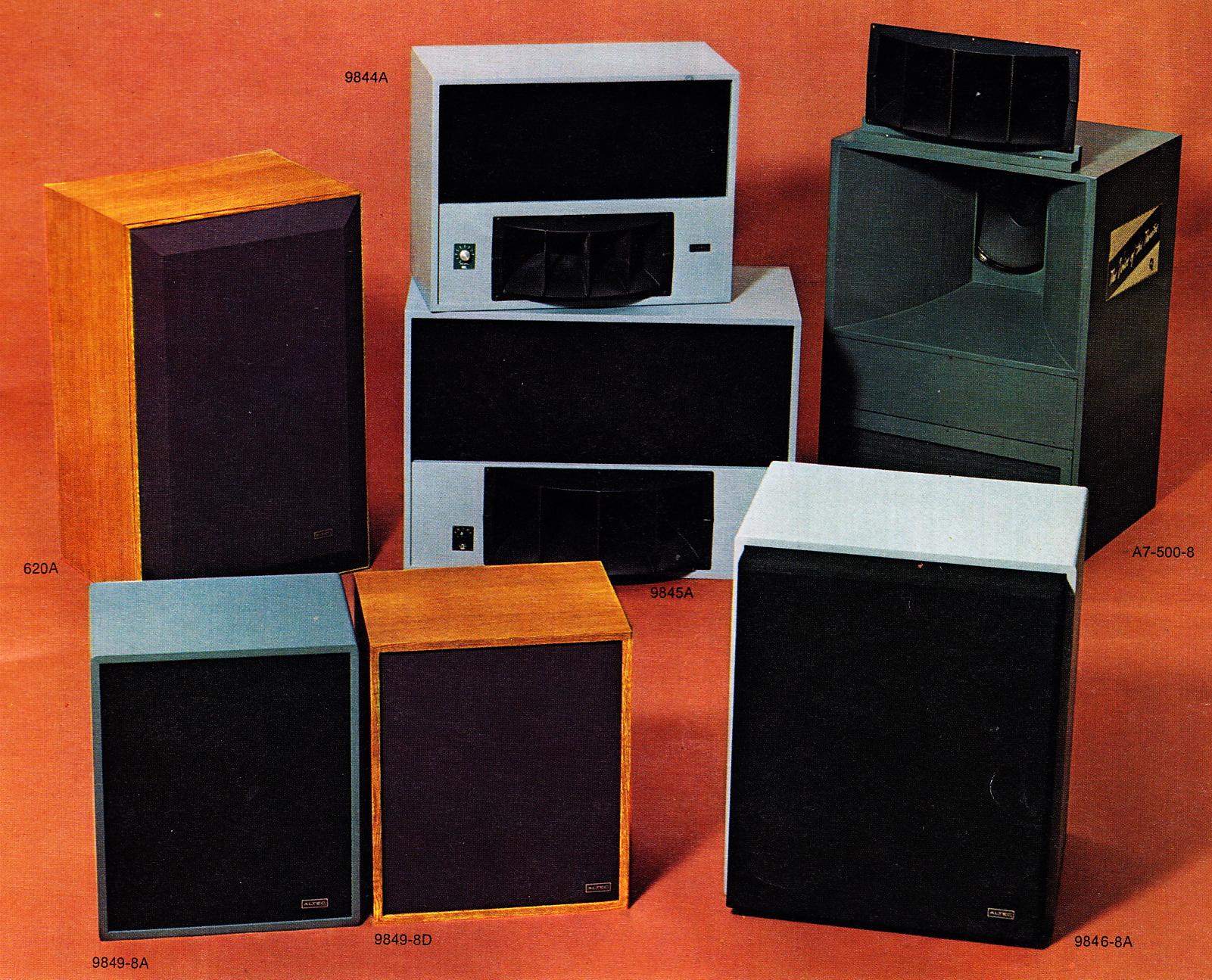
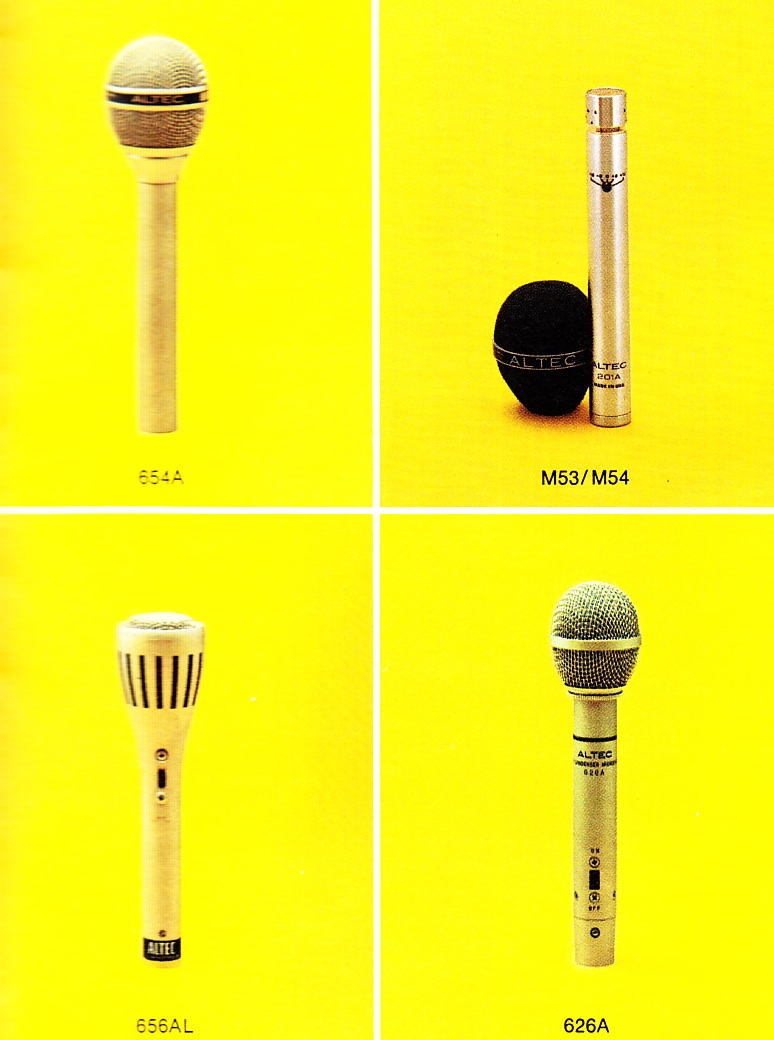
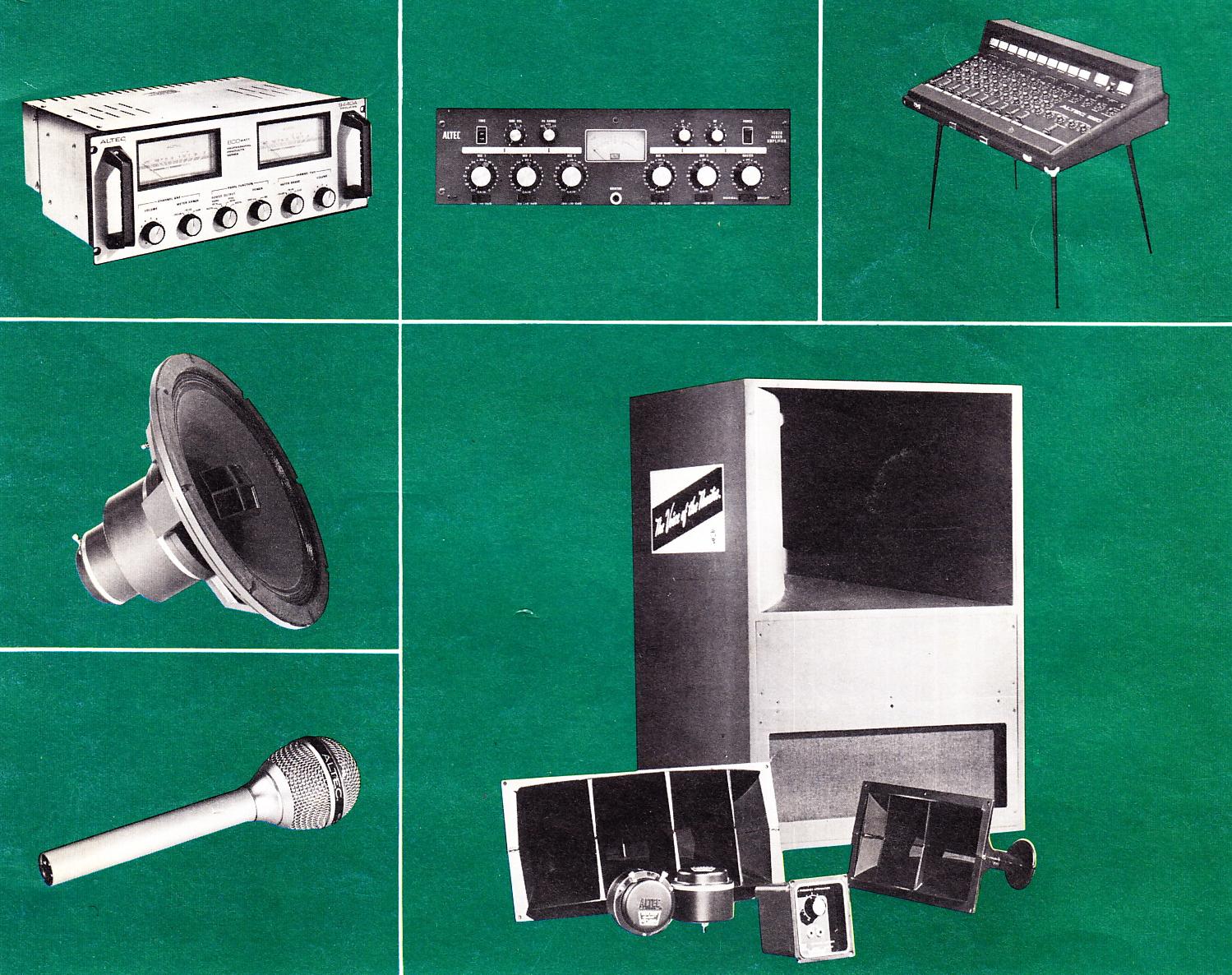
Products covered, with text, specs, and photos, include: Altec 1240B, 1208B, and 1218A ‘Voice of the Theatre’ speaker systems; 1221A stage monitor, 1219B speaker and 1224A Bi Amplifier, Altec A2, A4, A4X, A5X, A7-8, A7-500-8, and A-8 VOTT; Altec 9845A, 9844A, 814A, 849A, 210, 211A, 612C, 614D, 815A, 816A, and 828B speakers; 604-8G, 620-A, 9844, 9845A, 9849-8A, 9849-8D studio speakers, Altec 203B, 311-60, 311-90, 803B, 805B, 1003B, 1005B, 1505B, 32B, 511A, 511E, 31A, 511B, AND 811B horns; Altec 1211A and 1217A column loudspeakers; 417, 418, 421, and 425 musical instrument speaker; plus many many more speakers and speaker components.  We also see the Altec 1220AC mono console, 351C, 1590C, 159B, 1594B, 9440A, 1224A, 1609A amplifiers and 1606A, 1607A, 1608A, and 1611A mixer/amps; Altec 1628A, 1592B, 1599A, and 1589A mixer/preamps; 1603 coupler, 1605A expander, 1612A compressor, 1650 EQ, 9430A digital delay (looks like a lexicon-made unit) and 9880A filter; a load of other bits and bobs, and microphones including the Altec 650, 654, 656, 655, 677, 676, 668, 699, M53, M54, 624, 626, and 687.

Outboard_Altec Altec_VOTT_1976 Altec_Studio_Speakers_1976 altec_Mics

Categories
Connecticut Audio History

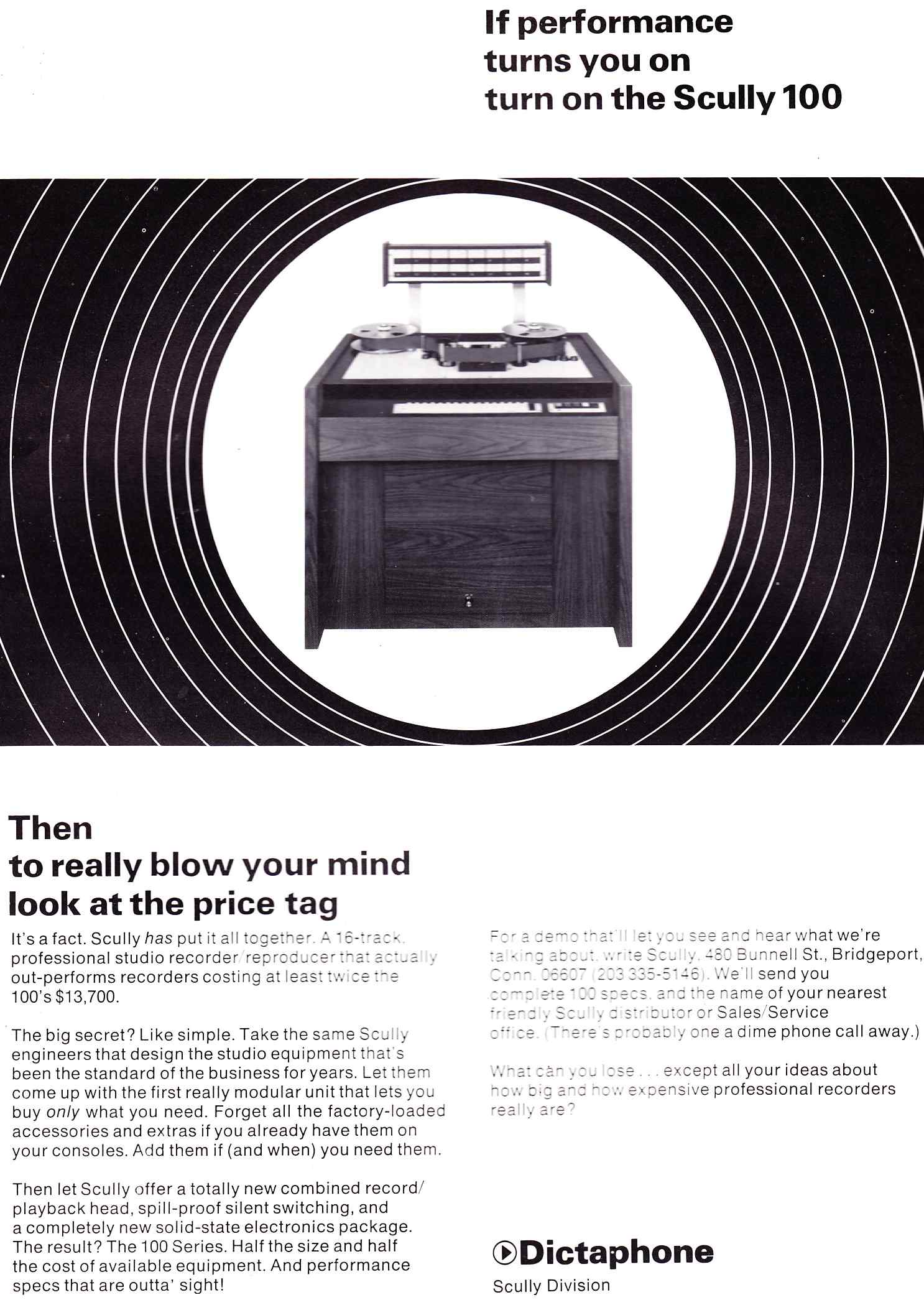
Scully Model 100 Sixteen-Track Tape Machine of 1971

Scully_100_16trackMachine_1971Above: The Scully 100 is introduced: 1971.  I love these headlines…  “…turns you on…   blows your mind….”   Amazing.  Anyhow… any of these still makin albums out there?  Let us know…
Categories
Connecticut Audio History

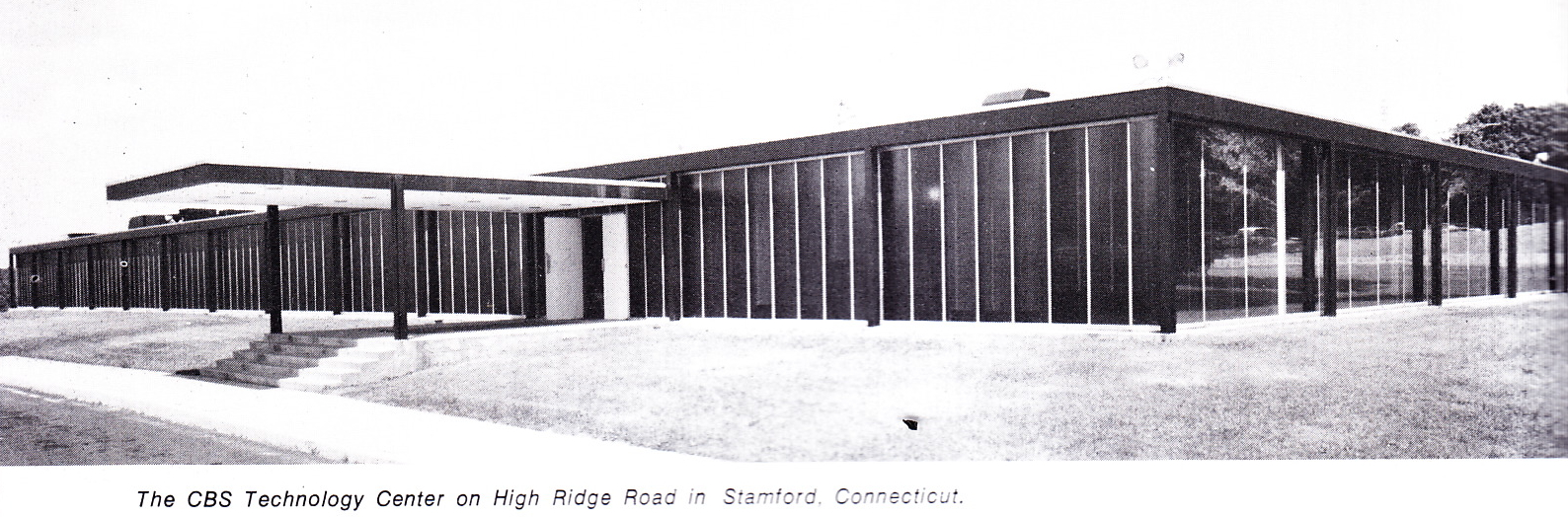
The CBS Tech Center, High Ridge Road, Stamford CT

CBS_Tech_Center_1975Above: The CBS Technology Center, development site and testing-ground for audio hardware, as seen in 1975.  An important piece of Connecticut audio history.  Any of y’all ever work at this location?  Is the building still standing?  Drop us a line and let us know.

Categories
Uncategorized

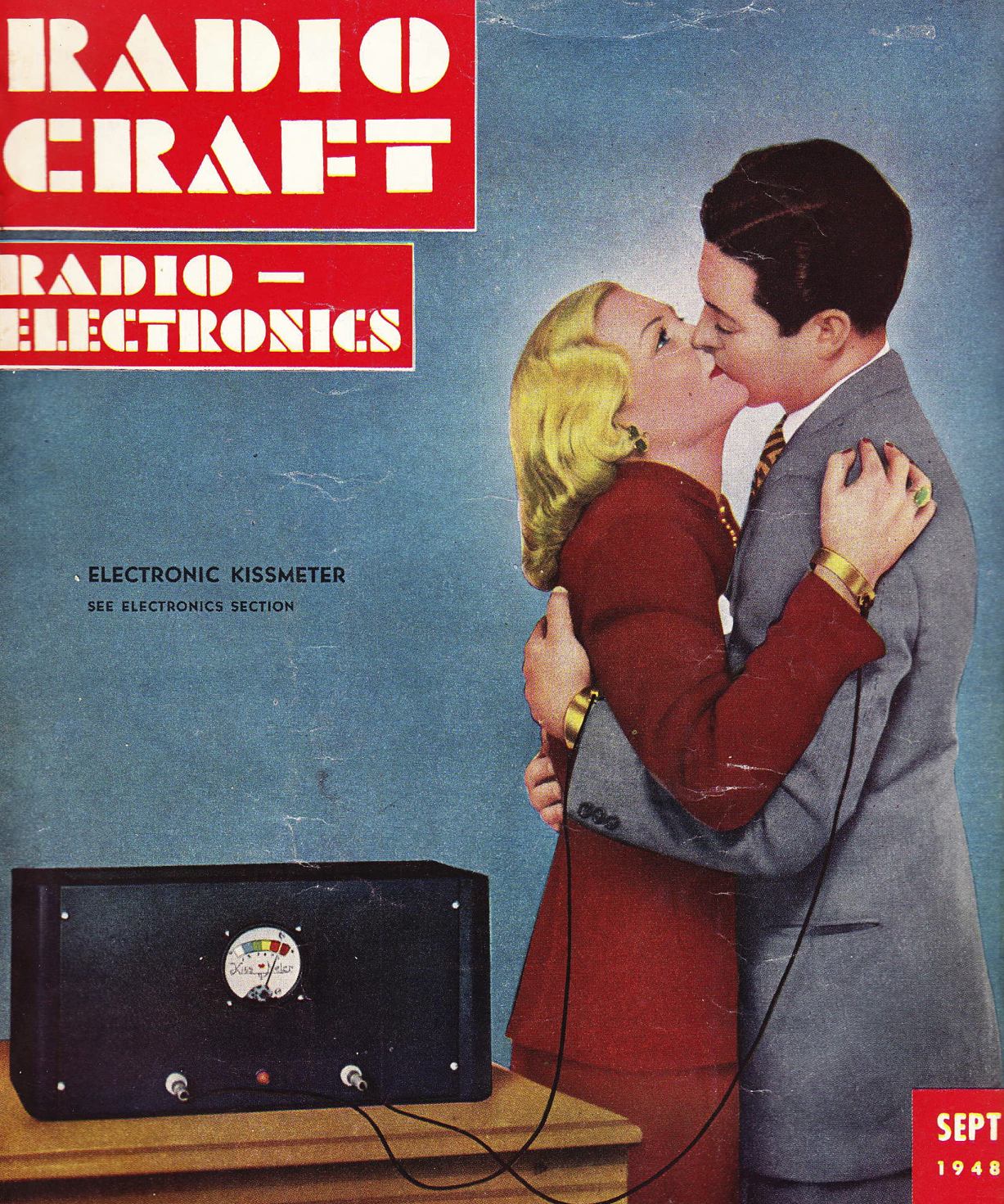
When DIY Gets Sexxxy (SFW)

RadioCraft_cover_0948From RADIO CRAFT 9/1948: plans and schematics to build a vacuum-tube powered KISS METER. In the post-war period of frenetic coupling and reproduction (via Baby Booms), new technology like this was required to ensure optimum conditions of repopulation.  Apparently.  Download a 3-page PDF here:

DOWNLOAD: Kissmeter

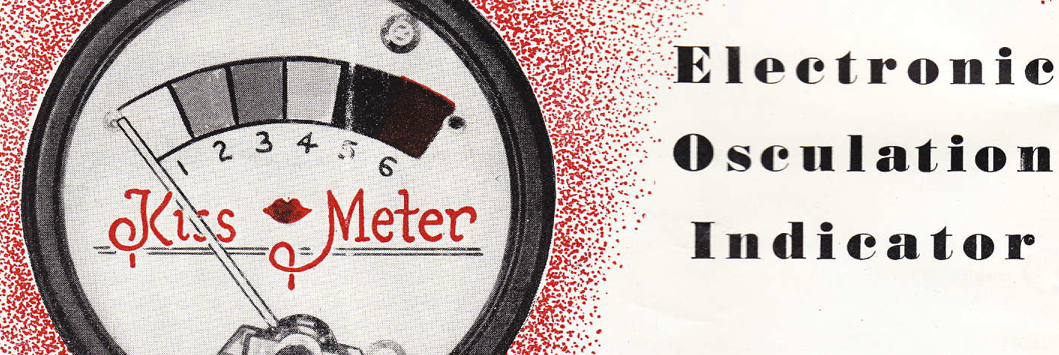
meterWe see here the 6J5, long considered to be the most romantic tube.  When two 6J5s love each other very, very much they can combine and create a 6SN7!  HANDS-DOWN WORST JOKE EVER. 

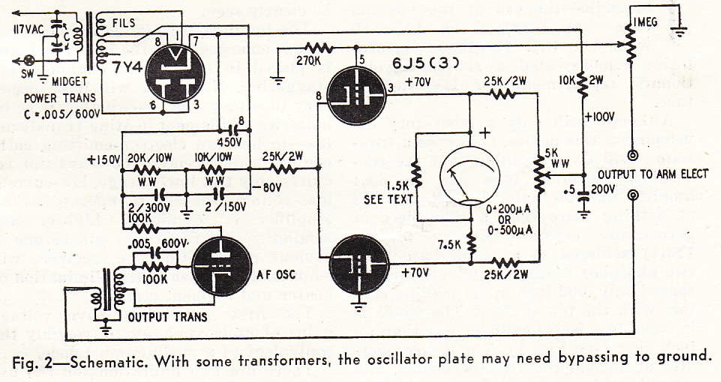
Happy Valentine’s Day!   Schematic below.

Schematic_Kissmeter

Categories
Uncategorized

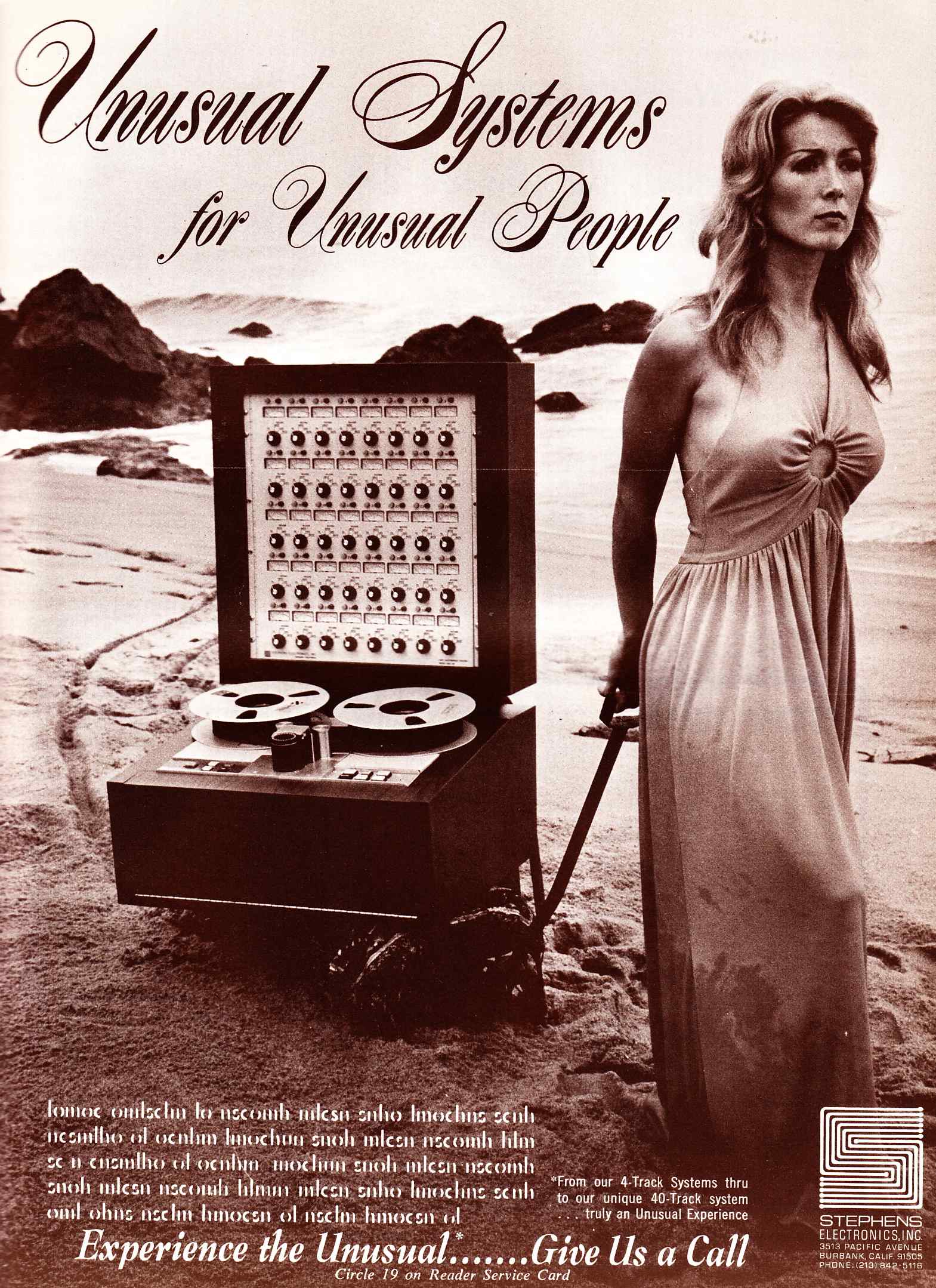
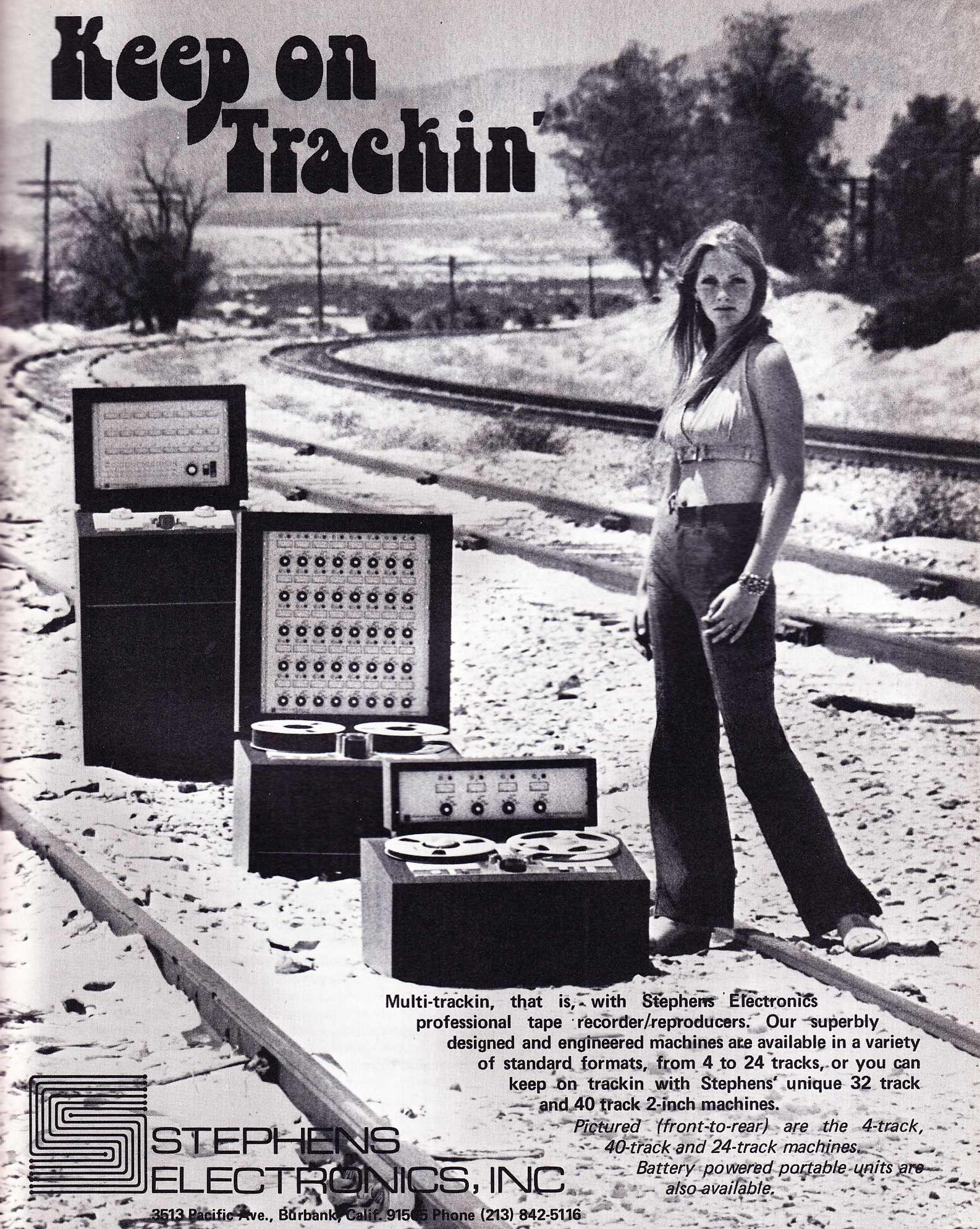
Stephens Electronics, maker of the 40-track analog multitrack machine (1973)

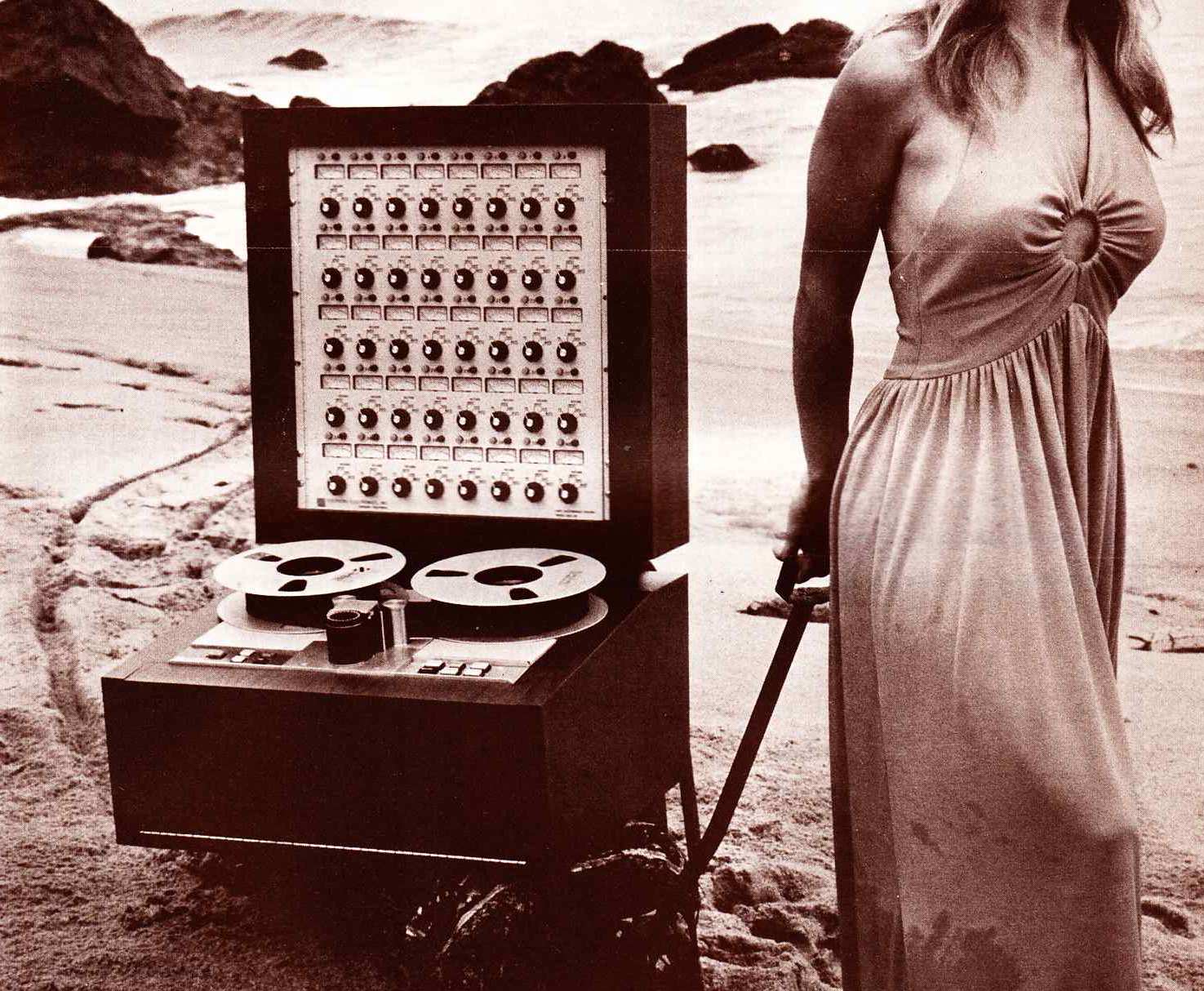
Stephens_40_track_1973Commercially-released albums were made on 24-track tape machines for a very long period of time, approximately 1971 – 1995.  Now, before 24-track machines were available there was always the possibility of ping-pong’ing, which can get you 8 solid-sounding tracks on a 4-track machine (and at least 20 on an 8-track) , and at some point in the 70s engineers were able to lockup two 24-track machines to get, I imagine, 46 tracks of audio plus timecode.  But as early as 1973, Stephens Electronics of Burbank offered another solution: a 40-track, 30 IPS 2″ tape machine that still promised 40 – 2oK response.  Users of these machines apparently included Leon Russell and Roy Thomas Baker; can anyone positively confirm any well-known records that were made on the Stephens 40-track?

A helpful dude has made the original Stephens catalog/spec sheet available online; click here to download the PDF (not my link).

Let’s get back to that advert tho…  WTF is going on here?

moodyPensive lady

draggingDrags 132lb tape deck along beach

GreekNonsensical ‘greek’ placeholder copy tells us nothing

headlineHeadline hails the freaks

Aphrodite FowlerThere’s clearly some sort of Venus/Aphrodite metaphor at work here, but what exactly IT ALL MEANS remains a mystery (at left, a painting of Aphrodite by Fowler).  I could find one other similar-period Stephens advert, and it’s a little quirky, but not as bizarre as beach-lady.

Stephens_ad_1974Any of y’all using these machines nowadays?

Many former Stephens users report that the machines compare well to Studer and Ampex in terms of sonics.  They were also designed for utmost mechanical and electronic reliability; designer John Stephens apparently had a background in aerospace engineering.  The machines seem to be few and far between these days, commanding prices well above that of similar vintage Studers.

Categories
Uncategorized

Now for some really obscure shit

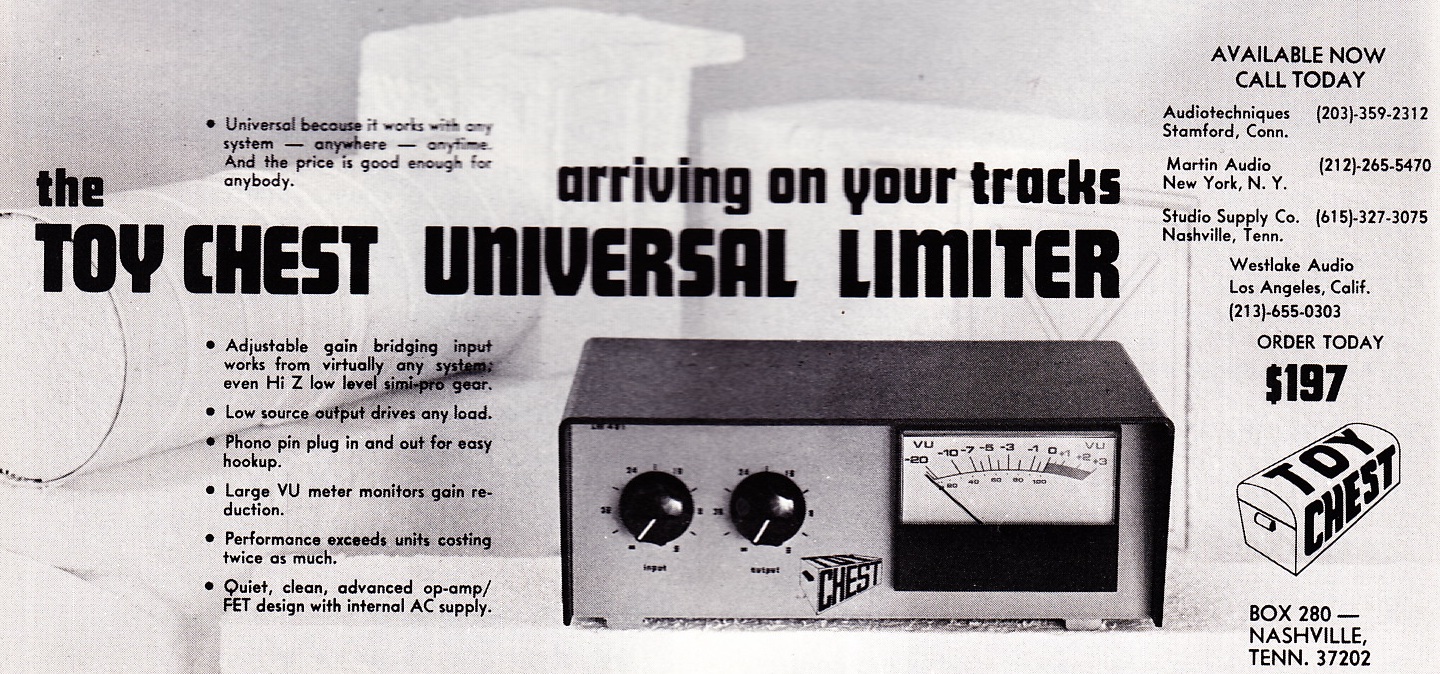
ToyChest_Universal_Limiter_1973Above: the TOY CHEST brand ‘Universal Limiter,’ a FET limiter produced in 1973.

Today at PS dot con: some interesting+bizarro seventies pro audio kit that caught my eye; i can find little to no reference to any of this stuff online.  Anyone?

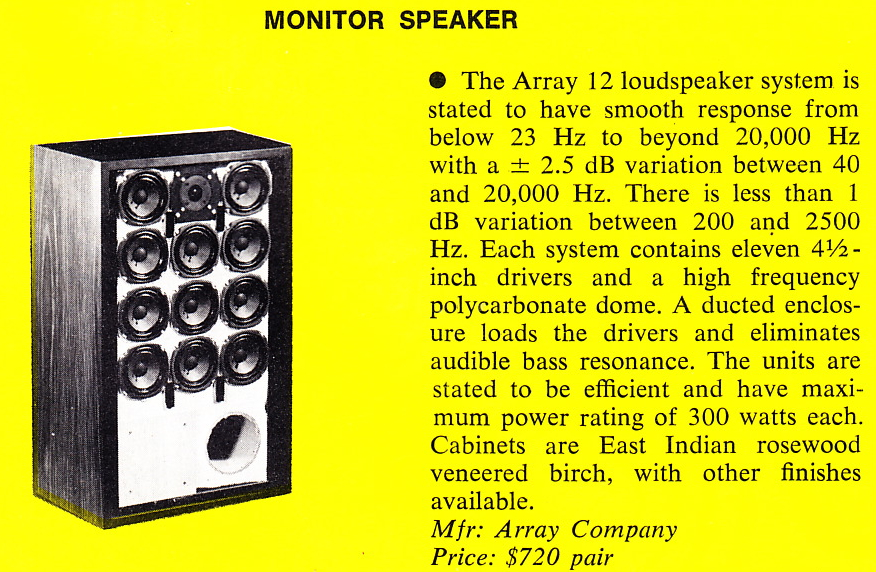
Array_12_Monitor_1972

Above: The ARRAY Co. model 12 studio monitor of 1972, which SEEMS similar in principle to the classic BOSE 901, except that…  all of the twelve drivers in the ARRAY fire forward.  I can’t imagine what these must have sounded like but i would love to know!

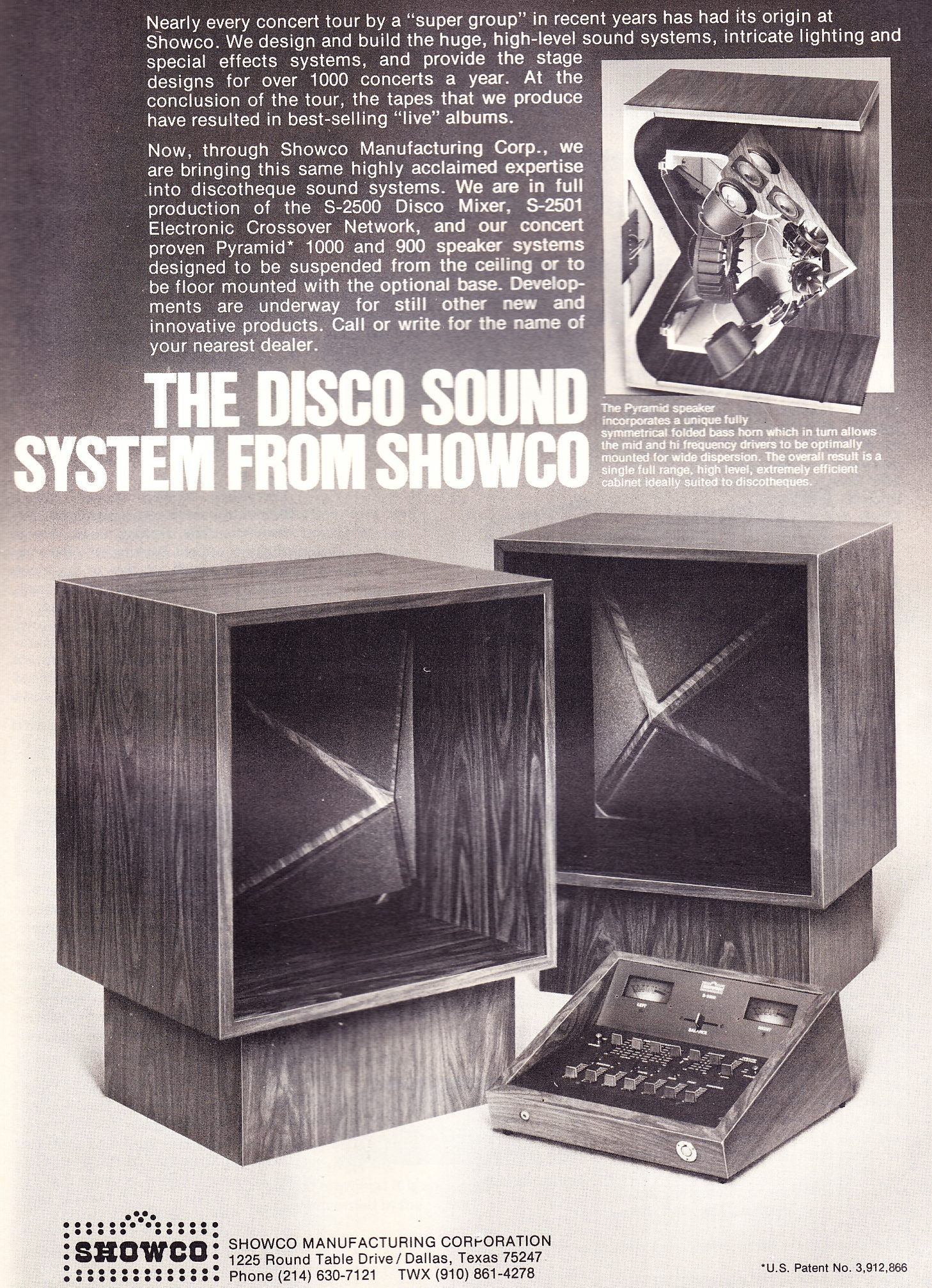
ShowCo_Disco_speakers_1977Above: the Showco Pyramid model 1000 loudspeaker. 

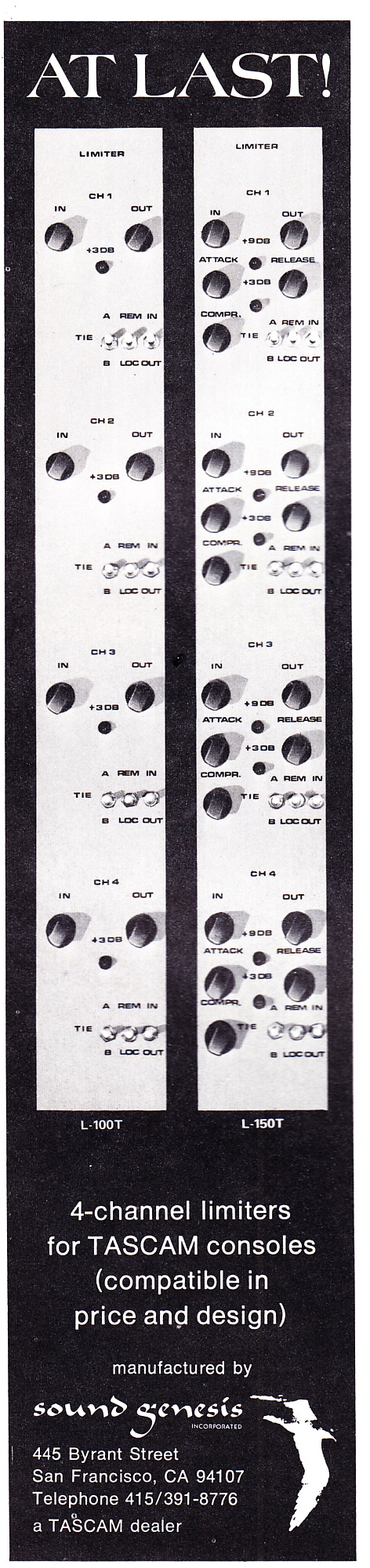
SoundGenesis_TascamLimiters_1975And, at left: Sound Genesis Corp, which was primarily a retail operation, AFAICT, offered these buss (i am guessing?) limiters as aftermarket add-ons for the early Tascam mixing consoles!  Very interesting.  Did any one else make similar drop-in aftermarket strips for Tascam boards?  Circa 1975.

Categories
Connecticut Audio History

1973: The Mark Levinson Pre Amp

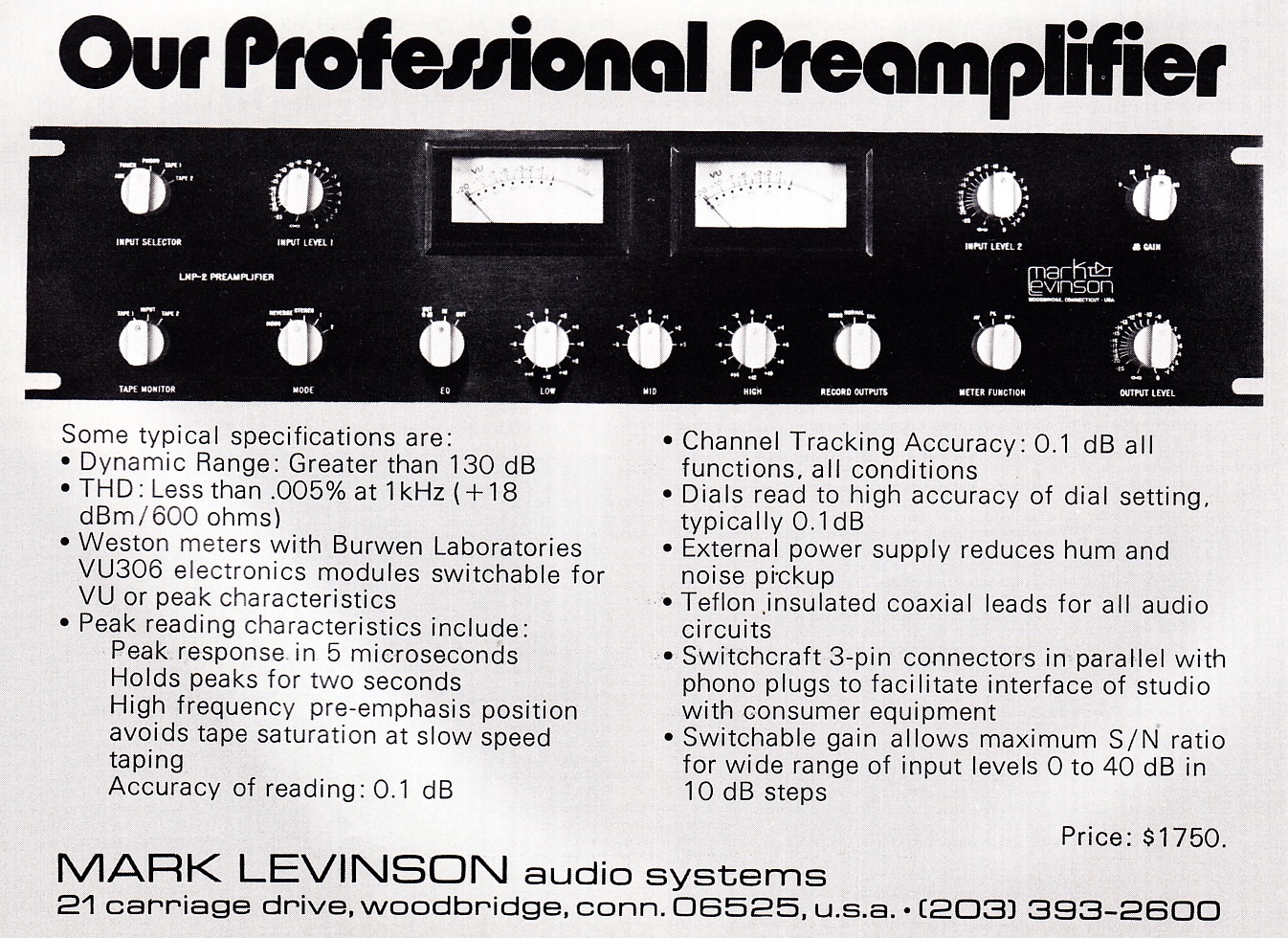
Mark_Levinson_Preamp_1973No account of CT audio-history could be complete without Mark Levinson.  Above: a 1973 advert for his first product, the LNP-2 pre amplifier.  Although it cost $9,050 (yup….) in 2013-dollars, a unit recently sold on eBay for $4500.… so not a terrible investment overall.

Click here to download (not my link…) Barry Willis’ account of the career of the CT audio legend.  It’s worth a read.  Starting with…  age 22, he built the console for Woodstock.

Categories
Manufacturers Uncategorized

Forgotten 70s Pro Audio maker Gately Electronics

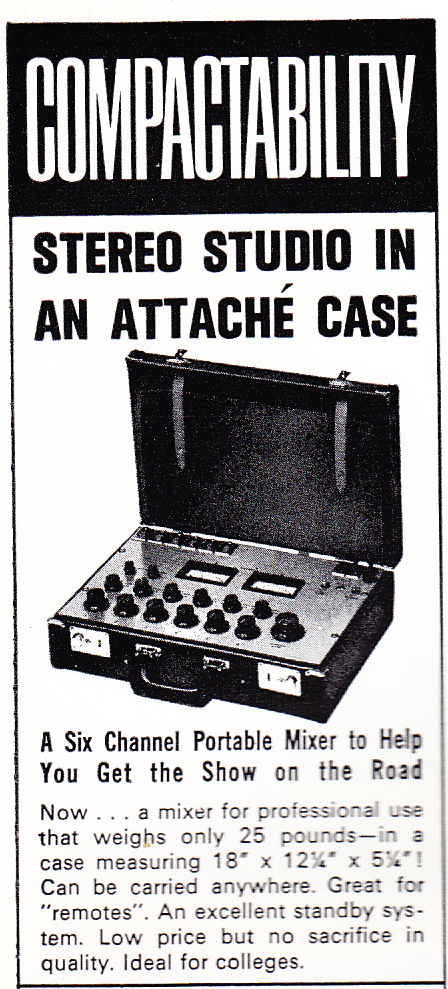
Gately_Stereo_Mixer_Briefcase_1970Above: Gately’s Stereo Briefcase Mixer circa 1970.

Gately Electronics was a Pennsylvania-based pro-audio manufacturing and importation/ distribution operation which seems to have operated between 1968 and 1975.  I often noticed adverts for their EM7 mixer in the old AES journals; the EM7 had a sort-of Pultec or maybe LANG vibe, and I was curious enough that when I found one AS-IS for $100 on eBay I went for it.  You can read my account of restoring my EM7 and its attendent EQ7 outboard equalizer accessory at this link.  The short version: it is a very well-built machine, and I was therefore surprised that Gately seems to be completely forgotten in the pro audio world.  Anyhow, I noticed that a pair of AS-IS Gately 1800 compressor cards went for an absurd amount of money on eBay last month, so I figured that maybe the world does need to know.  I therefore present: every piece of period documentation that I could find on Gately Electronics, its products, and operations.  Enjoy, and let us know if you are using any of this kit nowadays.

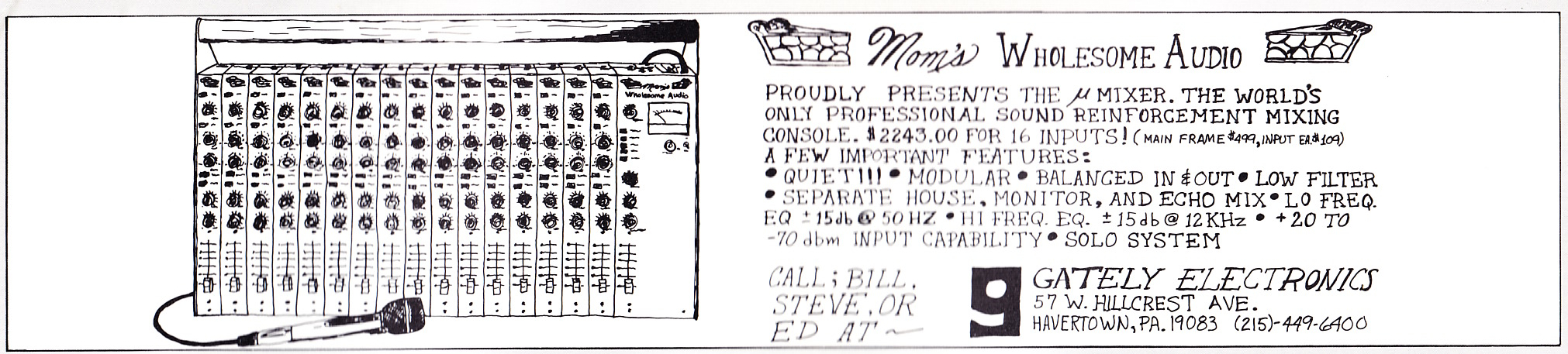
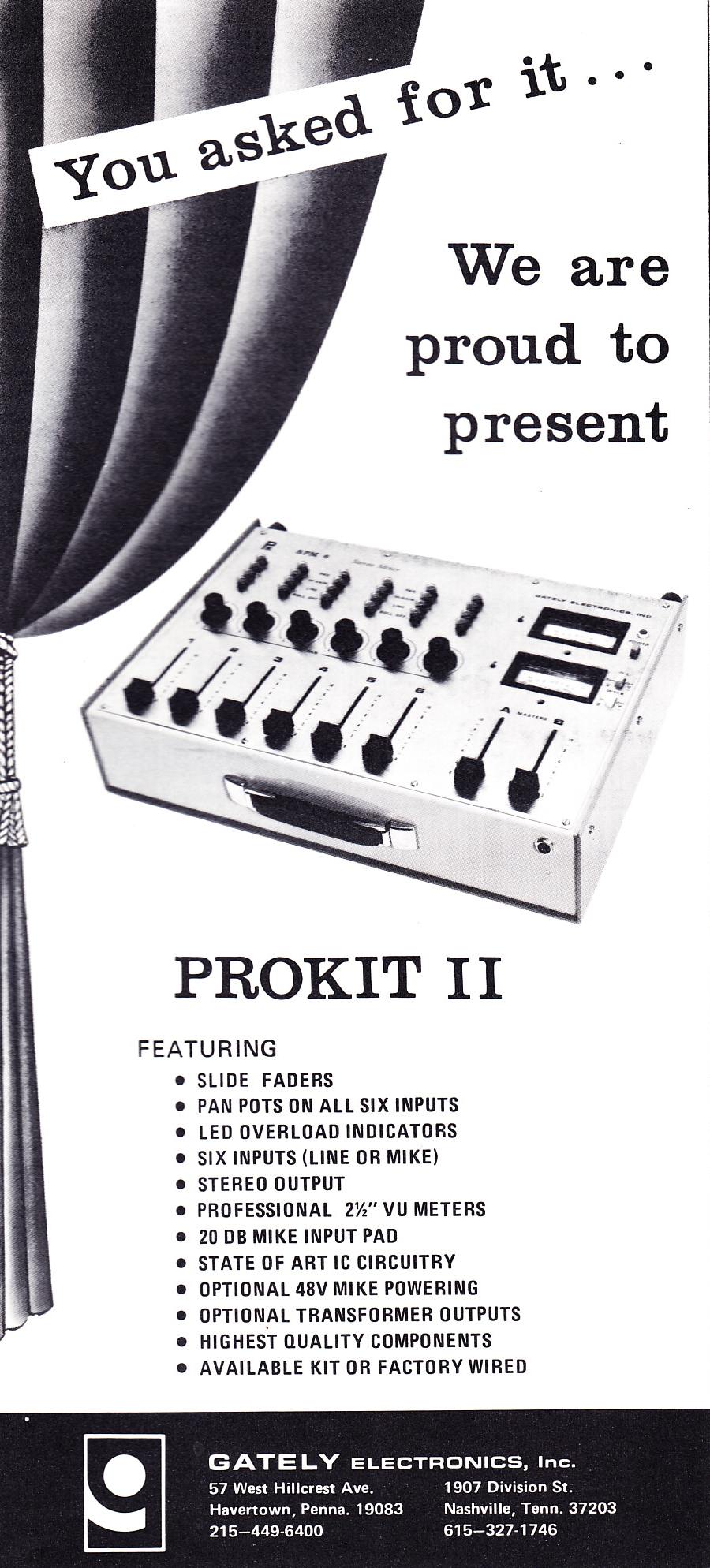
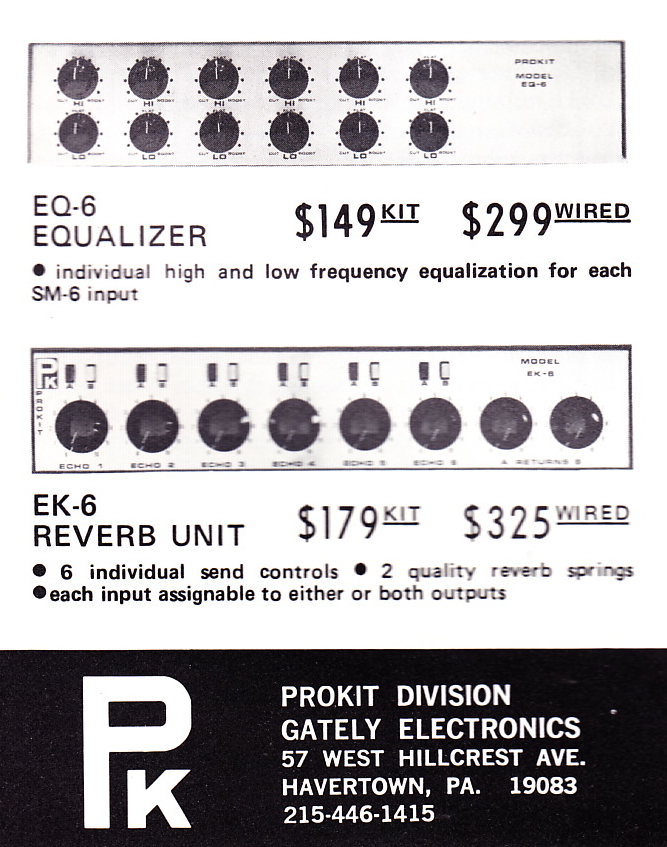
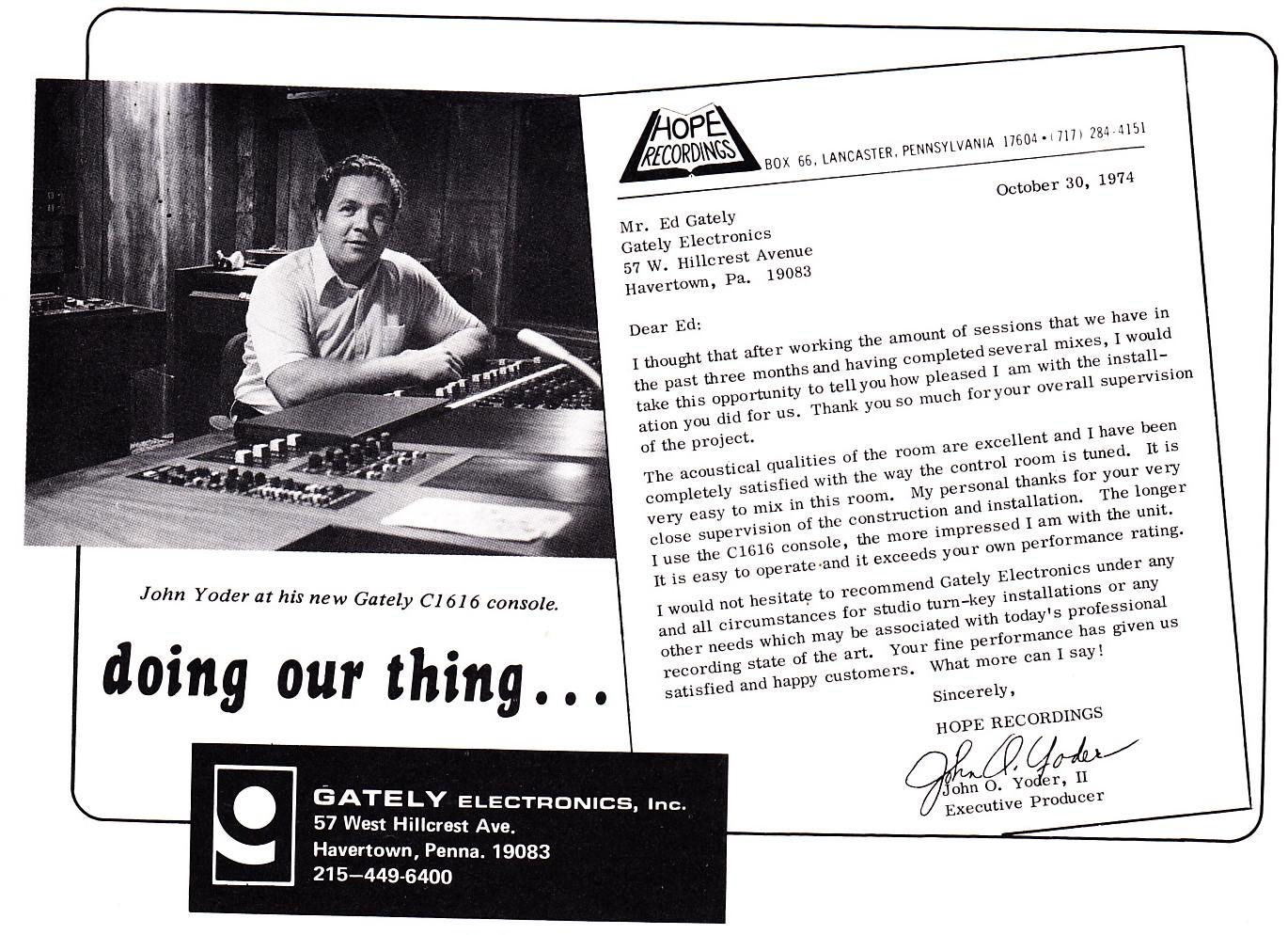
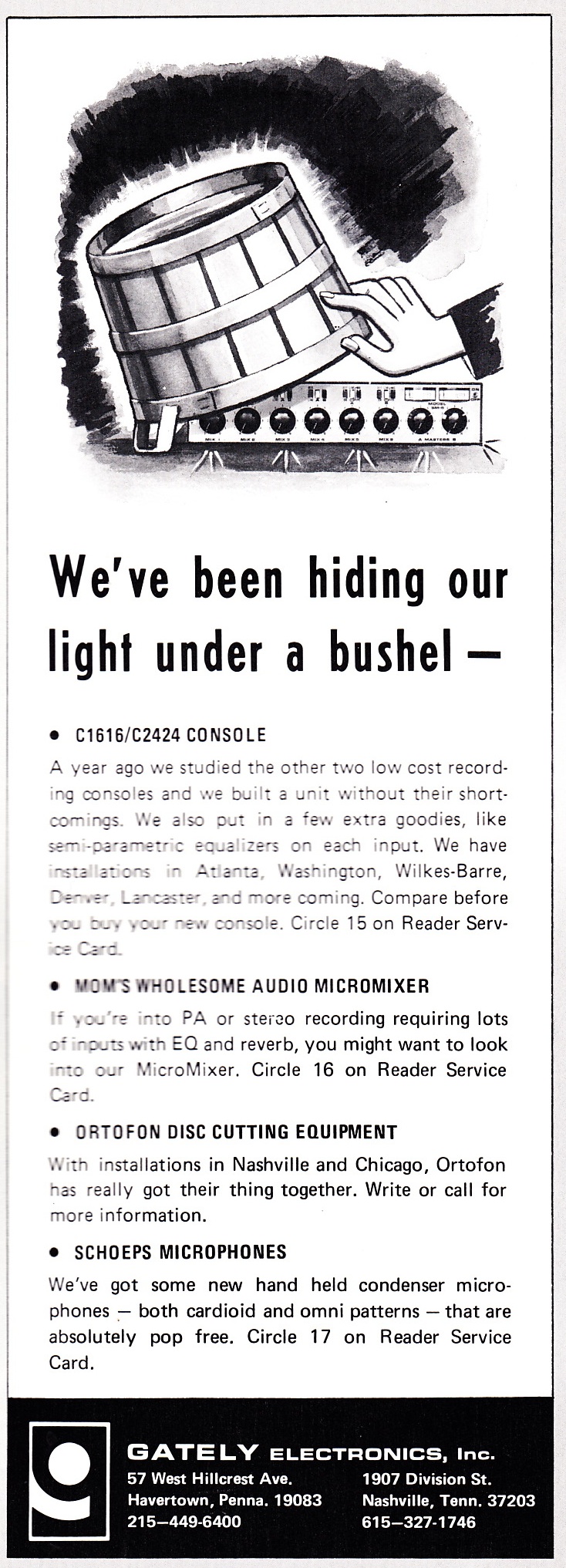
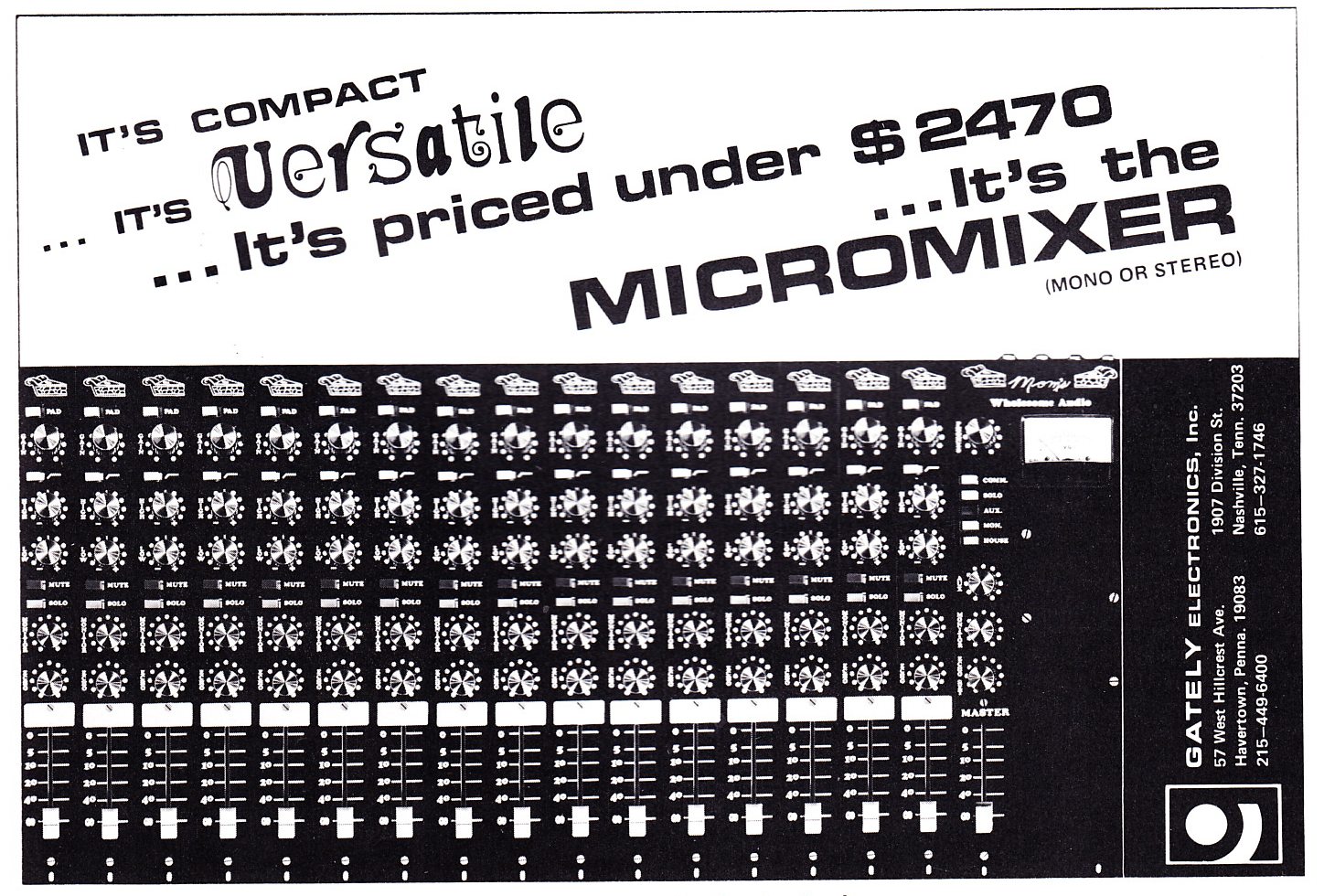
Gately_ProKitMixer_1972 Moms_Wholesome_Audio_Mixer_1973 Gately_ProKit_2_1974 Gately_PK6_EQ6_1972 Gately_C1616_Console_1975 Gately_ad_1974 Gately_1974_Micromixer

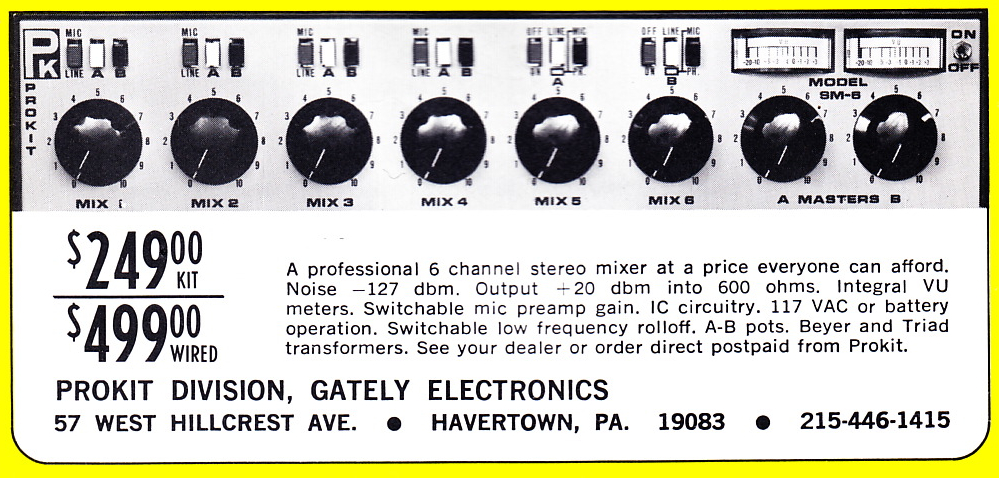
Above, from top to bottom: Gately ProKit 6-channel mixer (available as kit or assembled!), Gately’s Moms Wholesome Audio live PA board, Gately ProKit 2 mixer, and Gately EQ-6 and EK-6 equalizer and reverb accessories for the Pro-Kit (confused yet?).  Below that, John Yoder of Hope Recordings recommends the Gately C1616 studio console.  Next is an advert announcing Gately’s distribution of Ortofon lathes and Schoeps mics (yes please). Finally we see the Gately Micromixer, which appears to perhaps be the same as Moms Wholesome Audio Mixer?

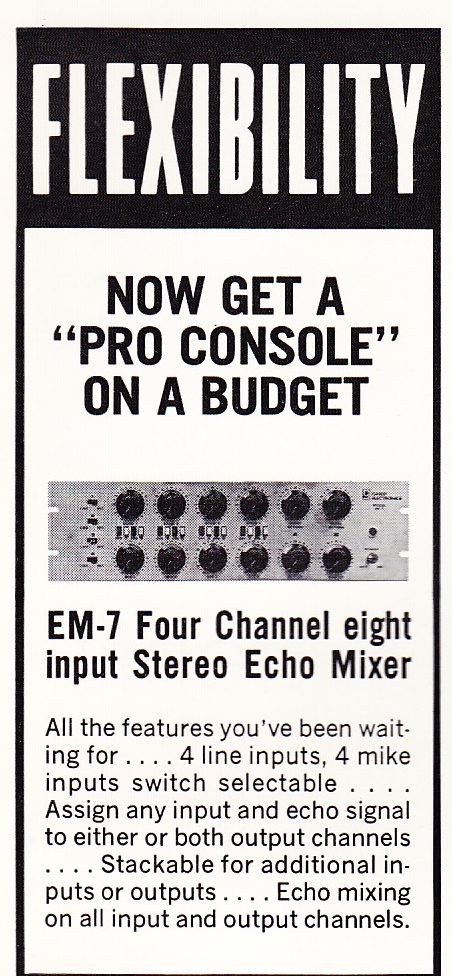
Gately_EM7_Mixer_1969

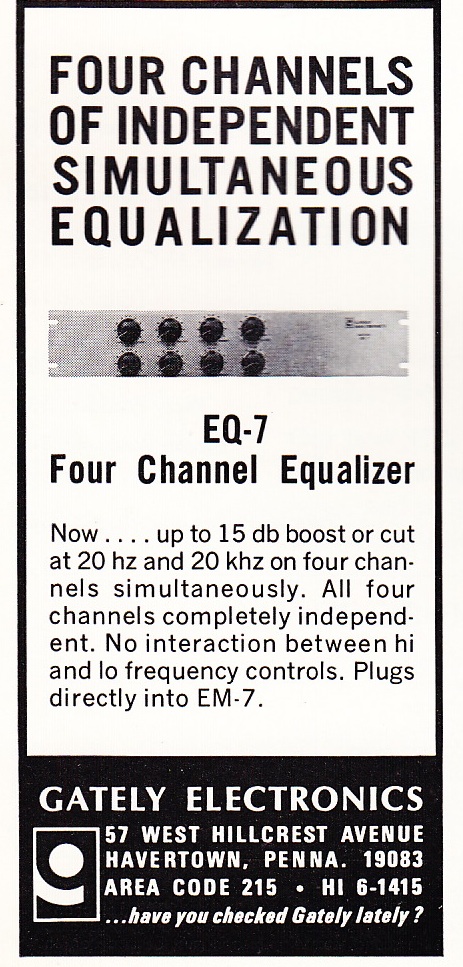
Gately_EQ7_EQ_1969

*****************************************************************

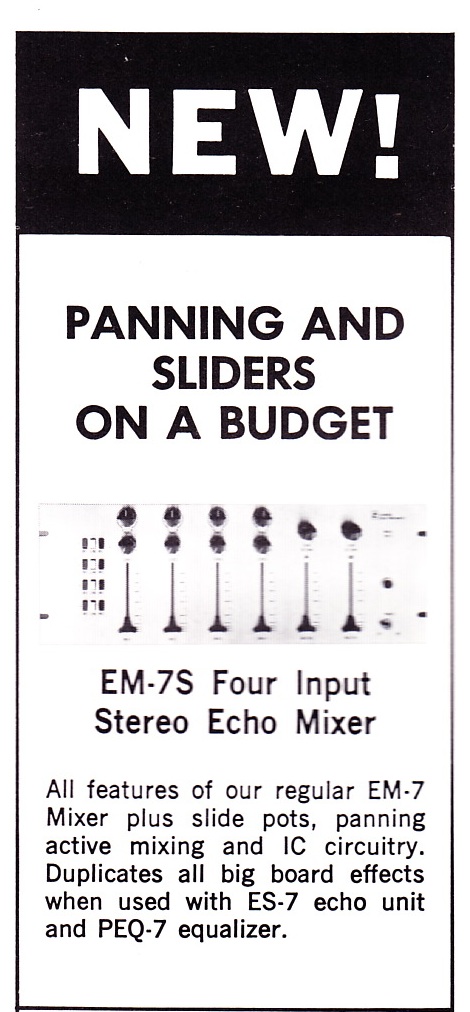
Gately_Em7s_1971

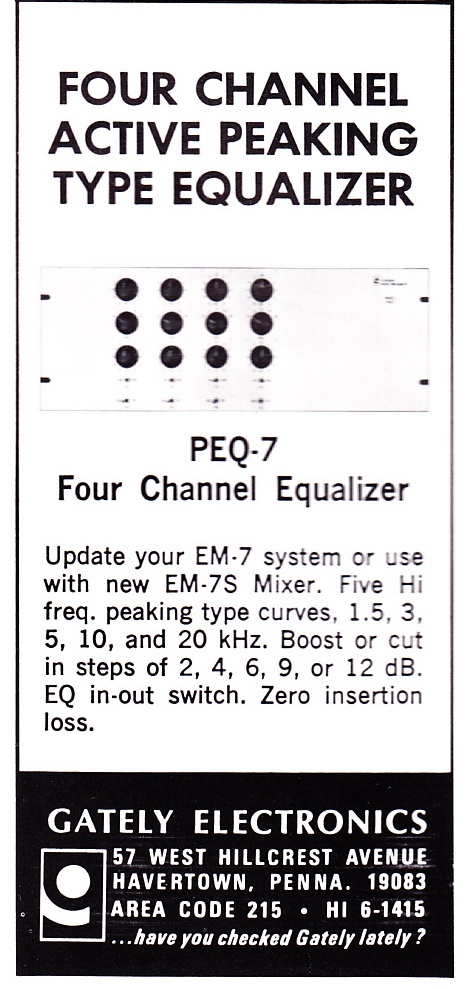
Gately_PEQ7_1971

***********************************************************************

Above: the Gately EM7 and EQ7, as described in my earlier article, followed by the subsequent updated versions EM7s and PEQ7.  The PEQ7 seems to have exchanged th fixed hi-shelf control of the EQ7 for a five-frequency high bell curve EQ.  Low frequency control is presumably still a shelf-type.   I can’t find any other info on the ES-7 echo unit.

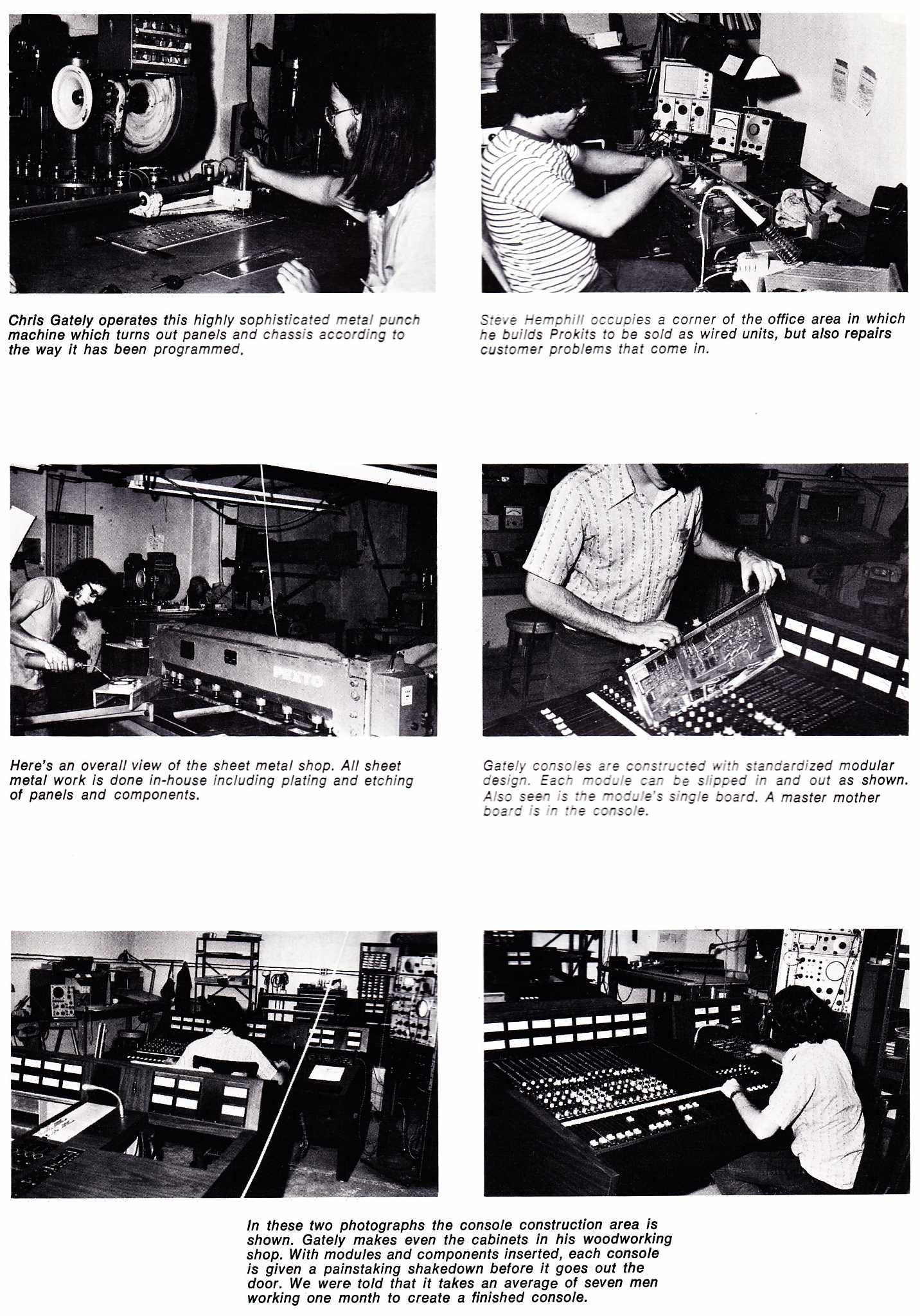
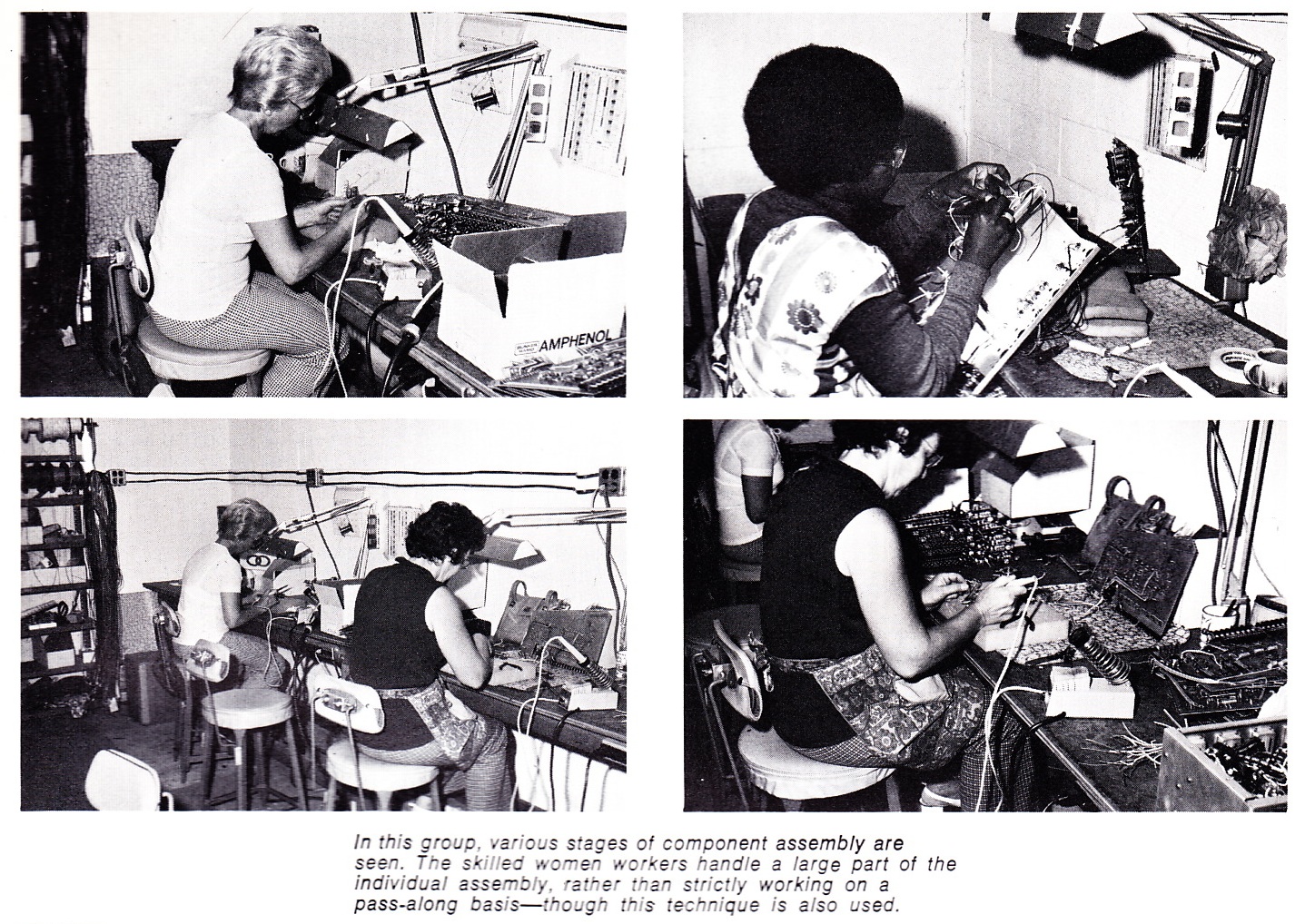
In 1974 a writer from DB (I imagine Woram or Zide; no credit is indicated) traveled to Gately’s Philadelphia-area facility.

You can download the account of their trip at this link: Gately_DB_Feb74

Gately_Factory_1974_2Gately_Factory_1974If there are any Gately alums out there, drop us a line; and if anyone out there is using any of this Gately kit, please let us know your thoughts.  I have yet to use my EM7 and EQ7 on a production, but at some point I hope to be able to do a shoot-out versus some better-known contemporary units such as API and Neve.

*************

*******

***

From PS dot com reader J. Roberts:

“I have a Gately Prokit II that I bought from Bob Todrank back around 1976. Bob had one of the first audio businesses in Berry Hill.

The mixer still works, no repairs ever, factory wired, I think it may be something like serial # 101w, but I will have to look and see. I kept a search on ebay for Gately and finally something surfaced… an original manual for my mixer.

I like that mixer because it is simple, no eq or anything to mess up, just set levels and pan. Interesting that the headphone out has no volume control, but I bought an old pair of Koss with faders just to use with that mixer. It looks to have very high quality components.  I do not know about ICs, wondering if the ones in there are ok or should be upgraded.  Does not have the output transformer option either.  In a day or two I plan to feed a Coopersound micpre into the line ins and see what I get.  I guess I should lay down some tracks and make another classical guitar LP, as I did back around 1978. Mastered at NRP by Larry Boden. Very fun times.”

Categories
Uncategorized

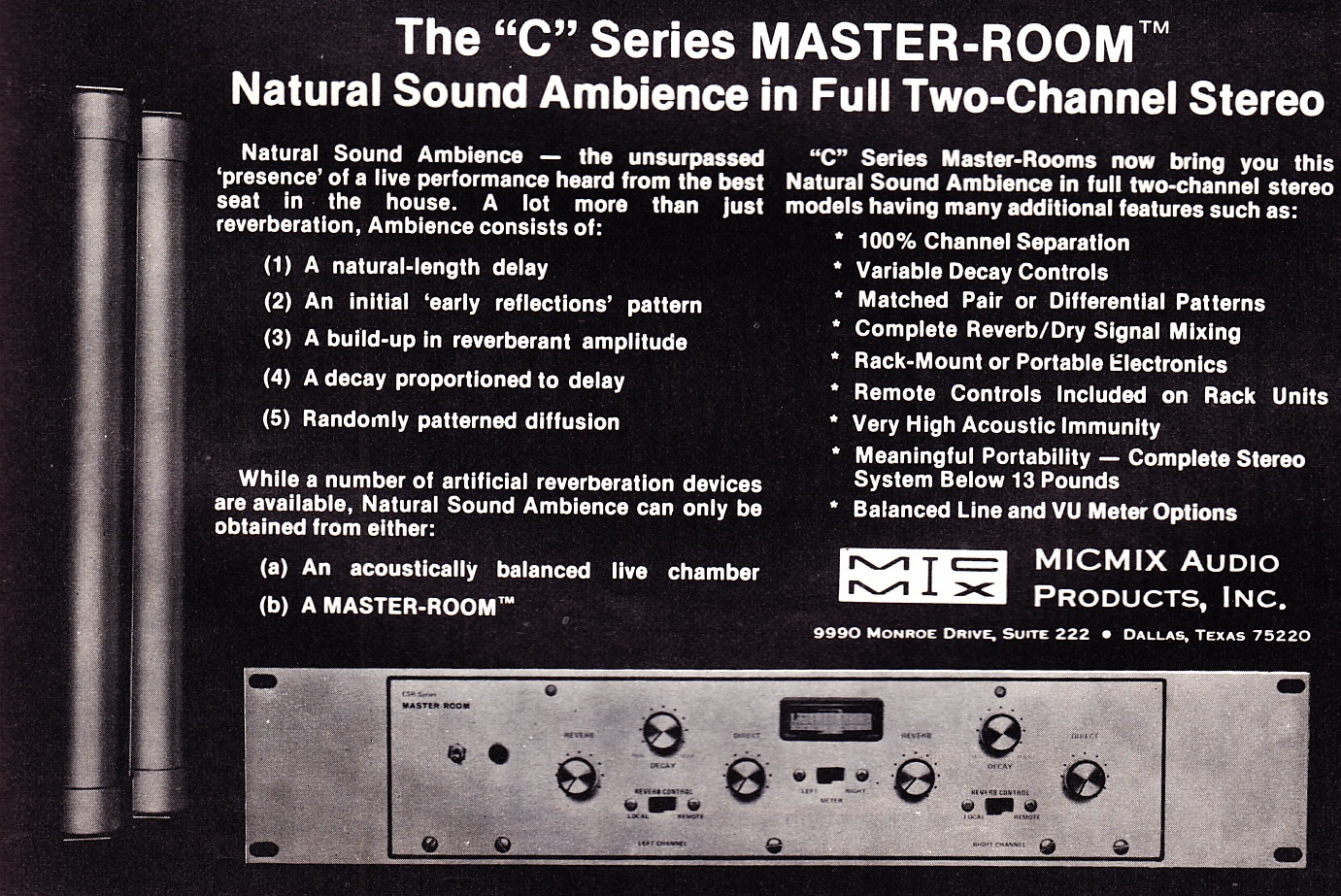
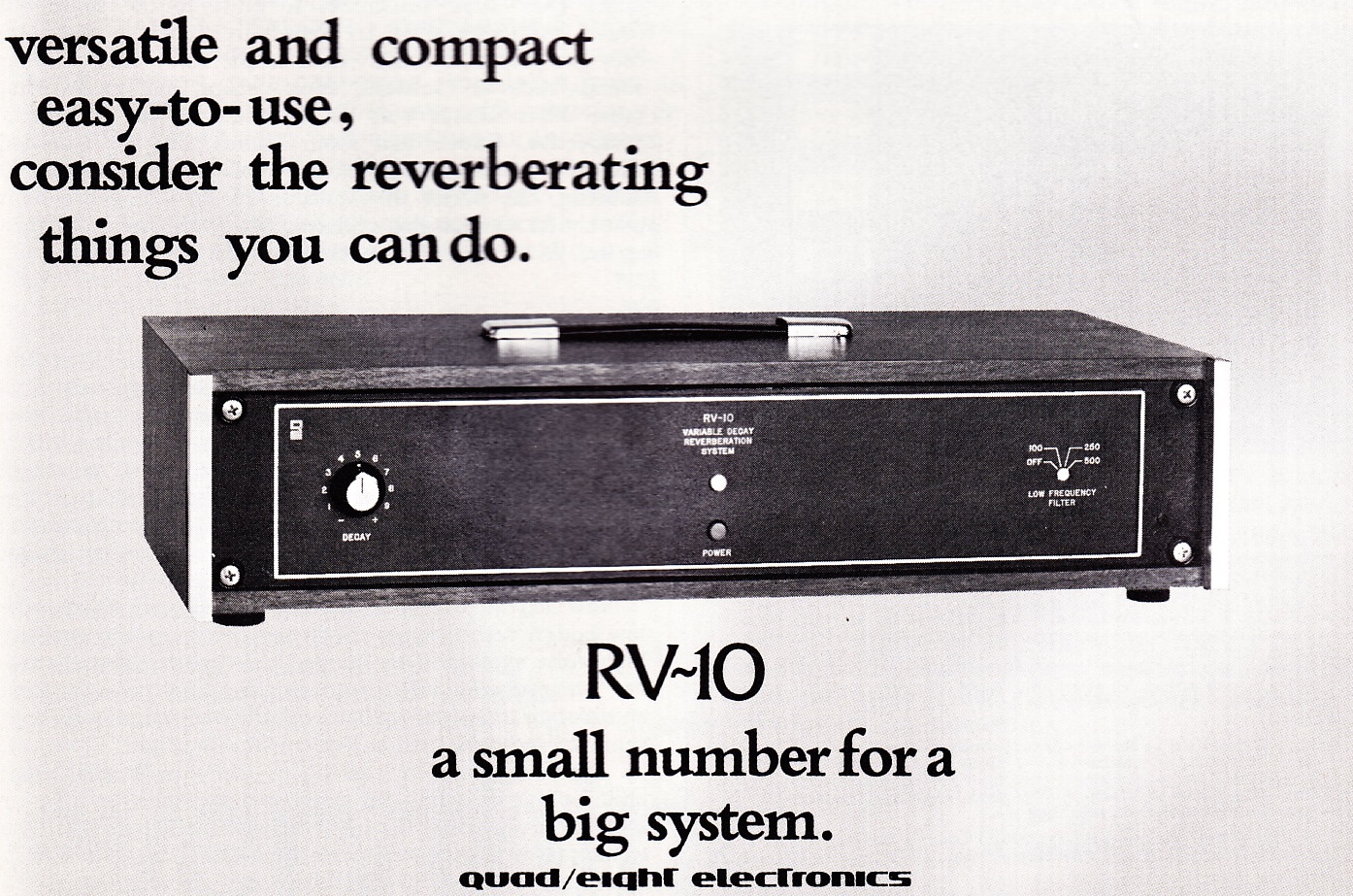
Obscure Mechanical Reverbs of the 70s

MasterRoom_reverb_1976 Quad8_RV10_Reverb_1973 Sennheiser_CV571_Reverb_1970If you’ve been reading this website for a while, you will know that I really dig old spring reverb units.  At Gold Coast Recorders we have an Orban 111b, a SoundWorkshop 242B, a a DIY’d mono tube unit based on the classic Fender tube 3-knob, and we recently added a mod’d Pioneer RS-101 stereo tube reverb to the lineup.  In addition, I use a built-out Fisher Space Expander in my lil home studio.  But there is always more out there, and ain’t that true.   Above: the Master Room series C, the Quad-8 RV-10, and the Sennheiser (!!!) CV-571.  Anyone using these units for music production these days?  Drop us a line and weigh in on ’em.