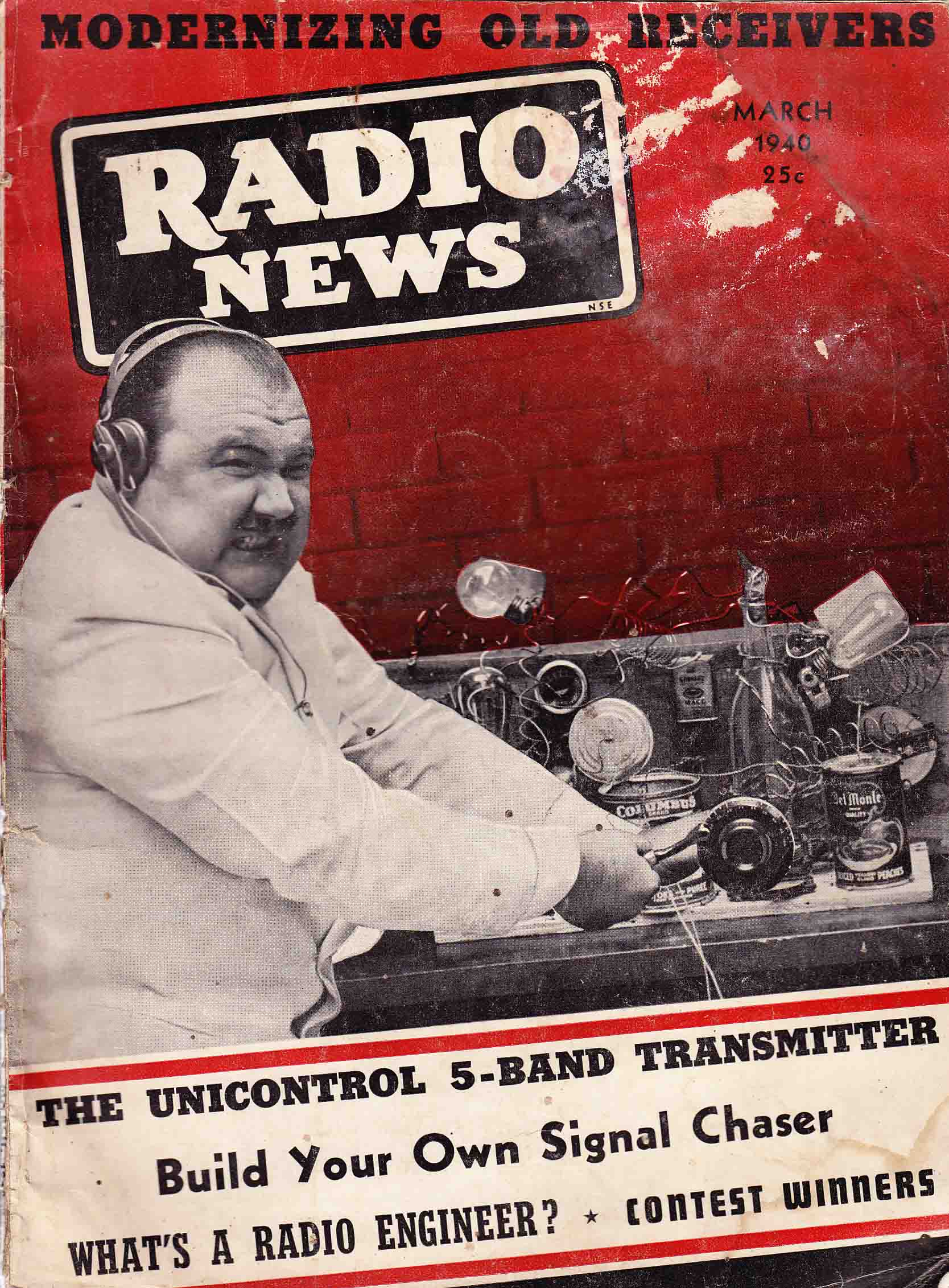
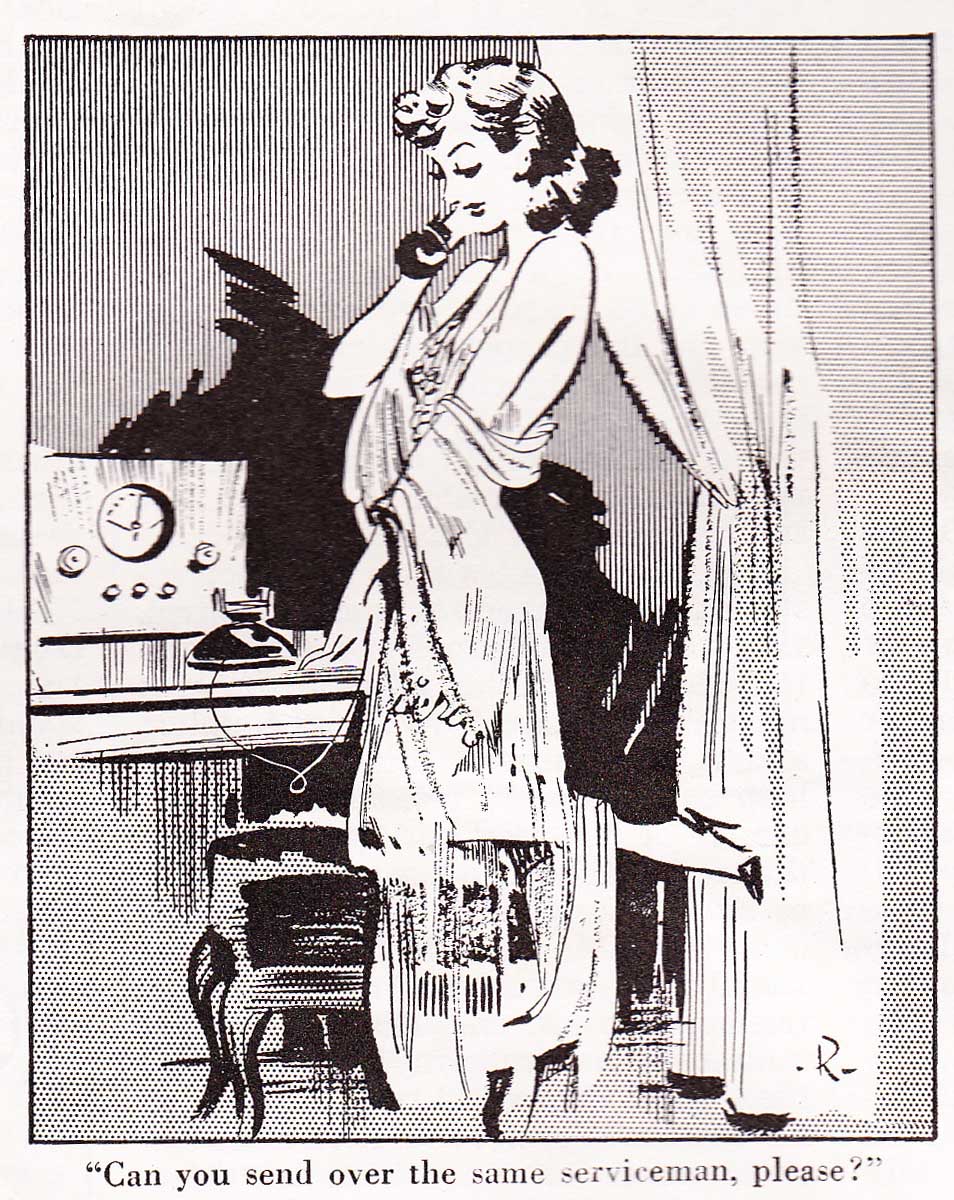
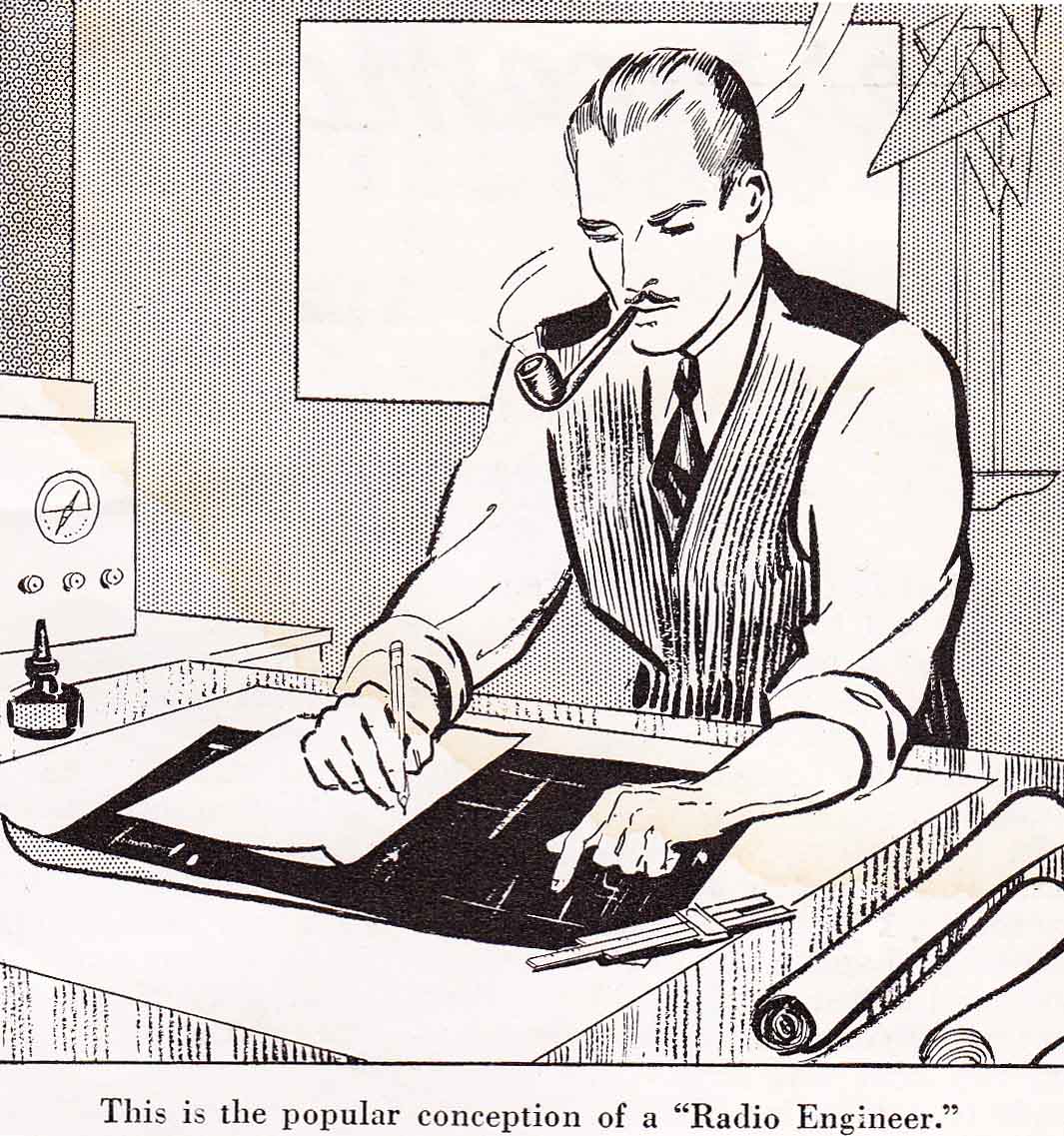
 Was electronics repair ever a ‘sexy’ profession? “RADIO NEWS” March 1940 seems to make this case. Wishful thinking, I imagine…
*************
*******
***
*************
*******
***
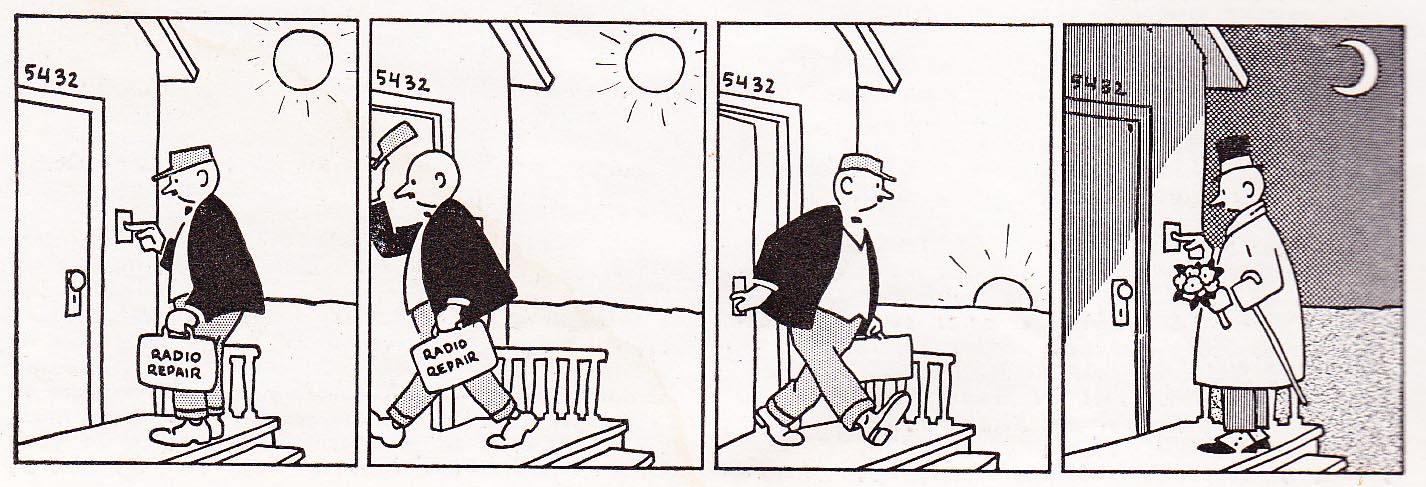
Was electronics repair ever a ‘sexy’ profession? “RADIO NEWS” March 1940 seems to make this case. Wishful thinking, I imagine…
*************
*******
***
*************
*******
***
 Thanks to H. Layer: A never-before-available Magnecord, INC factory-film circ 1955 (???) is now available on YouTube. These are the people that built the machines that powered broadcast tape-recording on the 1950s.
Click here to see the video on YouTube

Loads more Magnecord INC history and related information on PS dot com… just click here!
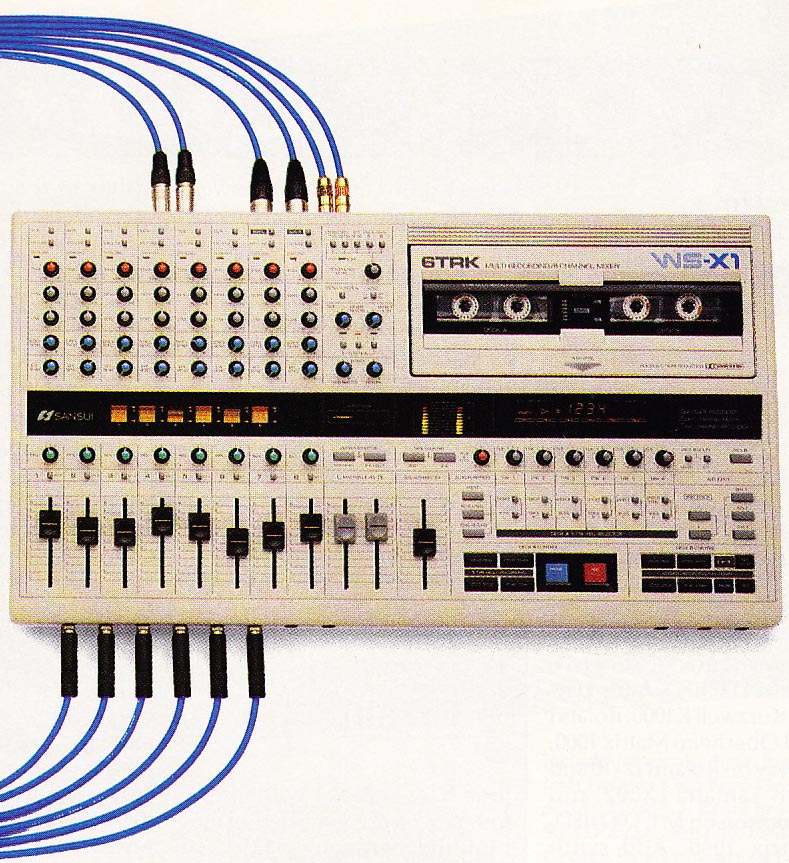 Sansui six-track cassette format c. 1989
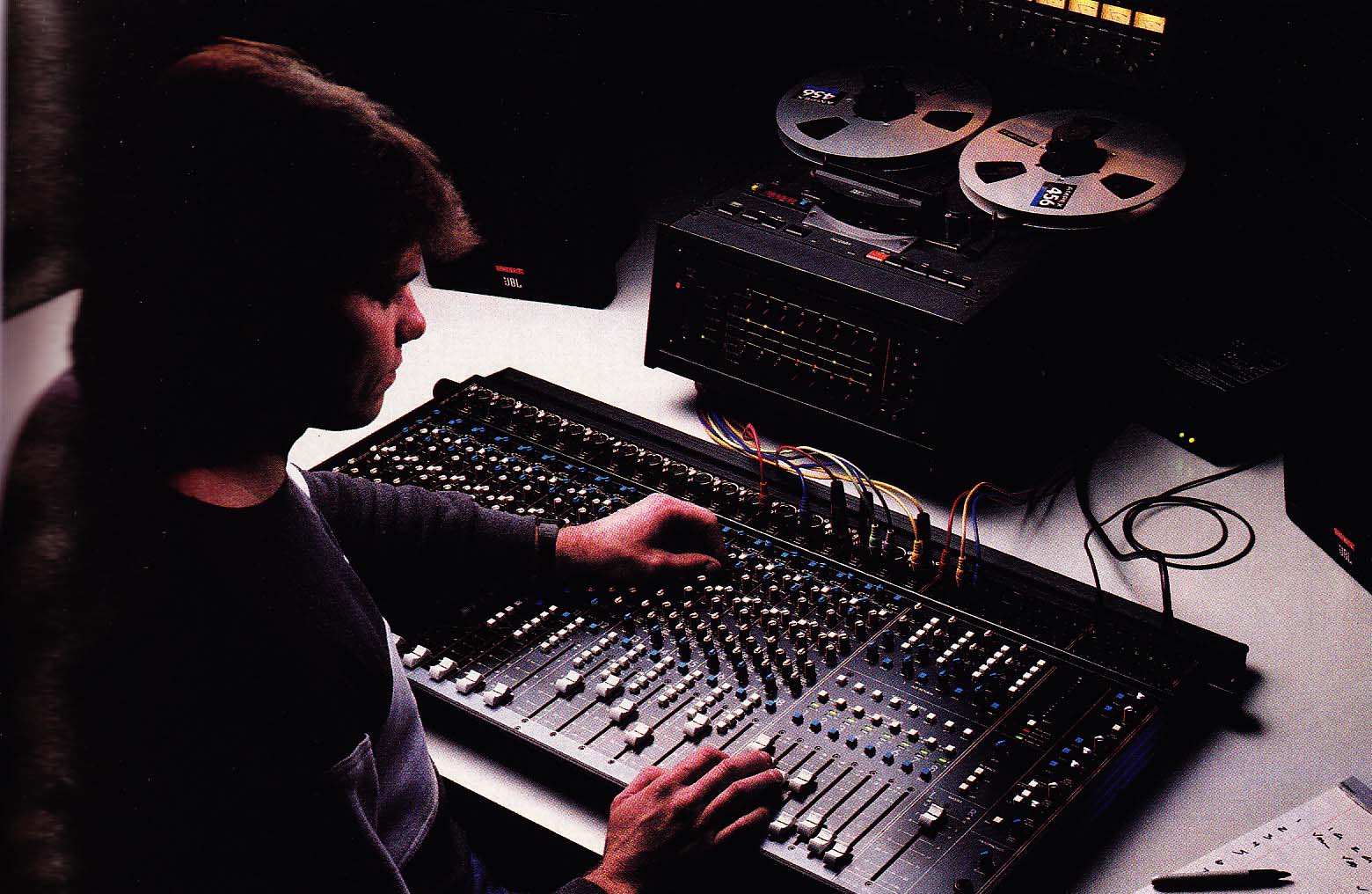 Otari Compact 8-track 1/2″ format c. 1989. Also, SECK mixer.
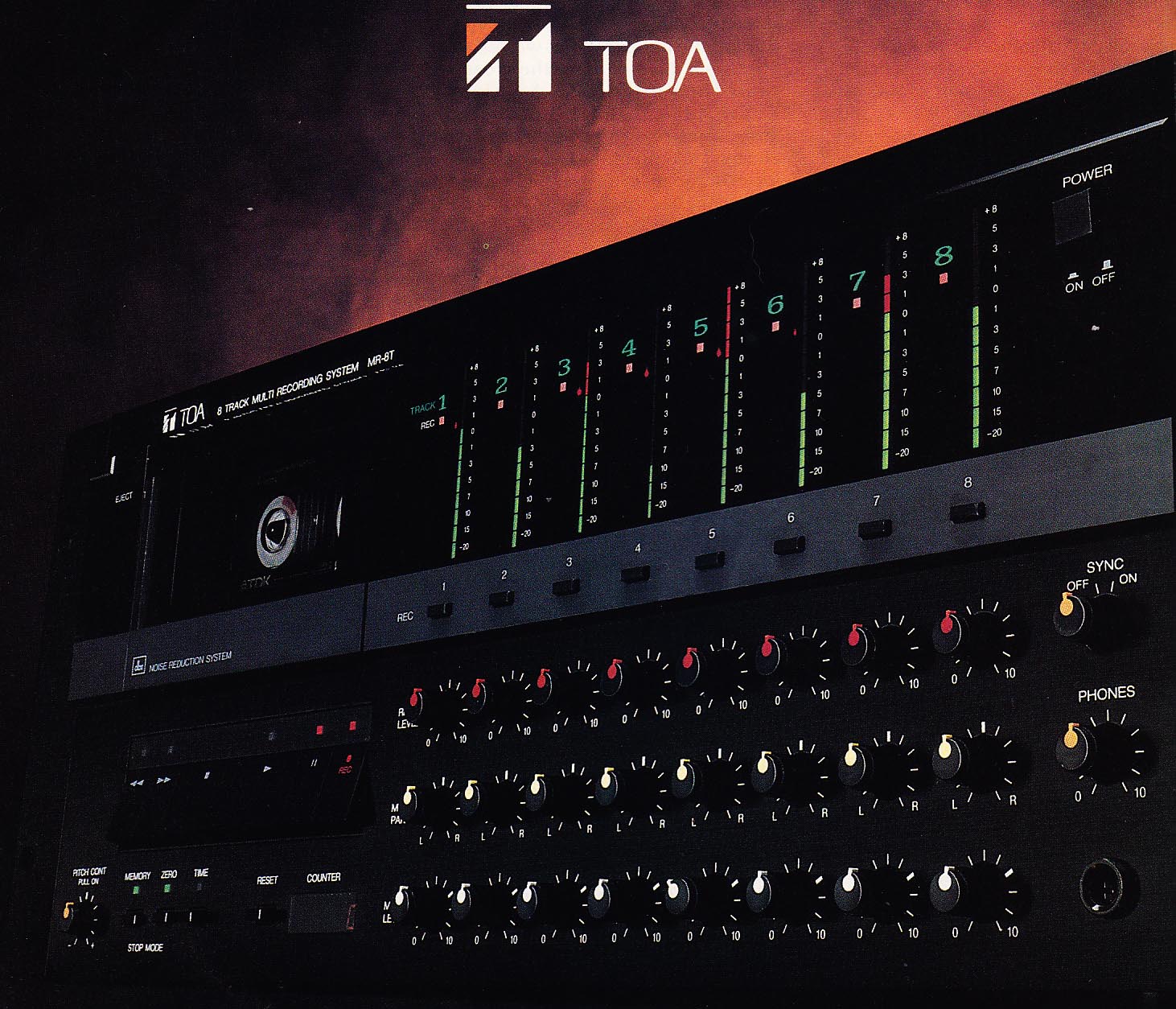 Toa 8-track cassette format
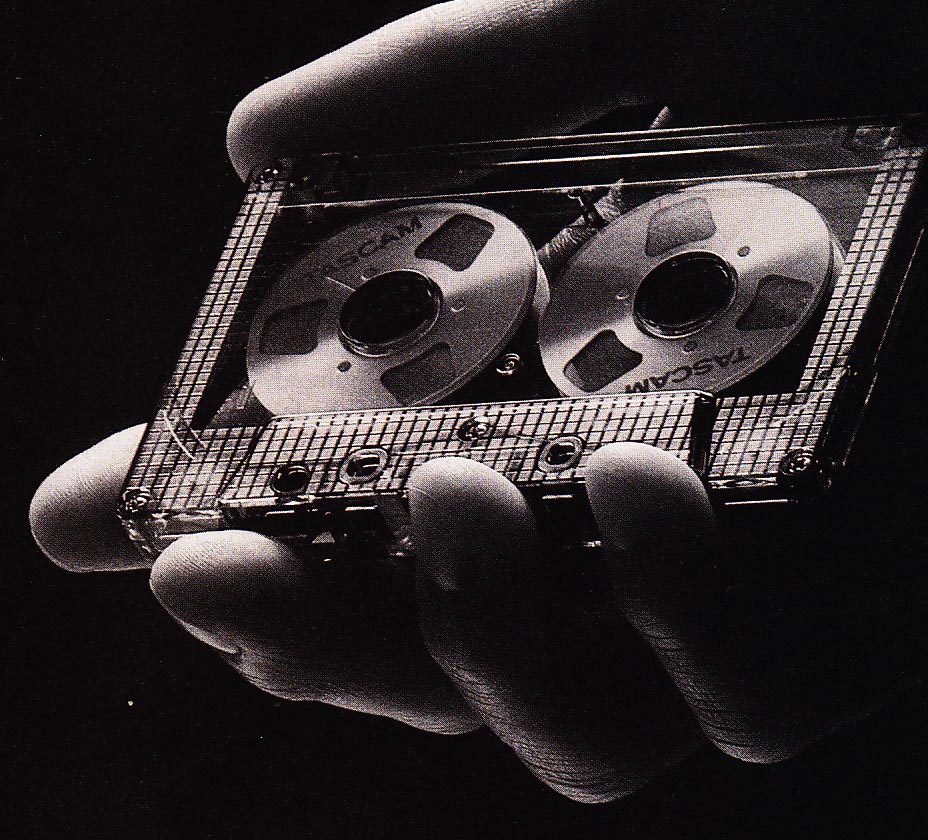 …and you better bet TASCAM made one too.
Above: some short-lived “more-than-four” home-recording formats that were available between the 4-track cassette and ADAT eras. It’s kind hard to imagine how significant an issue ‘track count’ (IE., the number of available tracks of a particular multi-track recording machine) was just a short while ago. It’s not unusual at all these days for me to make a production for an artist that has 80 or even 100 tracks. And I am not talking about some crazy orchestral or prog-rock epic; I am talking about just a well-produced indie pop song. Modern music means layering. Lots of it. When I, and many other folks started doing this, we dreamed of someday having more than 8 tracks to work with. Well, as it turns out, ‘more’ didn’t mean 16, 24, or even 48: it meant infinite. “Be careful what you wish for…”
What will be the next technological barrier to fall in the world of audio production?
I wouldn’t mind seeing all those goddamn wires go away, for one…
Any other ideas?
 Cyborg chick with some sort of midi-synchonizer
 I play the keyboards (for Bon Jovi)
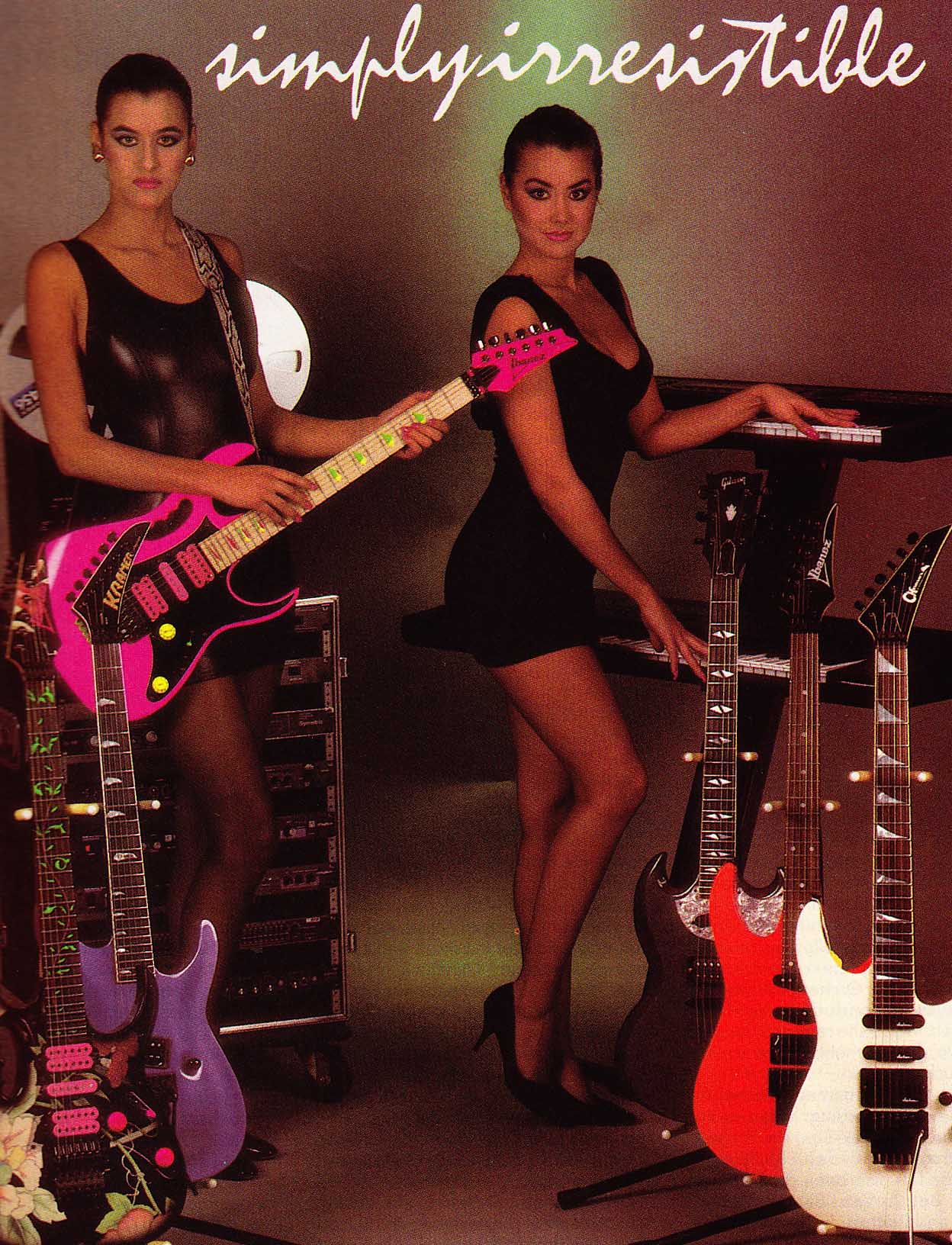 (pointy guitars are) impossible to (avoid) / (resist)
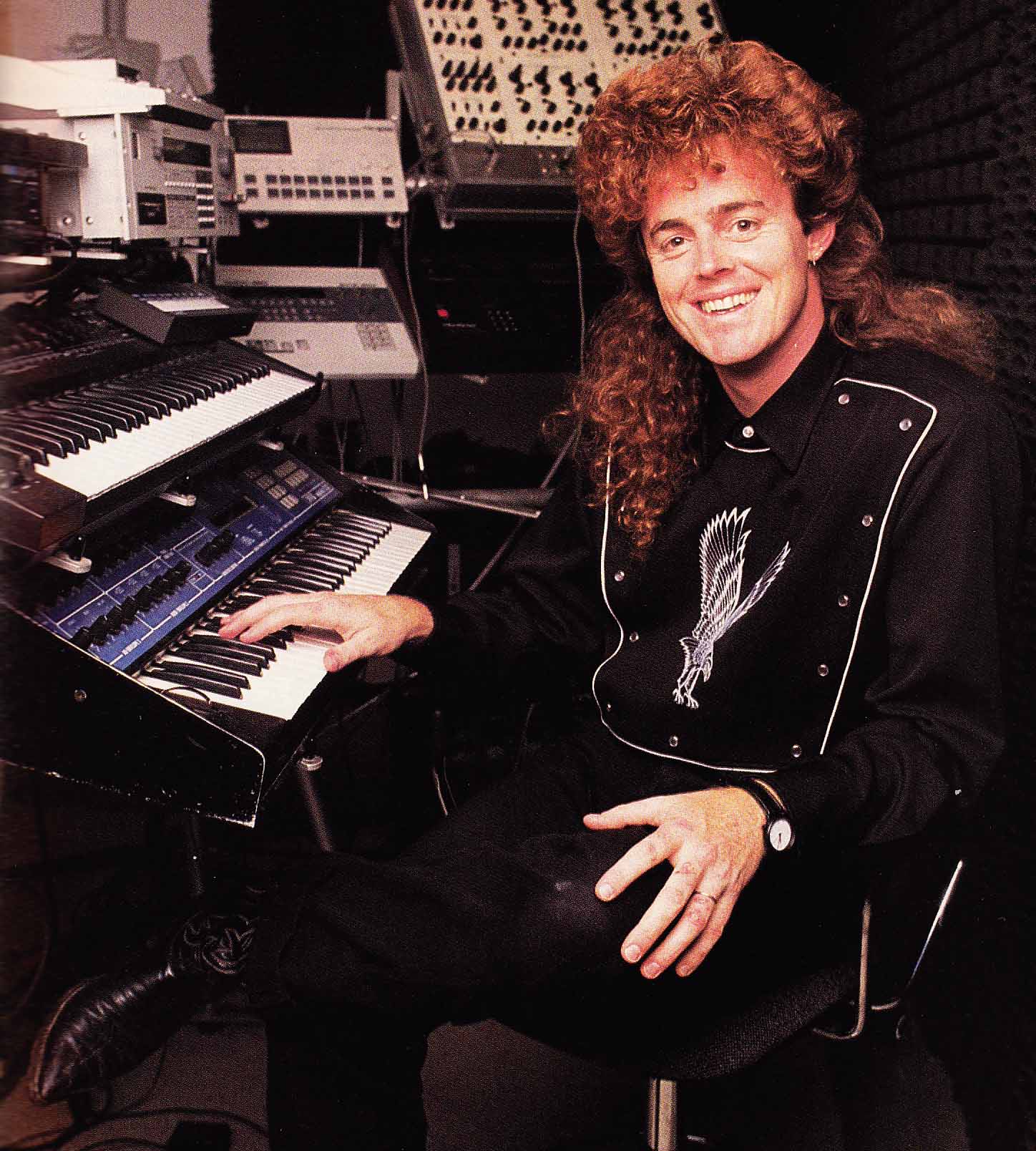 “Well I like your style too, man. Got a whole cowboy thing goin…”
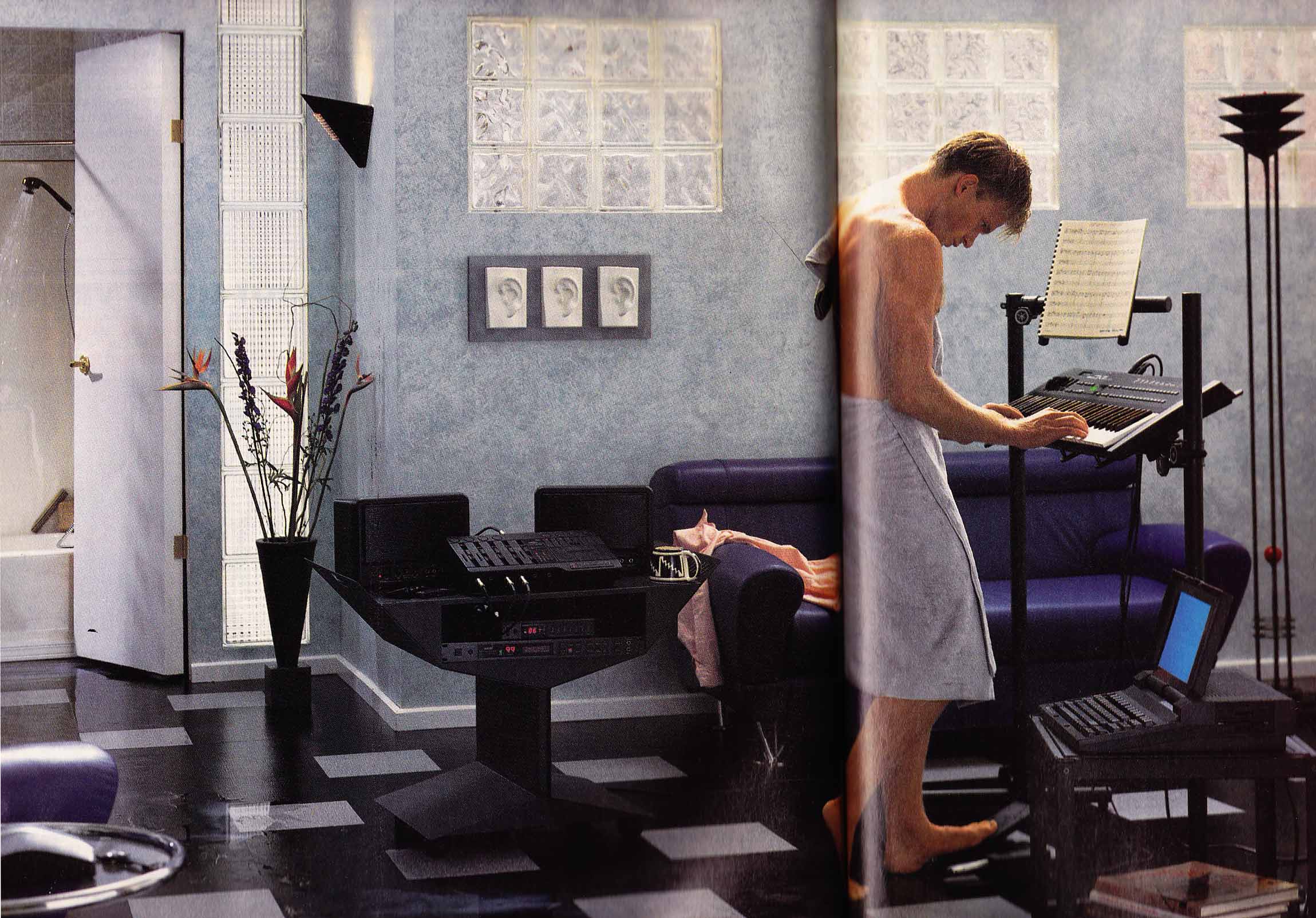 Bathroom Studio
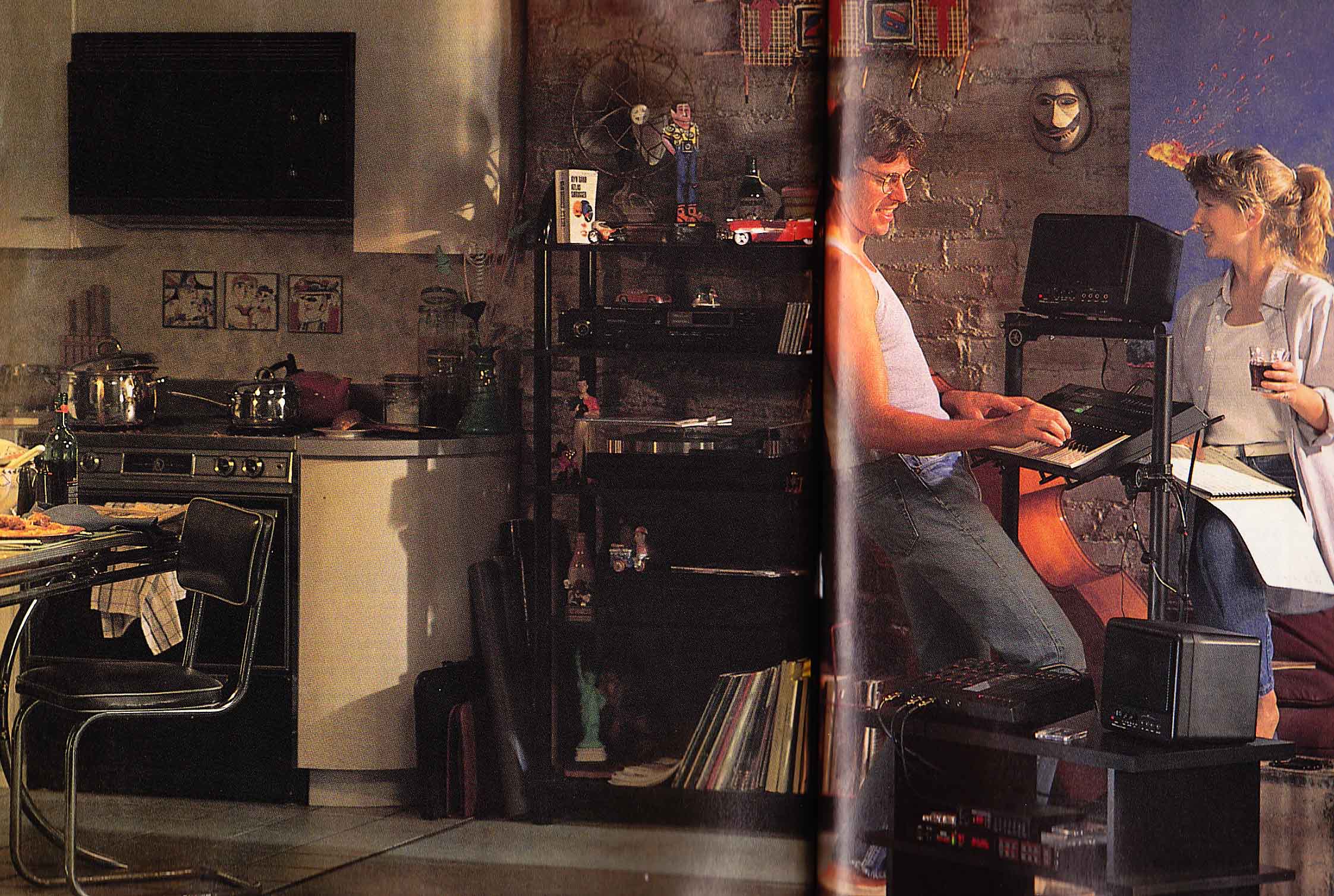 Kitchen Studio
Yamaha home-studio adverts circa 1989. Click on the images to expand.
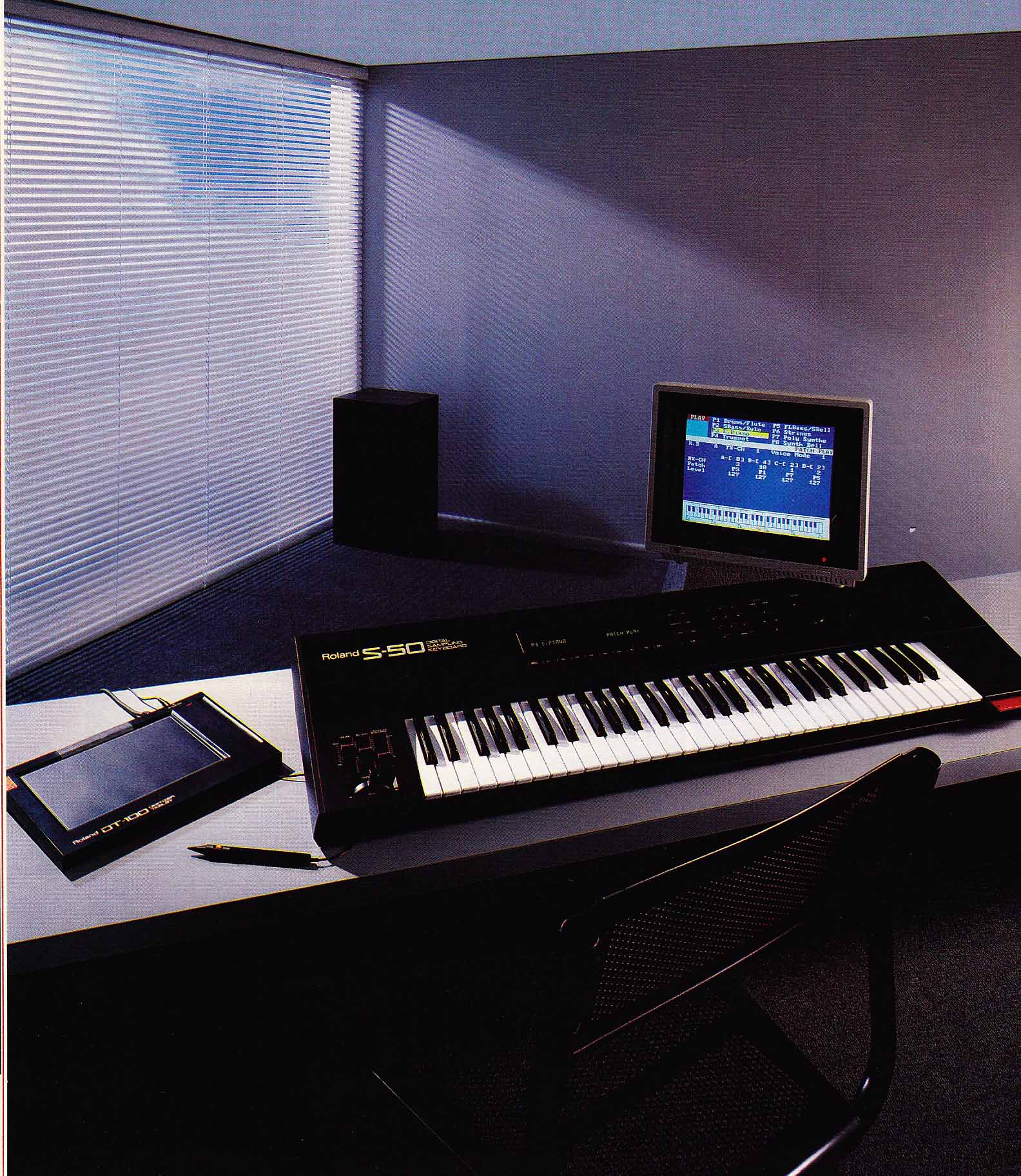
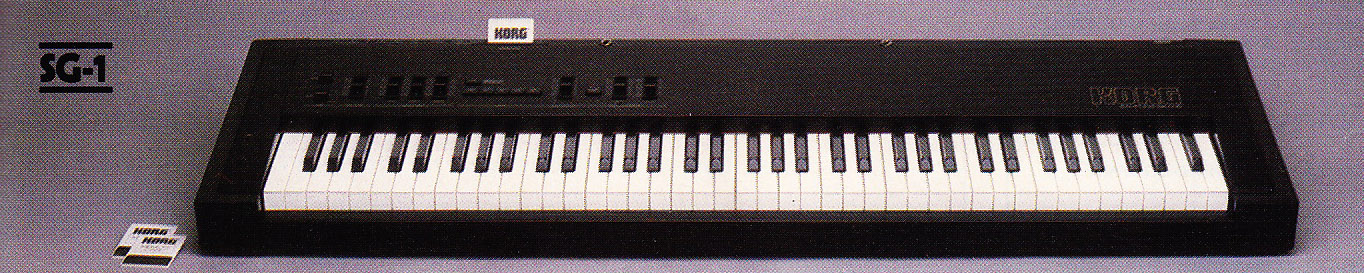
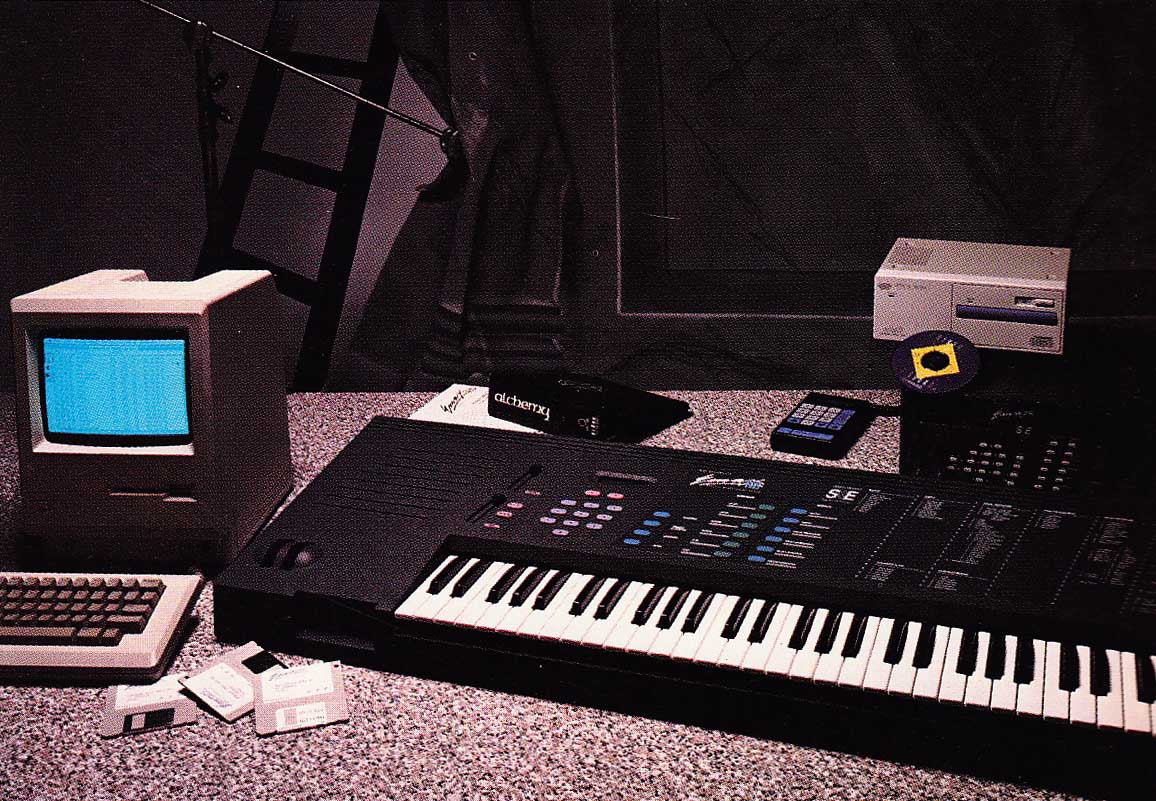
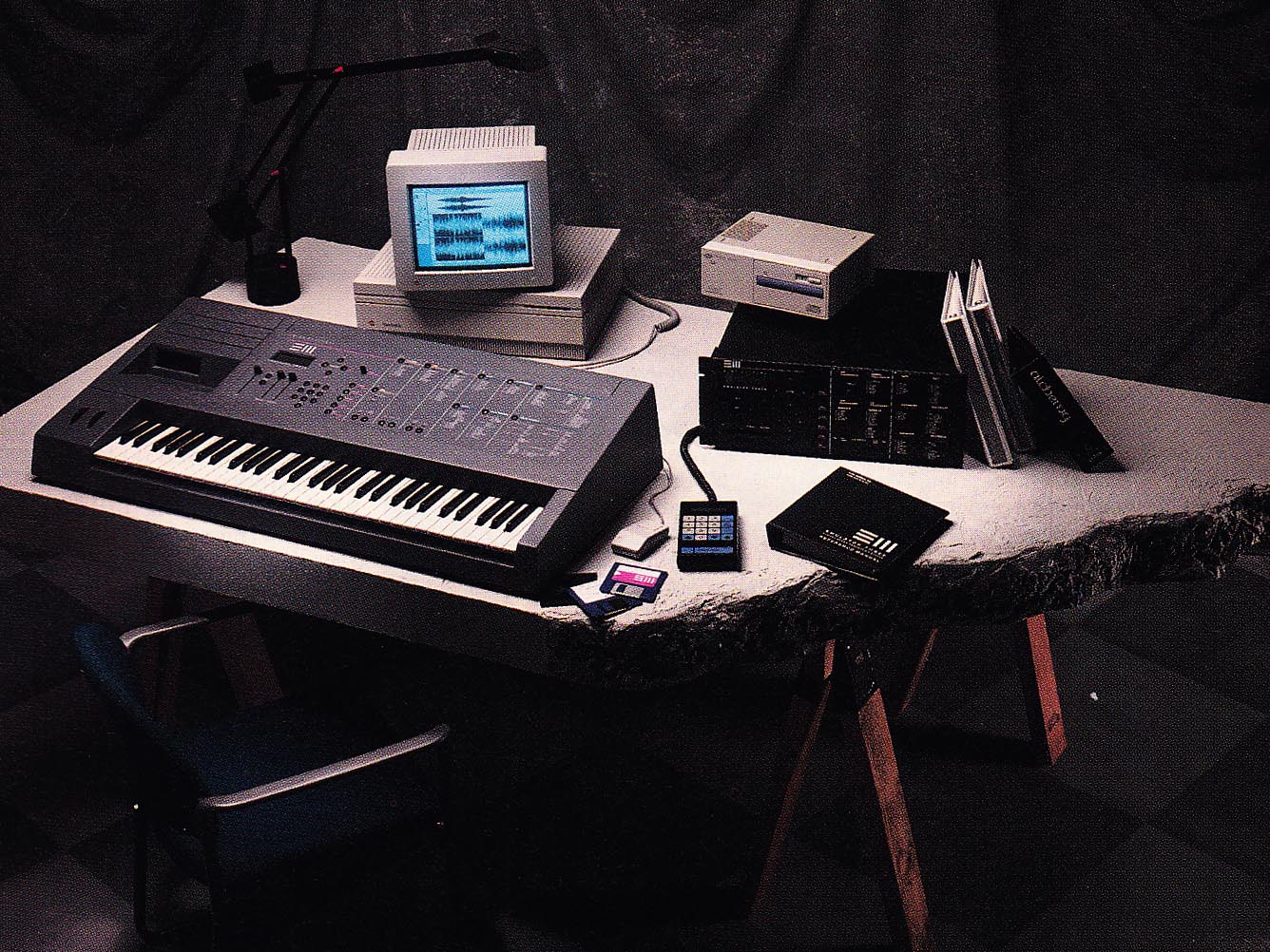 As the first in a series of “Brief Trends in Visual Culture,” we bring you: synthesizers photographed on stone-colored backgrounds. Pictured above: Roland S50, Korg SG1, EMU Emax SE and Emulator 3. If anyone can explain the significance of the all the stone-gray backgrounds, please let us know.
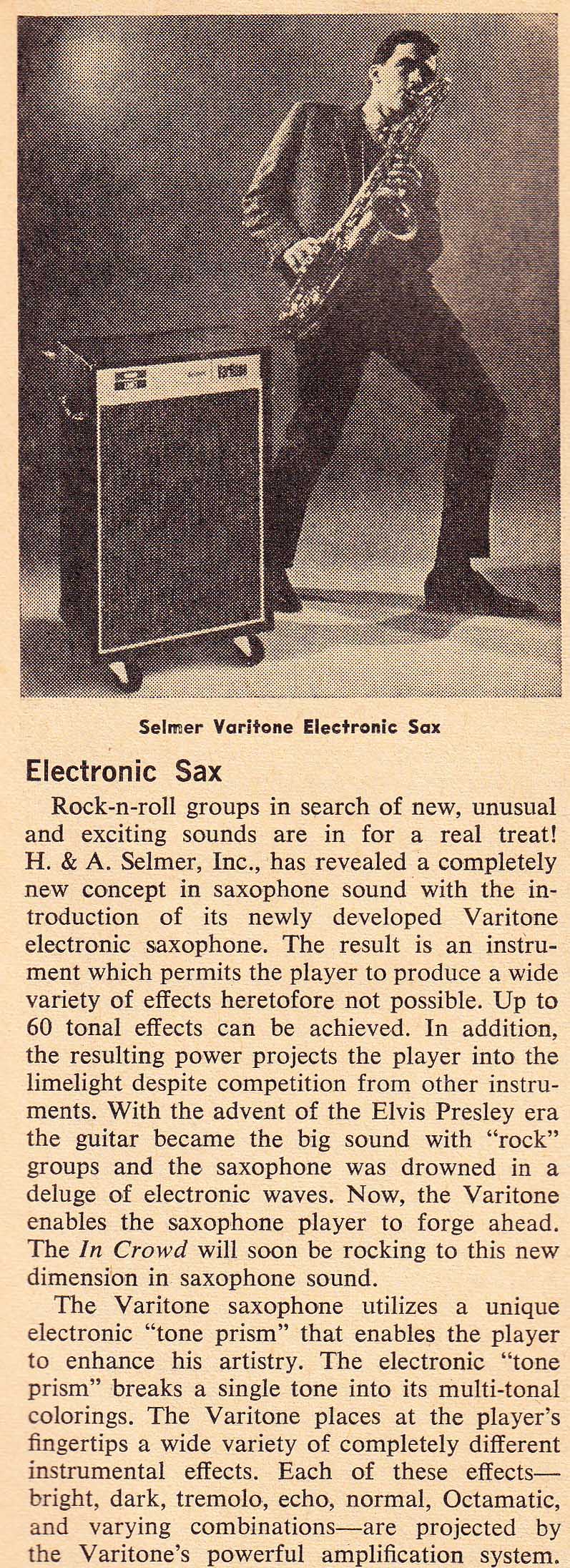 The Selmer Varitone Saxophone amplification system circa 1967. Click here for previous coverage on PS dot com. I once bought a few of the lil cigarette-pack-sized belt-mount preamp units; they make the most fantastic fuzz sounds when used with gtr or bass. Long gone to the eBay wilds…
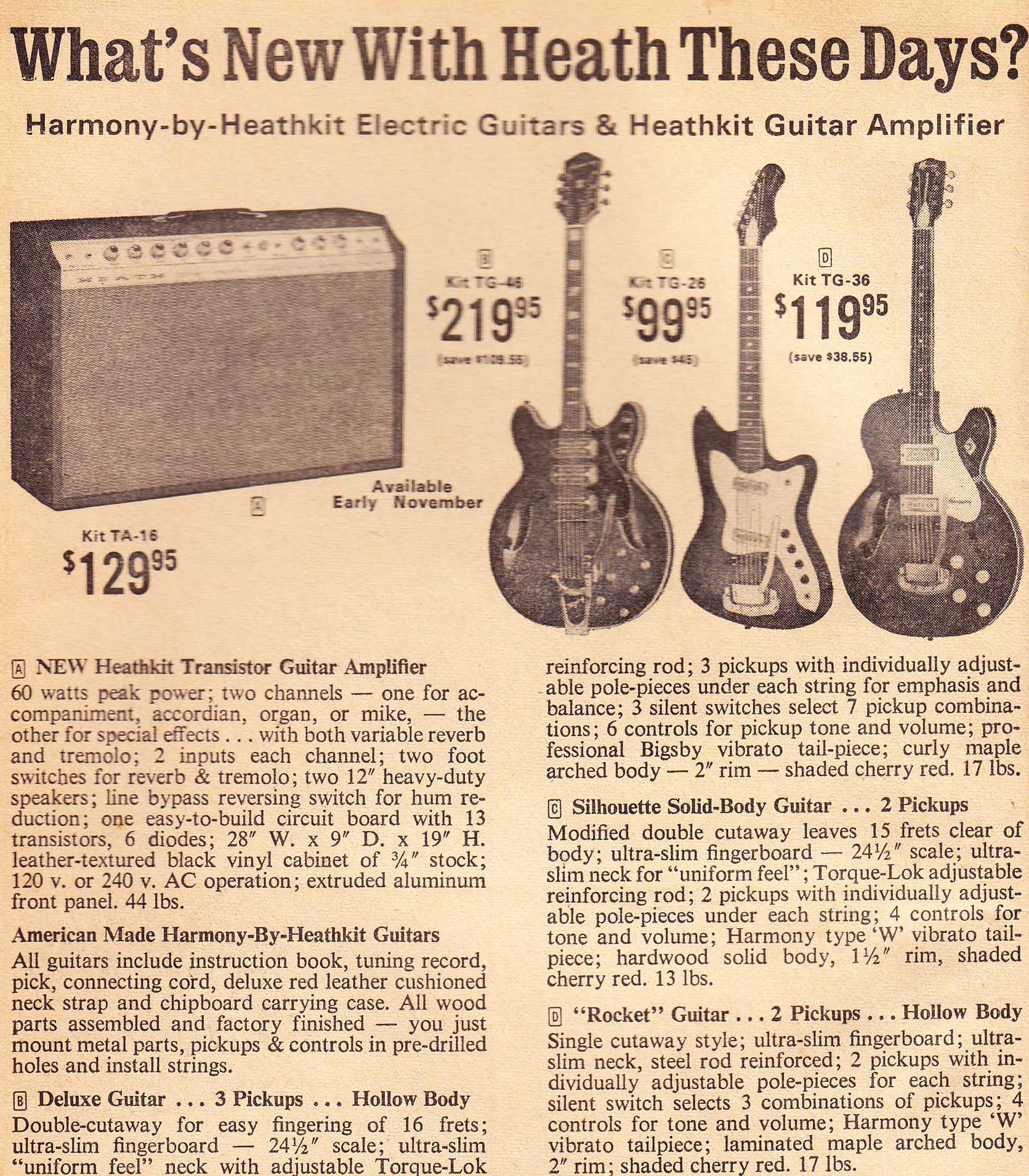 Heathkit rock-band hardware circa 1967, including Heath-distributed Rocket, Silhouette, and ‘Deluxe’ Harmony guitars. Also on offer: Heathkit TA-16 solid-state guitar amp. Click here and here for more Heathkit coverage on PS dot com.
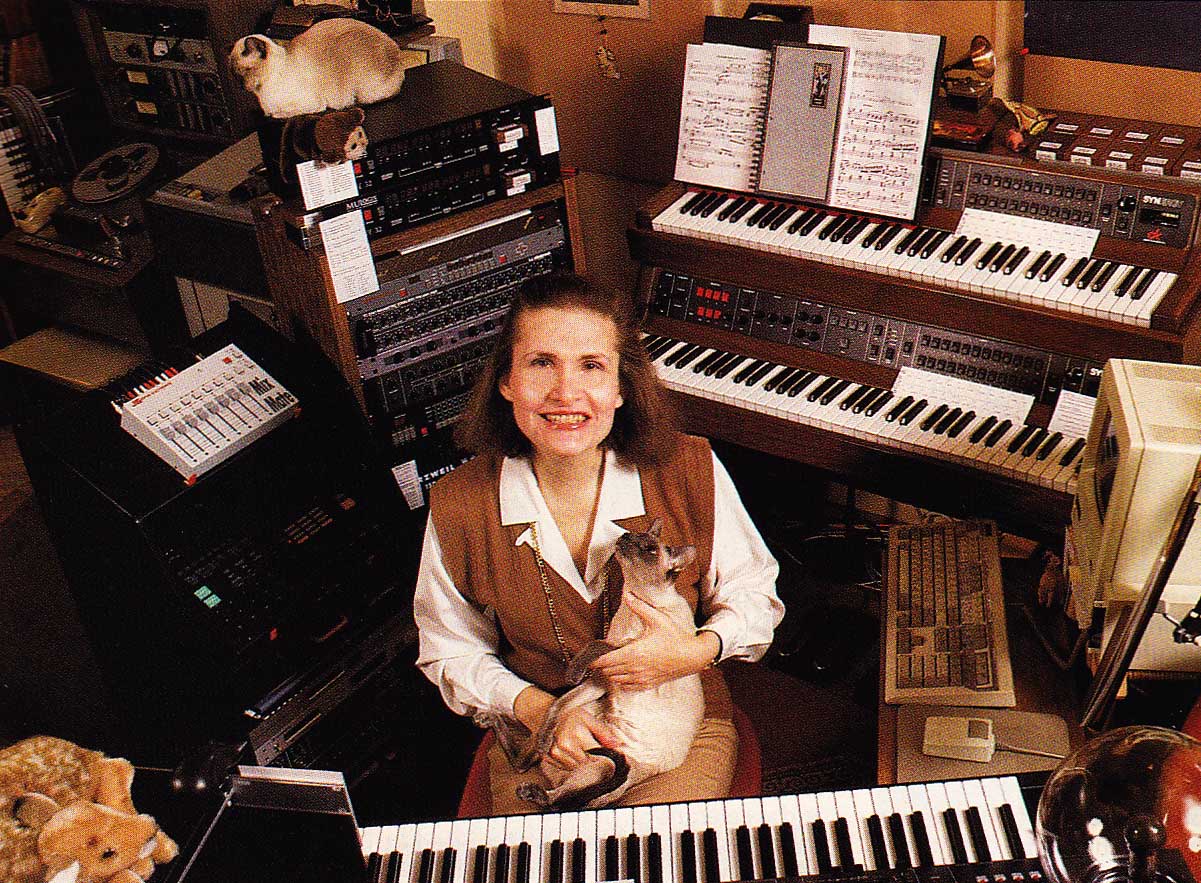 Although I don’t necessarily agree with super-aggressive enforcement of certain copyright laws, OR the fact that she tried to sue one of my favorite recording-artists after he released an affectionate tribute-song about her, I don’t want anyone to think that I am hating on Wendy Carlos. Given the remarkable and really uncanny life of this great composer, who can really judge? Pictured above: Carlos with cats and synthesizers.
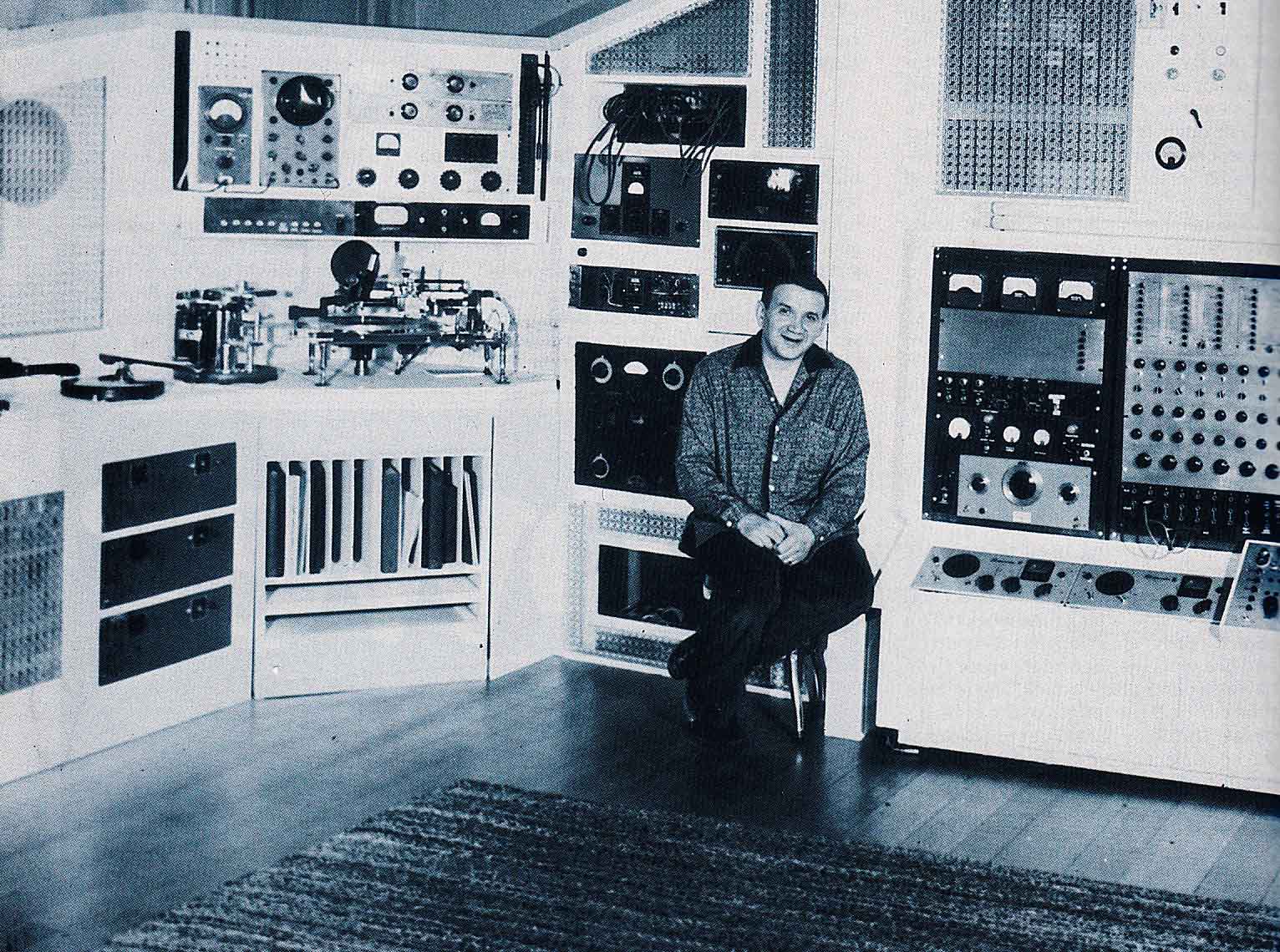 Raymond Scott in his home studio, 1955
“The composer must bear in mind that the radio listener does not hear music directly. He hears it only after the sound has passed through a microphone, amplifiers, transmission lines, radio transmitter, receiving set, and, finally, the loud speaker apparatus itself.” —Raymond Scott, 1938
“Raymond Scott was definitely in the forefront of developing electronic music technology, and in the forefront of using it commercially as a musician.” – Bob Moog (SOURCE)
Raymond Scott was one of the true visionaries of early electronic music. You can read his fascinating story here. Being a huge fan of Eno, Tangerine Dream, and Klaus Schulze, it is remarkable to me that Scott was creating very similar compositions (often with his own homemade equipment) a decade or more before any of those artists. Many early electronic artists seemed interested in sound-as-music, noise-as-music – recall how Varese, Stockhausen, and Luening used electronics in their work. Others seemed content to replicate traditional harmonic and melodic patterns, using the newly available electronic voices as novel colors. For instance, Wendy Carlos (no link available due to the fact that Carlos seems stuck in the past as regards YouTube and modern content realities. Ironic, ain’t it). NEways,,, Scott, contrary to both of these approaches, walked a middle line – creating often wholly electronic music in which the harmonic, rhythmic, and melodic strategies were both pleasantly listenable but also very true to their synthetic nature: there’s really no attempt to shoehorn trumpet and piano lines into the new voices he established. To rephrase: the material is very much composed for these particular new voices, but in an approachable way.
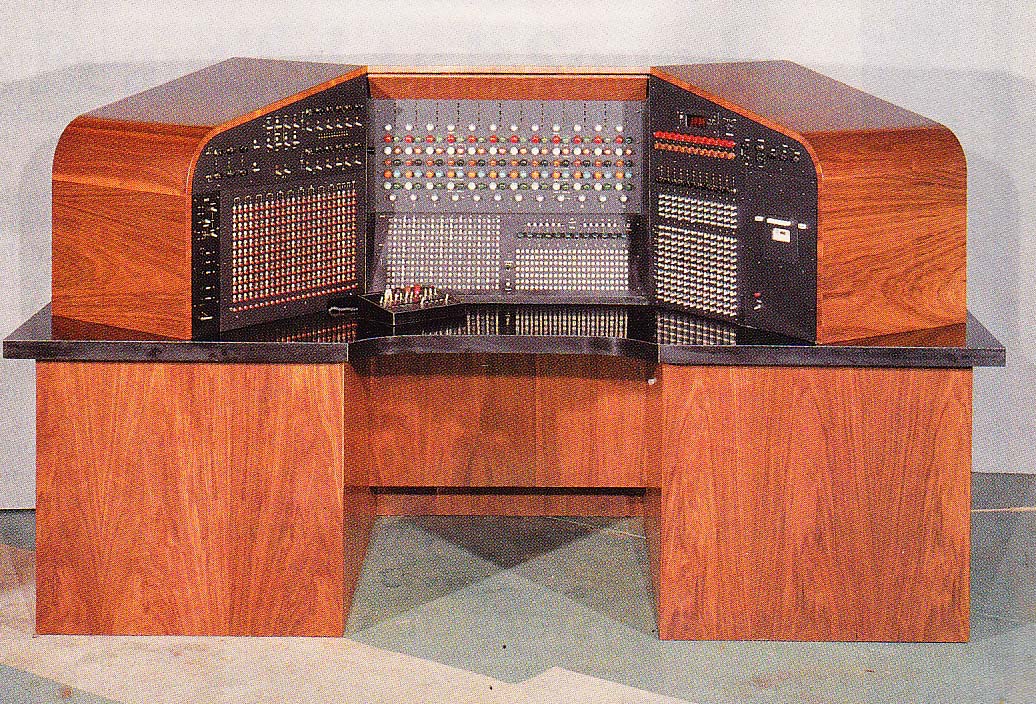 Above, Scott’s ‘Electronium’ music computer of 1965. Not too surprisingly, it is currently owned by Mark Mothersbaugh; a child to Scott’s marriage of esoteric electronics and pop sensibility if there was ever one. The ‘Electronium’ currently awaits restoration. Makes me cringe to just think about servicing that thing. Good luck fellas.
For more coverage of early electronic music pioneers on PS dot com, click here.
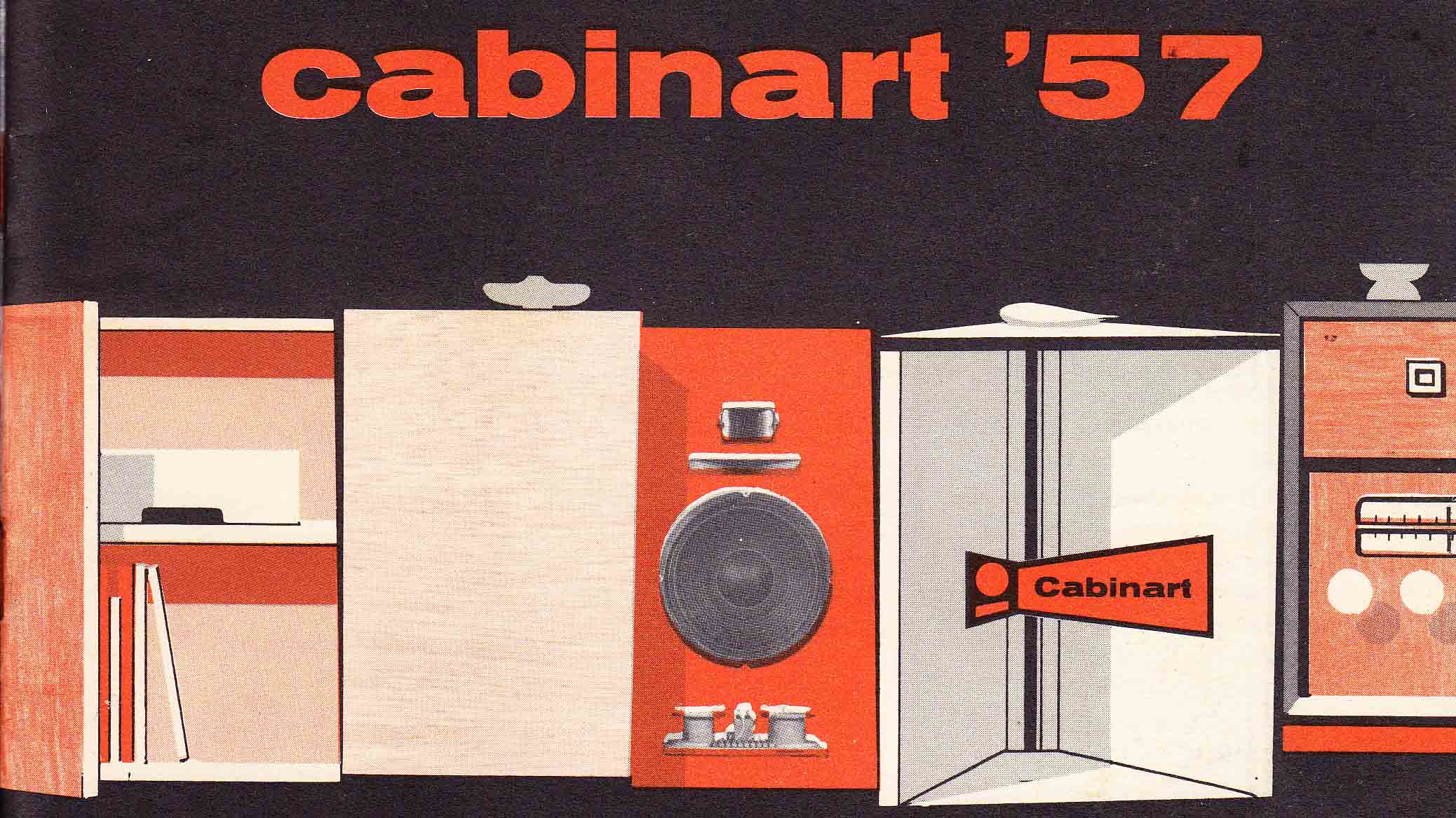 Download the complete 36pp 1957 Cabinart catalog (presented in three parts due to size)
DOWNLOAD PART 1: Cabinart_1957_part1
DOWNLOAD PART 2: Cabinart_1957_part2
DOWNLOAD PART 3: Cabinart_1957_part3
Models covered include: well, hundreds of ’em. All intended for Mono operation, including the ‘Rebel’ series of corner-horns designed by Paul Klipsch.

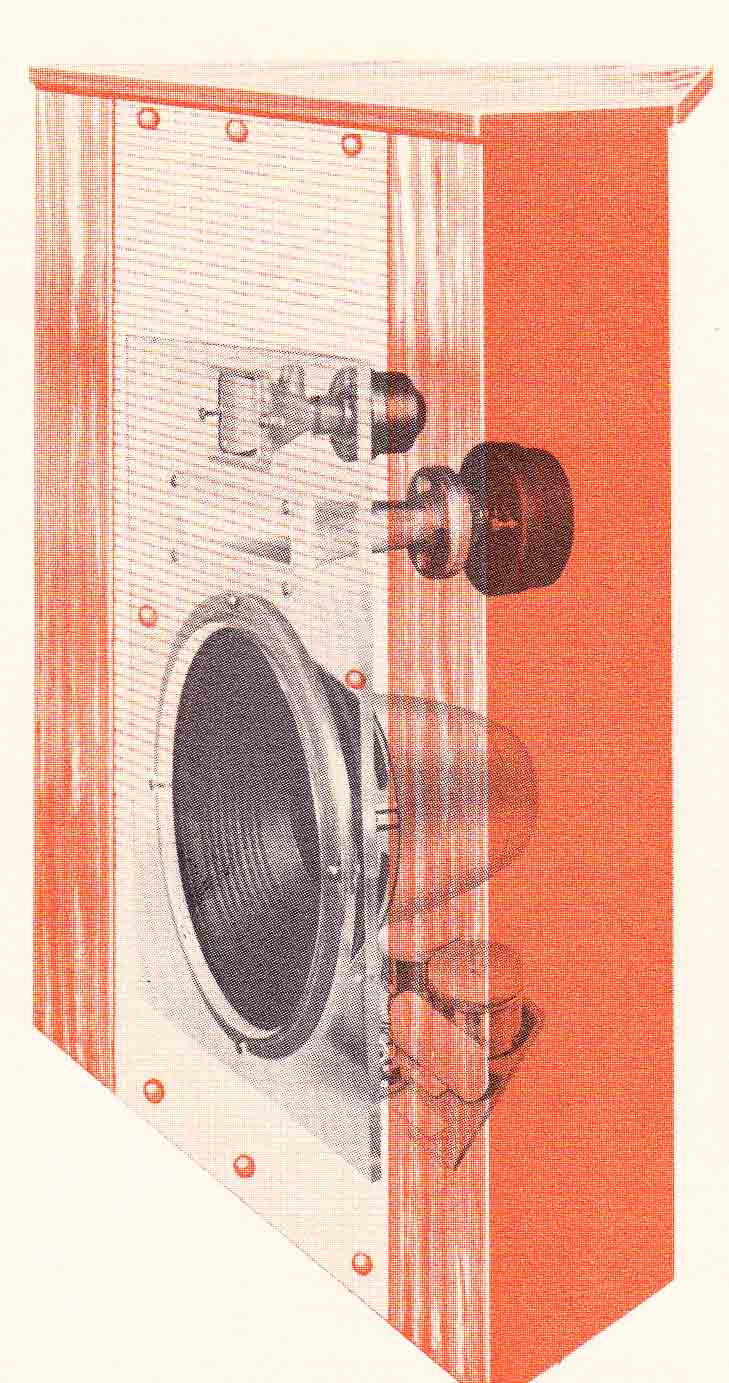 Above, the Rebel ‘Ortho 315’ which featured University (aka Altec) and Klipsch components.
When I think of ‘Hi Fi Furniture’ I immediately envision the wares of the Bell’ogetti brand (now known simply as ‘Bell’o’). Their classic 80s and 90s designs were largely minimal, metal, and exposing the equipment in a dramatic manner. Hi-Fi furniture of the 50’s was designed rather to hide and/or disguise the equipment: to ‘blend’ with the more traditional home-furnishings such as the hutch and end-table.
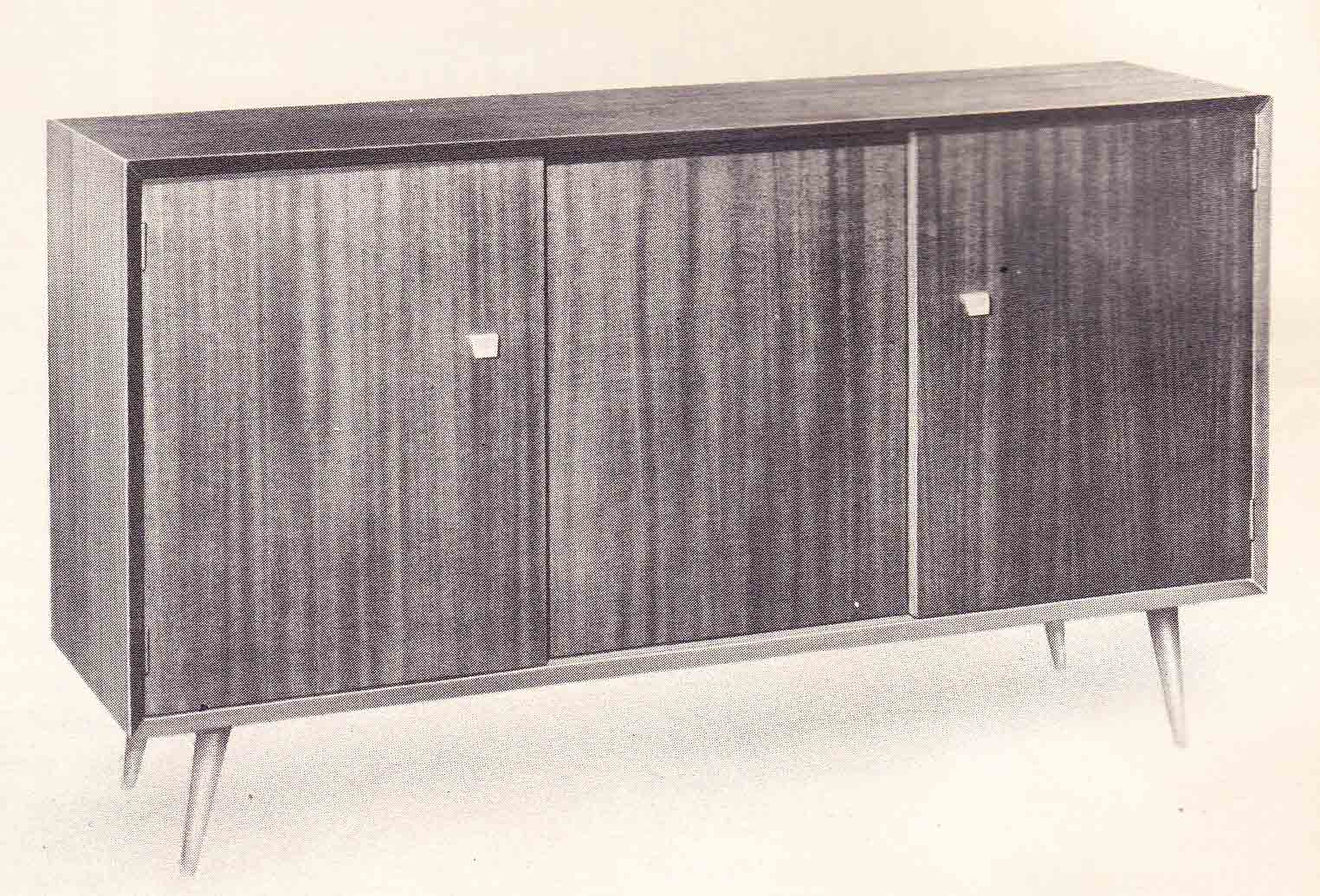
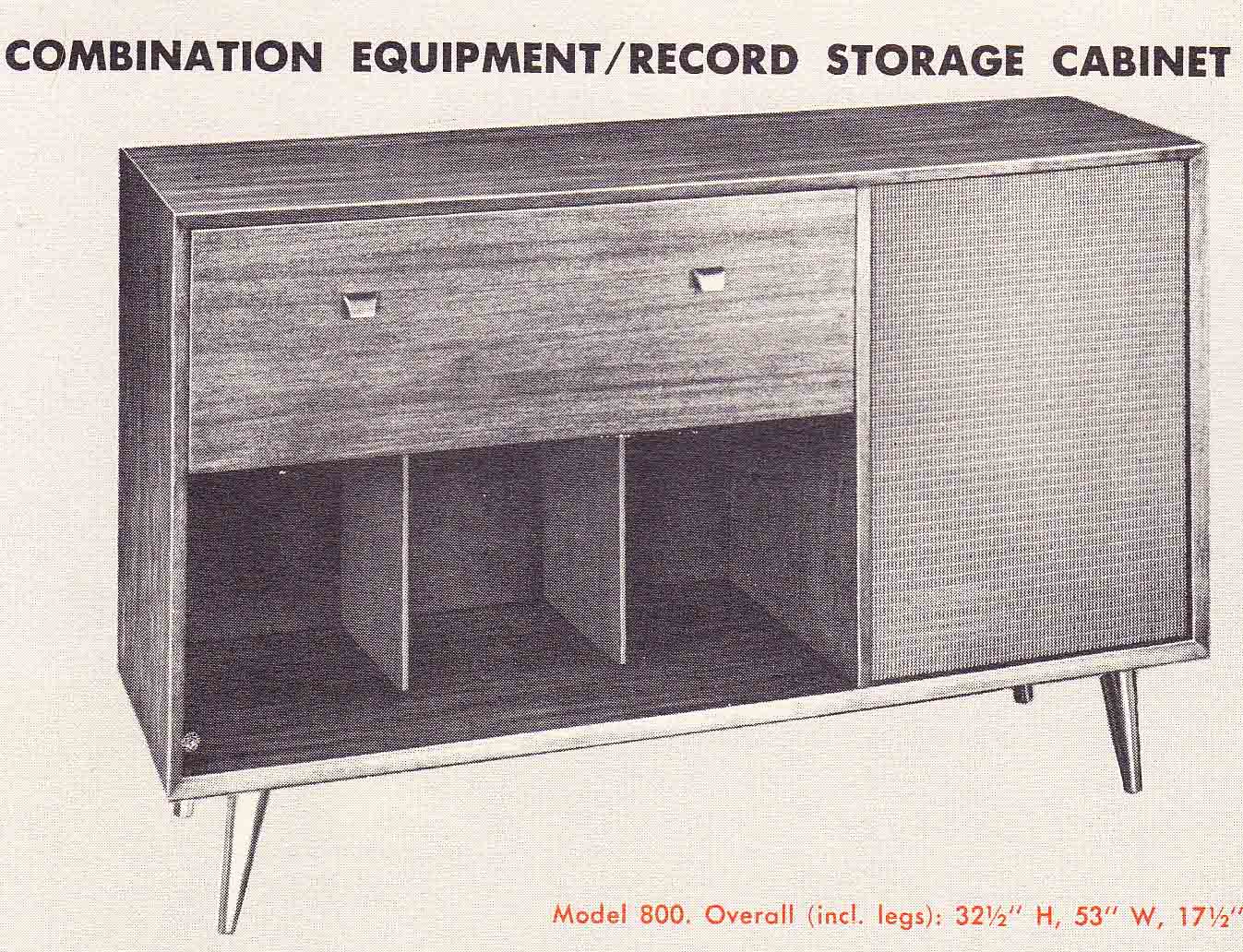
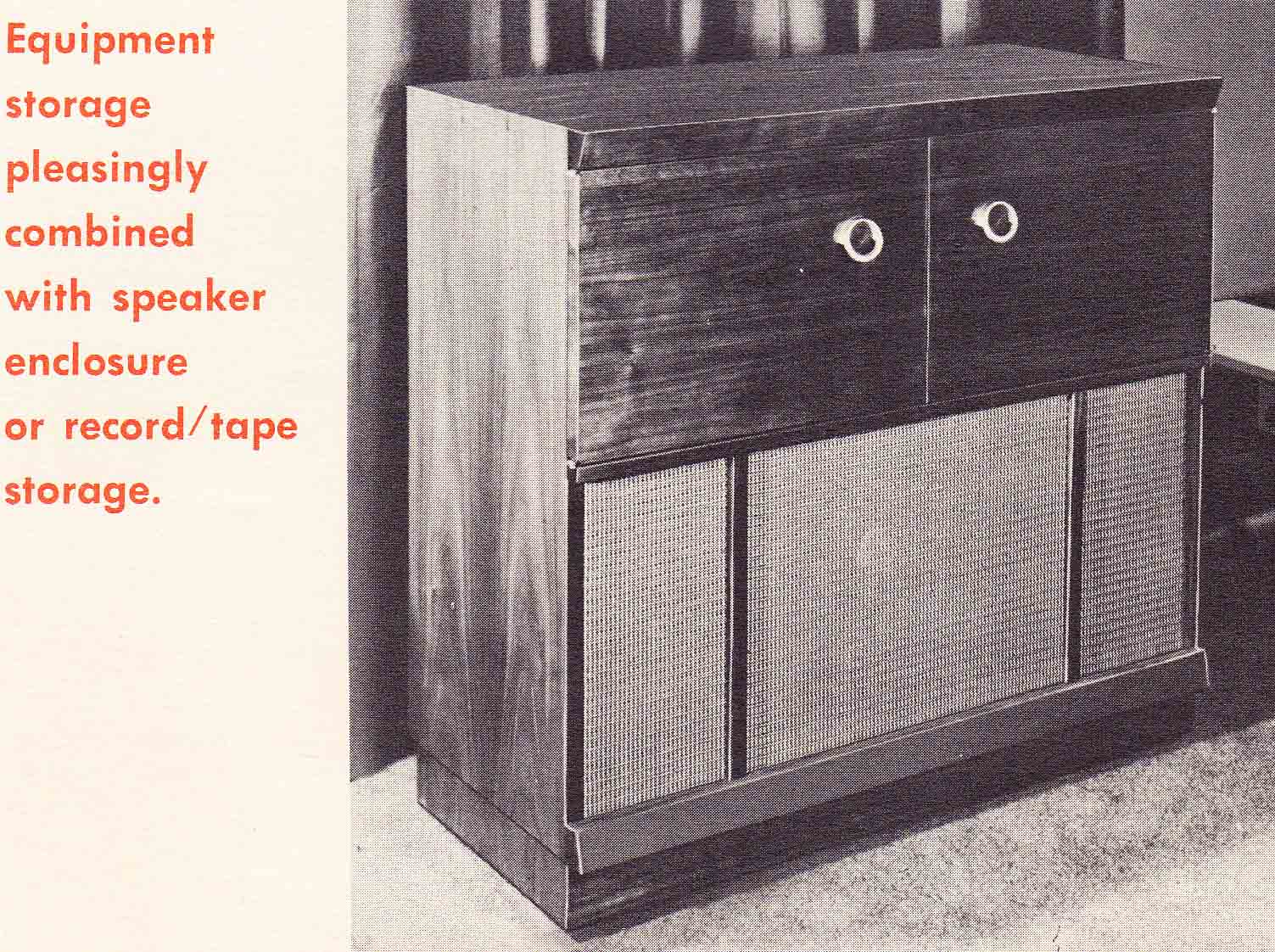
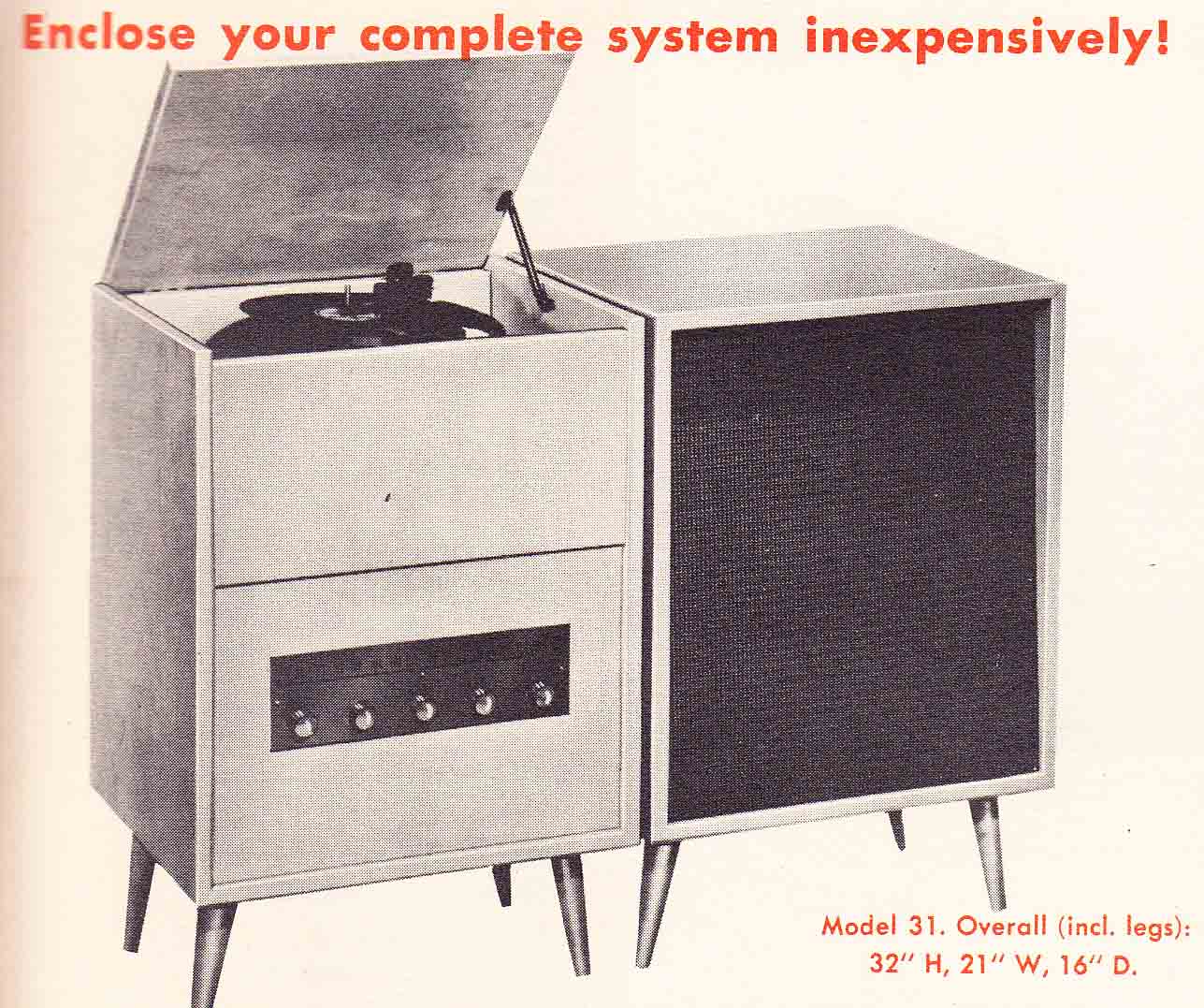 An interesting side-note: it seems like a mono-system offers more opportunities for designing attractive, unobtrusive hi-fi furniture. Once you can commit to a single set of speakers, why not simply put the components in the same spot? The whole system can be aesthetically unified, there are no wires running all over the place, etc. Stereo console-furniture was certainly made as well in the coming years, but at some point we seem to have entered an era of conspicuous display of audio equipment rather than following a policy of tasteful containment.
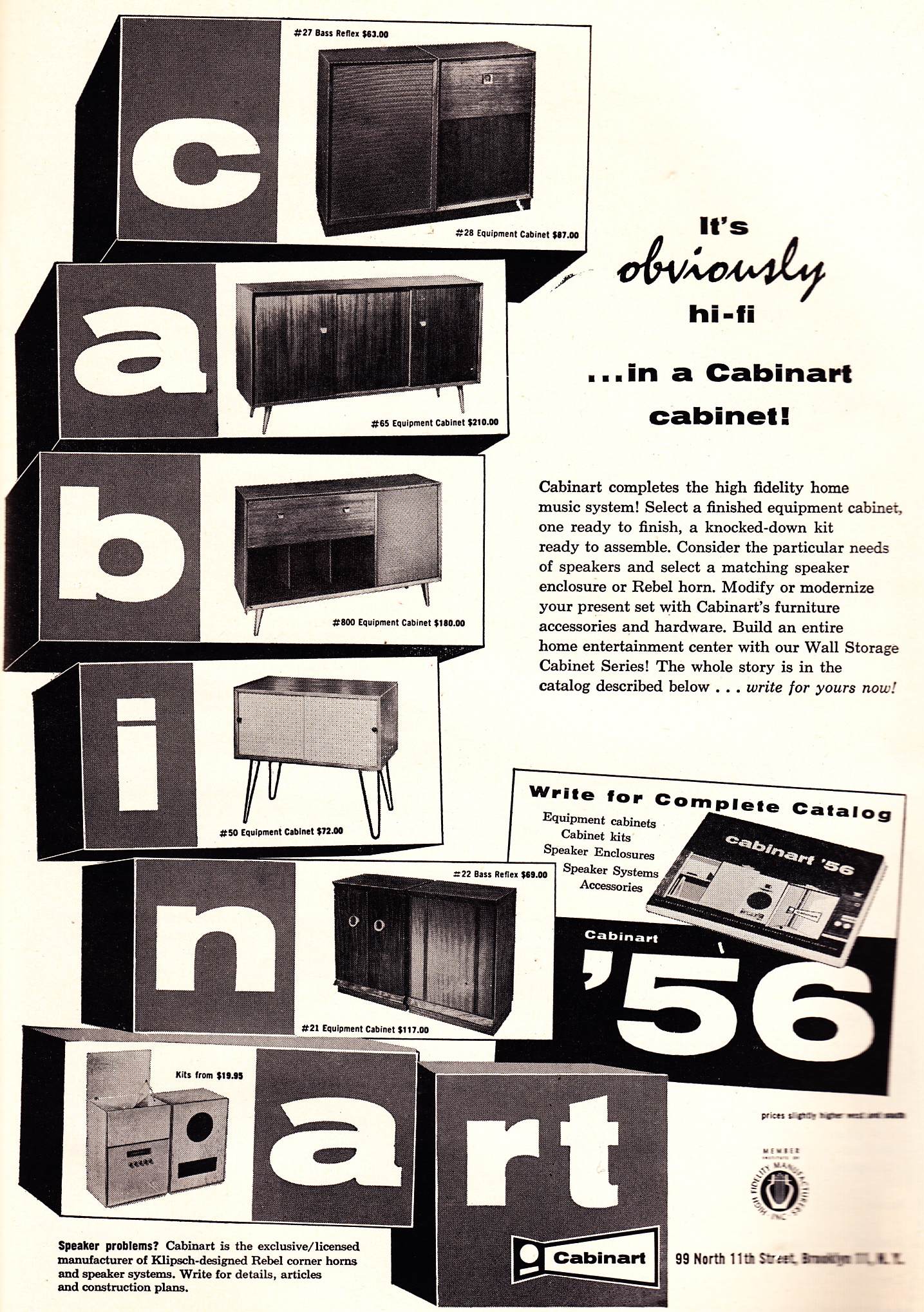 Above, a Cabinart print-ad from 1956. As the advert points out, most Cabinart models were available in three variants: assembled+ finished, ready-to-finish, or as ready-to-assemble-and-finish.
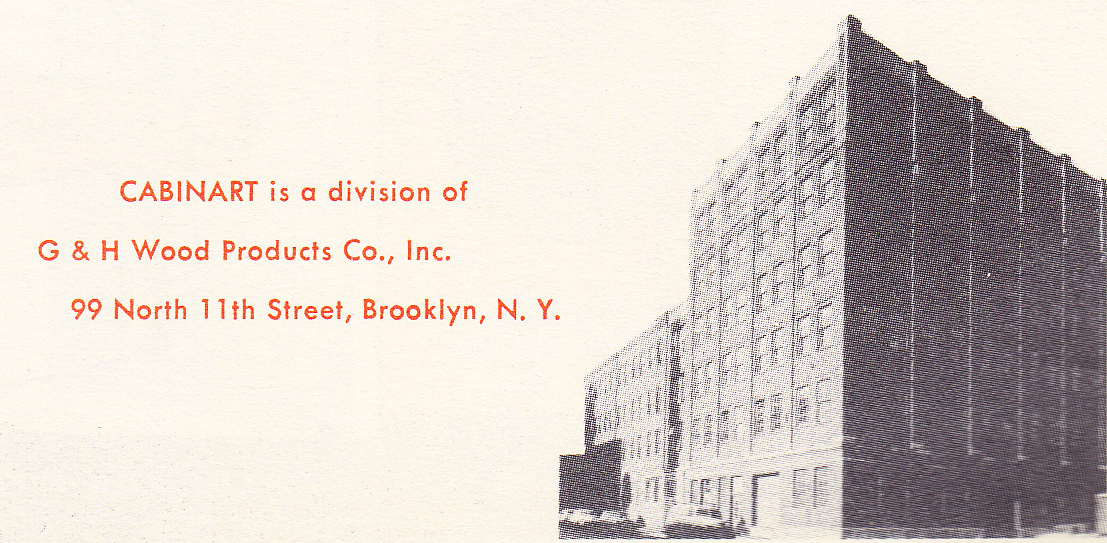
 Above, 99 North 11th street, Brooklyn, NY, former home of Cabinart, as it stands today. Lofts are available, btw. This structure is a stones-throw away from Beacon’s Closet and the Brooklyn Brewery, two icons of the ‘New-Williamsburg’ if ever there were.