Categories
Guitar Equipment Publications

Out-of-Print-Book-Report: “The Guitars Friend” 1977

Download a thirteen-page excerpt from “The Guitars Friend” (no author credited), Quick Fox publishers, ISBN# 0-8256-3072-X:

DOWNLOAD: GuitarsFriend_Elec
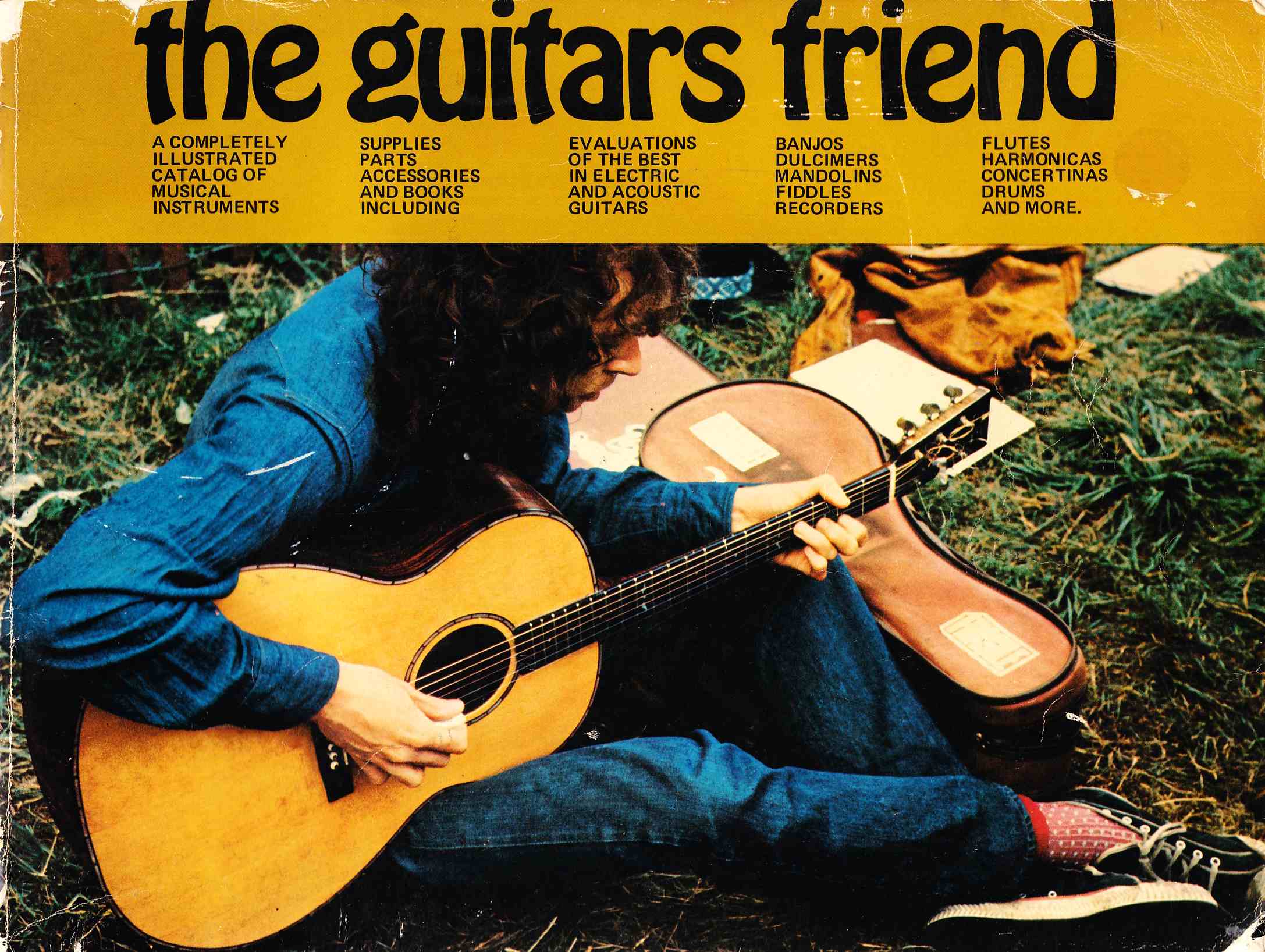
 

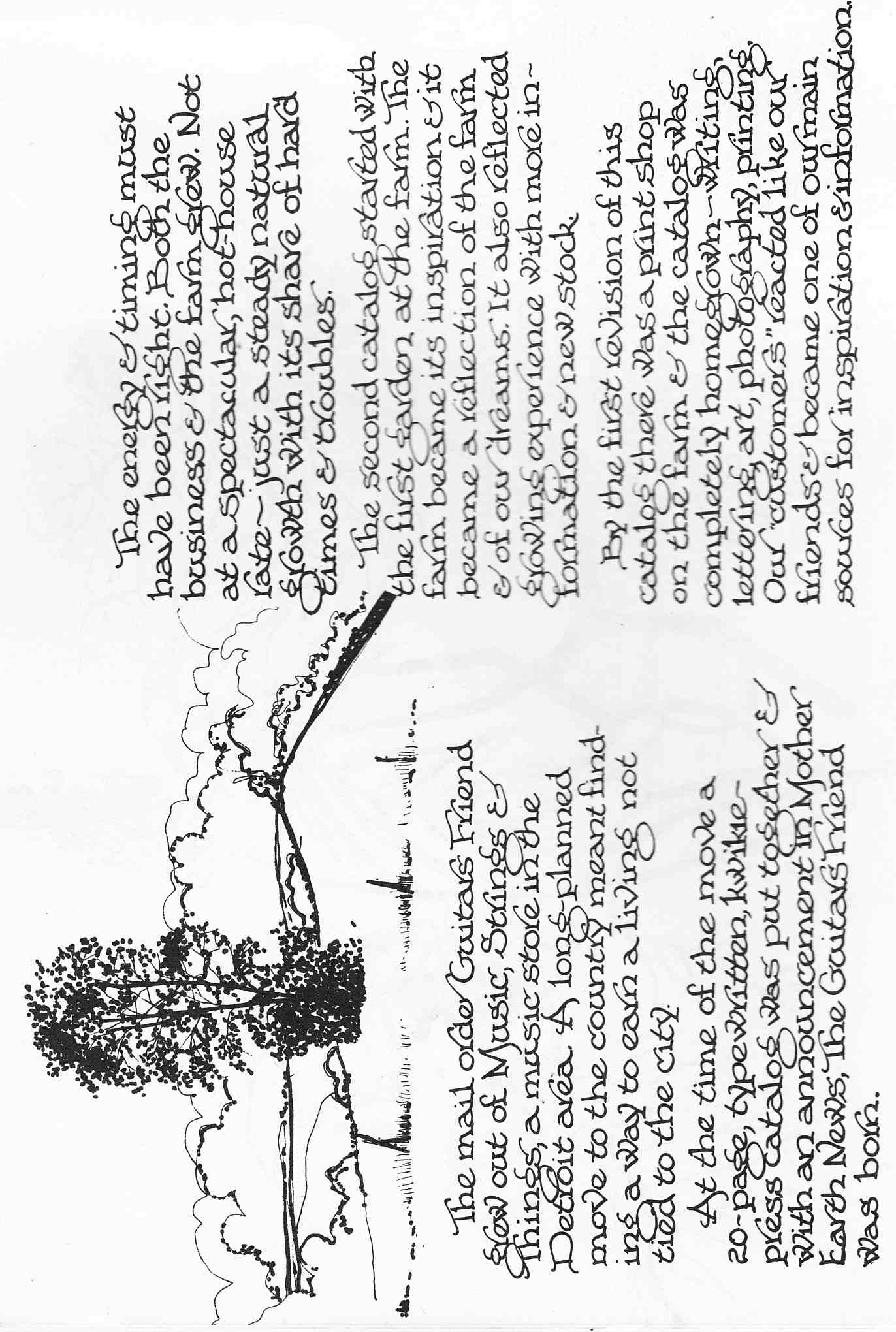
Billed alternately as a ‘Catalog’ and a ‘Guide,’ “The Guitars Friend” (h.f. “TGF”) is a charming artifact of the late-hippie-era.  From the self-description offered in the book, TGF began as a mail-order catalog begun by former (owners or employees – unclear) of ‘Music, Strings, and Things’  a Detroit-area music store.  Seems that these retailers wanted to move to the country, and they took their business with them.  A few years later, they had stopped the mail-order business and took to solely publishing this guidebook to current musical instruments.  We’re not trying to sell you anything, man.  Just sharing.  (Although they apparently will sell you much of the gear if you write to them?  it’s all very vague.) Check it out in their own words:
The entire 180-pp volume is entirely hand-lettered and largely hand-illustrated.  It’s a pretty fantastic relic of the post-woodstock-youth generation as well as the back-to-the-land movement.
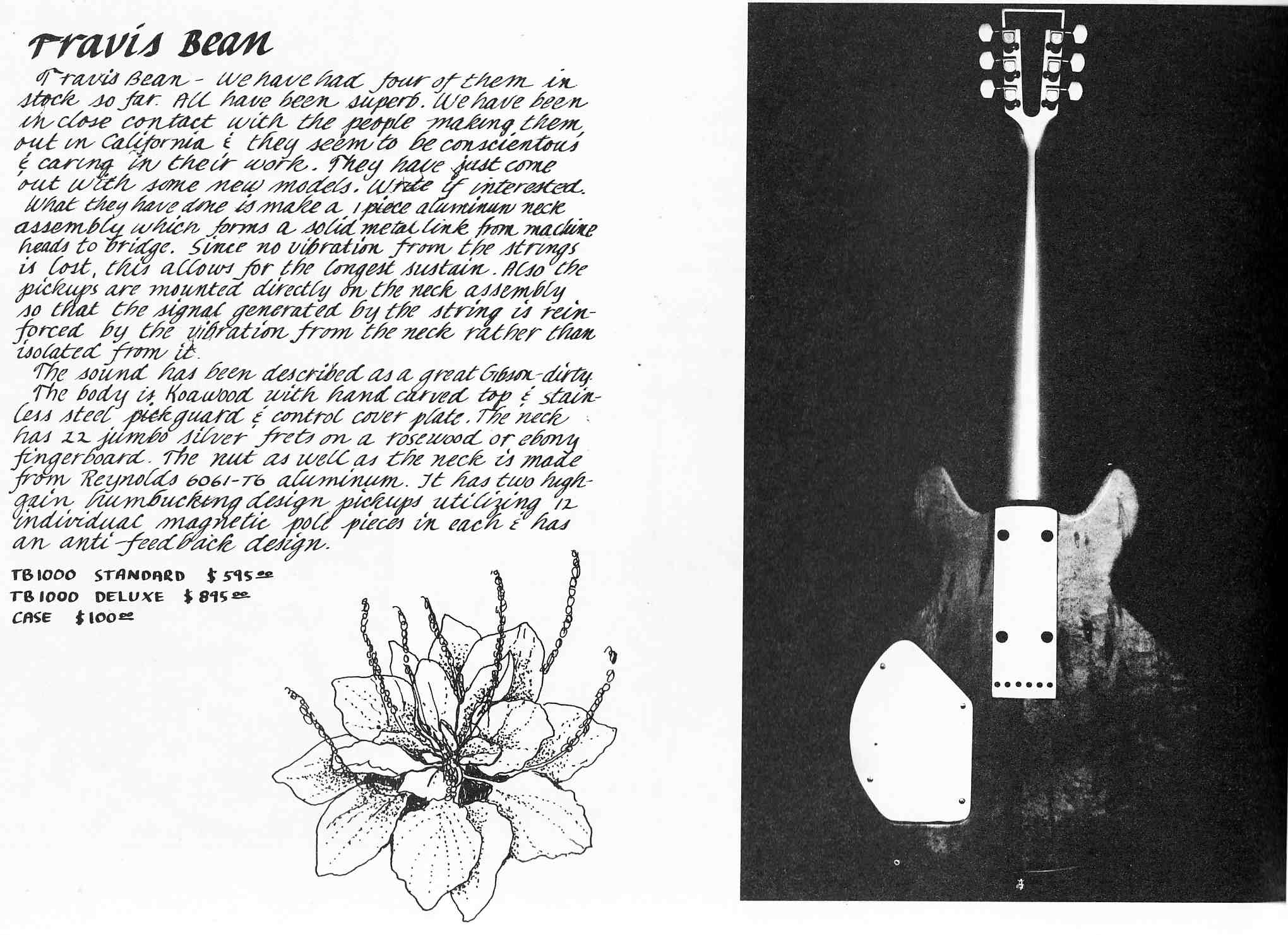
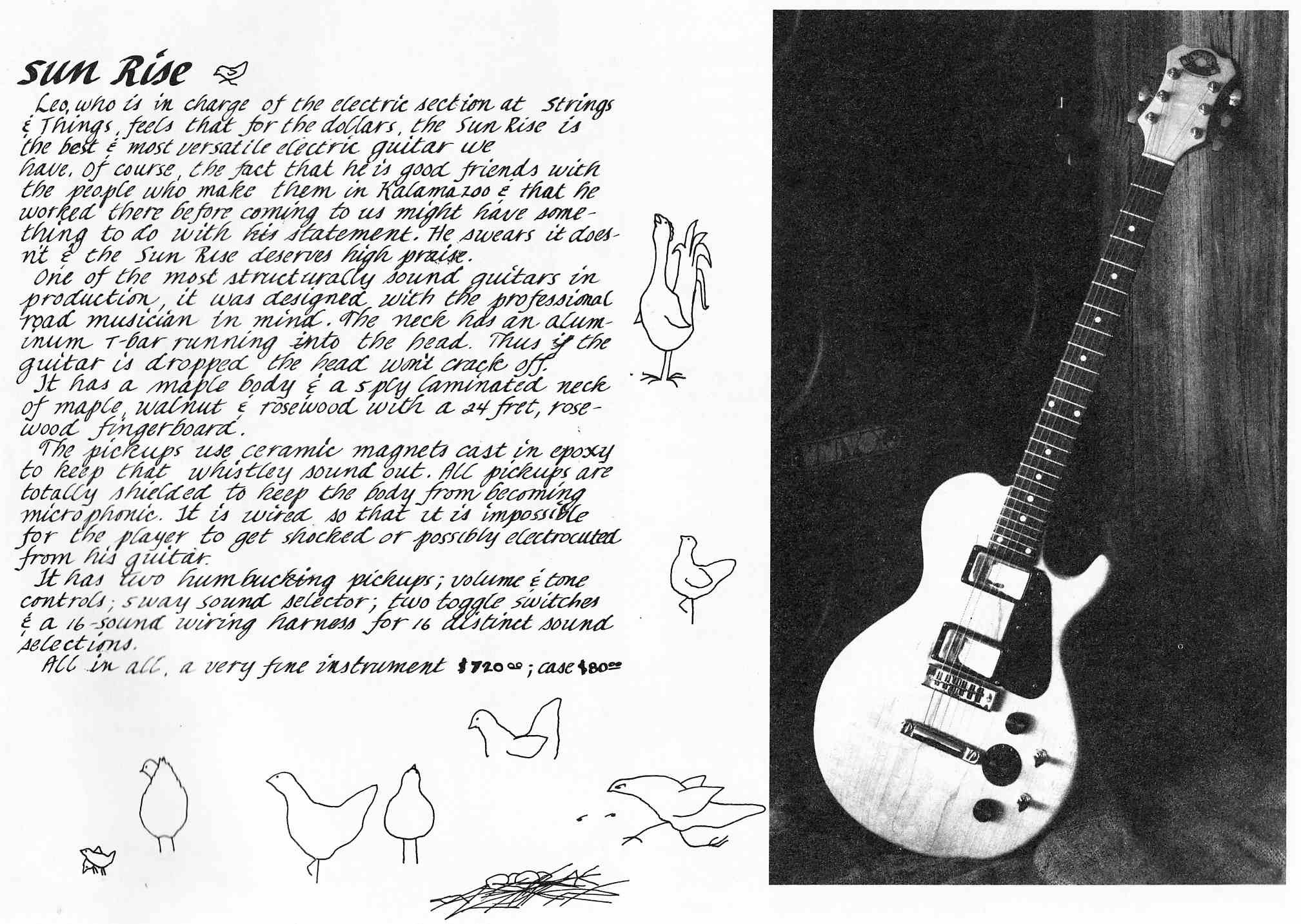
The book features descriptions and advice concerning mainly acoustic instruments, but there is a good ten pages devoted to electric guitars (no mention of amps and effects).  I’ve included the electric bits in their entirety in the download link at the head of this article.  Guitars depicted and discussed include: Ibanez Firebrand, Rocket Roll, MoonLight 59, F.M. Jr, Howie Roberts, Rick Bass, Old-Style Strat, and Strato Model; Gibson Les Paul Custom, Les Paul Deluxe, ES 335, SG Custom, Standard, L6S, and the Gibson Ripper and Grabber Bass; Fender Stratocaster, Telecaster, Mustang, Precision, Jazz, and Mustang Bass (es); Rickenbacker 4001; The Seagull Guitar, described as being built by Bernardo Rico (better known in the 80s as B.C. Rich);The Travis Bean TB1000 Standard and Deluxe; The Sunrise Electric Guitar (no model name given; made in Kalamazoo MI); and finally the Alembic Long Scale Bass and guitar, a steal at $1750 (that’s $6200 dollars in today’s bread).
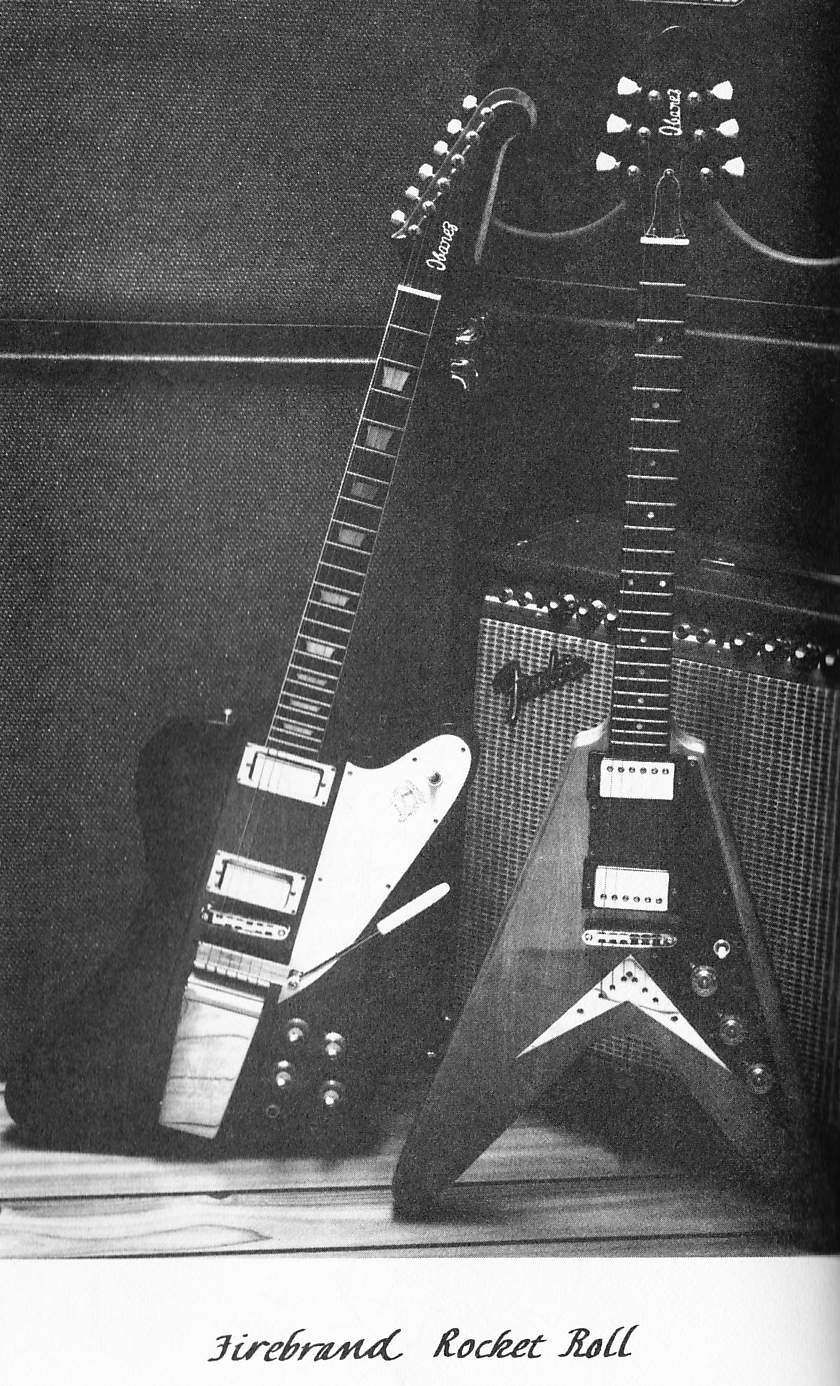
Anyhow.  DL the file and give it a look…  some of the writing is pretty amazing; as in the discussion of Ibanez, who were then churning out thousands of what we now term ‘lawsuit guitars’:

“The Ibanez people…can make a copy of almost any stringed instrument and make it as good but cheaper than the original…The only complaint people seem to have is status-wise – that it is a Japanese copy.  Once they get past their own ego and conditioning, they are amazed at the quality.”

Let go of yr hangups and order a copy of “The Guitars Friend.”  Four currently available on Amazon dot com.
Categories
Altec

Takin’ em to Church (with Altec)

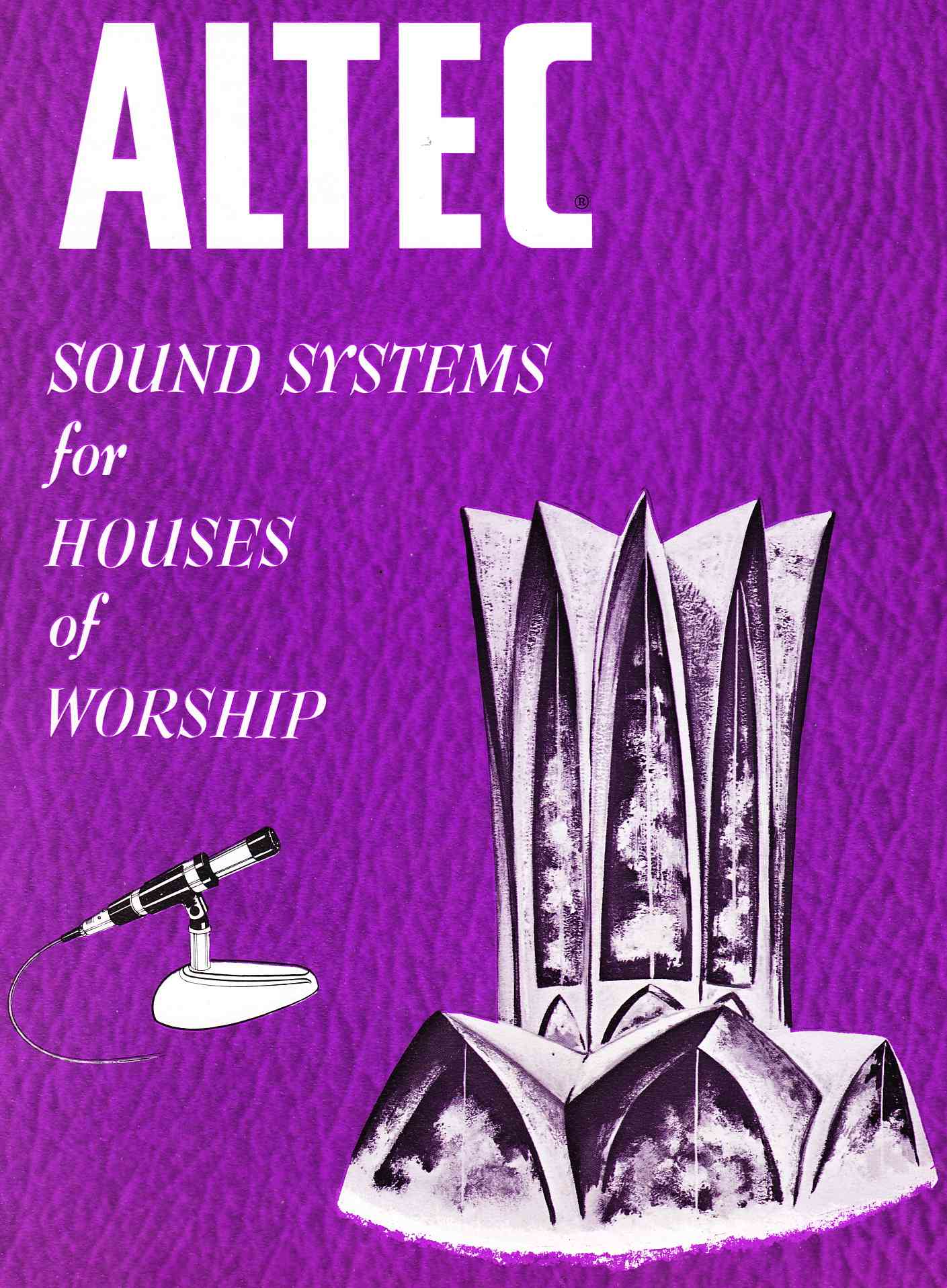
Download the eight-page 1966 brochure “Altec Sound Systems for Houses of Worship”:

DOWNLOAD: Altec_Worship_1966

The text above is taken from page 2 of this royal-purple-colored document.  The logical inference would be “As You Are To God, Your PA System Can Be To You! (with ALTEC)”

Been thinking about the voice/sound of God lately.  Our recent purchase of a massive Hammond Organ/Leslie speaker system at Gold Coast Recorders has led me to consider the features/tones/visual considerations that Hammond’s designers implemented when they designed these incredibly complex electro-acoustical devices.   The large Hammond Organs of the 1950s were designed (and commercially successfully, I might add) to replace the pipe organs which had functioned as a sonic {analog/representation/index/or-what-have-you} for religious expression in the Christian church for hundreds of years.  Notice that I say sonic  representation, as opposed to musical representation.  We experience the Hammond Organ/Leslie system as being impressive and one-could-say ‘godlike’ in it’s sonic attributes, even aside from any particular piece of music that’s performed on it.  The unusually deep, pure bass tones of the footpedals; the cavernous Hammond spring reverb system; the swells of the footpedal; the visceral emotional response that the Leslie speaker creates by way of it’s manipulation of the Doppler effect.

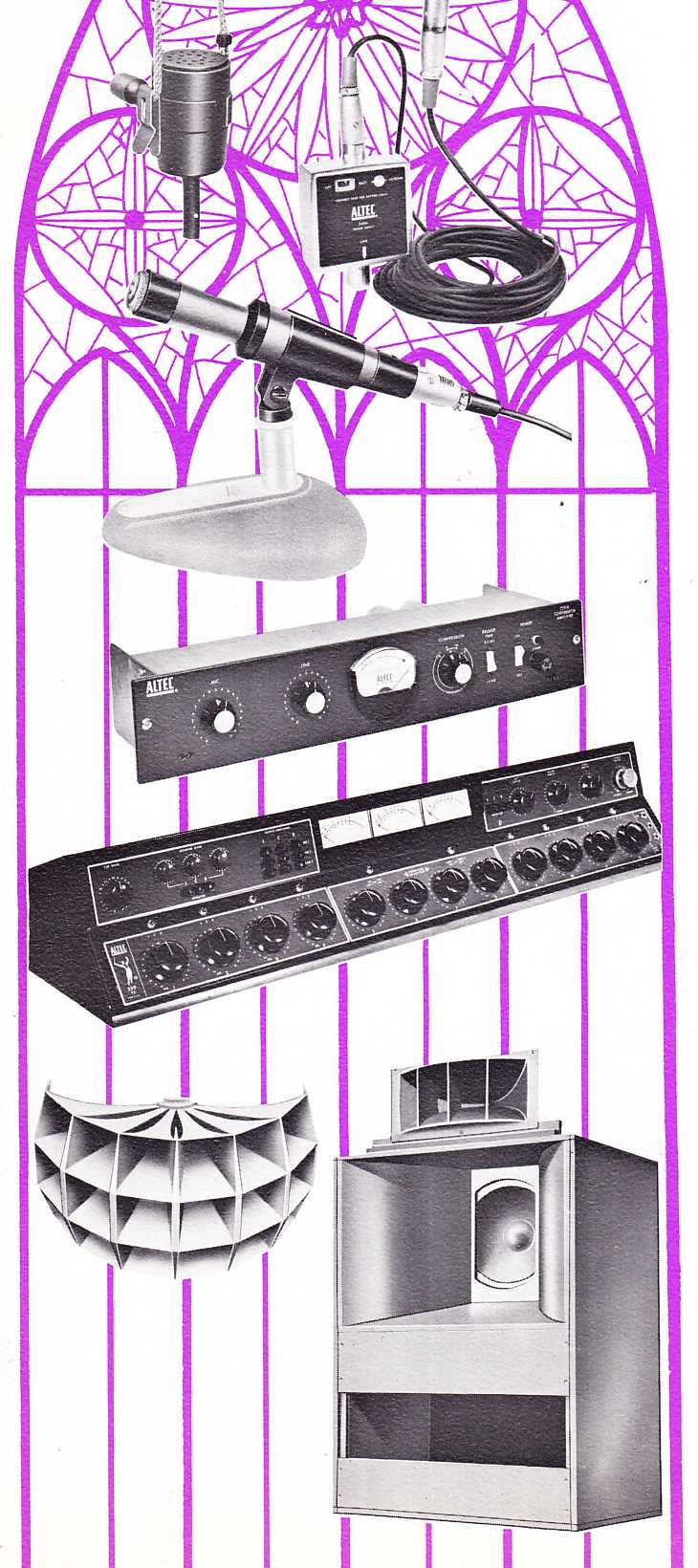
Sound systems in churches face certain special design requirements; this 1966 brochure from Altec addresses some of these concerns.  Low distortion, extremely high speech intelligibility, uniform coverage, and minimal visual presence; and all of this must be accomplished at a moderate overall acoustical volume.  Combine these sonic requirements with the fact that the sound system will often be operated by church members, ie., volunteers, ie., not-professional engineers, and you will find that operational simplicity is also necessary.

Given the large number of old Altec mixers on eBay with a stated provenance of ‘from an old church,’ I feel like Altec was probably pretty successful in their church-marketing initiatives of the 1960s.  From what I can gather, Peavey seems to be a leader in church audio today.  It’s interesting to examine the various products in their Sanctuary Series and note the differences between these and their standard nightclub PA line.

To my readers out there:  do any of you operate sound systems in churches?  Are there any special techniques in mic’ing, mixing, or processing of audio in the church environment?  Does anyone attend a church that is still using old green Altec PA kit of the 60’s?

Categories
Altec Custom Fabrication

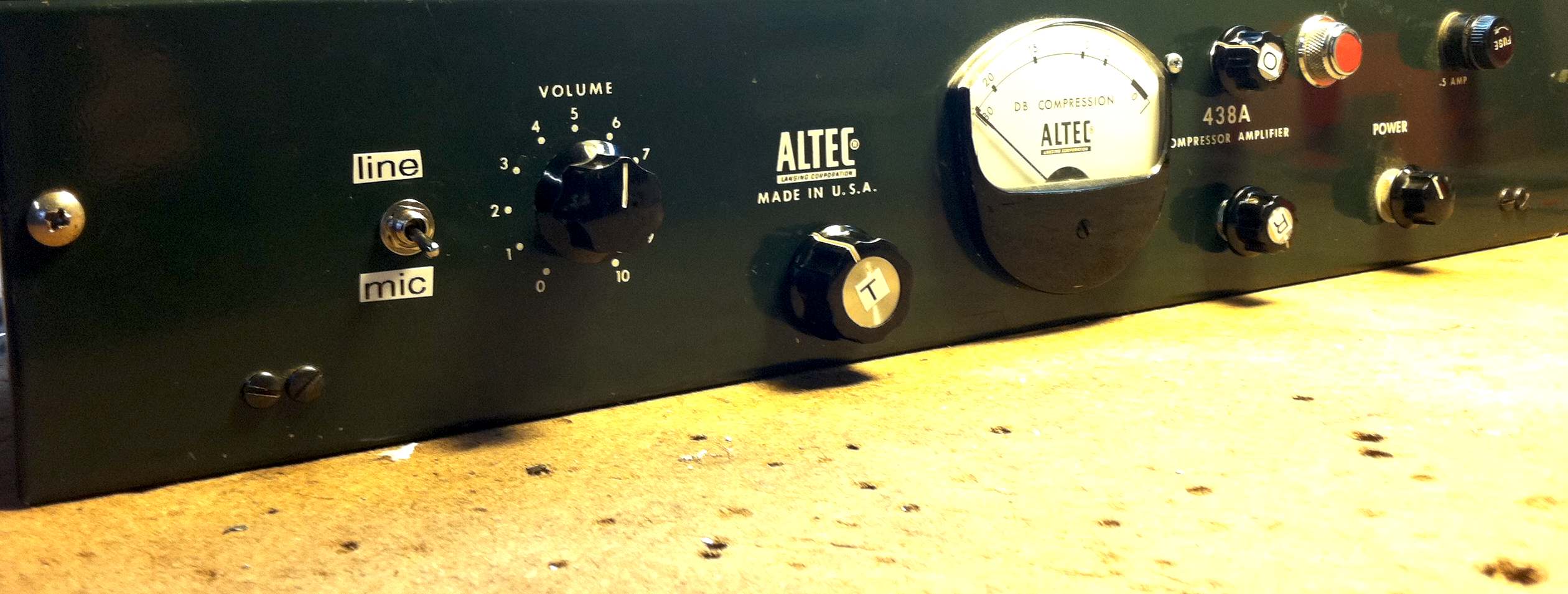
Altec 438A – Modified for modern music production use

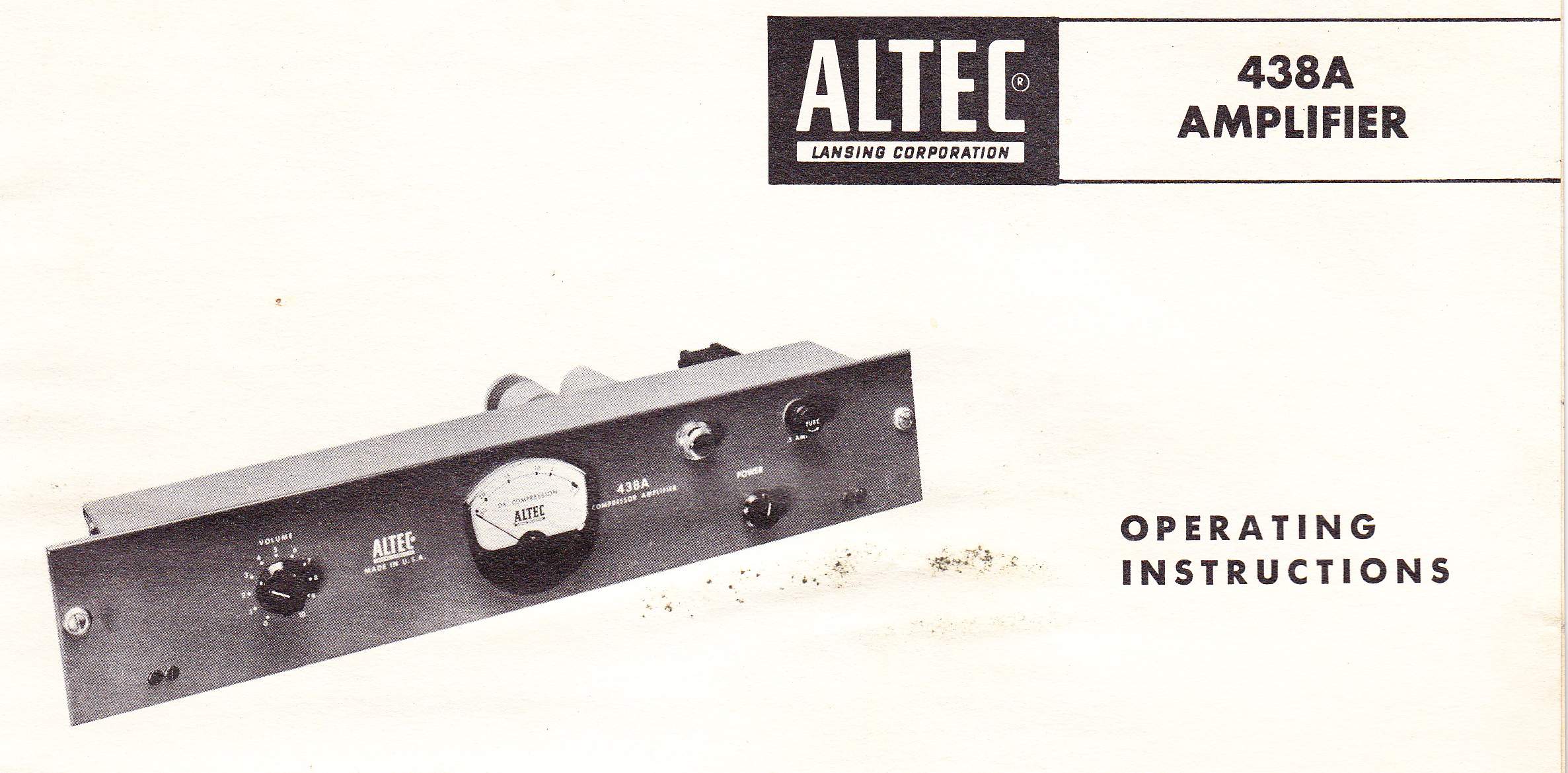
As we discussed in previous posts, the Altec 438A is an audio compressor designed in the late 1950s primarily for use in public-address sound systems.  It has a microphone pre-amp built in, and an absolute minimum of controls:  one knob determines the level of the signal that hits the input of the compressor; turn this knob all the way down and you hear silence; turn it high enough and you get a highly-amplified version of the input signal; keep turning it up and you get a highly amplified signal with the peaks attenuated or ‘compressed.’  There is also a 2nd input with slightly less gain; this unbalanced 100k ohm nominal input shares the same volume pot as the mic preamp.  I suppose that the 438A was useful enough in its day, as there are hundreds still to be found; but for use in a modern music-production environment, it’s pretty useless.  The levels are all wrong, there is not enough control of the compression parameters, and there is no proper balanced line-level input.

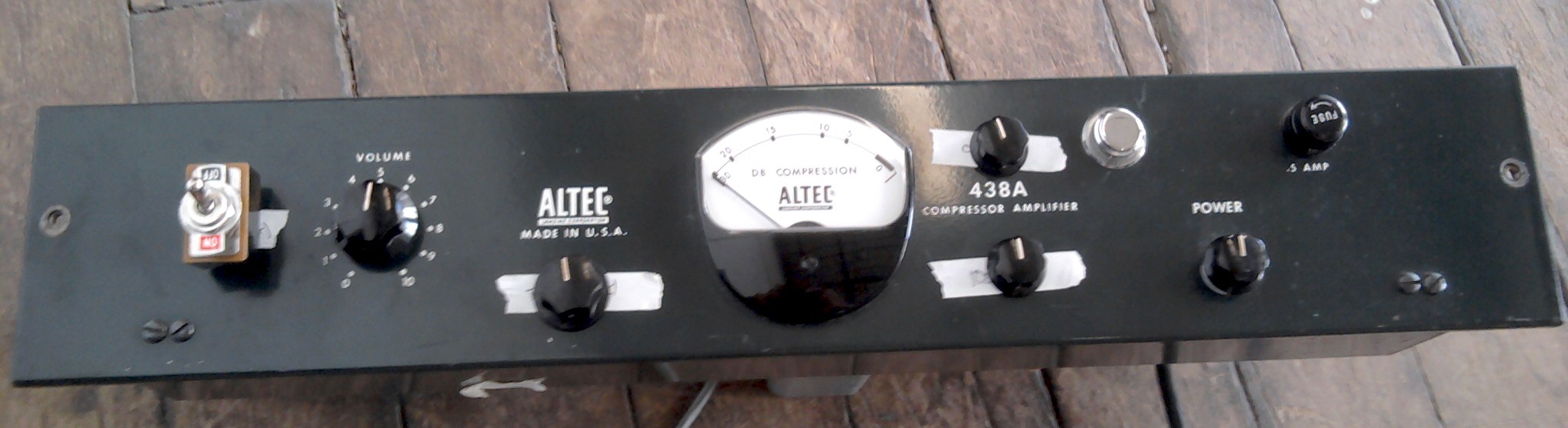
Here is how I took an original-spec 438A and modify it so that one could use it alongside more modern compressors in a music-production studio.

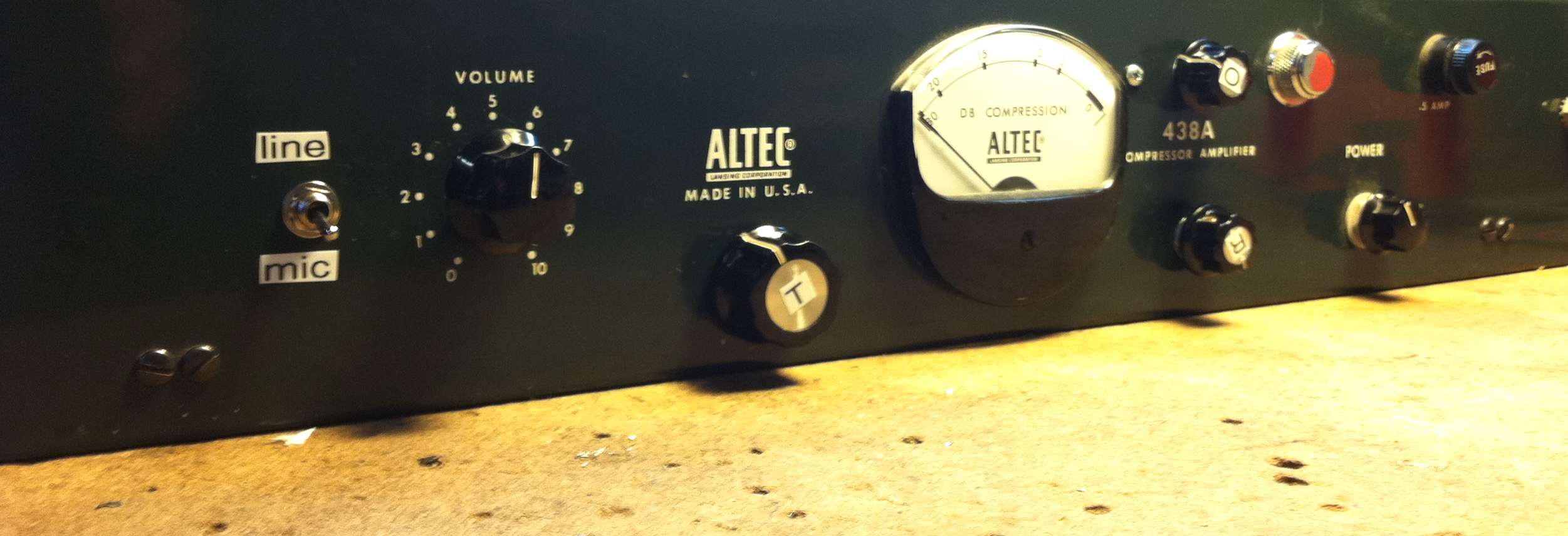
(From Left to Right): A switch to determine if either the two-stage mic preamp OR a balanced 15K nominal signal hits the input transformer of the compression amp; a threshold/ratio combo control ala the later Altec 436C; (top) an balanced output level control/pad ala the Gates Sta-Level (see here for details); (bottom) a release time control ala the Altec 436C.  The original volume pot still functions as an interstage gain control for the mic preamp.

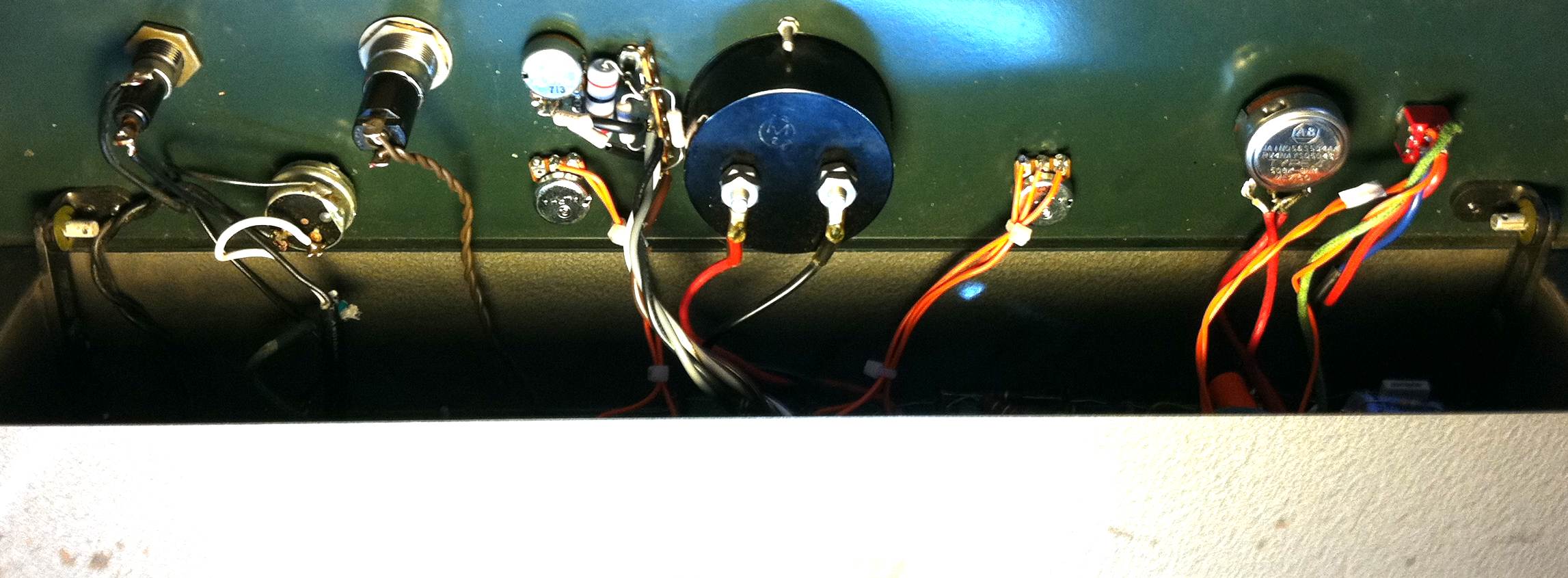
Here’s the unit with the face flipped down, revealing the wiring to the newly added pots and switches.  At my client’s request I used 11-position detented pots; ALPHA makes these in a huge range of values and Mouser stocks them for just about $2 a piece.  A great value IMO.  I used sliver-plated 24ga stranded wire for the audio wiring and 22ga solid copper for the control signal wiring.

This 438A is now ready for use in any situation where a gentle, vintage compression sound is desired.  The input and output levels are what you would expect from a standard pro-audio compressor; the release timing is widely variable (but never very fast – this would cause some artifacts due to the way these simple vari-mu compressors function); and the threshold/ratio control will yield a wide range of results as well.  Since the unit was in good physical and electrical shape, no re-tubing or re-capping was necessary.

Categories
Synthesizers

ARP Synthesizers Full-Line Catalog 1977

Download the twenty-page c.1977 ARP Instruments, Inc. catalog:

DOWNLOAD: ARP_1977_Catalog

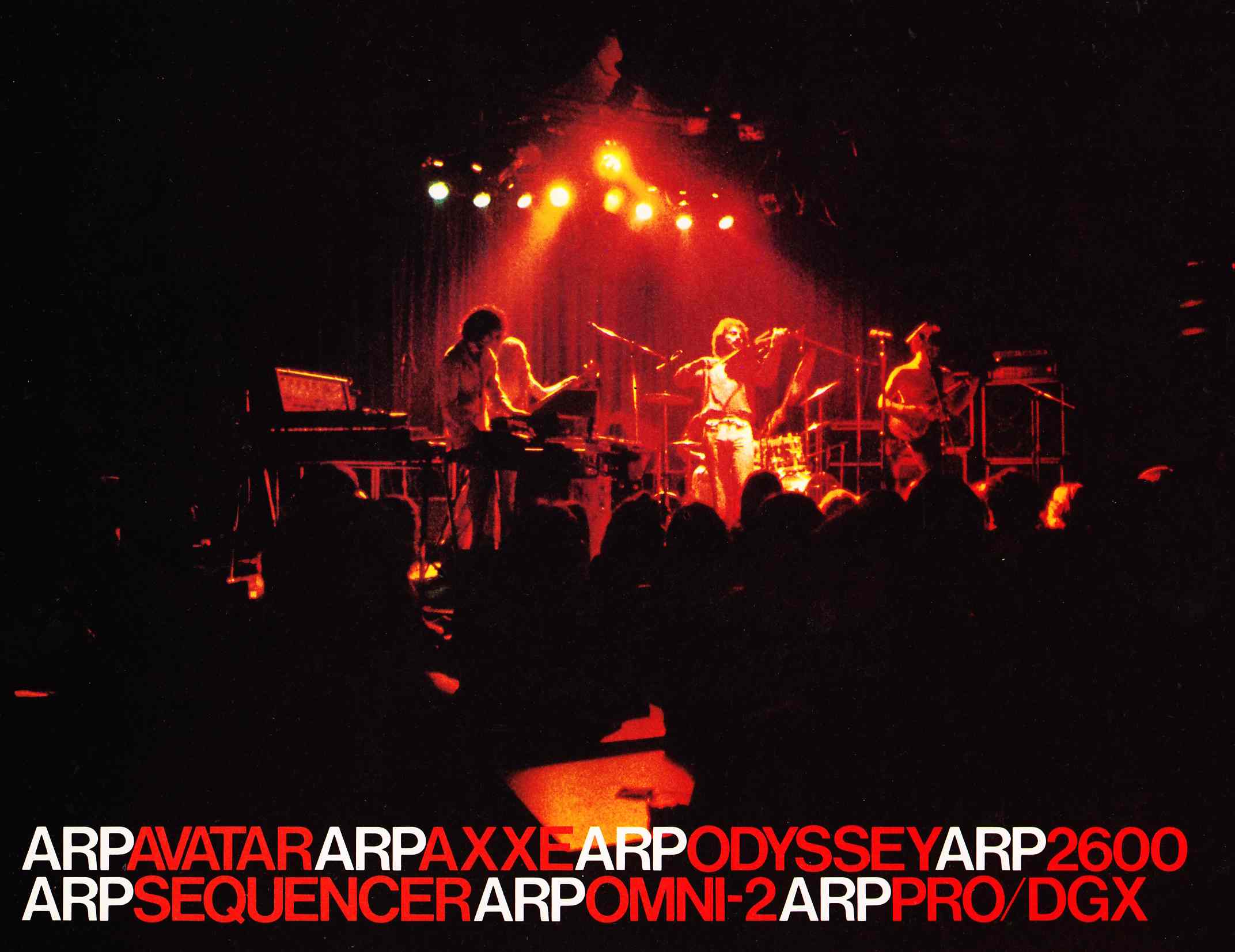
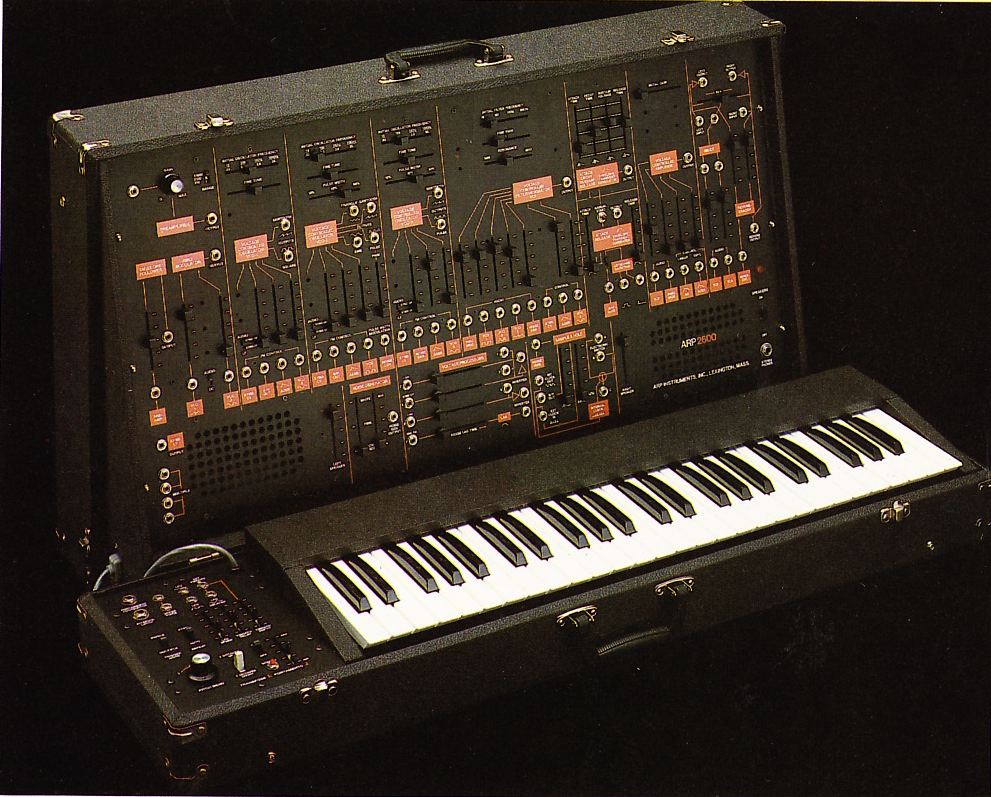
Products covered, with text, specs, and photos, include: ARP Avatar Guitar Synth, ARP Axxe, Odyssey, and 2600 modular-style synth; ARP Sequencer; ARP Omni-2 and PRO/DGX preset synths.

ARP can be considered the ‘other’ Moog of the 1970s.  Similar product lines, pricing, and appeal; in my limited experience, ARP synths are of similar sonic potential.

I studied electronic music extensively in college; the program had a nice selection of pieces going back to the early 70s; the big daddy of which was an ARP 2600.  It still sounded great 25 years after it rolled out of the factory.


Categories
Uncategorized

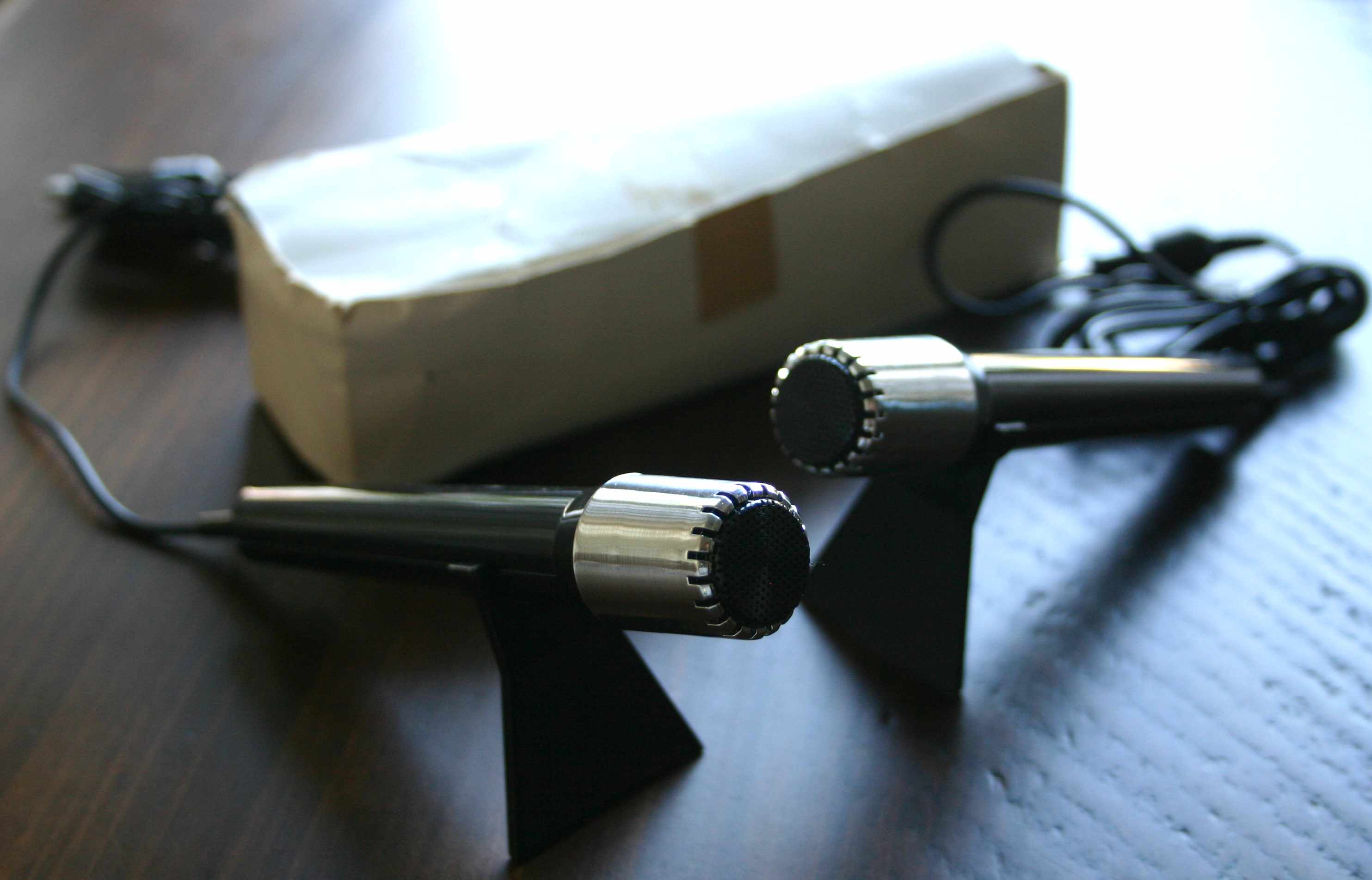
Every House Has A Mic

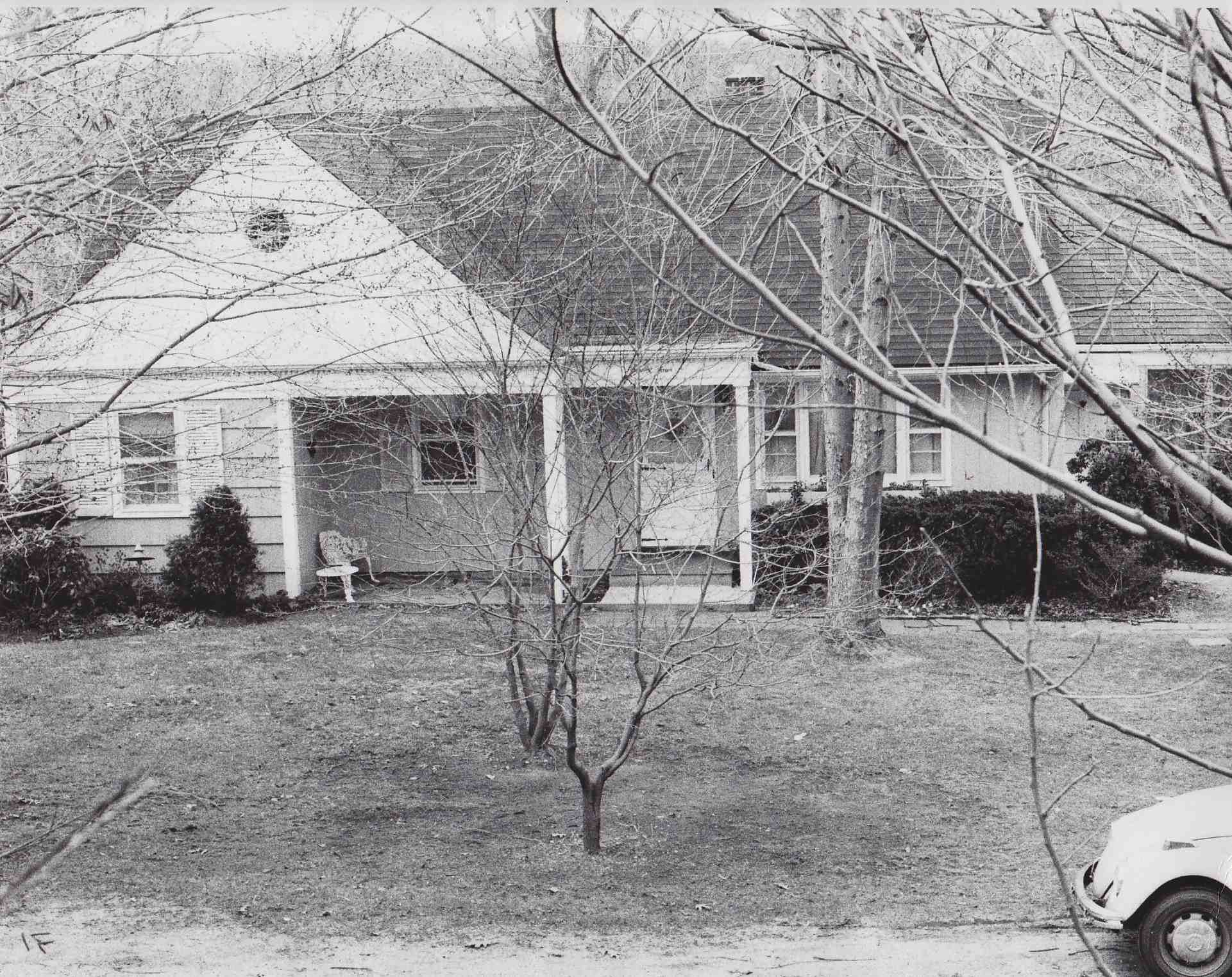
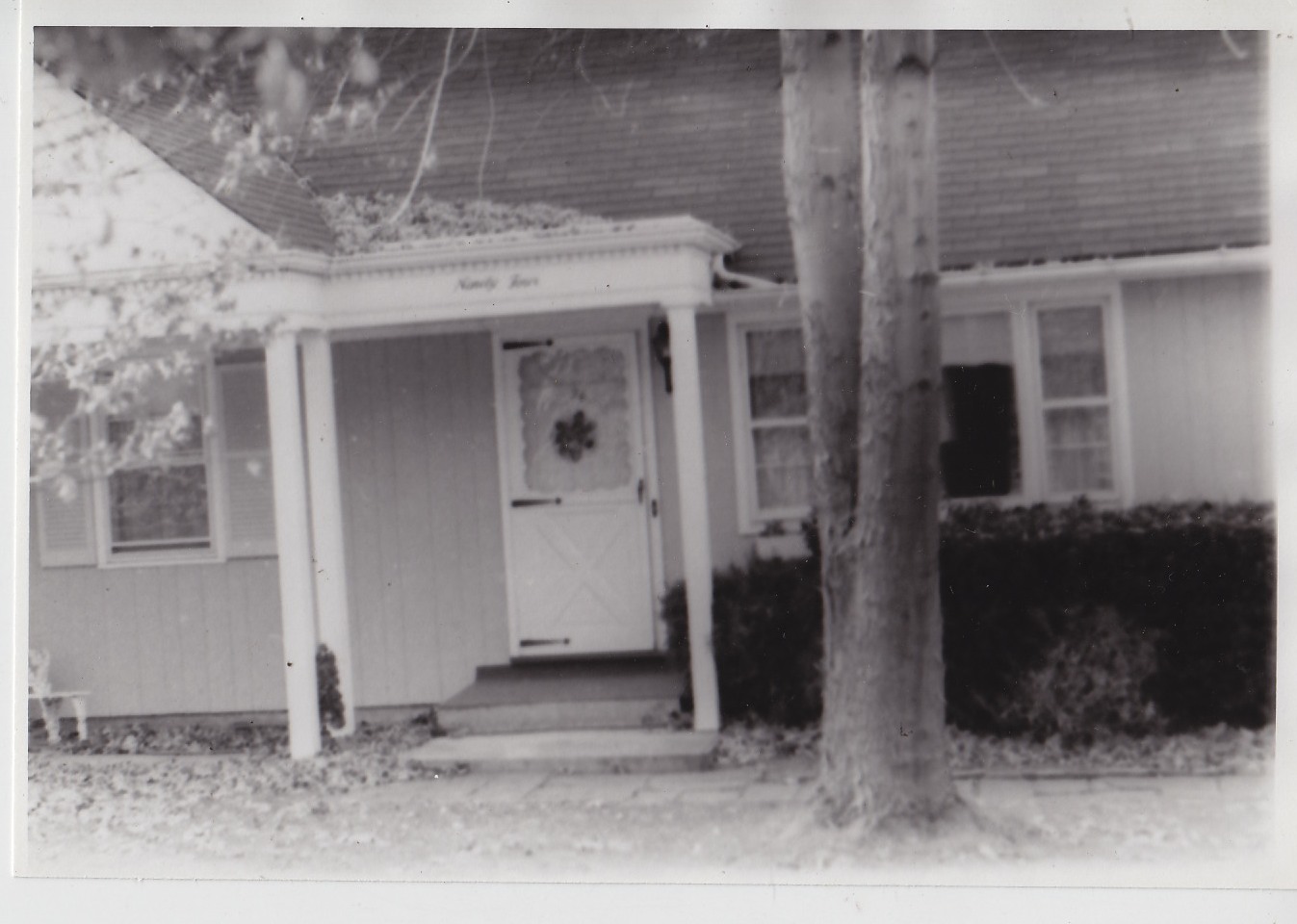
Any old house, on any street;

any house where a family lived, where life happened;

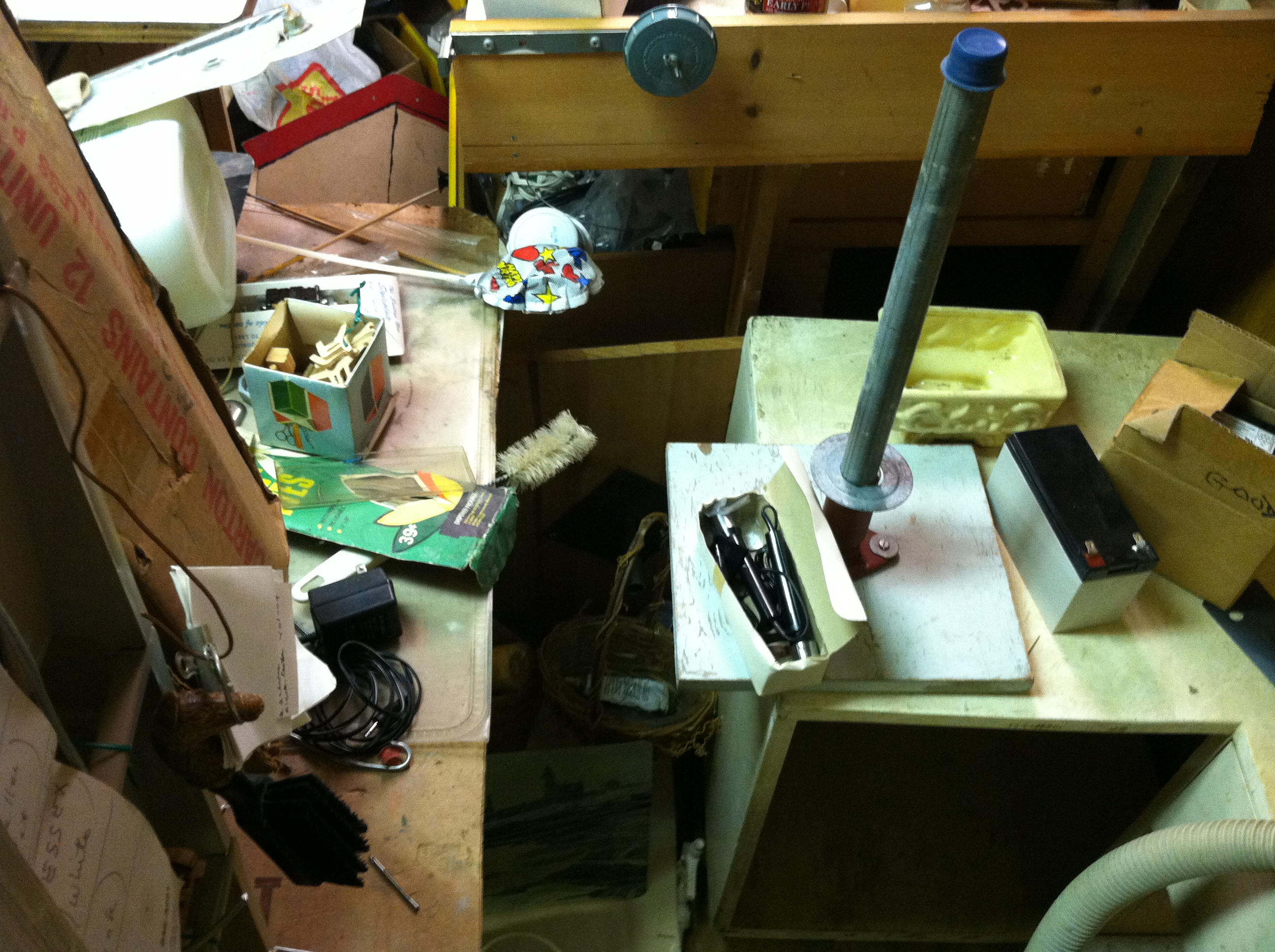
deep in the basement, perhaps; isolated: its partner the Tape Recorder long gone, a likely early-casualty of its own mechanical complexity;

buried among the sawdust, the poorly chosen xmas gifts, the (few or many) power tools. The microphone is inevitable, and it persists.

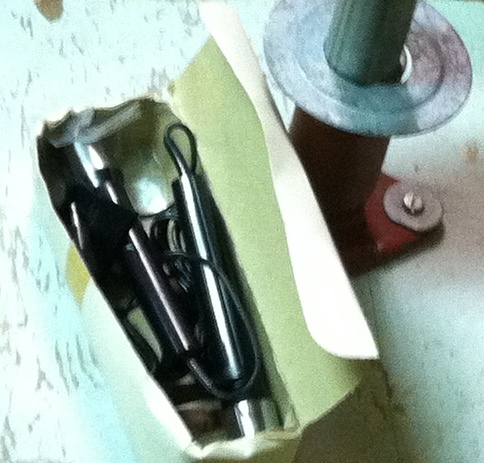
It’s probably not very fancy or sophisticated;

just the most basic object necessary to reliably convert sound-pressure into an electrical signal; two for stereo, if purchased after 196X (got to be realistic, right?  life is in stereo?).

An old house without a microphone would be an unthinkable as an old house without photographs.  Whatever it is that drives us to take all those pictures also drives us to capture moments of life via the sound that surrounds us, the sound that we swim in, sound that you can’t escape by something as easy as closing your eyes.   Like the camera, the microphone is a crucial tool in the ritual process of memory-enhancement and posterity-creation; the very presence of the microphone at certain moments serves to create the discourse of ‘significance’ that we have come to expect at certain moments of life.   The microphone is an index of significance, of remembering, and of the desire to remember.  To discard or destroy it would be very difficult.  And so it persists.


Categories
Uncategorized

In The Studio

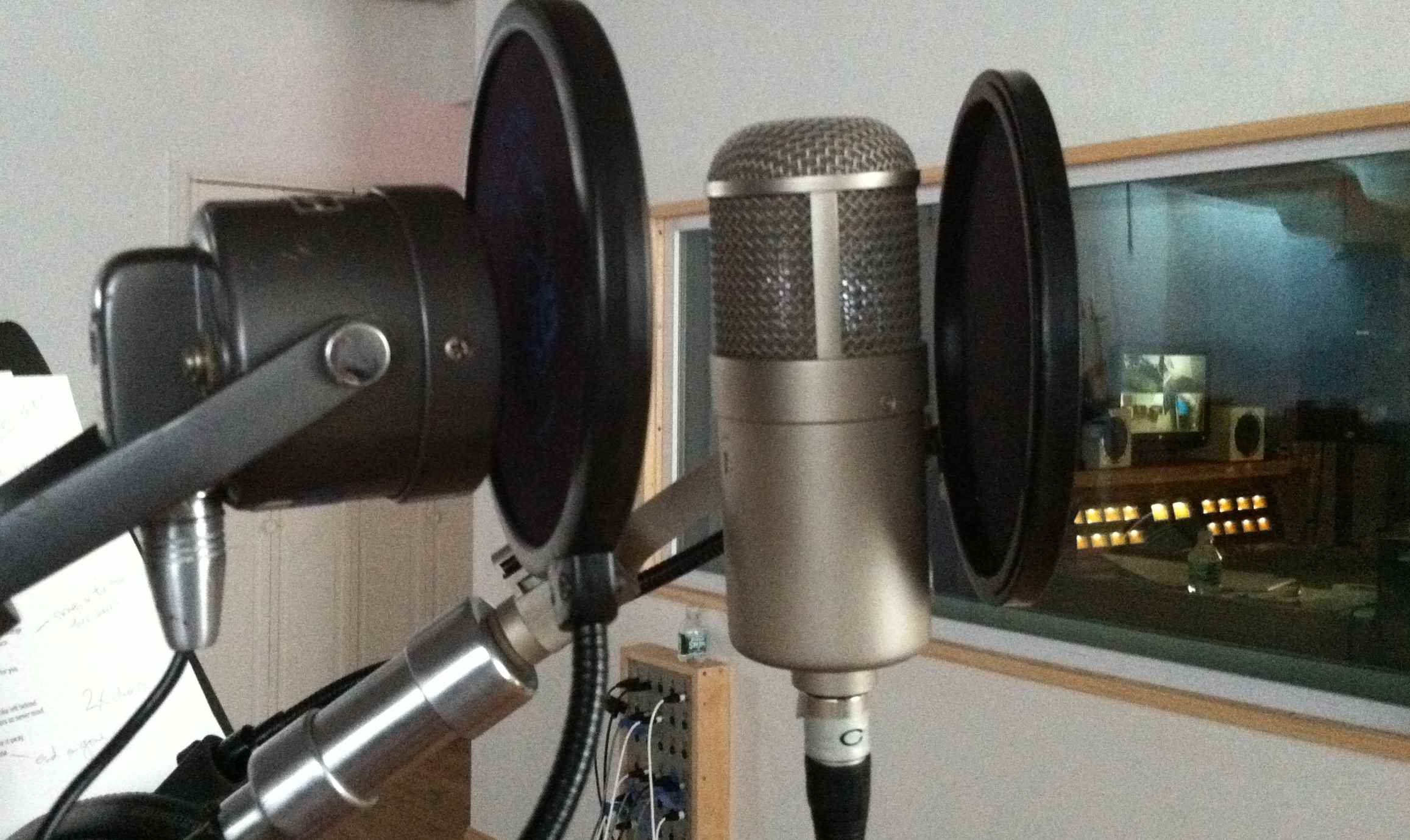
Another day of live tracking at Gold Coast Recorders.  Vocal chain working great:  Neumann U47 fet into Neve console pre into (gentle) distessor; vocalist needs to be pretty tight on the mic due to the drums, Hammond, and Super Reverb live in the room with her.  Behind the U47 is a Turner U99 dynamic amplified by one of my Altec 1566 -based mic preamps.  The perfect pairing of hi-fi & pristine / dirty and lowdown.  If you have ever thought about building your own vacuum-tube mic preamp, the Altec 1566 is a great place to start.  Here’s where I first learned about them. The 1566 is not a very clean preamp, but wow they sound great for drum fronts, toughening up acoustic gtr, etc.  We have 3 of them at GCR and they get a lot of use.  I recommend Edcor transformers for the output and power; Jensen 115 for input.

Categories
Custom Fabrication

Leslie Rotating-Speaker Interface Unit – UPDATED

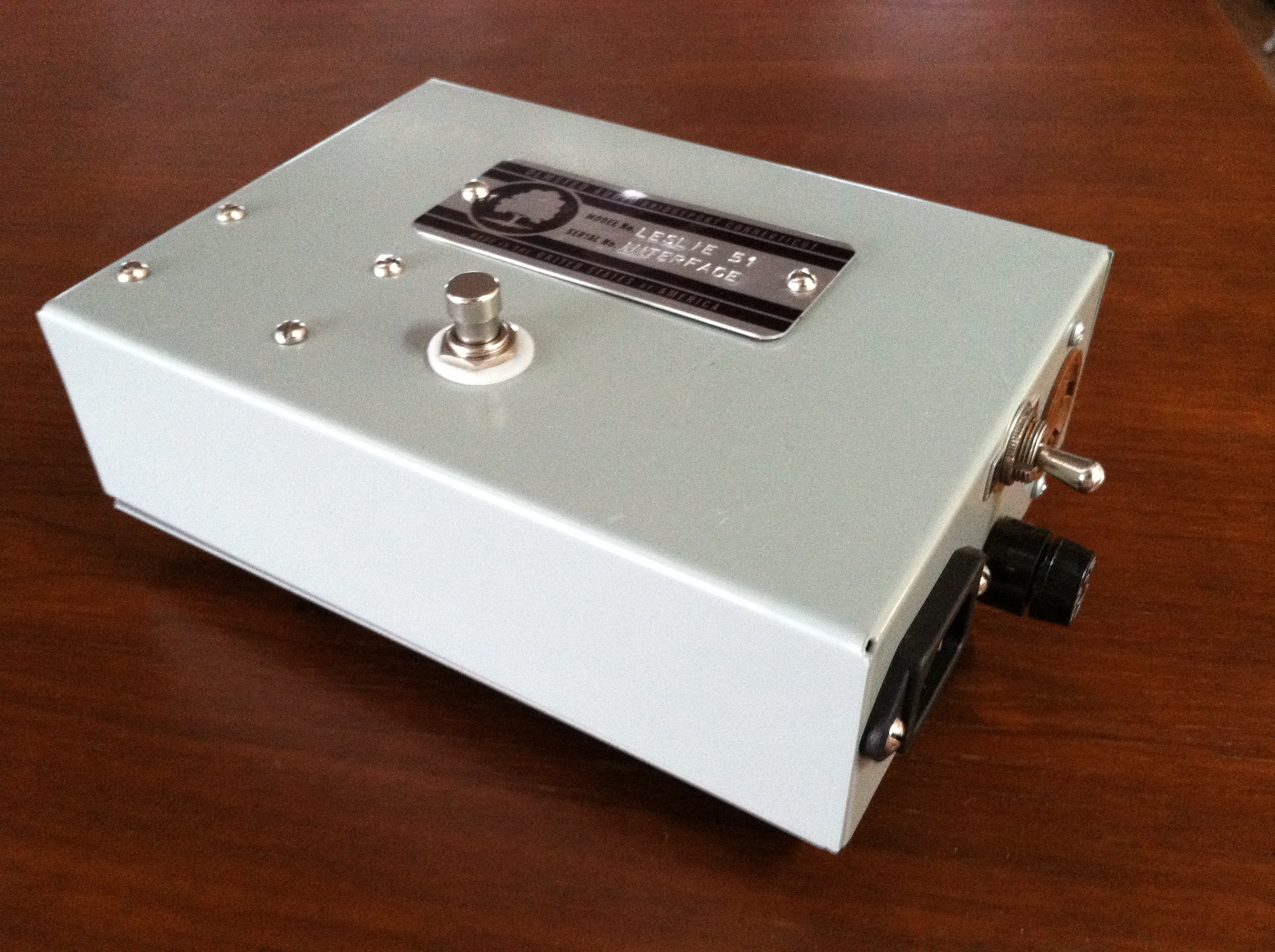
The Leslie Model 51 is a single-speed, large Leslie unit with 2 amps, a 15″ woofer, a rotating horn, and two stationary side-speakers.  It sounds killer, and we wanted a way to get any audio signal off the board and into the unit.  Here’s how we did it for about $100.

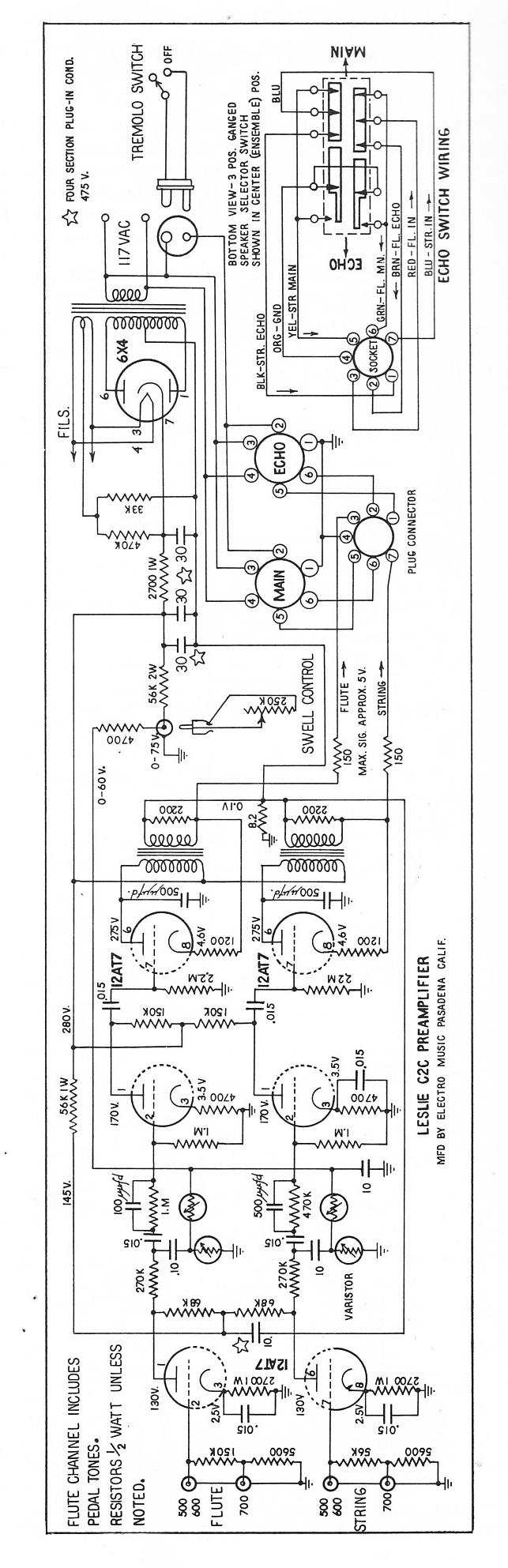
The Leslie 51 was originally designed to by driven and controlled by the Leslie model C2C preamplifier.  Here’s the schematic for the C2C, taken from the original manual for the 51.

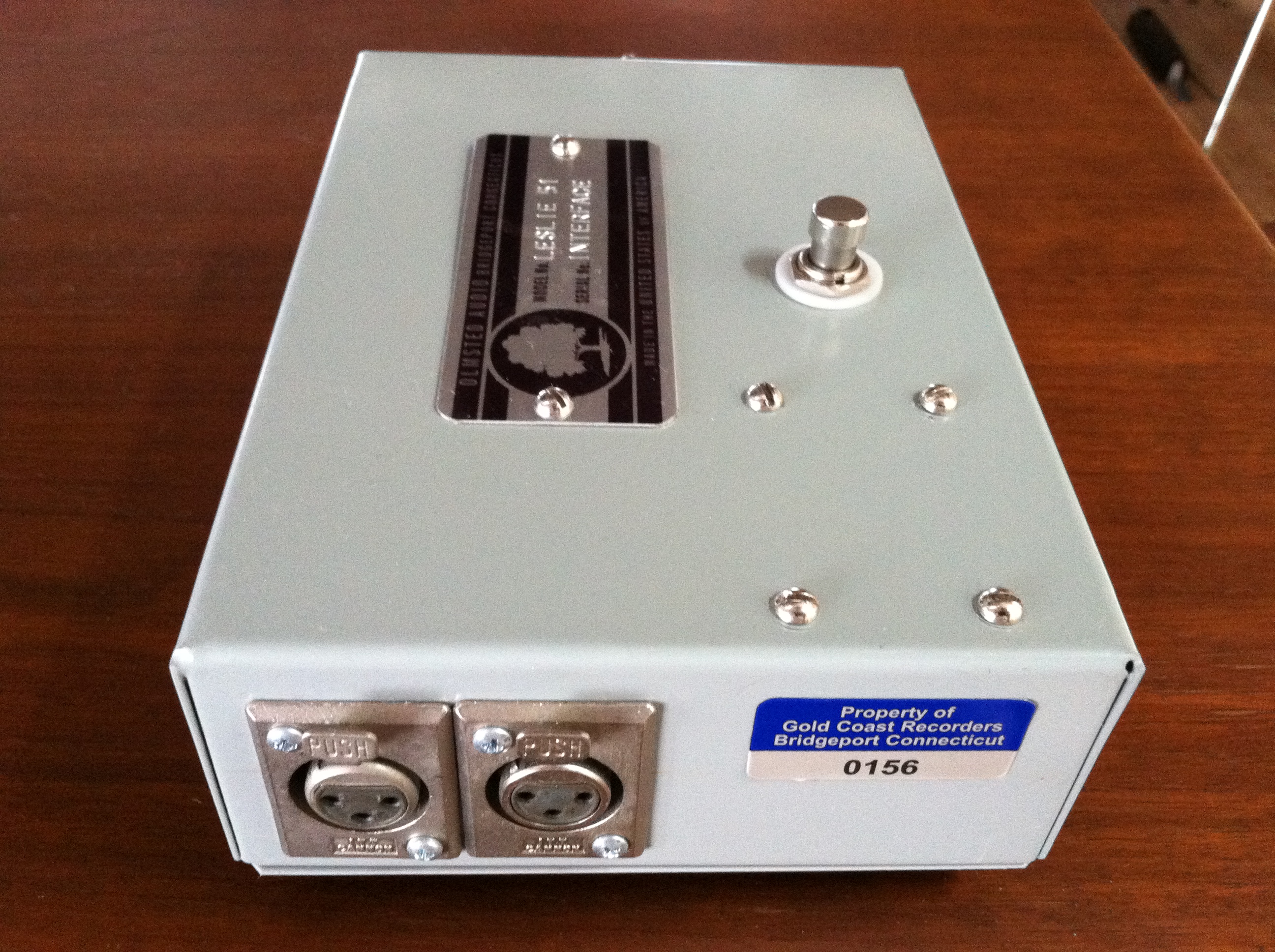
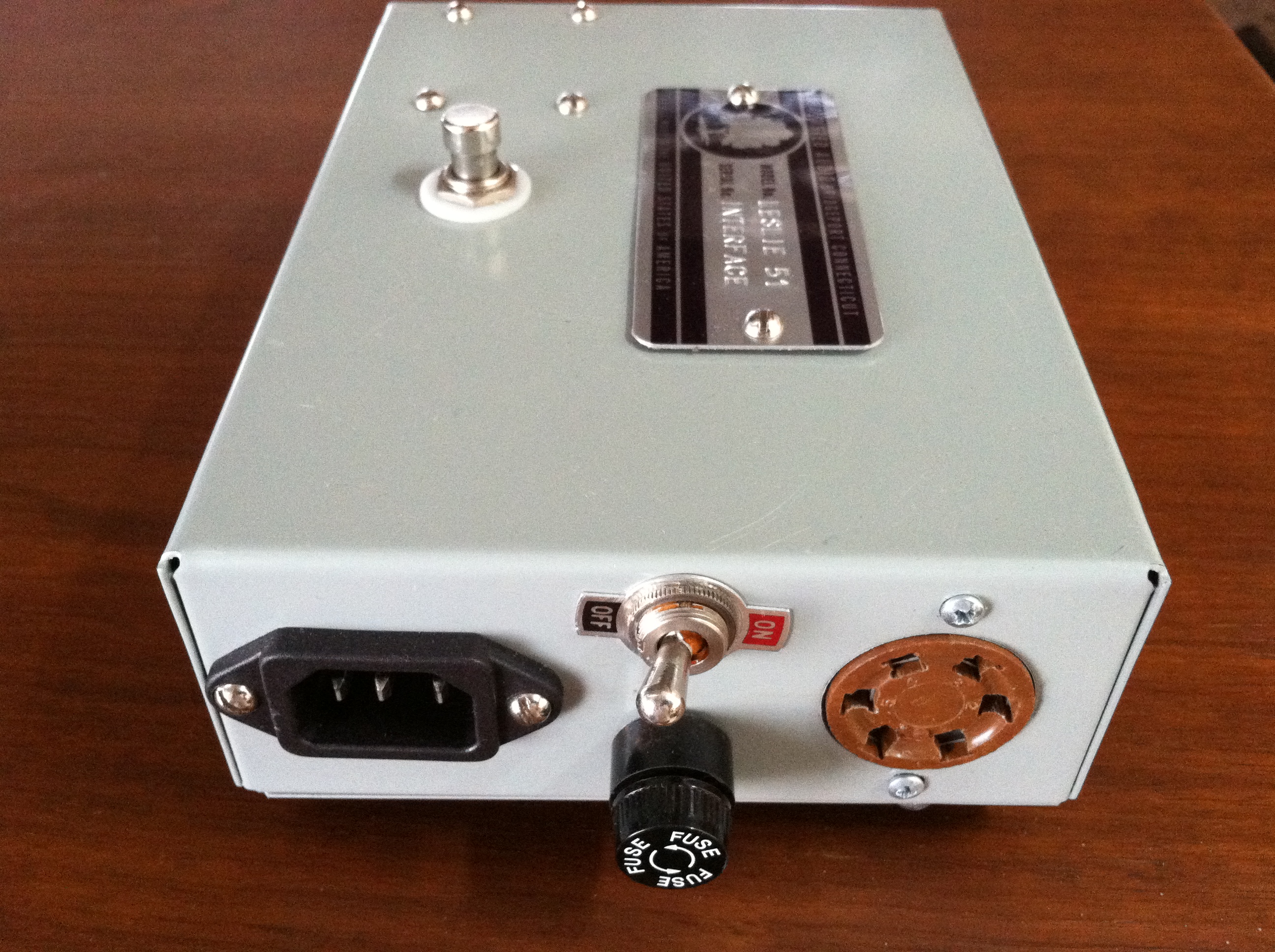
The critical things to take away from this:  the 51 has a 6-pin vacuum-tube type socket which supplies input power, ground, two unbalanced audio channels (600 ohm nominal) and a control pin to turn the leslie motors on and off.  Pin one is Ground, 2 is control, 3 and 4 are 117 V AC, and 5 and 6 are the two audio channels.  The motors are turned on simply by connecting pin 2 to pin 3.  In our simplified control unit, this motor-control function is accomplished with the simple footswitch you see below.

Balanced input jacks go into Jensen JT-11-FLCF series 600/600 transformers (AKA the cheap unshielded ones).  These are used just to unbalance the lines going in, allowing the lines leading up to the interface to remain fully balanced.

The only other parts:  an IEC receptacle, a fuse holder, power switch, and the 6-pin tube socket to mate with the Leslie cable.  Enclosure is a steel Hammond.  When I fired it up, it worked fine, but there was some hum and buzz when the motor was engaged.  I figured that this was likely due to the dried-out 30 foot Leslie cable with 3 117V AC lines running parallel to the 2 unbalanced audio lines.  Even at 600 ohms that will likely cause problems.  I built a new 10-foot cable using Canare starquad for the audio lines and voila.  I made the female cable end with a 6-pin tube socket, and the male cable end from the busted-off base of a… i think it was a 42 tube.  Anyway.  Problem solved.   As beautiful as a Leslie sounds with an organ, it’s absolutely genius with guitar.  This thing does require a pretty hot level to get it up to full volume, but it’s easily within reach of any piece of +4 balanced outboard gear.   Even using it with the humble Guitar Pod sounds fantastic.

Categories
Gold Coast Recorders Uncategorized

In The Studio

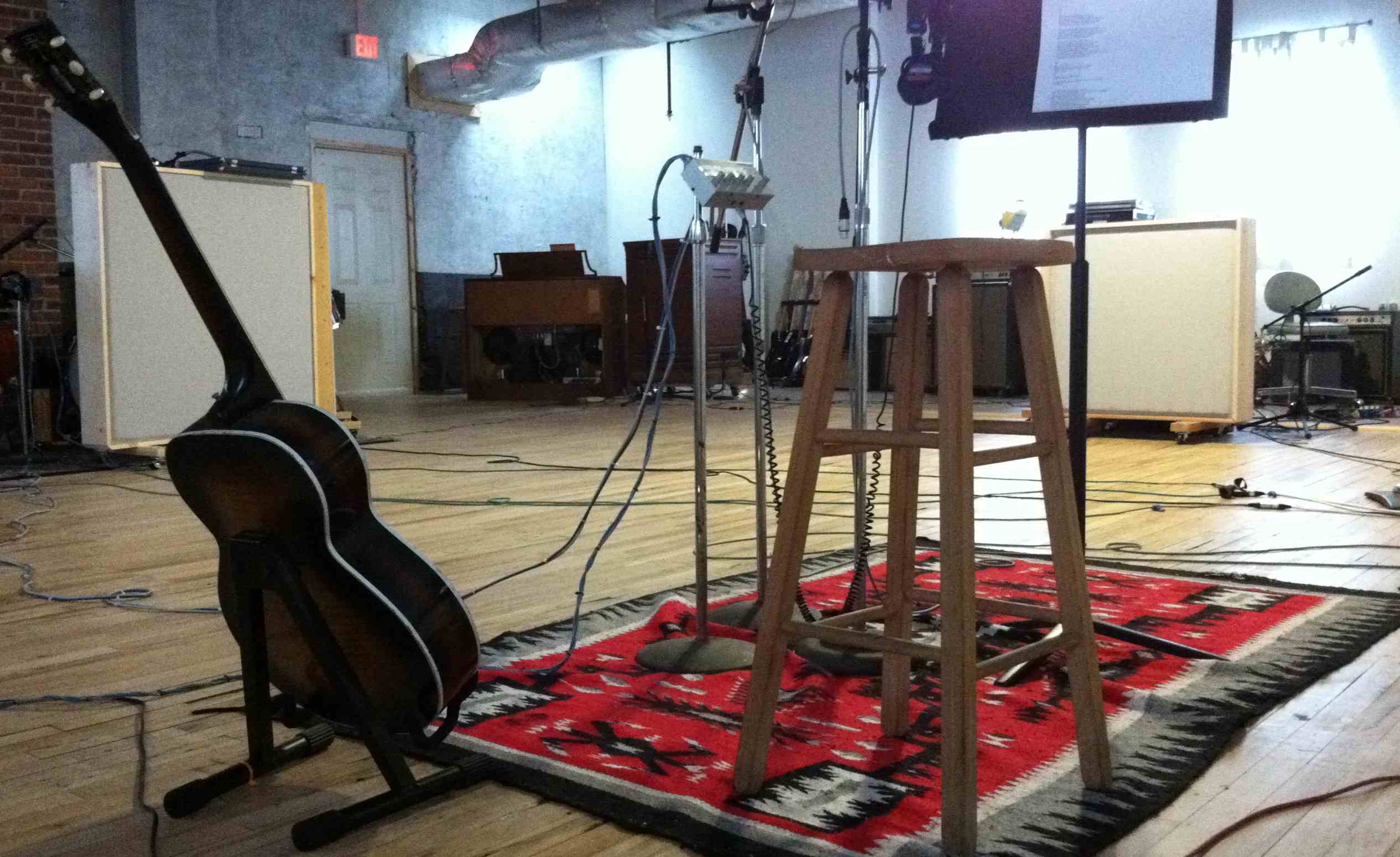
Preservation Sound dot com will be less active this week because I have 7 days of back-to-back sessions booked at Gold Coast Recorders.  The first 5 days are live full-ensemble tracking and editing.  Electric string player (gtr/bass/sitar), Hammond organist, two percussionists, and one vocalist.

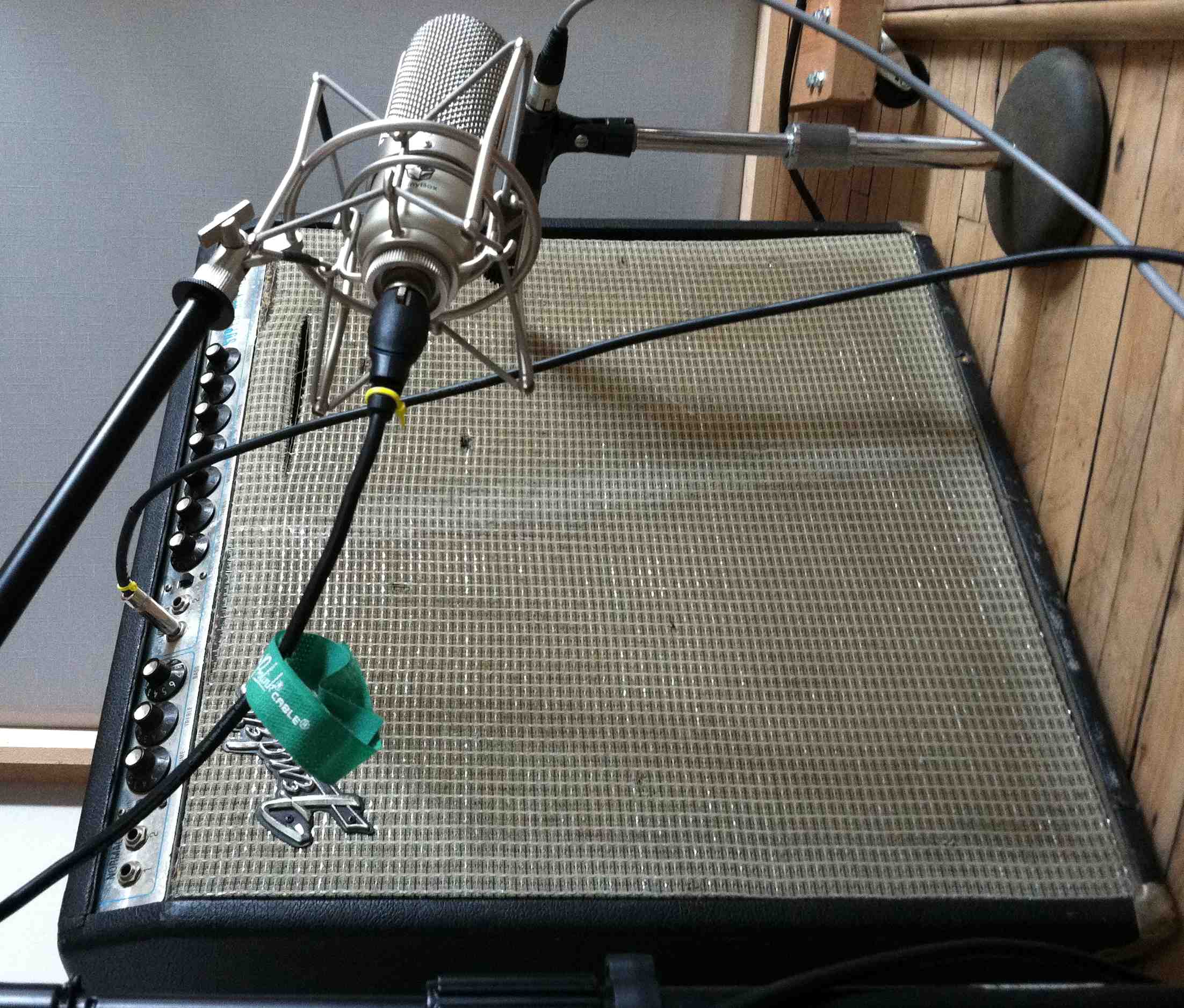
The Fender Super Reverb, circa 1969; perhaps the best guitar amplifier ever made; also used for bass on many of the greatest hits of the 1960s via C. Kaye.  Mic’d with the can’t-fail combination of a close SM57 and a ribbon mic a few feet off; in this case, a Shinybox 46MXL, IMO one of the best values in a current-production microphone. 

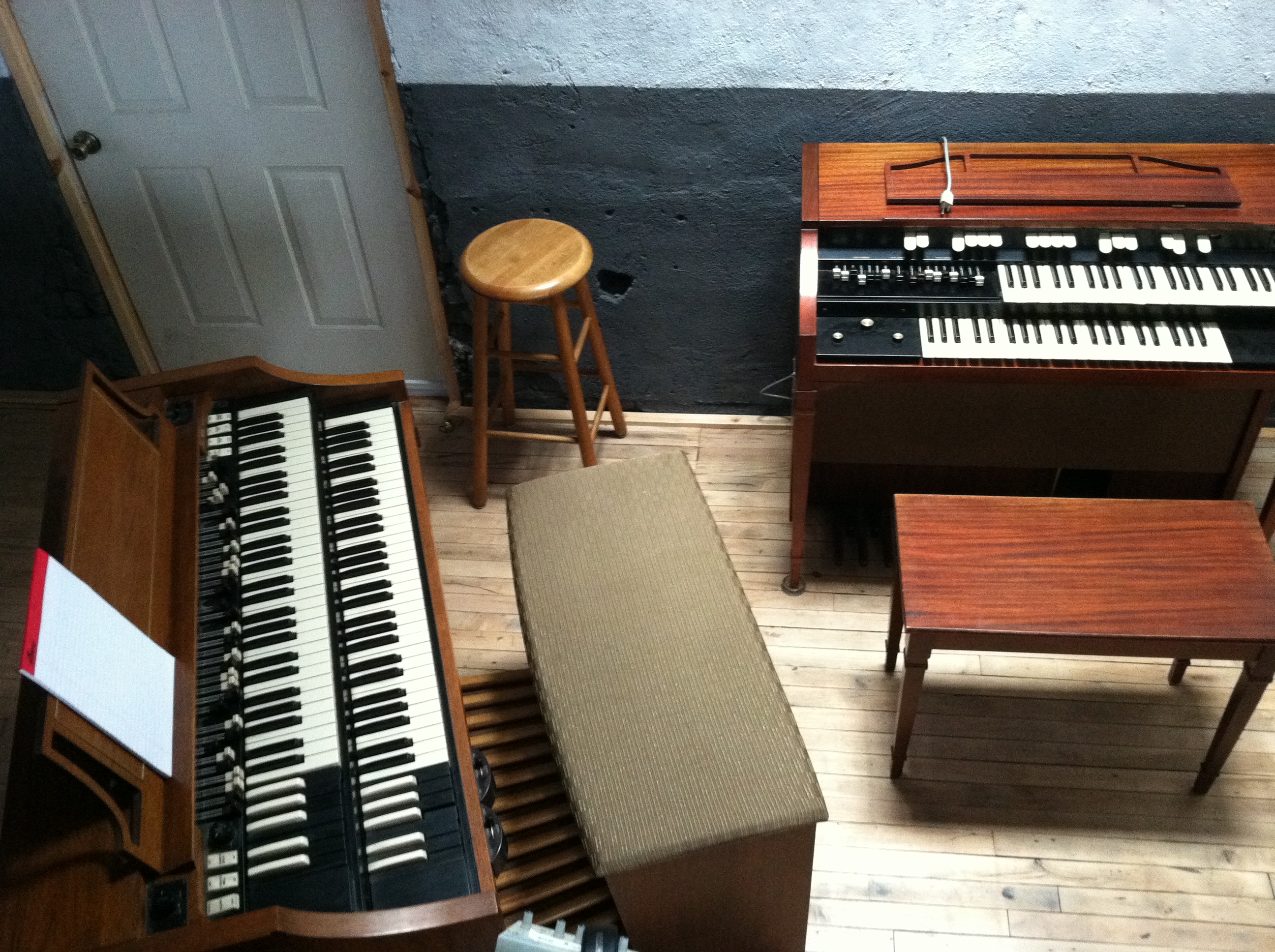
Gold Coast Recorders has a circa 1960 Hammond L-101 (at right), which sonically splits the difference between a classic Hammond tonewheel sound and a voltage-divider organ (e.g., a Farfisa).  What it lacks in sonic heft it more-than-makes up for with the amazing psychedelic effects-option board you see installed at the lower right.  On the Left is GCR’s new Hammond A100, which is the same thing as a B3 except that it has built-in speakers and a reverb section.  We’re using it with a Leslie 51.

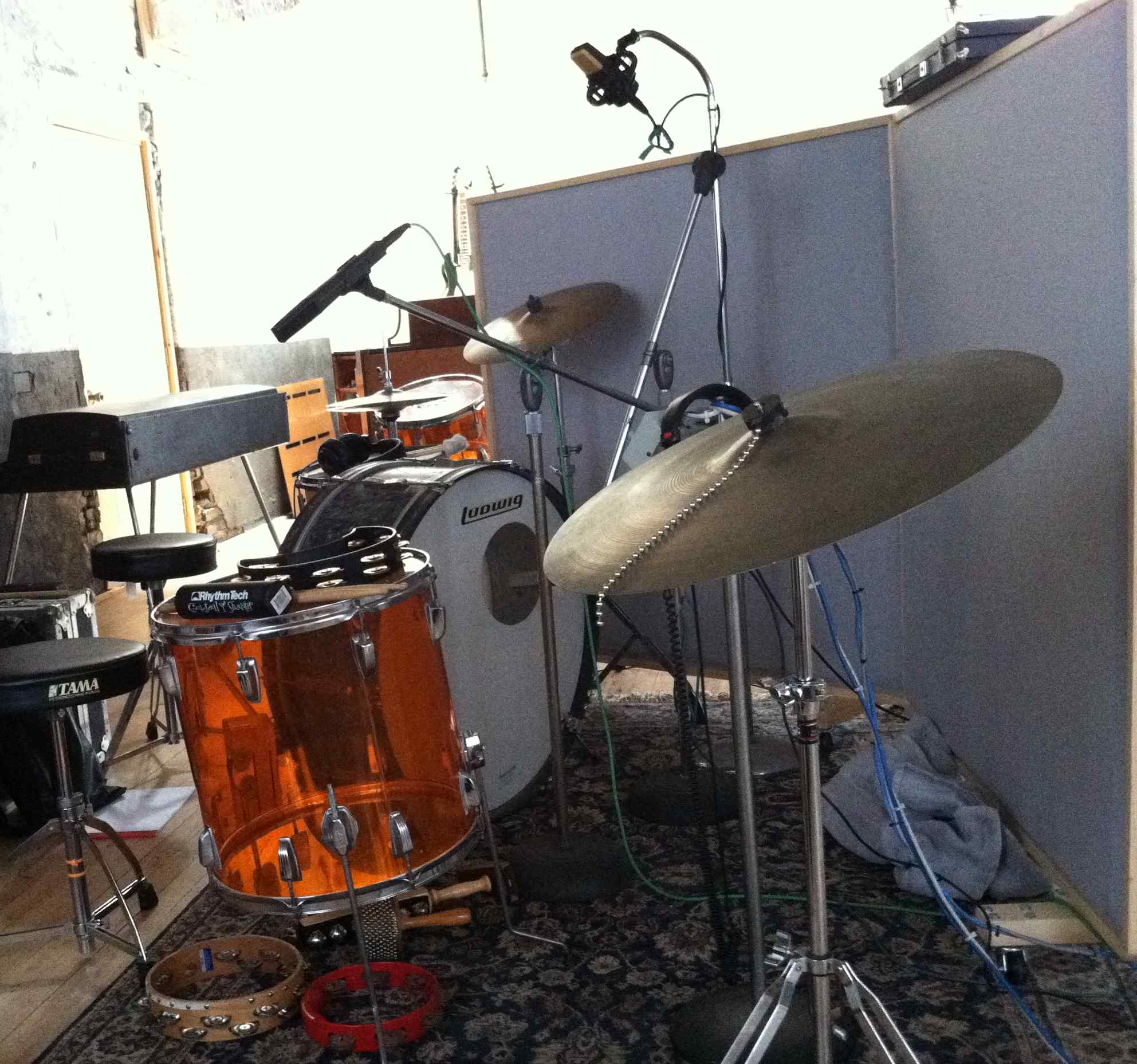
Percussion via several Sennhesier 441s and an AKG 414 overhead.  Room is mic’d with an XY pair of Neuman TLM 103s, a great choice for room mics owing to their incredibly low self-noise and very high output.

Categories
Uncategorized

‘We Shape Our Tools, And Thereafter Our Tools Shape Us’: MM

(Image Source)

As I wrote on day 1, the goal of this website is to investigate “the potential (of sound-altering audio technologies) to create meaning for the people who experience these new sounds.”  This can be as broad as audio-tape domesticating and institutionalizing  surveillance, or a limited as attempting to decode the visual language of different electric guitar models (via my endless uploads of obscure vintage guitar paper items) and attempting to understand how, if at all, that certain vintage microphone preamp design really does make a tangible difference in the effect of a recording. Through it all, though, what’s crucial to me is the idea that /we make tools to serve certain ends/ …and then (also)… /our tools create and dictate our behavior/.   It’s this dynamic that I find fascinating about any technology, any medium…  since I work in sound + music, I investigate it on this particular plane.

I was recently reminded where this idea comes from; or at least how it first came to me; I was reminded that it stems from the writings of Marshall McLuhan, via books of his I picked up at various library-book-sales while in high school.  McLuhan was an academic and a media critic, but in the highly progressive and experimental time that was the late 1960s, he was able to cross over into the popular sphere, and the many millions of copies of his books in circulation guaranteed that any curious kid would find them eventually.   Not long after I first discovered McLuhan, I was off to college where I would study semiotics and cultural theory (along with music); McLuhan was rarely mentioned in my courses.  I can’t recall why this was, but he was not part of the program.  Nonetheless, the basic premise of McLuhan’s theories:  ‘We shape our tools, and thereafter our tools shape us’: this is parallel to the most basic principle of semiotics; the idea that /language does not describe that which is in the world/, but rather /we can only understand and ‘see’  the world through the filter of language/.  To put it another way: language is essentially limiting.  And: our tools do not ‘let us do whatever we want to do,’ but instead limit and in some cases dictate what we do.

Our friends J+C visited recently; C manages a bookstore and is therefore very up-to-date on the latest publications.  C mentioned that Douglas Coupland recently wrote a book on Marshall McLuhan; I am a big fan of both of these writers so this is great news to me.  NEways…  a few days later, McLuhan and Coupland popped up again in this NYT article.  McLuhan is apparently experiencing a resurrection in academic circles.  At the university where I teach, E and I are the only faculty to teach semiotics, so I don’t know how true this as; but much like everything comes-around in music, I imagine certain thinkers can regain a footing in academia.

I realize that this post has absolutely nothing to do with audio in particular, but MM has everything to do with why I think it’s interesting and important to look closer at the audio tools and technology that we use, and to (at least) try to understand how these tools and technologies interact with our work and our creative goals.  You can find a copy of his Understanding Media virtually anywhere.

Categories
Guitar Equipment Uncategorized

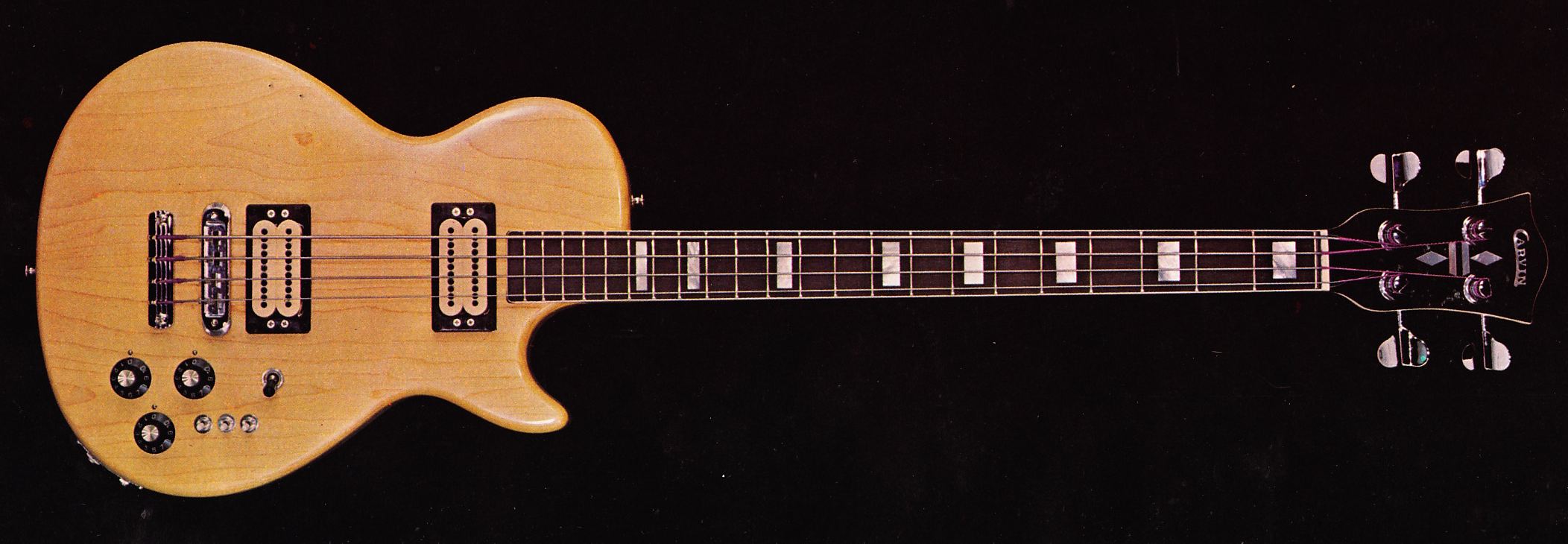
Carvin Co. electric guitars of 1978

Continuing our series on Carvin Musical Instruments of the 1970s:  the complete Carvin electric guitar line-up of 1978.  Download a twelve-page scan of the 1978 catalog:

DOWNLOAD: Carvin_guitars_1978

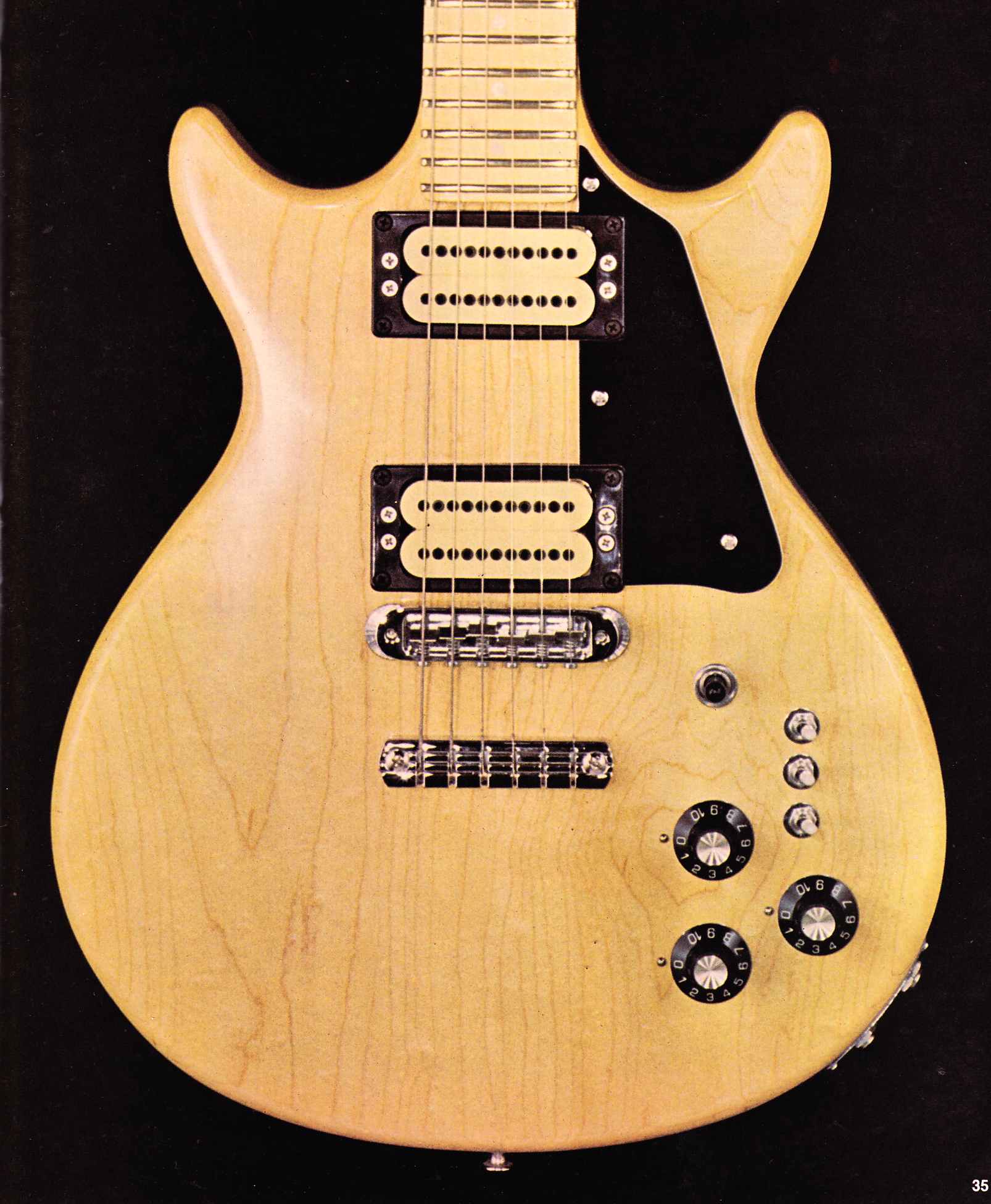
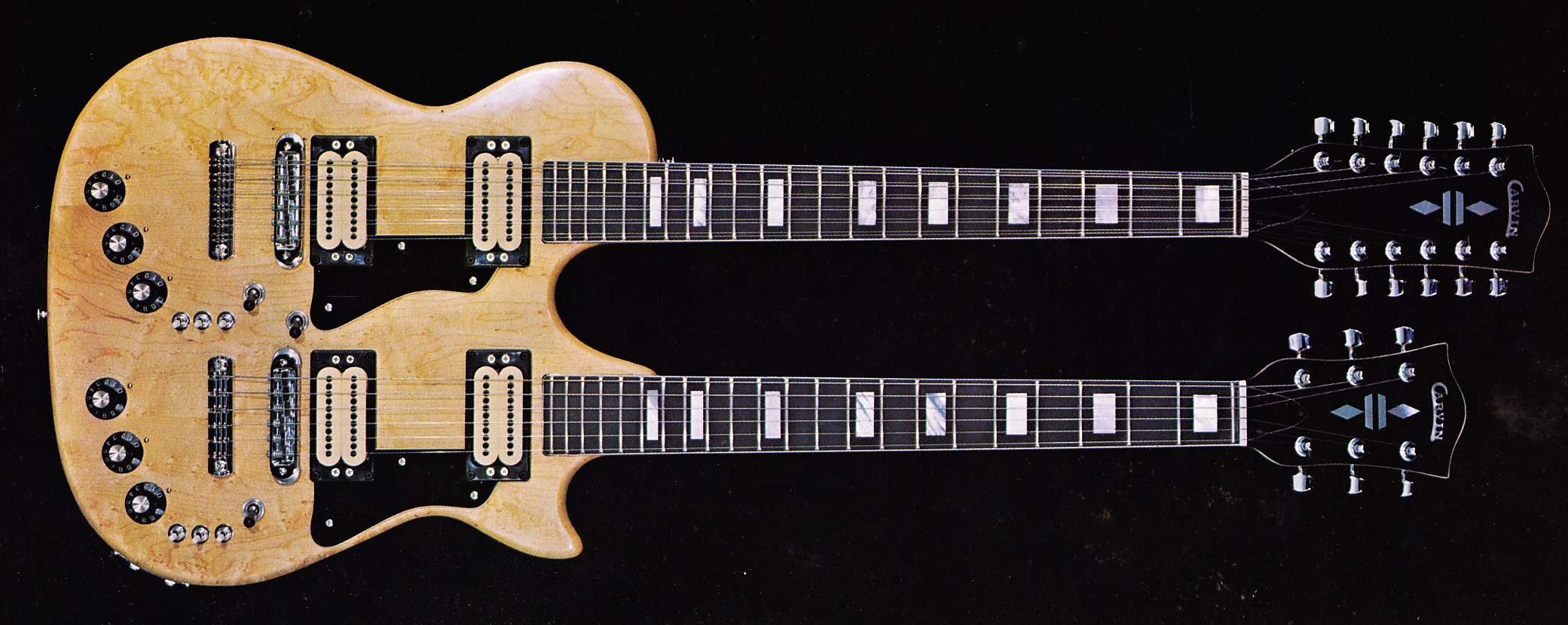
Products on offer include:  Carvin DC150C, DC150B, CM140, CM130, and CM120 electric guitars; the Carvin CB100 stereo bass, and the DT630 and DB630 doubleneck instruments.

By 1978, Carvin had abandoned the slightly Fender-influenced European-made guitar components they had been using since the late 60s; the 1978 lineup is much more Gibson influenced; or maybe Gibson-by-way-of-Alembic.   Noteable late-70s trends at work here include: solid brass hardware; heavier (8.5 lbs) instruments; humbucking pickups with coil taps; ‘natural’ finishes; and plentiful control knobs/switches ala Alembic and BC Rich.

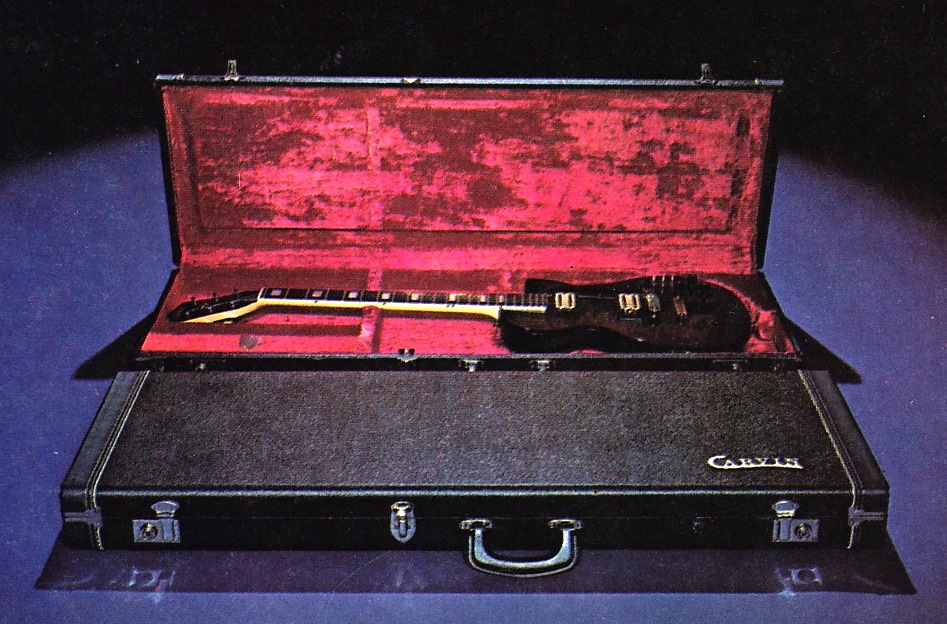
One odd holdout from the earlier era of the electric-guitar is the fact that these instruments shipped with a guitar-cable included.  I wonder when this practice finally ended.  Seems like a cable more ought to come with an amplifier than with a guitar… Also notable that the bass-instruments shipped with flatwound strings standard.  I have noticed that there is a definite trend lately for electric-guitar players to use flatwound strings again; I have been really enjoying the sound of flatwounds on my 60s Fender and Harmony guitars; it’s kinda the secret ingredient to get the sound of 60s records (assuming yr using an old gtr and an old amp as well).  The only problem is that they are more expensive.   $12 vs $5 for roundwounds.  On the other hand, they rarely break, and it’s not necessary to change them as often, as a ‘dulled’ sound is sorta the point.

Previous 1970s Carvin coverage on PS dot com begins here…