Categories
Early Electronic Music

(Very) Early Electronic Instruments

When you think of ‘early electronic instruments,’ what period comes to mind?  European tape music of the 1950s?  Academic electronic music labs of the 1960s?  How about 1931?
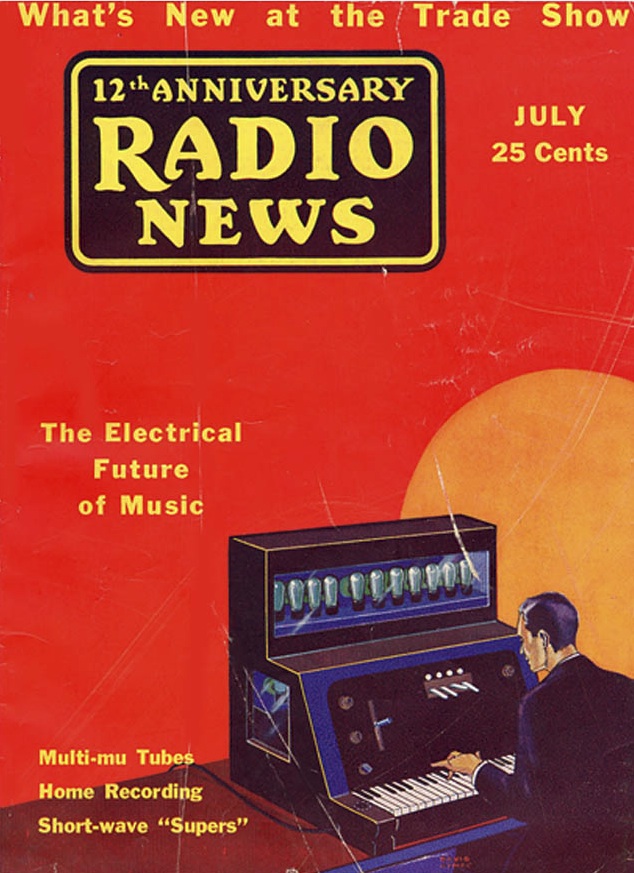
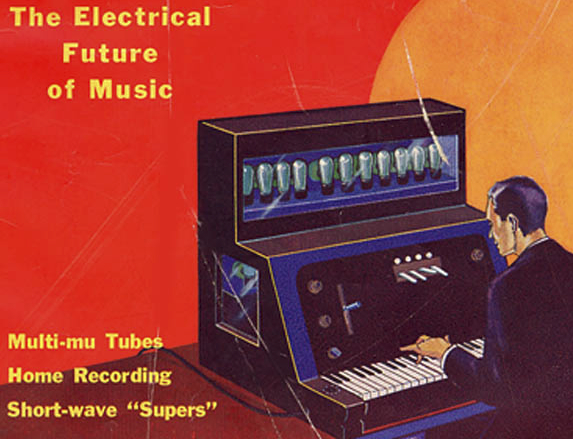
Download a five-page article from Radio News 1931, on ‘The Electrical Future Of Music.’

DOWNLOAD: Radio_News_3107_Electronic_Music

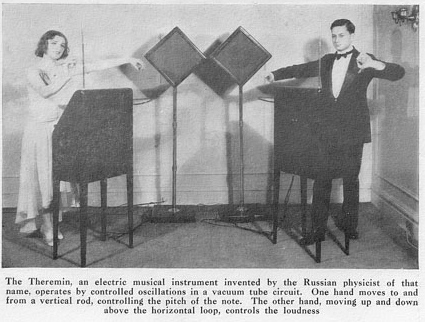
It’s interesting to see her how the focus is primarily on the creation of instruments on which one could perform western tempered music (as opposed to music concrete or noise-music).  Although those more avant garde approaches to electronic music would come soon, this earlier approach – the electronic (as opposed to bellows) organ, the violin-simulating theremin – seems to be what has won out.  Eighty years later, most of us are not usually listening to atonal clusters of carefully organized noise – we’re still mostly listened to very diatonic, 4/4 folk-songs (essentially) performed and presented via wholly electronic means.
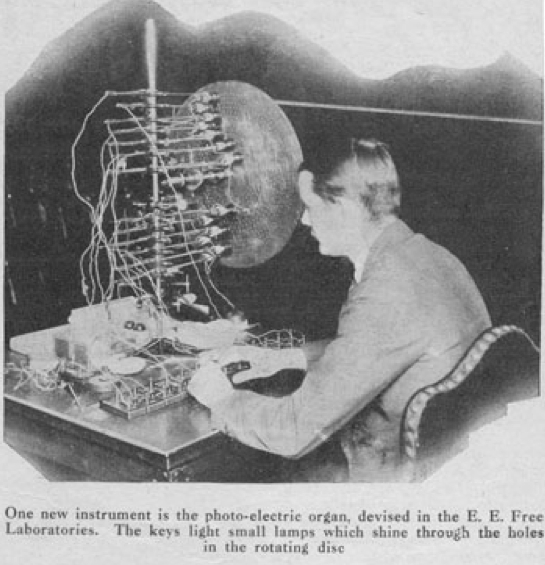
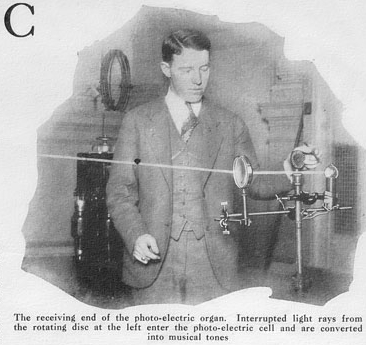
Above: the photo-electric organ

Above: the Theremin, still popular today in a variety of musical genres.
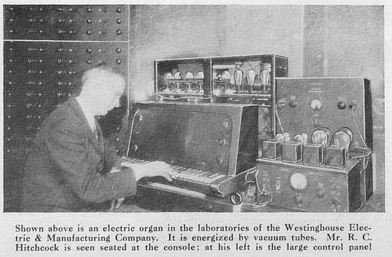
Above: an electronic organ built by Westinghouse, 1931.
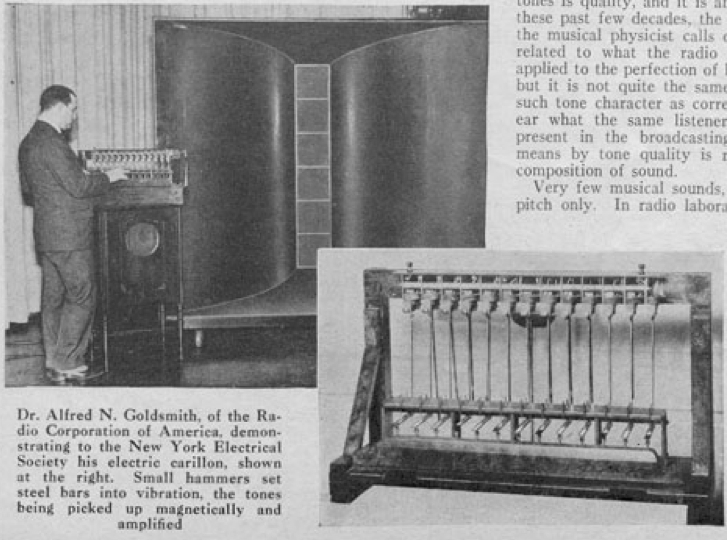
Above: an electronic Carillion as built by RCA.  The principle employed here is also still very popular today.
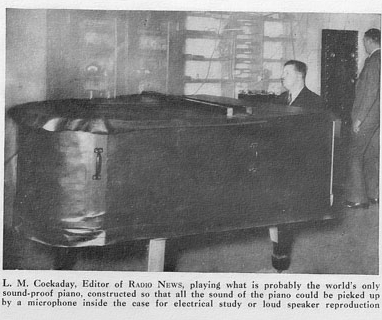
Early attempt at acoustic isolation of an instrument for electronic pickup
 

Categories
Uncategorized

Communication

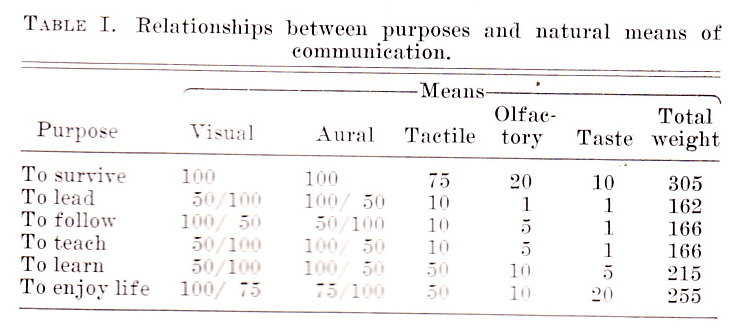
Today: some excerpts from a piece by C.W. Vadersen as published in the AES journal.  It’s a good thing to remember that early audio technology developed not out of the entertainment industry but from the communications industry: primarily, the telegraph.  As important to us as music and art maybe, the need to communicate is primary (or at least secondary only to the 4 F’s: Feed, Fight, Flight, Sex).

How to we use our senses, and in what proportion? (in Vadersen’s opinon…)

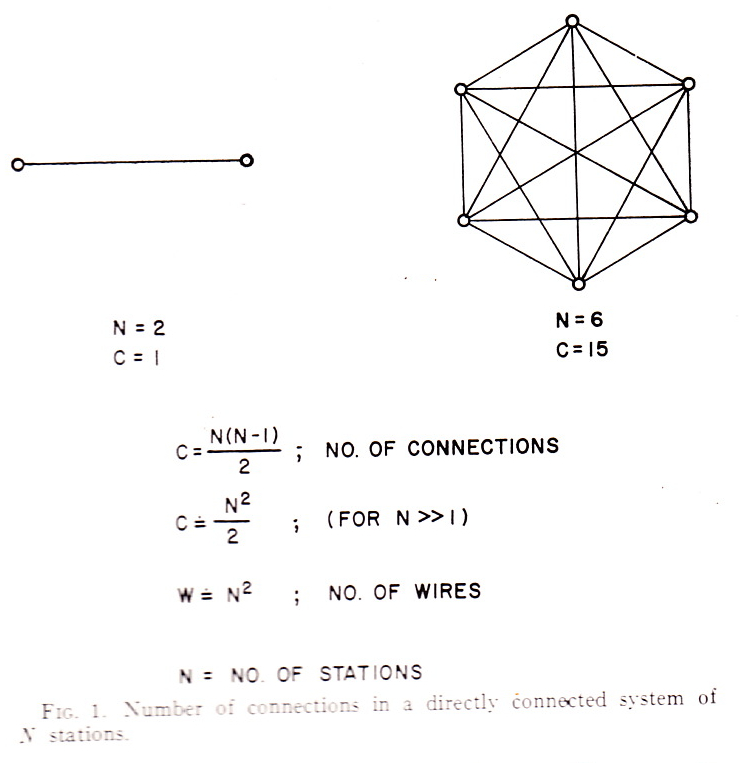
Our interpersonal connections grown exponentially with each new ‘cable’ that we run

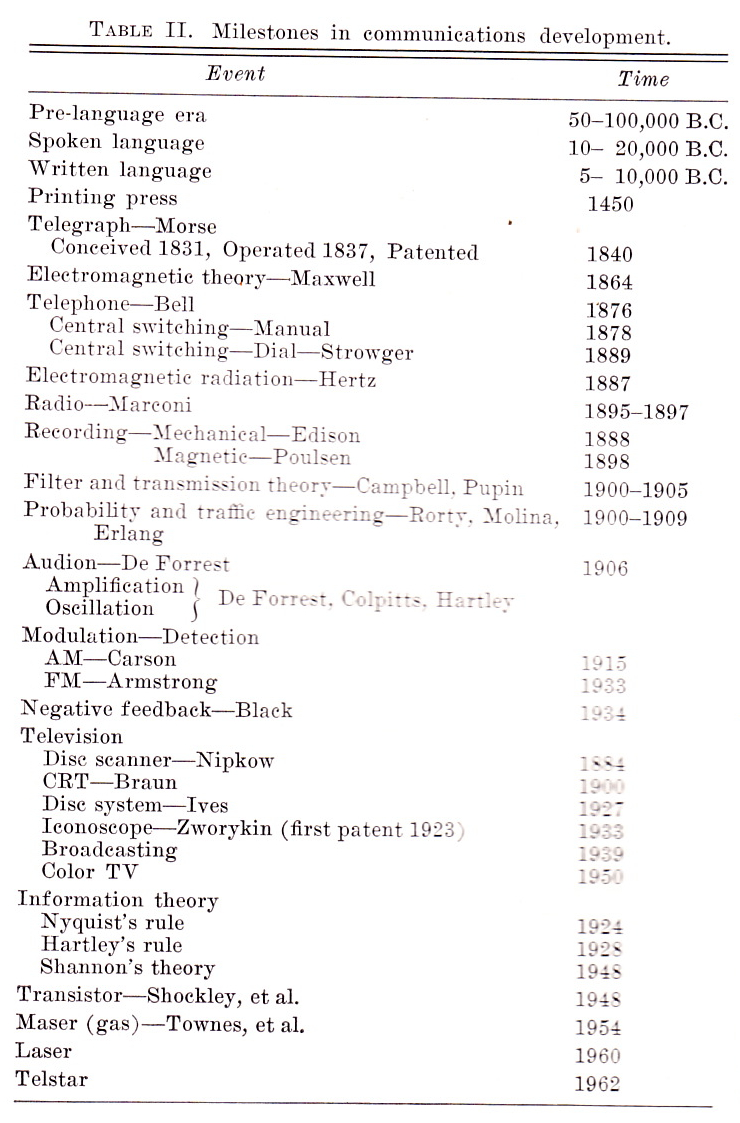
The arc of communications technologies circa 1962.  It’s almost impossible to wrap the mind around the growth we’ve seen since then.  How far down on this list would ‘Blog’ appear?

Categories
Recording Studio History

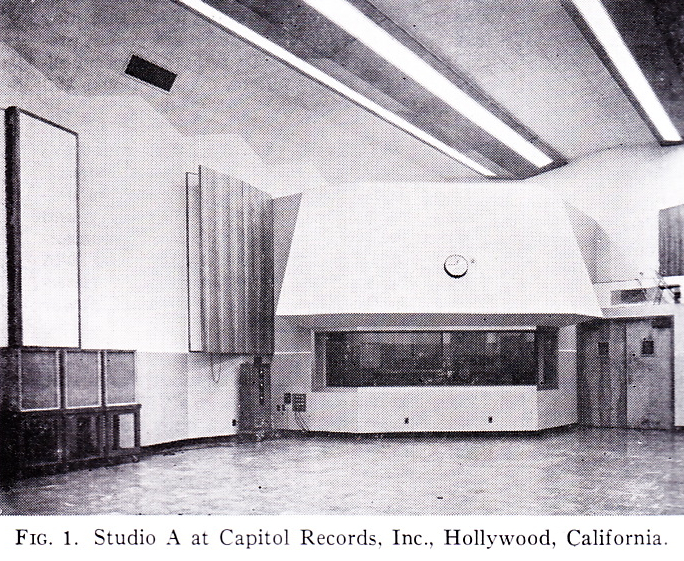
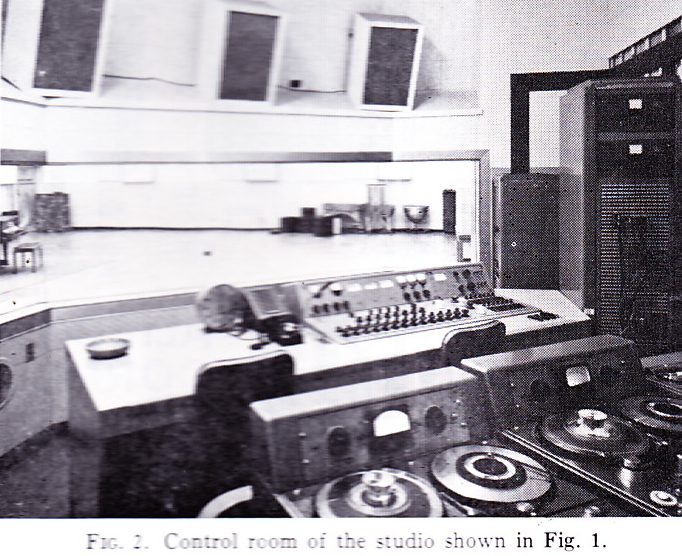
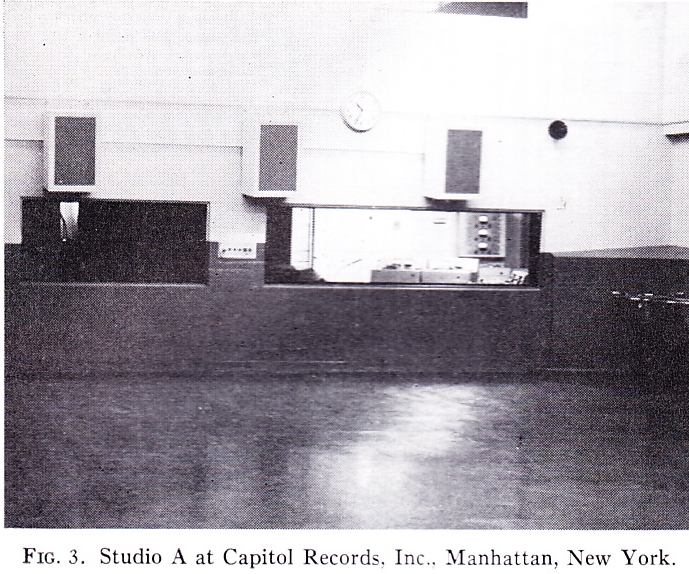
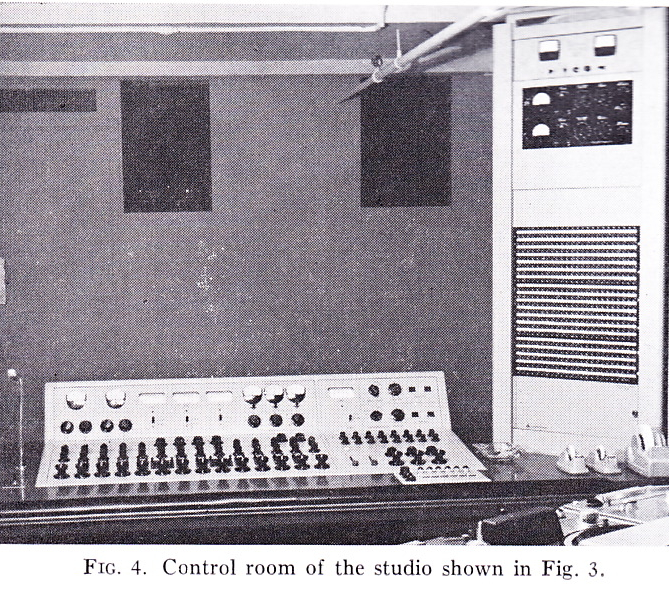
Capitol Records Studios Circa 1960

Above: the live room and control room of Capitol A, Los Angeles, circa late 1950’s.

Capitol Records Studio A, New York, 1963.

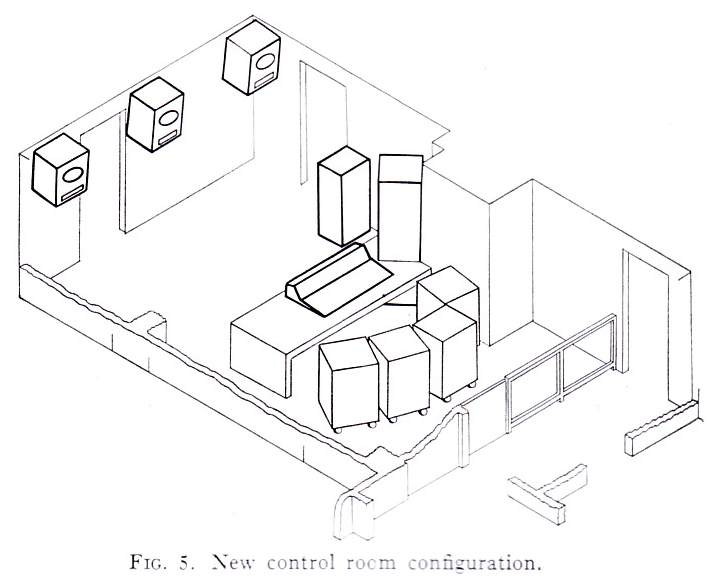
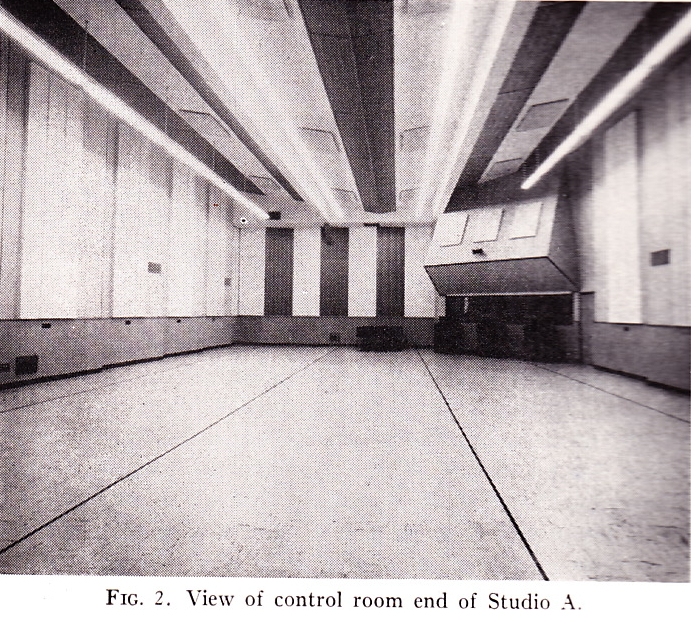
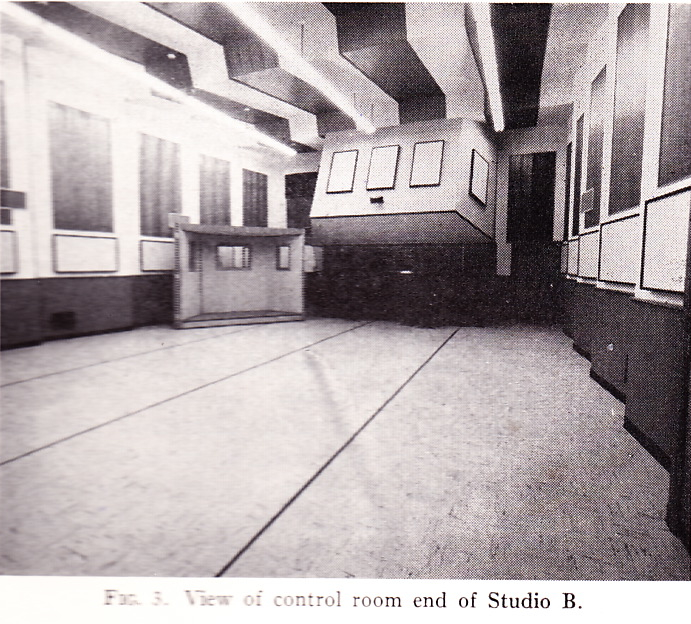
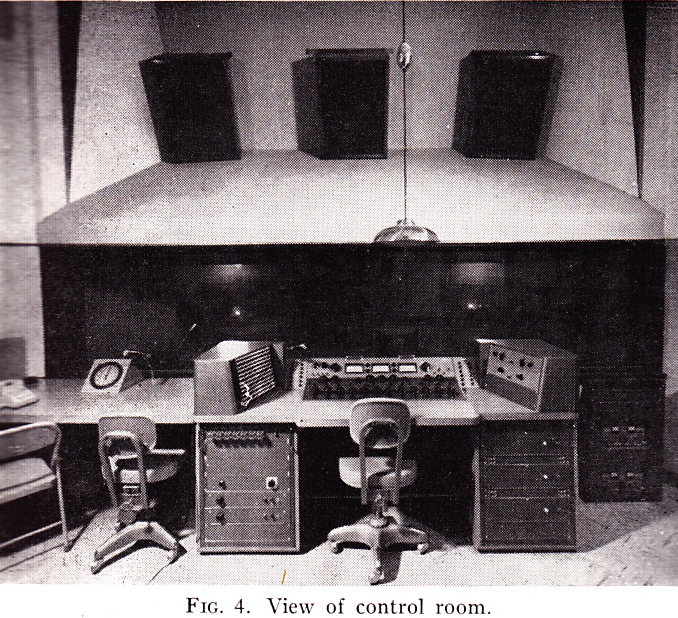
Capitol Records, like most big record companies of the fifties and sixties, had their own state-of-the-art recording studios: and on both coasts, no less.  I am currently  in the process of building a bespoke audio piece for a busy New York studio at the moment.  My client is fairly unique (these days) in that they are a very well-equipped, full-scale label studio – a recording studio owned and operated by a record label and used by many of the label’s artists to record and mix their albums.   This concept makes sense to me, as  I worked for a decade for Sony Music in New York and spent at least half of that time at their enormous studio complex on West 54th street.  The label-studio is becoming a thing of the past, but so is the traditional record-label business model.  It will be interesting to see what ‘record companies’ evolve into in the next few decades, and whether or not the ‘means of production’ become more or less a part of this new business model.

Categories
Icons Recording Studio History

Bill Putnam and United Recording, Hollywood CA

Wow what a titan Bill Putnam was.  Not only did the man create some of the greatest audio equipment ever made, equipment that is still coveted and used on major records some 50 years after it was introduced, he also designed and built (and worked in) some of the greatest recording studios ever made (the later of which were bankrolled by Frank Sinatra, among others).  It’s almost impossible to think of a similar comparison today…  it would be like if the same dude who coded the best plug-ins that you use every day also engineered the hit records that you hear on the radio and also owned the world’s top recording studio, which he designed himself, and which Thom Yorke paid for…  anyway… amazing.  Here’s the room he built in Hollywood in the late 1950s.  Much more information is available all over the ‘net… you can start here

Moving from wide to close-up in these pics above: the studios, the control room, the console, and the console preamps, all designed by Putnam.  Okay so yr gonna move to a new town and build a new studio…  might as well design all new recording equipment while you are at it.  Putnam’s approach has inspired me deeply (on a much smaller scale…) with Gold Coast Recorders and the custom equipment that I’ve developed around my work in that room.  Here’s to hoping we have (even a fraction of) his success…
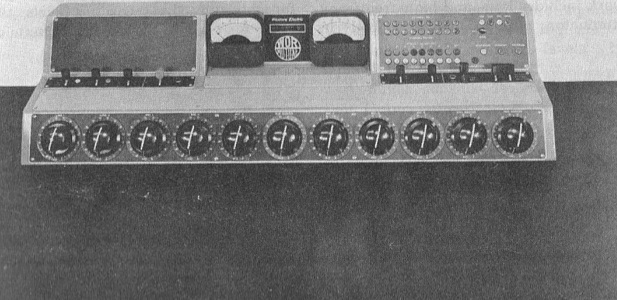
P.S.: David Kulka of Studio Electronics has made twenty issues of the URC company newsletter available for free download on his website.  The newsletters span the years 1964-1970 and they are an invaluable resource for anyone interested in ye olde recording studio lore…

Categories
Pro Audio Archive

More outboard gear of the early 60’s

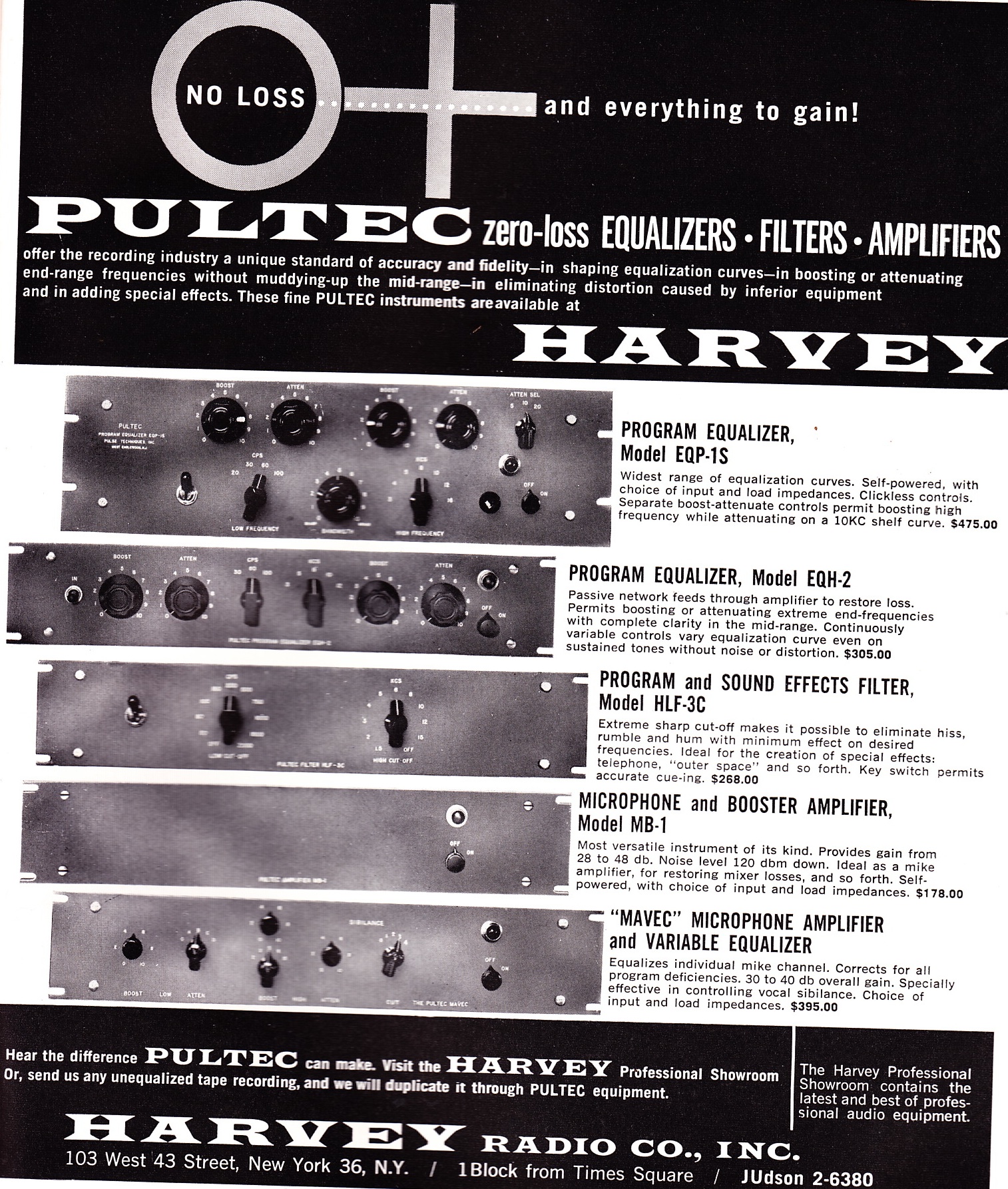
The Pultec range of 1961: the Pultec EQP-1S program equalizer, EQH-2 program equalizer, HLF-3C high and low pass filter set, MB-1 mic and booster amp, and Mavec micpre/EQ unit.

Pultec equalizers have enjoyed fifty-plus years of popularity among recording professionals.  Much like the first several compressors released by Universal Audio/UREI, they have never really gone out of style.  And if vintage Pultecs seem expensive these days (and they no doubt are…), remember that there is an inflation factor of 11x from 1961 to 2012.  So the value of these pieces has more or less simply risen with inflation.

Download catalog data on the EQP 1, shown above: Pultec_EQP-1

Download catalog data on the EQH 2, shown above: Pultec_EQH

Download catalog data on the HLF, shown above: Pultec_HLF-3

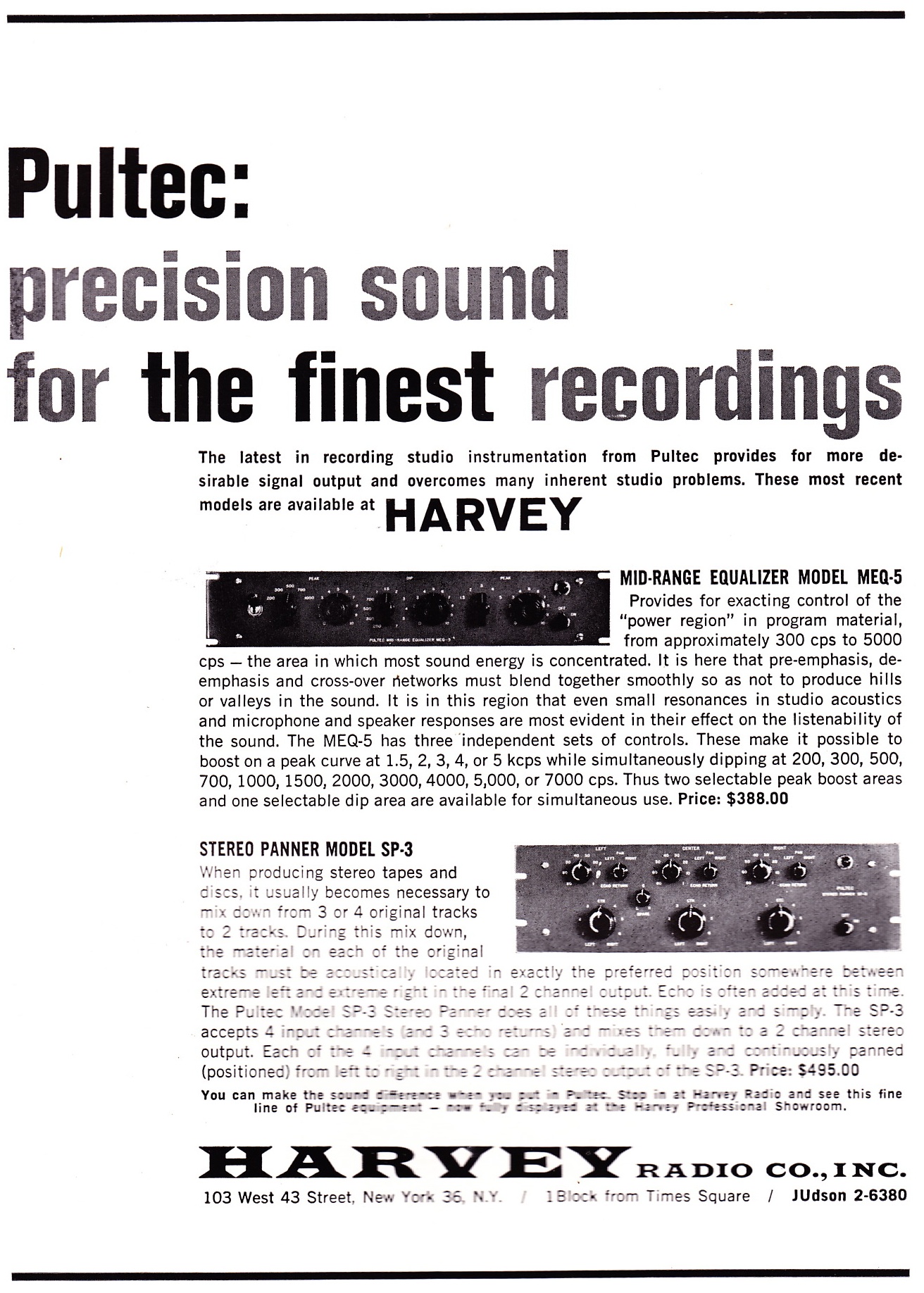
The Pultec MEQ-5 and SP-3 Stereo Panner of 1962.  As unlikely as it might seem, the ‘pan’ knob was, at one time, a new and novel concept. 

*************

*******

***

*

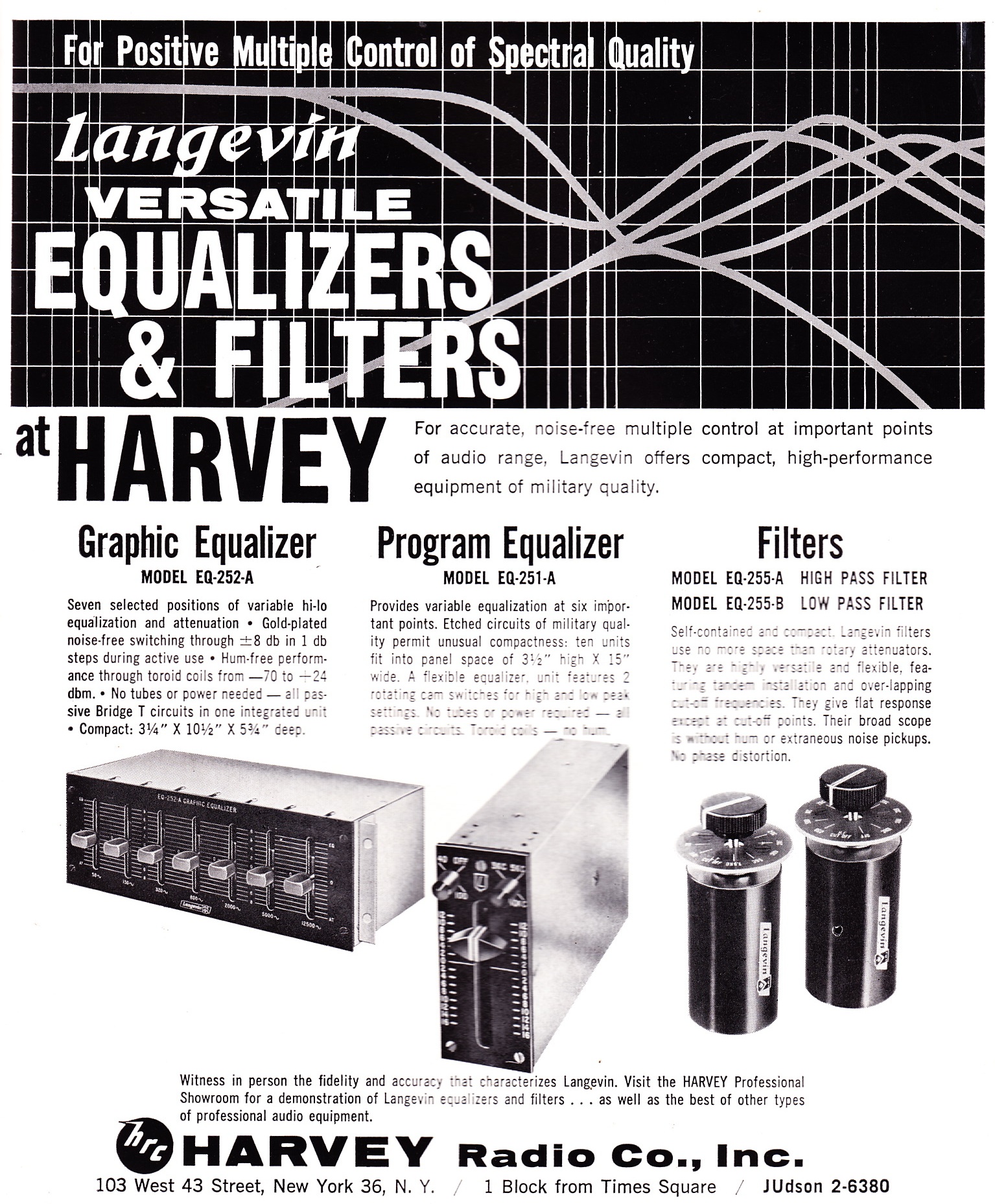
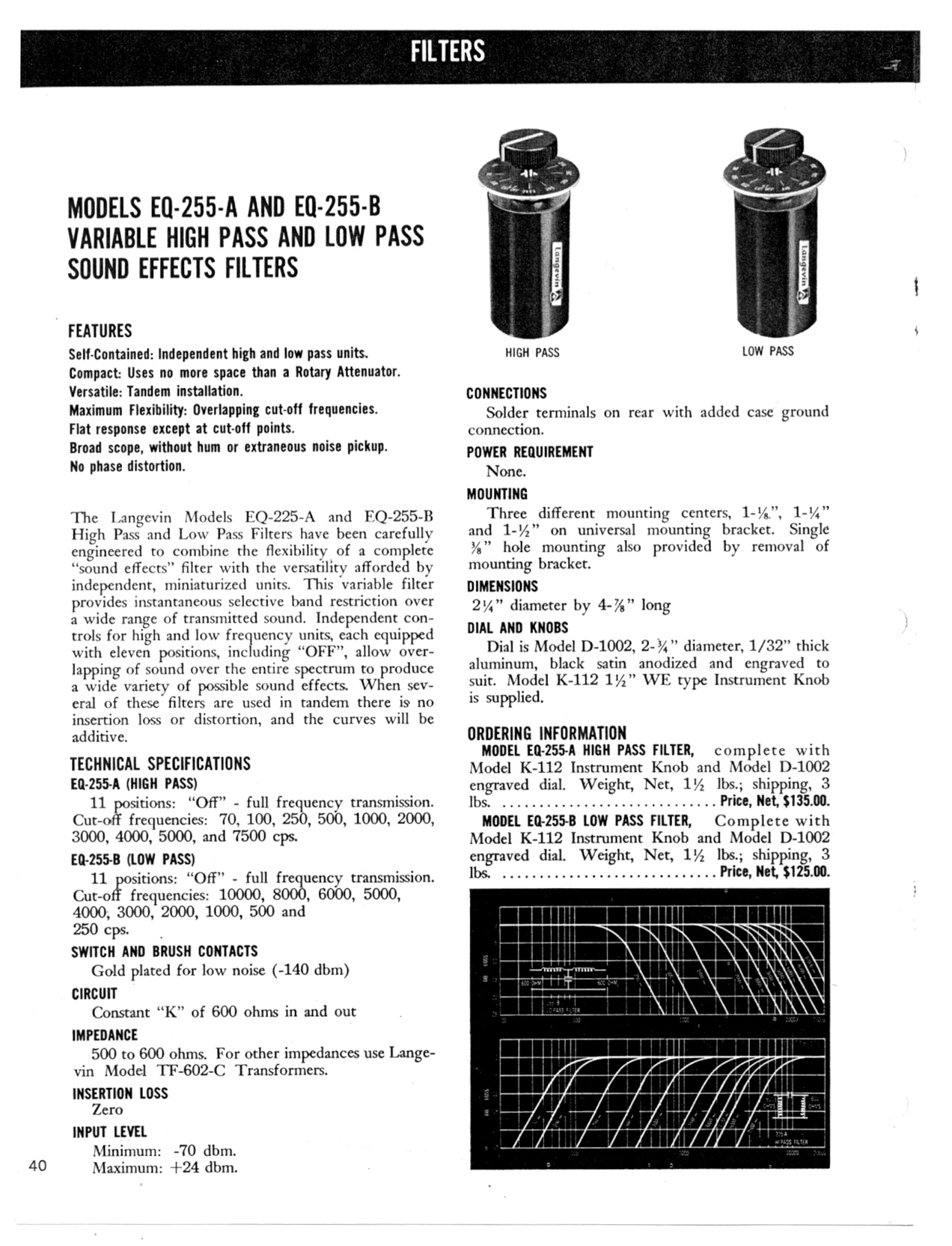
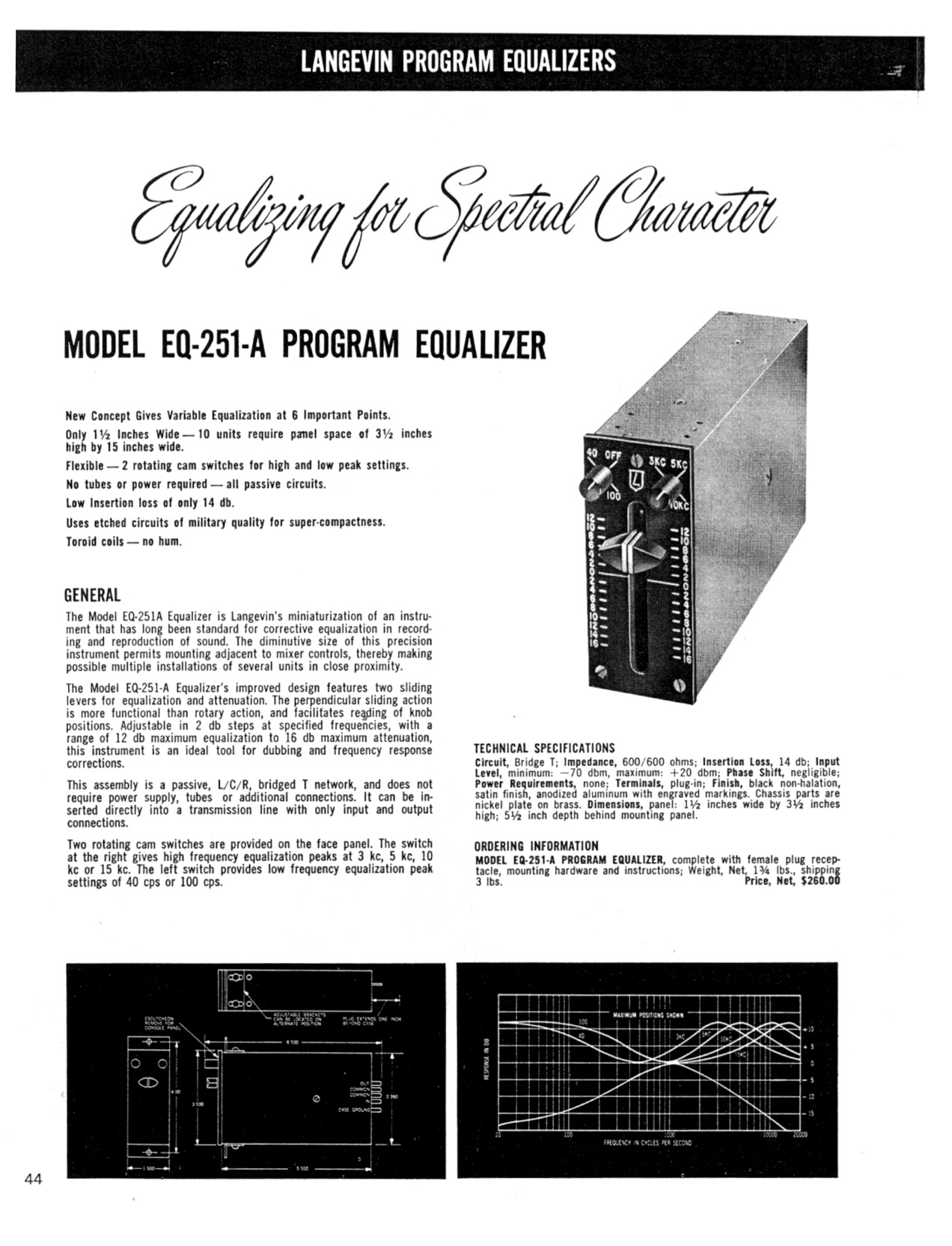
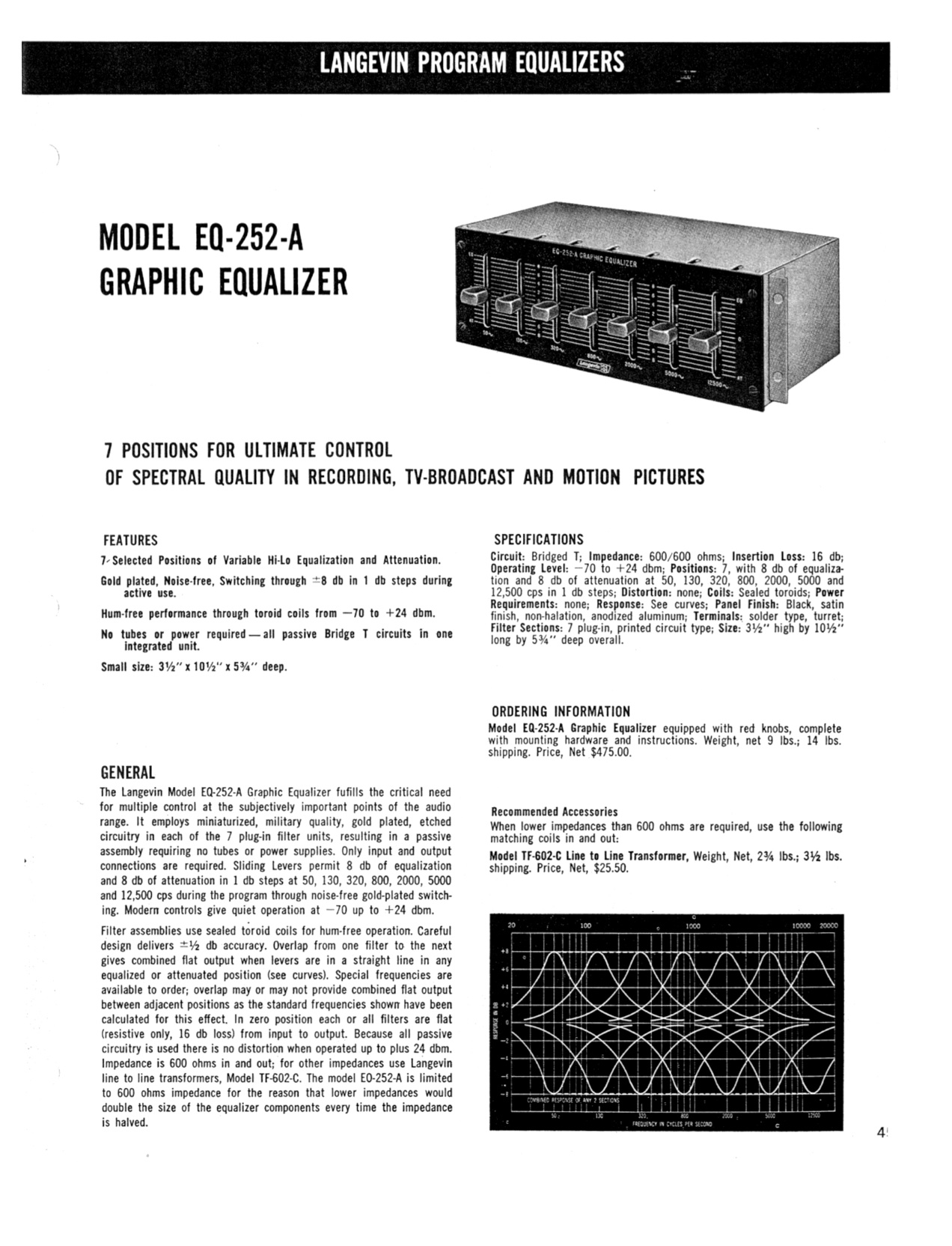
Ok so these are not outboard so much as inboard but you get the connection.  The Langevin EQ-252A, EQ-251-A, and EQ-255 filters of 1961.

************

********

***

*

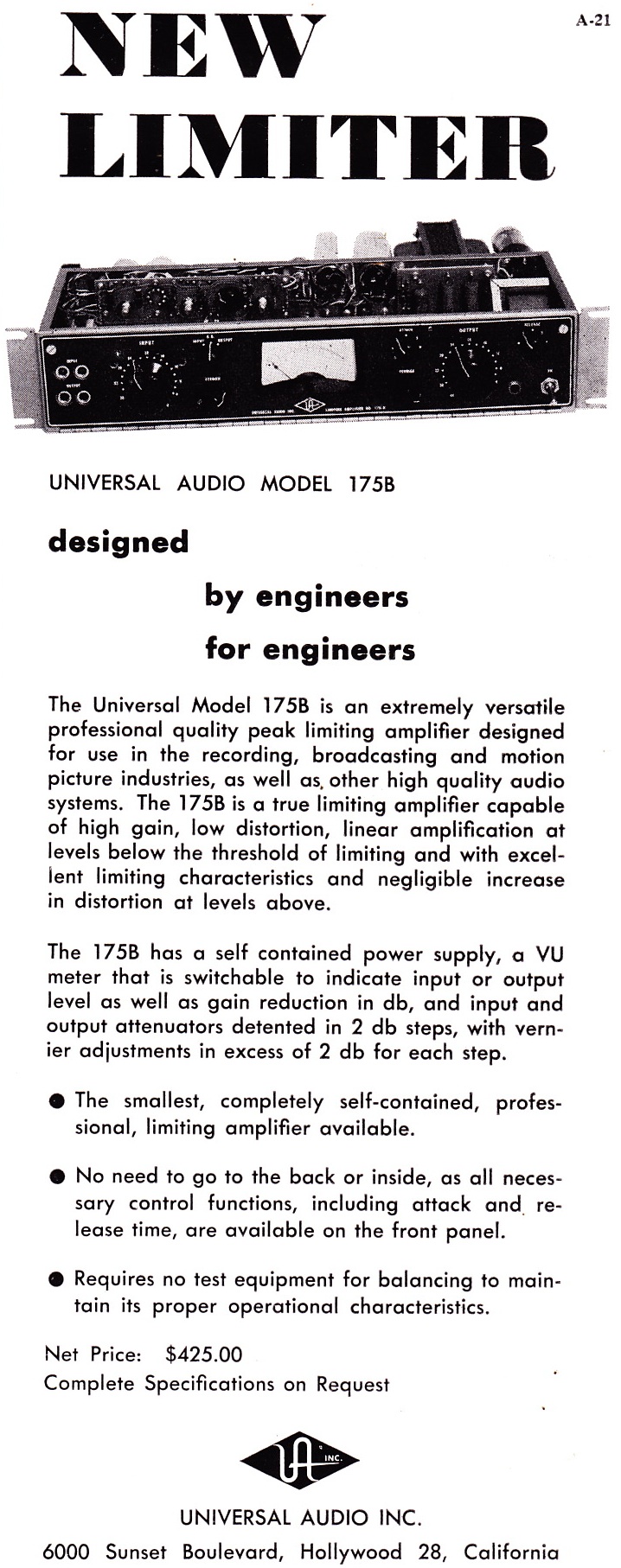
Above: the Universal Audio 175B limiter is announced.  The 175B is quite similar in operational principle to the Altec 436/8 and the Gates Sta-Level but the UA is far more sophisticated.  Just a really smartly designed piece of AFAIK, it was sold like shown, with no top cover.   gear.  Retro Instruments currently makes a reissue of this classic piece (but with a top cover).
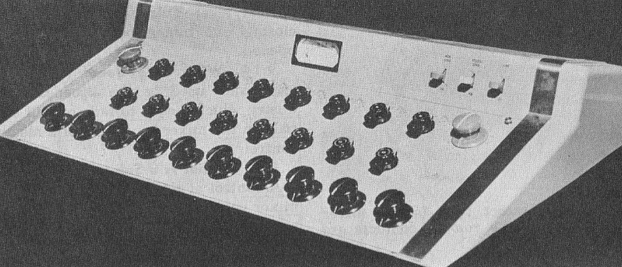
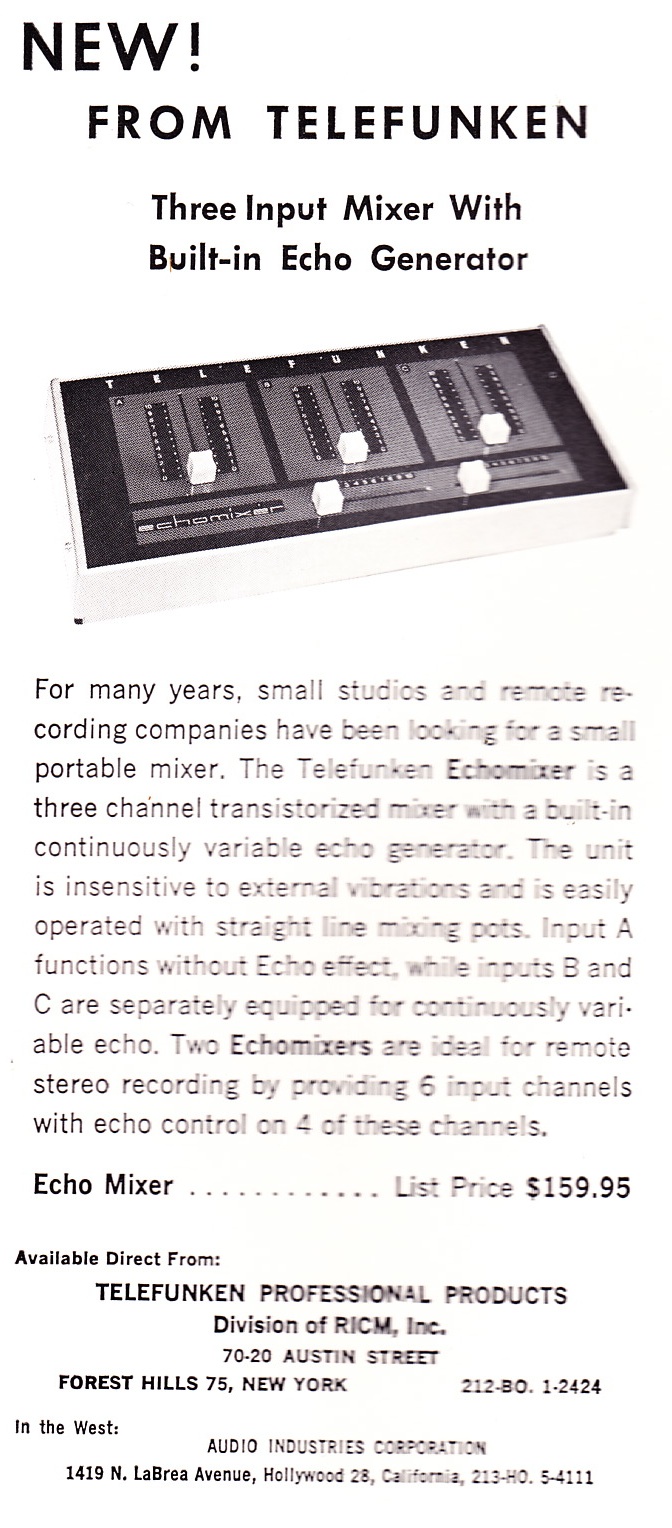
Above: an inexpensive studio echo unit of the early 1960s: the Telefunken Echo Mixer. It is a spring-reverb unit.  Click this link for an audio demo.   Apparently used by Klaus Schulze on his “Irrlicht,” which is one of my favorite records.


Categories
Microphones

Schoeps microphones of the early 1960s

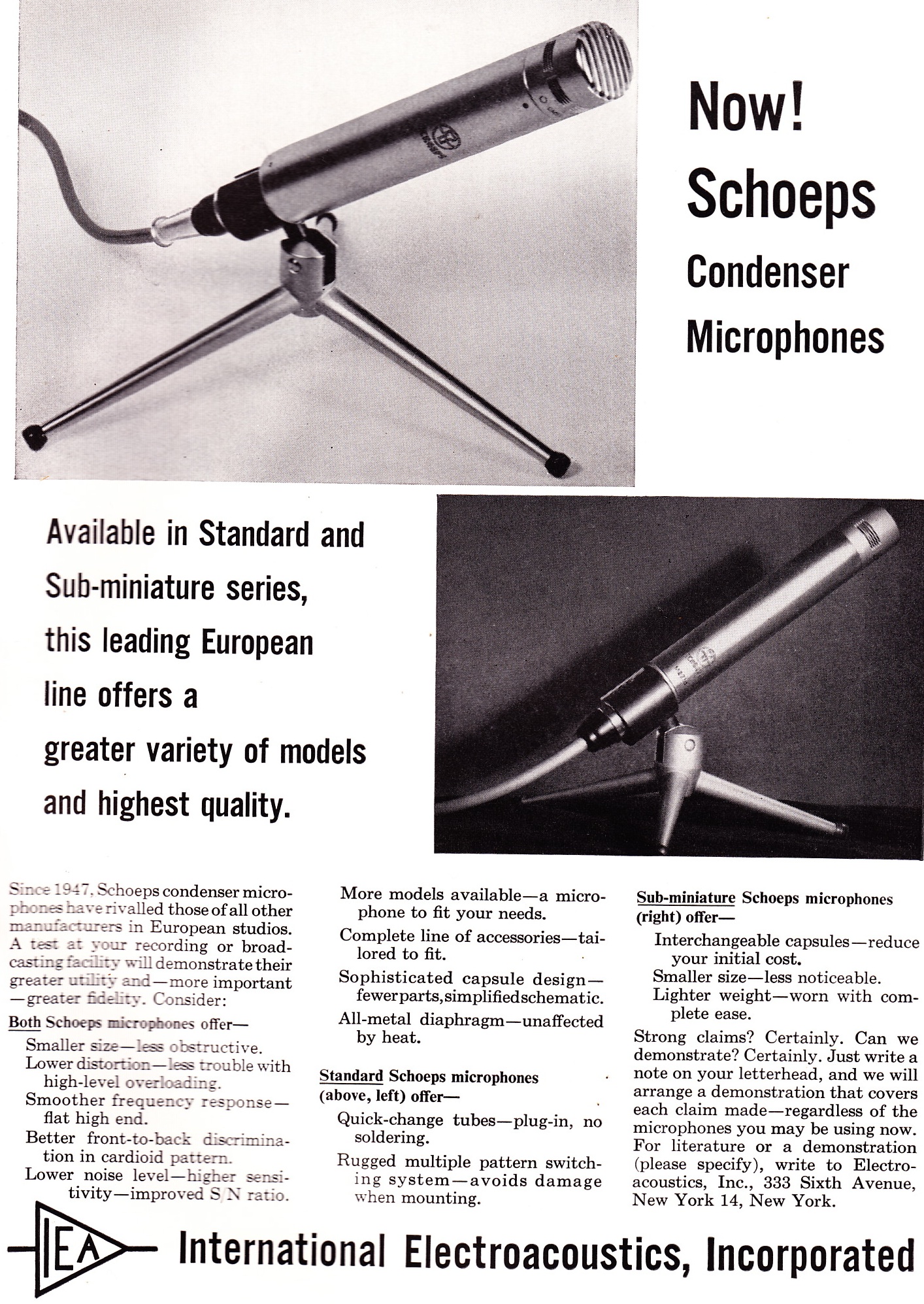
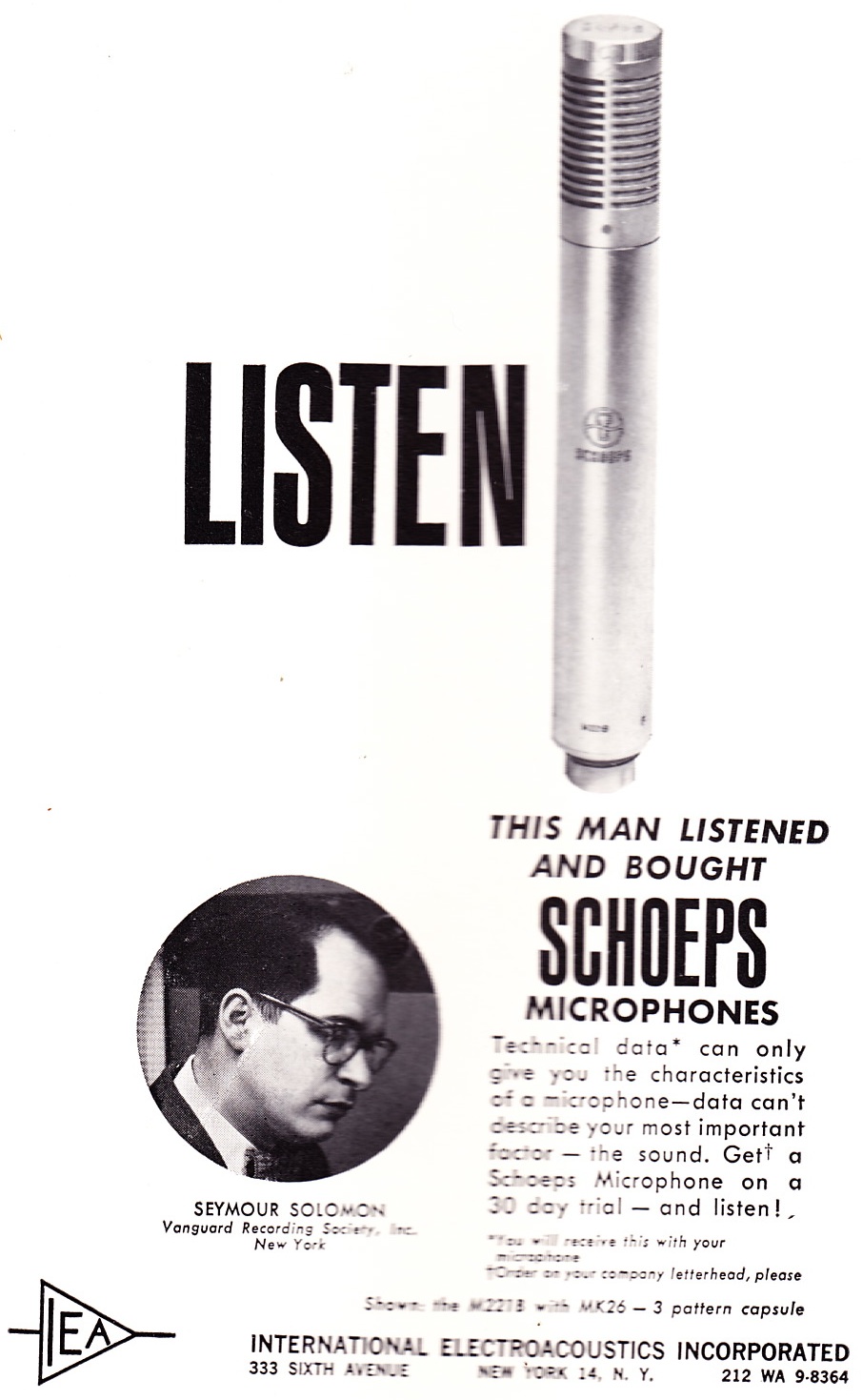
Above: Schoeps mics circa 1961.  Schoeps have a deserved reputation as being the most high-fidelity of any widely-available microphones.

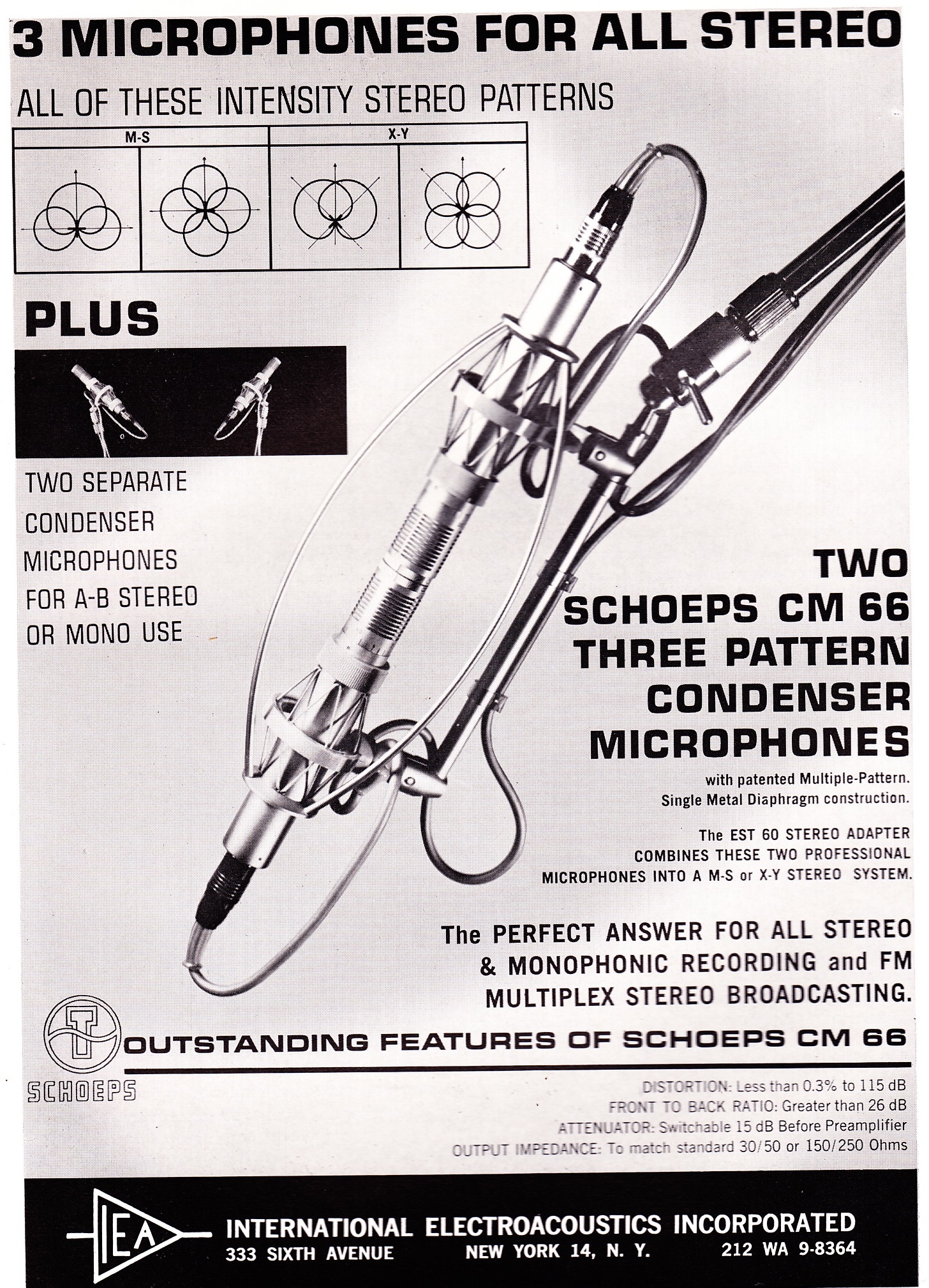
The Schoeps CM66 circa 1961

The Schoeps M221B microphone.  I really, really need to get me a pair of Schoeps…

Categories
Uncategorized

A Seven-Foot-Long Microphone

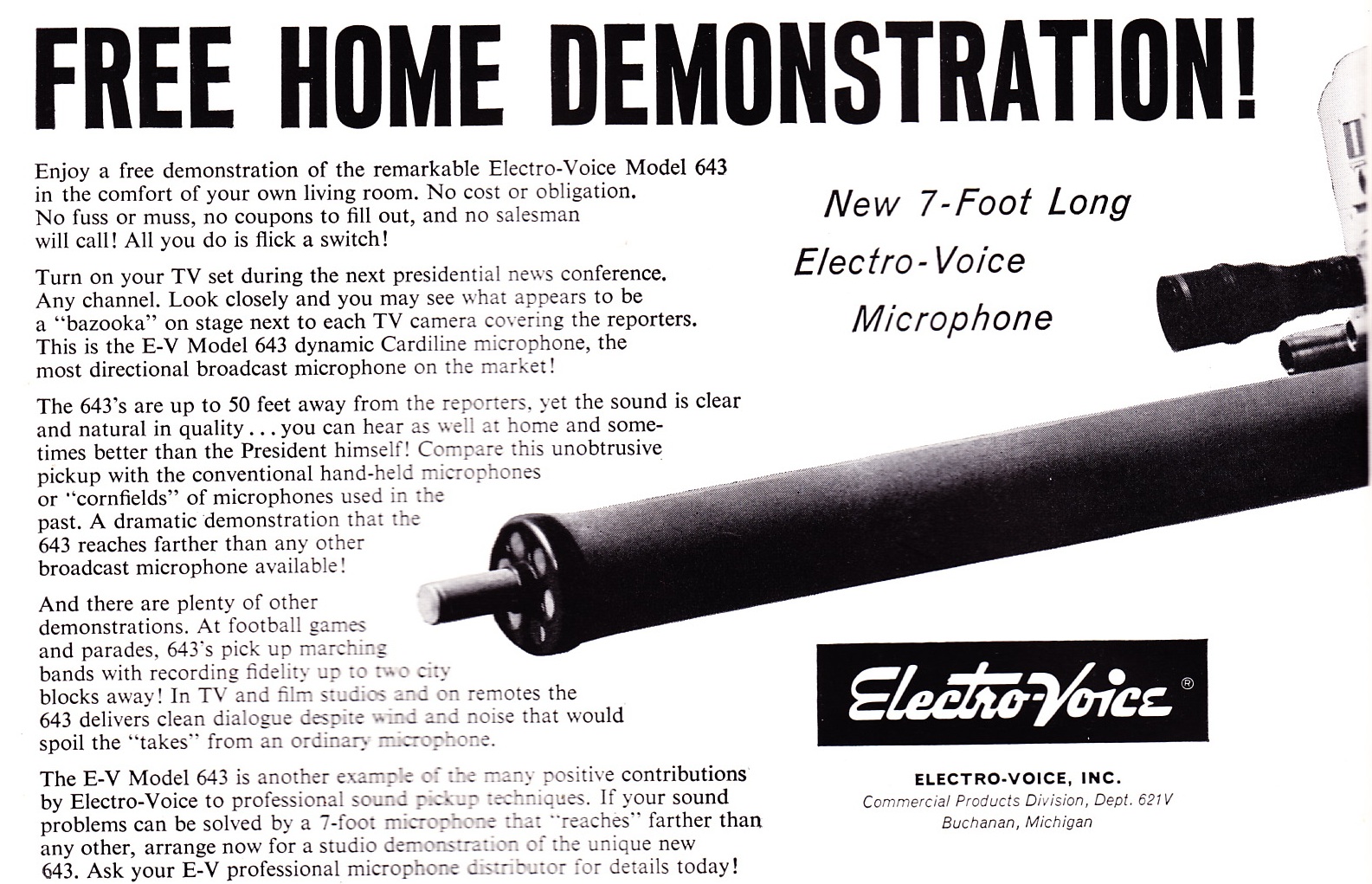
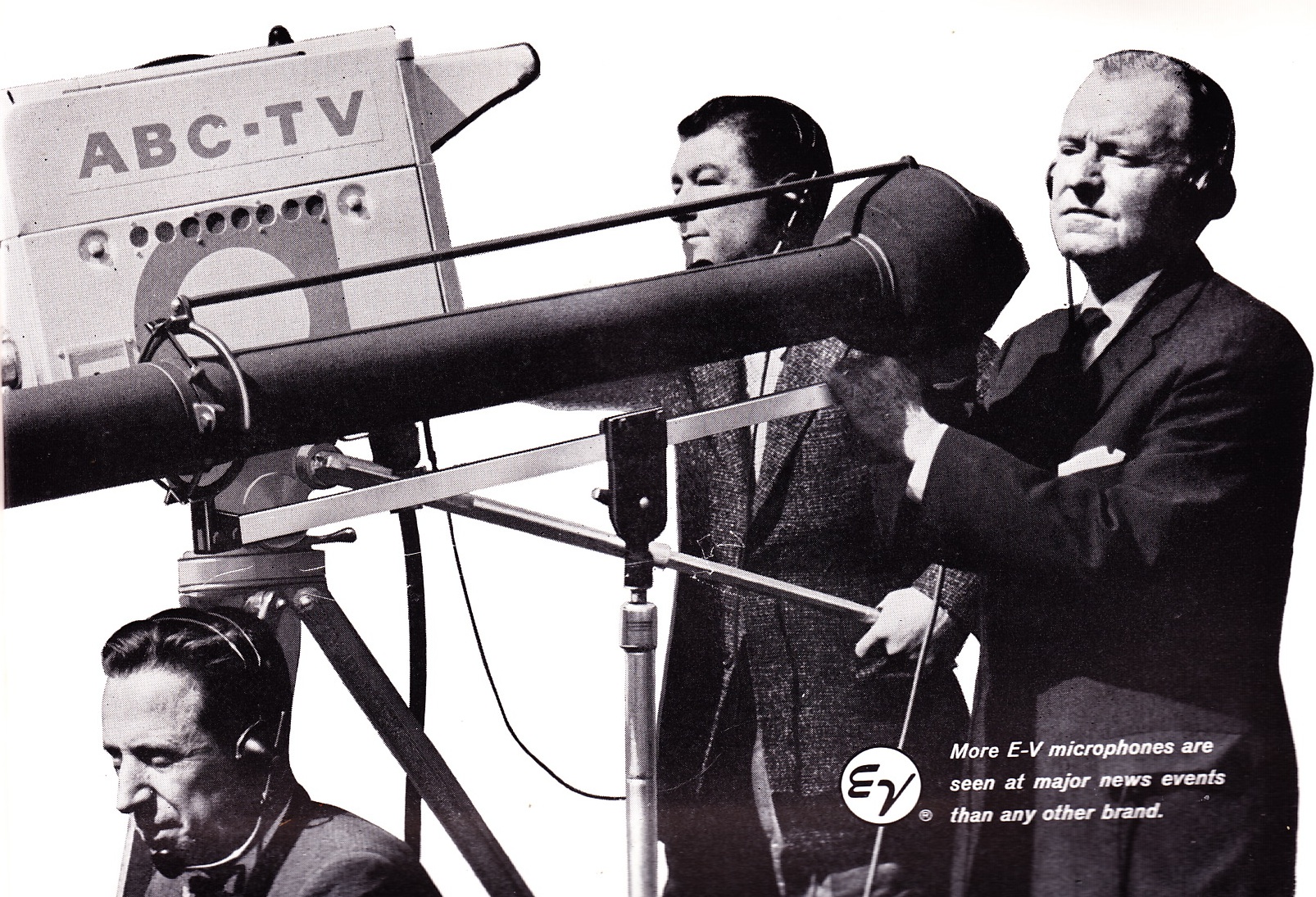
Above: the Electrovoice 643 super-directional microphone of 1961.  The 643 was apparently developed by the same engineer who created the wonderful Electrovoice RE-20.  Unlike the 643, the RE-20 is still in production, and still being used everyday around the world.  As far as the 643…well… it was supposedly used in the 1960s for Presidential news conferences, but I can’t imagine seeing something like this aimed at a head-of-state today.

Categories
Microphones

Neumann Microphones of the early 1960s

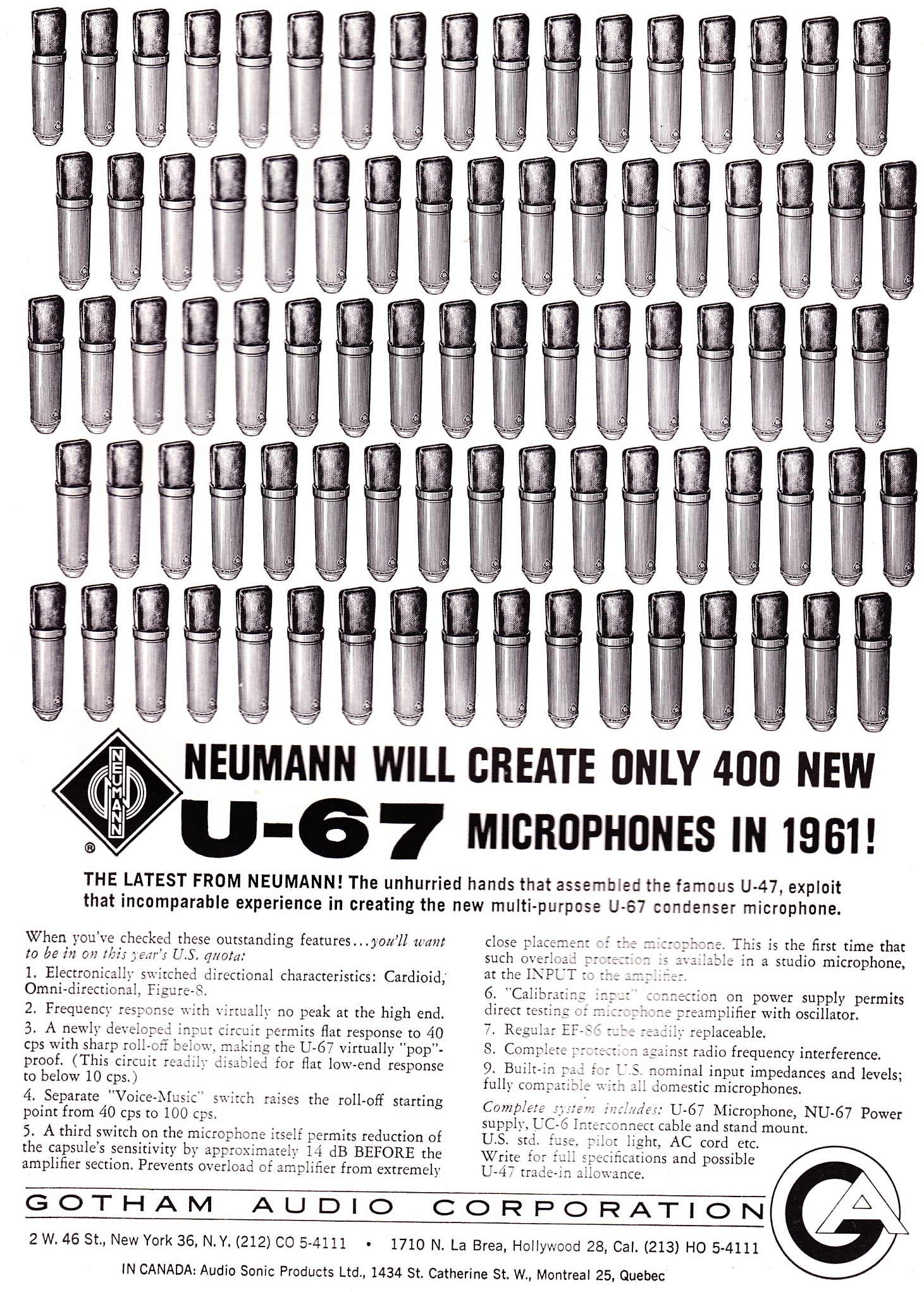
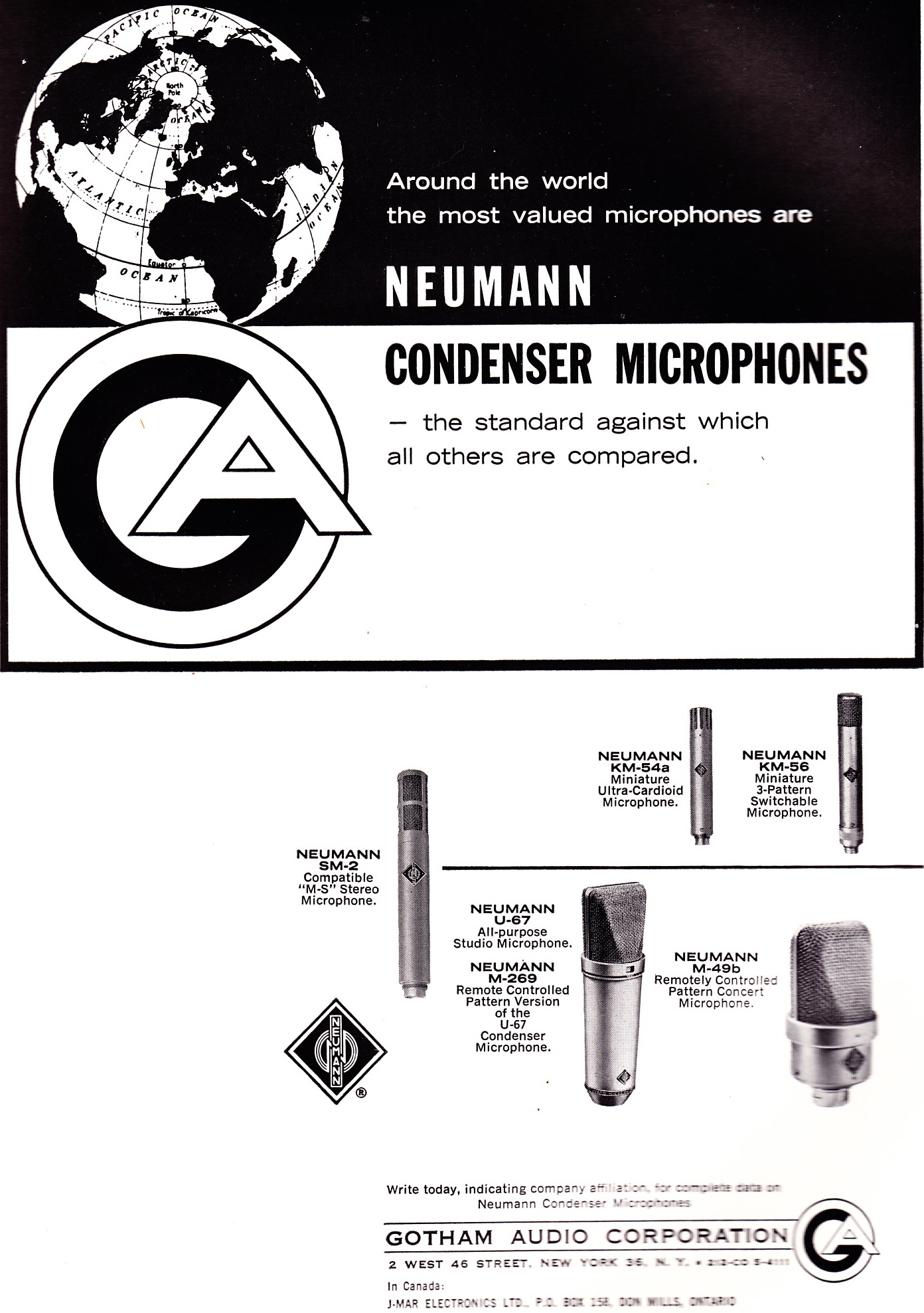
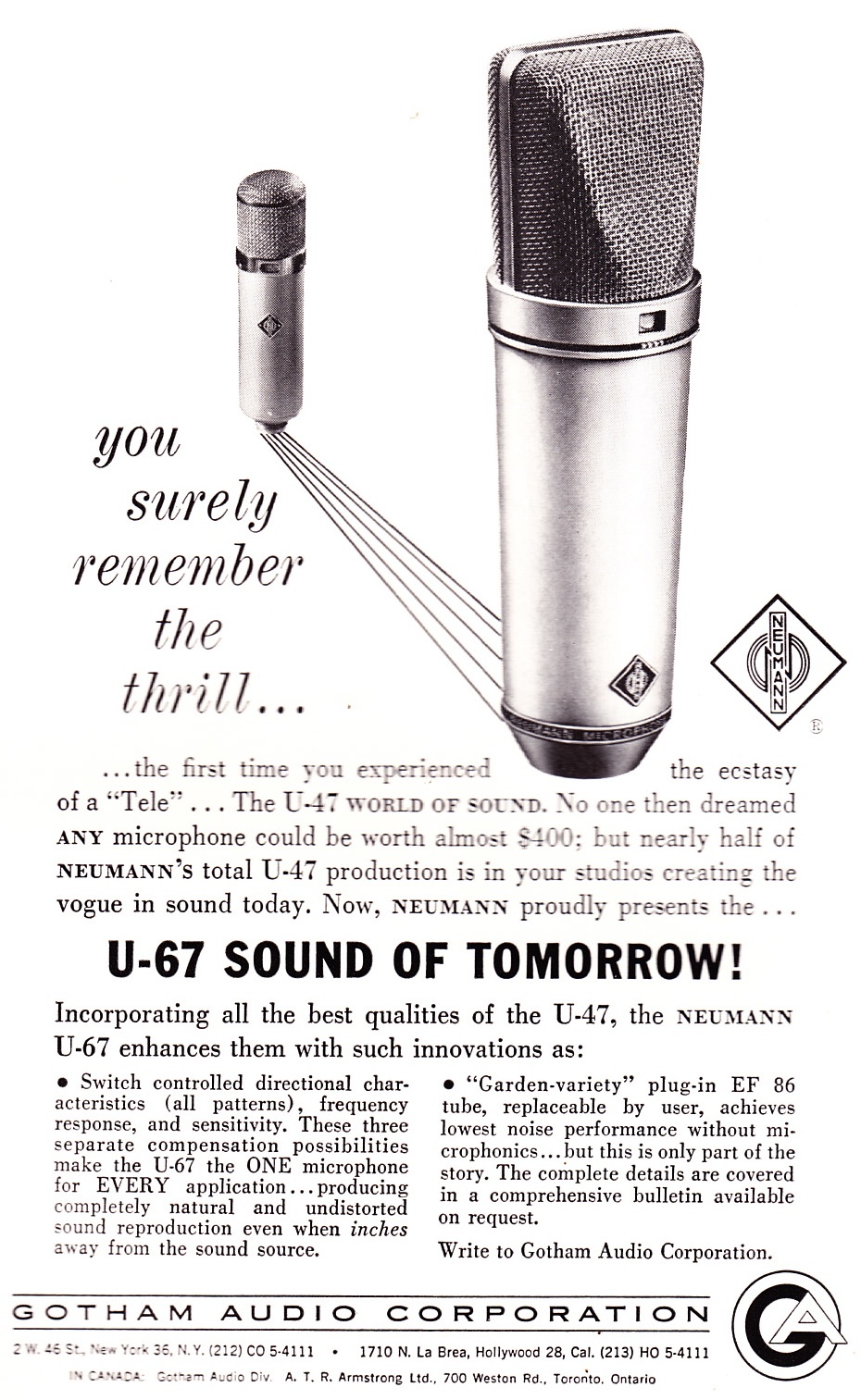
Above: the Neumann U-67 is announced.  The U67 was the ‘bridge’ between the earlier U47 and the soon-to-be-ubiquitous U-87.  Like the U-47 it is a tube mic.  A U-67 just sold on eBay for $7k, which is not too surprising. It’s possible to turn up cheap U87s from time to time but the U67 had a much shorter run and not the same level of popularity.

Above: the Neumann KM-54, KM-56, SM-2, U-67, M-49b, and M-269 microphones.

Another announcement ad for the U-67.

Categories
Pro Audio Archive

Audio Mixing Consoles circa 1959

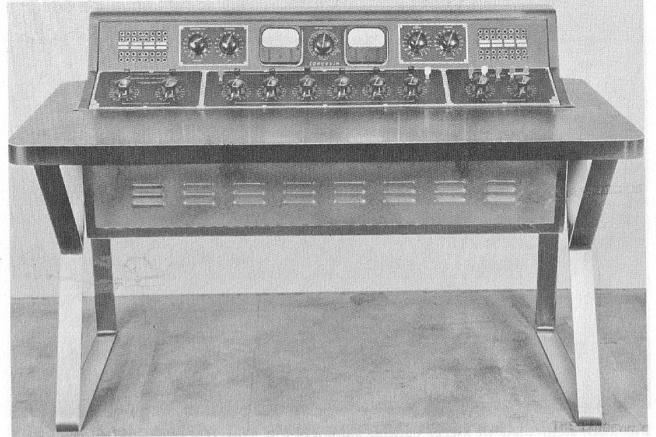
Langevin stereo console circa 1959

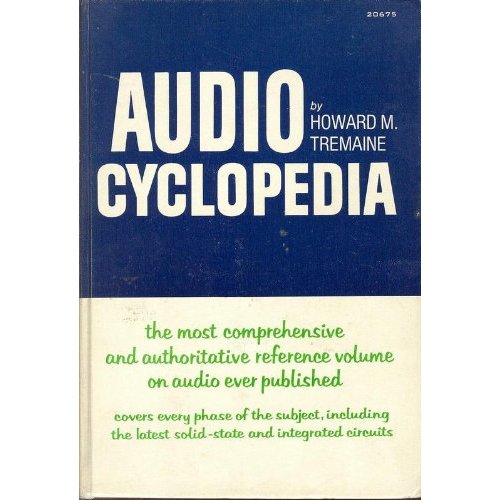
Today: from the “Audio Cyclopedia,” Howard Tremaine, 1959: a quick visual survey of professional mixing consoles in service in 1959.  A PS Dot Com reader turned me on to the “Audio Cycolopedia”; many copies of this 1300ppp volume are available on Amazon and eBay starting at around $80; based on the number available, though, i feel like there’s a $1 yard-sale copy waiting for me just around the bend…  When the moment presents itself, we’ll be sure to run an Out-Of-Print-Book Report.

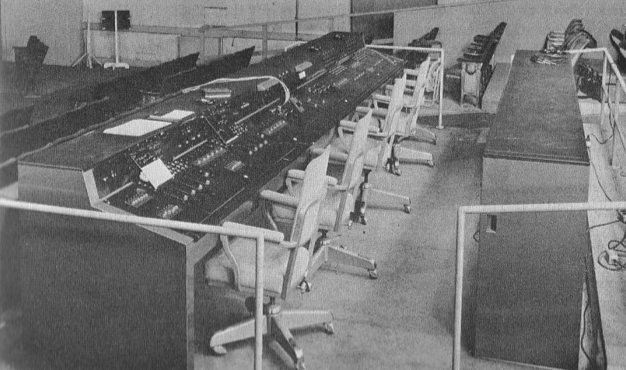
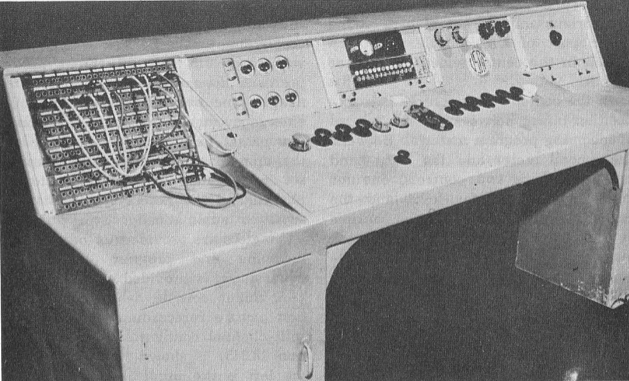
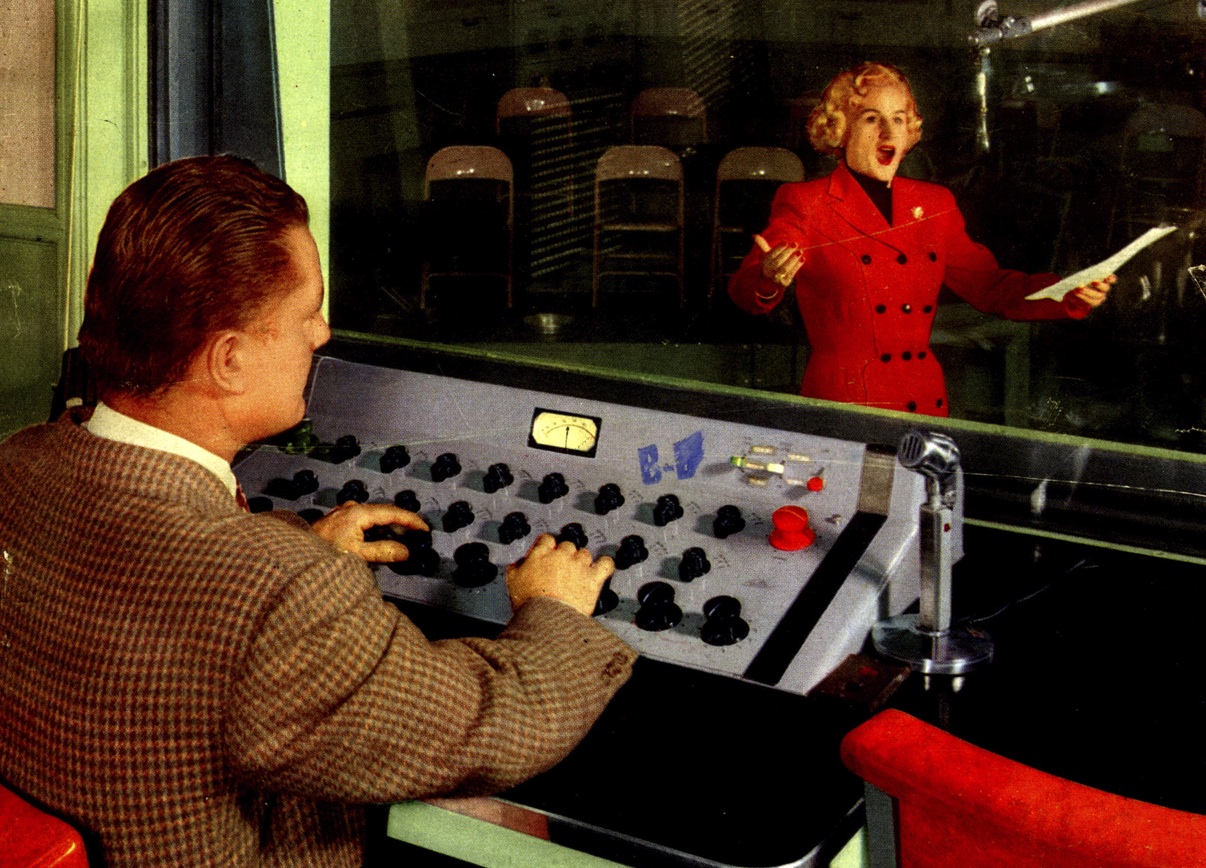
A Westrex console built for Todd-AO

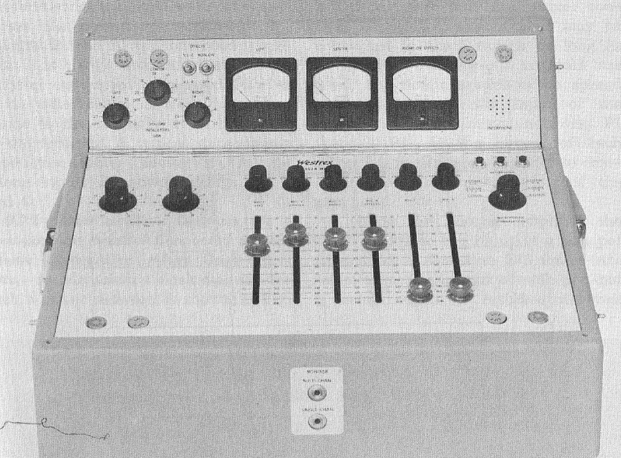
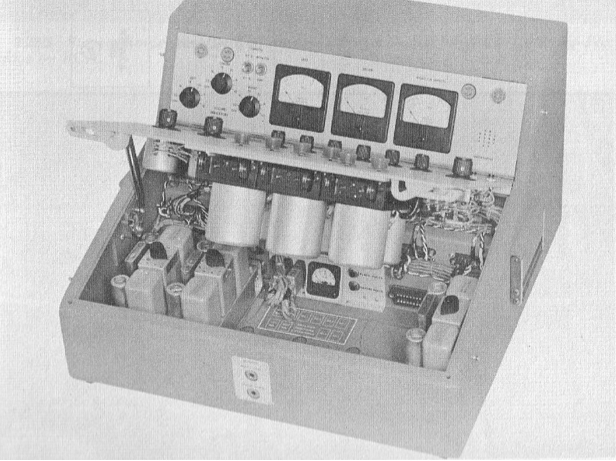
The Westrex Portable Stereo Mixer, inside+out

RCA Stereo Console built for 20th Century Fox

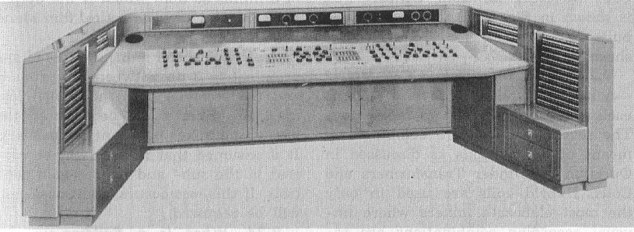
A ten-channel stereo console built for the production of USAF training films

An eight-channel Western Electric console

Cinema Engineering Console with integral channel equalization.  These consoles were apparently introduced in 1951…

…as seen in this image from Radio & Television News, 1951.  We’re looking at Capitol Records’ studio in this image.

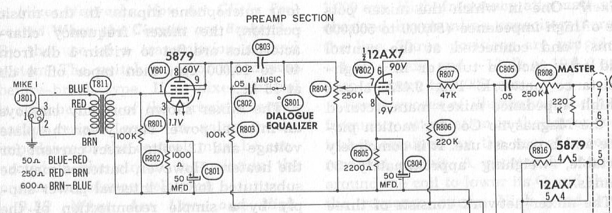
“Audio Cyclopedia” presents a range of material in an easy-to-read manner suitable for technical and non-technical persons alike; that being said, the book does not shy away from some very useful circuit data, such as the above-depicted Magnasync mixer schematic.  I have been wondering for some time what the proper way was to use a 5879 tube in triode mode: here we see:  100k plate resistor with 1K bias resistor.  Easy…

Categories
Uncategorized

What is an audio engineer? c. 1961

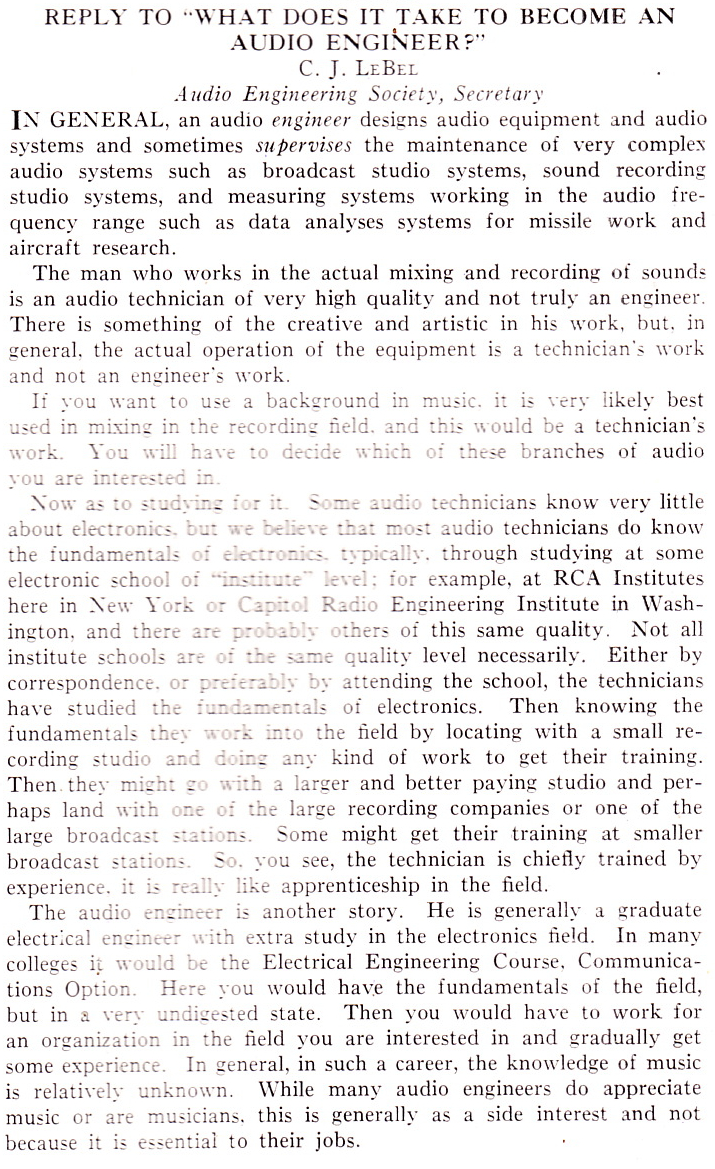
From an AES journal circa 1961.  It’s interesting to see how the meaning of ‘audio engineer’ has shifted over the past half century.  An ‘Audio Engineer’ circa 1961 would almost certainly be called a ‘tech’ or a ‘broadcast engineer’ today, while the circa ’61 ‘audio technician’ would almost certainly be called an engineer or mixer today.