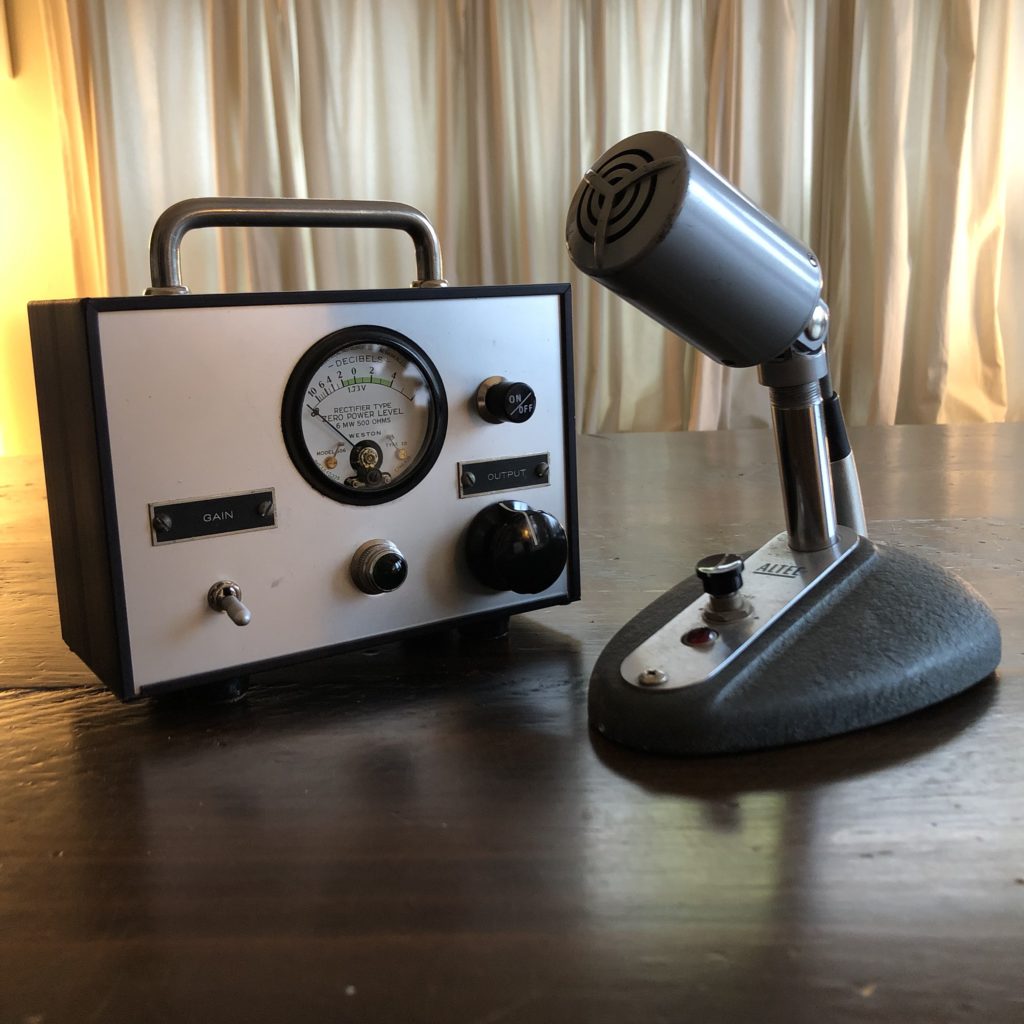
This is my first post using this intensely frustrating new WordPress “Blocks” authoring structure so it will brief/awkwardly formatted. Why TF they would change this platform so drastically after all these years is beyond me but I guess there is no shortage of bad ideas in the world. OK got that out of the way. I was recently reminded of the existence of (many, many, many) of these Altec 1588C microphone preamp modules.
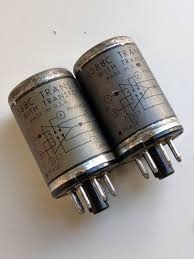
(image source) The 1588C is an octal module with flexible DC powering requirements and offers around 35DB of gain into a 10ohm load. According to the spec sheet it is full-frequency. It has an input transformer and can pass the DC supply voltage as phantom power if wired as such. Years ago I had an Altec 1592 mono sound-reinforcement mixer that used these things; it sounded fine.
Anyhow, some post on Instagram reminded me that these things are out there; a quick eBay check revealed that they are very cheap (if you are patient); I bought three for around $30 shipped. Here’s the original data sheet.
It occurred to me that if these things really do perform as well as advertised, they COULD make a good basis for the custom mixing console i’ve been dreaming about for, oh, 15 years. But first: I had to know. I needed to build some thing to test the 1588’s and see if they really do perform well and sound good.
Following the advice offered in this online forum, I figured I would wire one up with a 1K pot strapped to the output, feeding a high-quality 600:600 transformer. The best thing I had around that would fit in the tiny chassis was a Jensen JT-11-FLCF. Here’s the specs on that piece:
Since everyone likes a vintage mechanical VU meter, I added one of those too, driven by a buffer amp from DIY–TUBES.com. I’ve bought dozens of these lil amp boards from them and they go together quickly and work great.
Here are some photos of the assembled unit so you can see how it all went together. The chassis is a (was a) NOS NIB “Versa-box” or something like that; it came from an ancient distro in my city. I don’t thing you can expect to find many of these left in the wild, but any old steel, aluminum, or plastic box should do. The RCA-style knob (SATO brand) and pushbutton power switch came from Akihabara in Tokyo; I’ve been unable to find an online source for them. The top handle is an old pull, probably ParMetal or the like, with a pair of beauty washers (AMAZON) to help the appearance. The ‘GAIN’ and “OUTPUT’ metal tags are from a huge hoard of these I bought from the estate of a Silent Key; I have no idea where to find these, but someone should start making these again! (i mentioned the idea to RedCo but they weren’t interested)
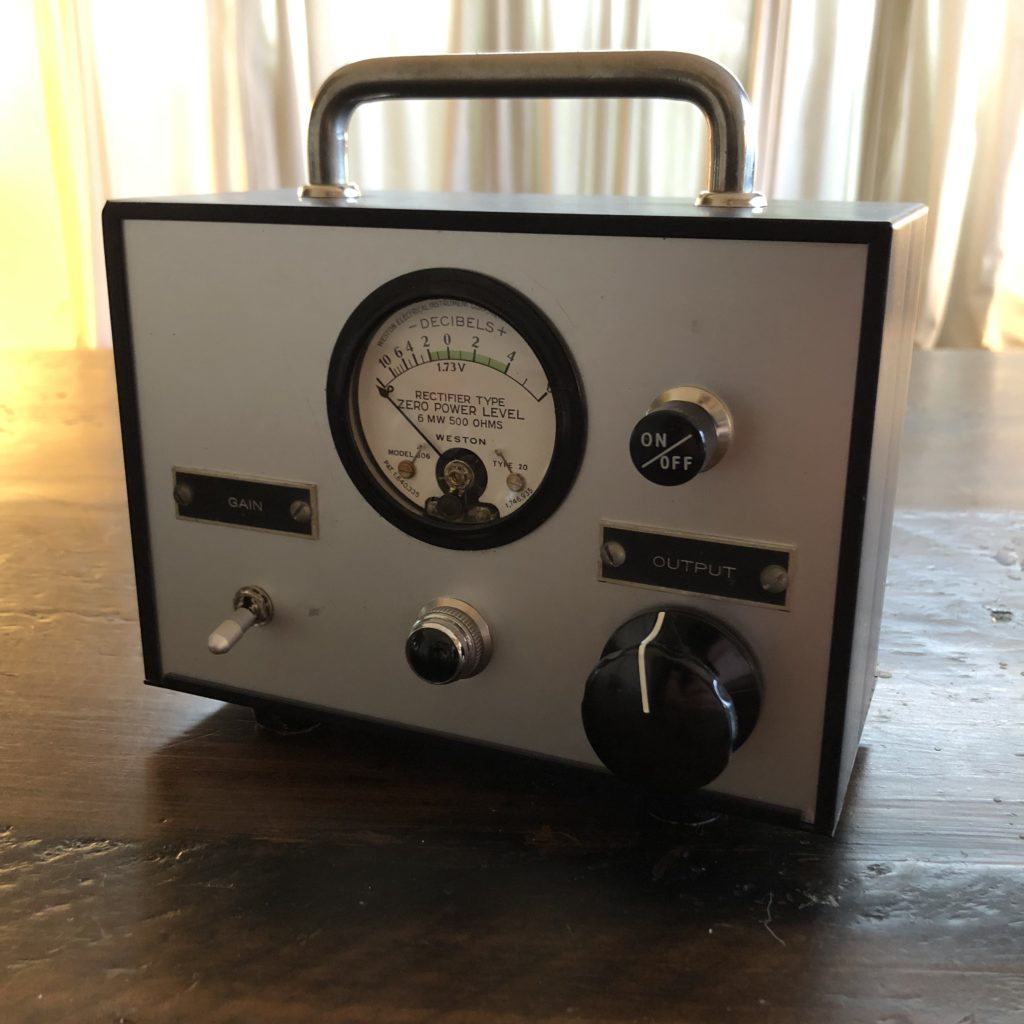
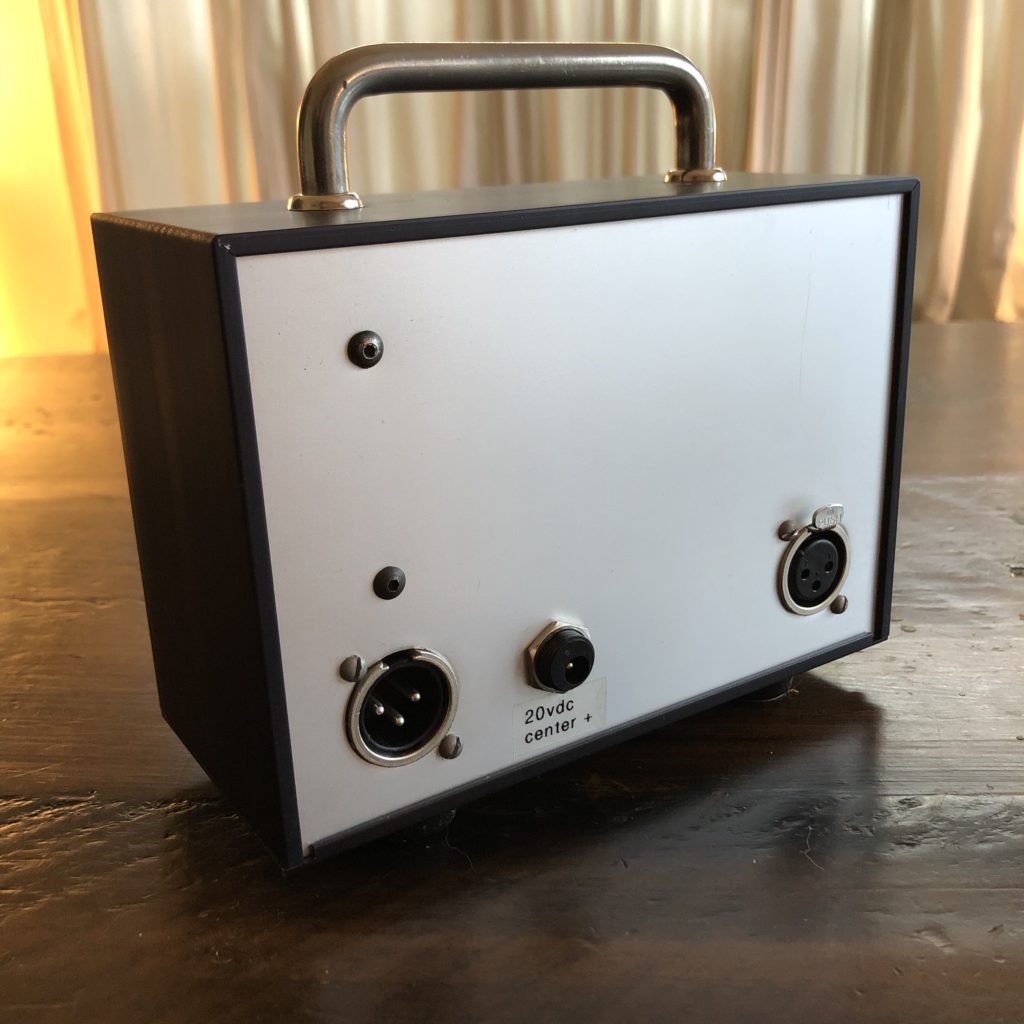
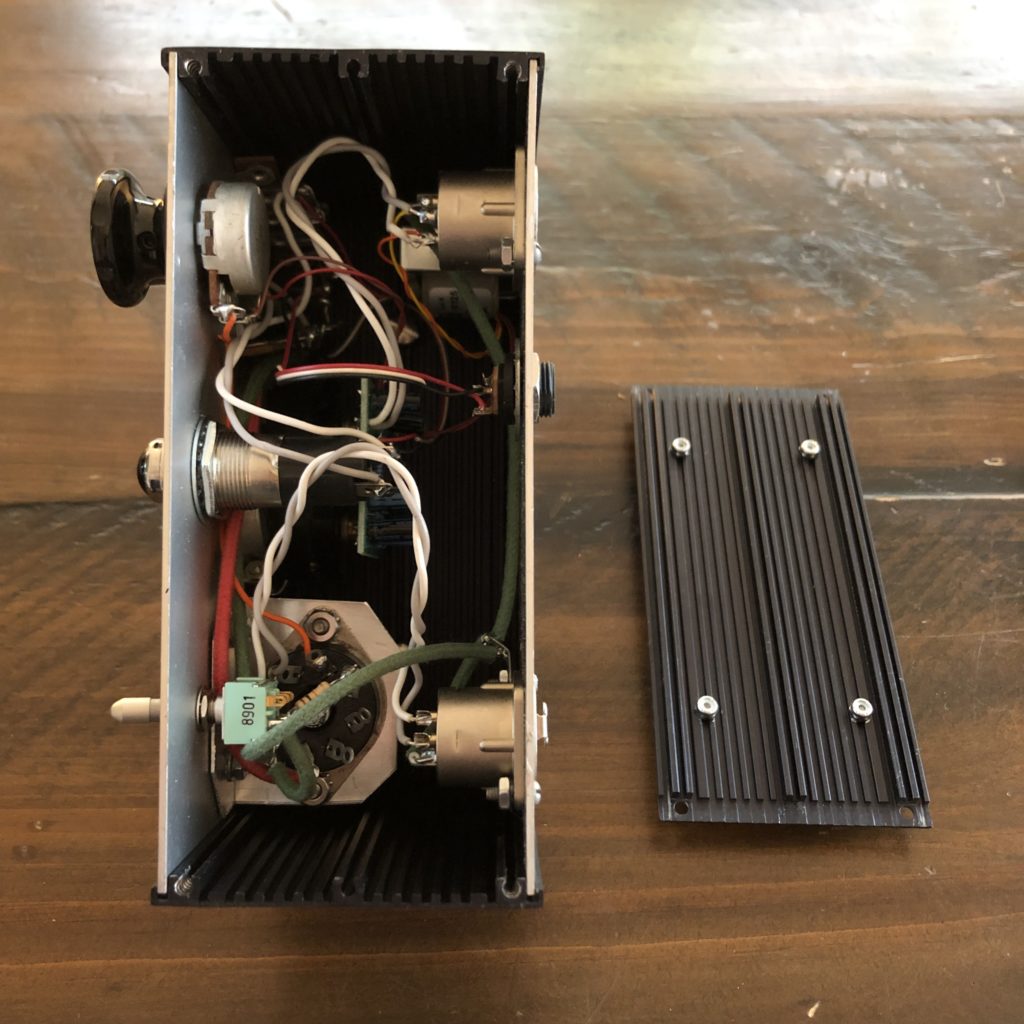
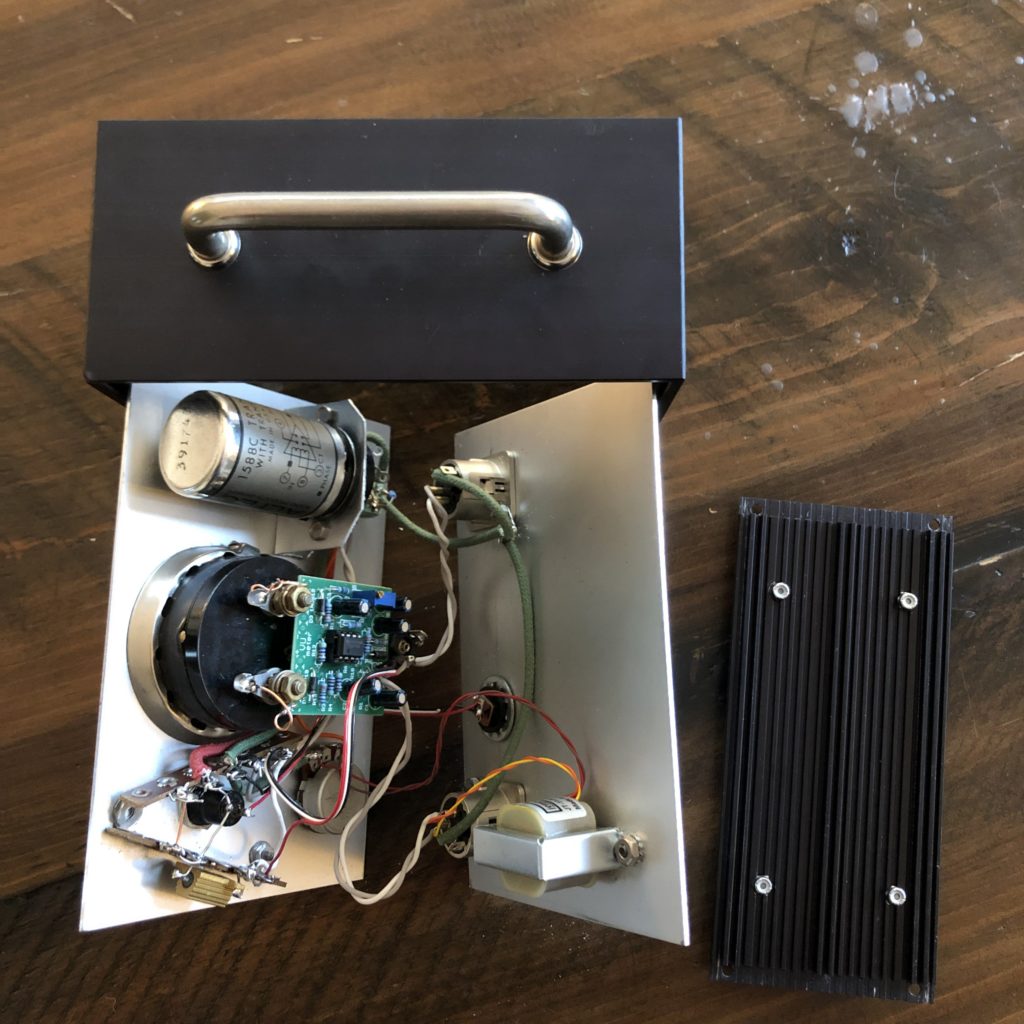
As the photos reveal, the case is comprised of a U-shaped black body with a bolt -on bottom cover; the front and rear faces are polished aluminum and simply slot into channels in the body. VERY sturdy and attractive. If anyone know of a comparable modern product line, please LMK in the comments.
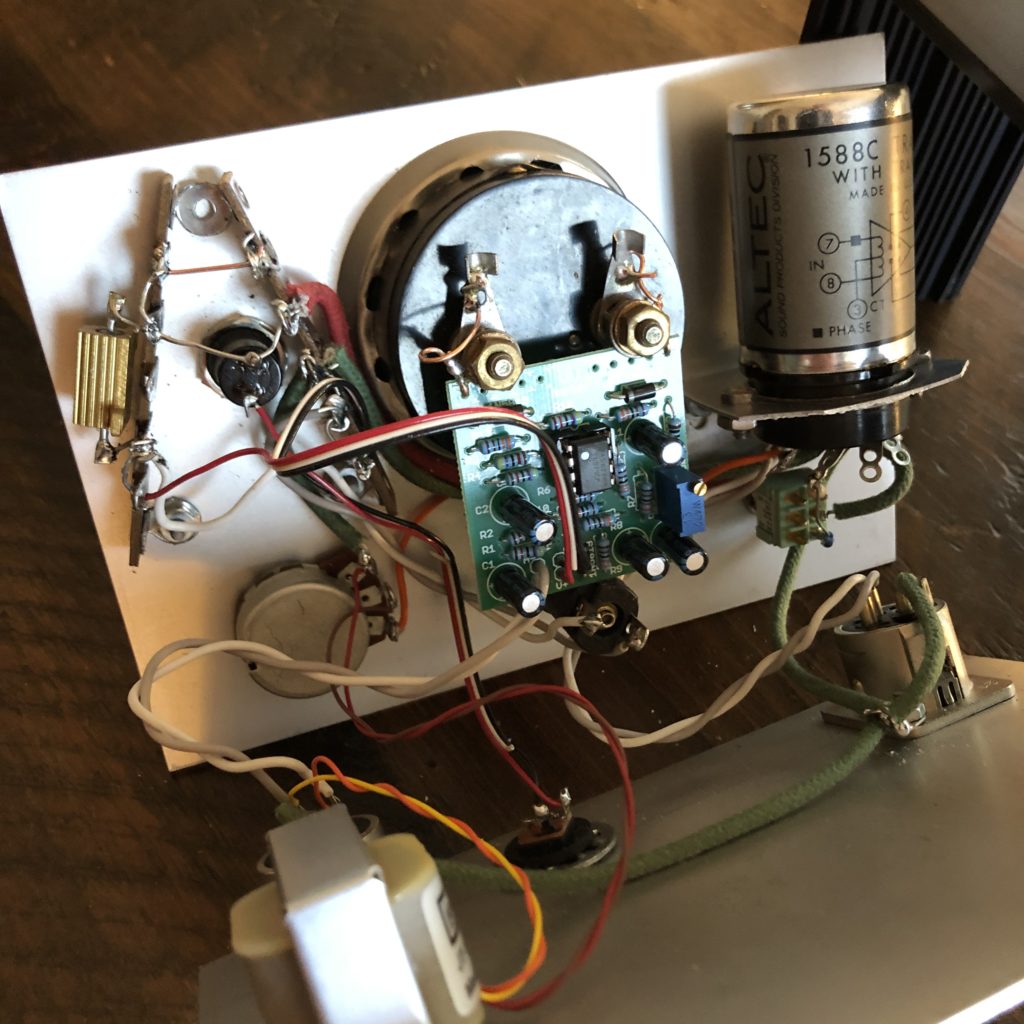
In the photo above (front panel, rear view) you can see the the pot on the lower left; above is the power switch and a 5W 40-ohm resistor that drops the 20VDC from the regulated Dell Laptop supply (free at a hamfest!) to around 11 volts to power the VU buffer amp and the 14v lamp. This is certainly not the most elegant solution (ESP because when/if the bulb fails, the power to the buffer will spike to around 19V), but I couldn’t make the required voltage drop happen with a voltage divider since the DC resistance of the bulb is so low (5 ohms!). Any advice on this that does not require a voltage regulator, pls LMK in the comments…
Anyhow, on the right is the 1588C module, mounted in a standard octal tube socket. The switch below selects if pin 2 sees ground thru either a 100 ohm resistor (‘hi gain’) or a 10K resistor (‘low gain’).
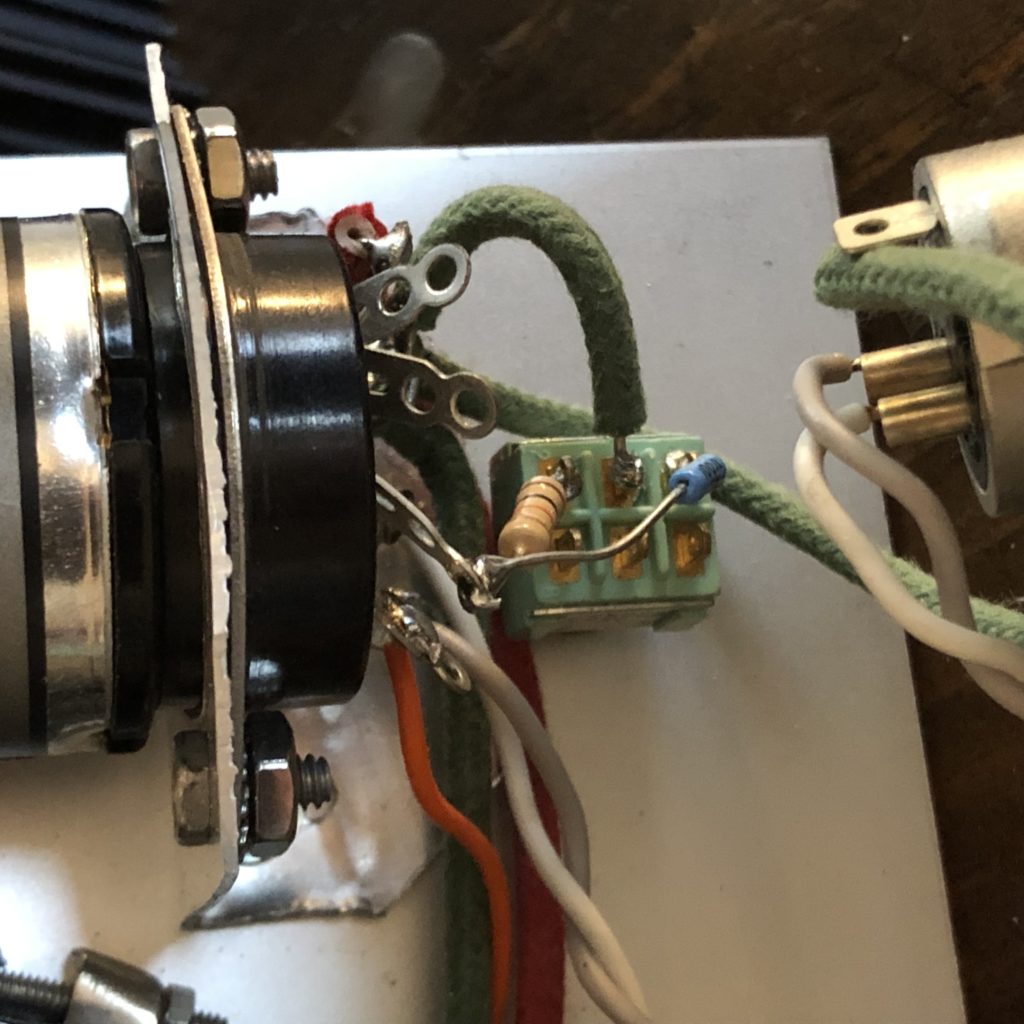
The switch itself is pretty neat; vintage Japanese NOS unit with gold contacts and a ‘pull’ shaft, IE., you need to pull the shaft toward you in order to change its position.
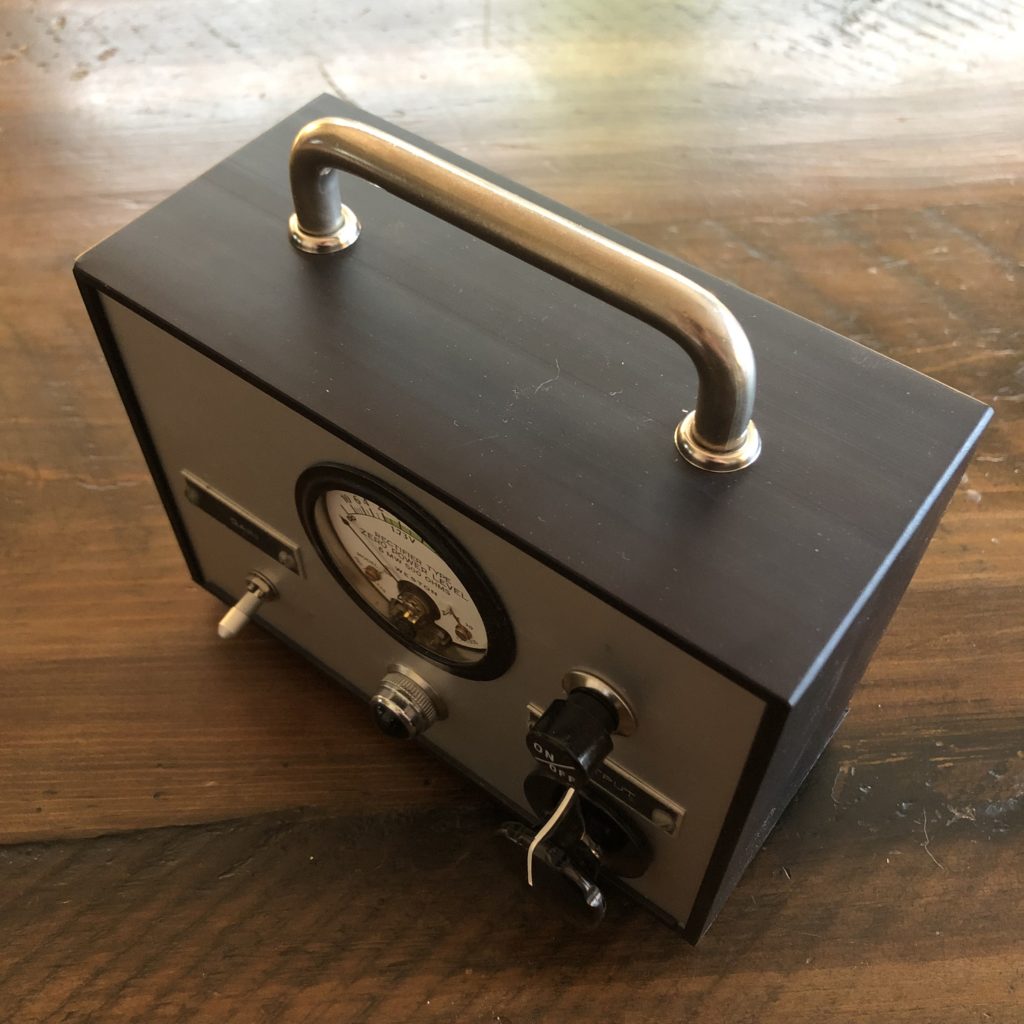
So that’s about it… the sound is very good; very clear, very low noise. Will def be usable for recording. Unfortunately, the frequency performance of the unit is nowhere near the stated specs. Why this is I am unsure. The only external elements in the signal path are the pot and the Jensen Transformer; I certainly trust the stated specs of the Jensen, and if the source impedance of the 1588C is truly 10 ohms, it should have no problem driving a 1K pot. Based on what I’ve described of its implementation here, if anyone knows for sure what the issue is, please LMK in the comments. Anyhow, here’s my test results obtained with the completed unit; I use a LofTech oscillator and a Ward Beck meter for measurements. Signal ref is sine, -40db, 1K hz.
Max gain (low; 10K fb res) = 28.5 fb
Max gain (high; 100ohm fb res) = 38db
Max clean output +14 db
High end down 1db at 7K, 2db at 10k, 5db at 15K, 6db at 20k
Low end down 1 db at 100hz, 2db at 40hz, 3.5db at 20 hz
One final note, and important if you attempt to do this same sort of thing. Of the three 1588Cs that I got in that $30 lot (one used, two in-the-box, advertised as NOS), only one worked well – the first two I tried had issues. The first had a very subtle high-frequency whine, and the other had a non-functional gain pin (it was stuck in a low-gain setting, likely indicating a short within the unit). If I had not had extra 1588Cs around, this would have been an intensely frustrating exercise.



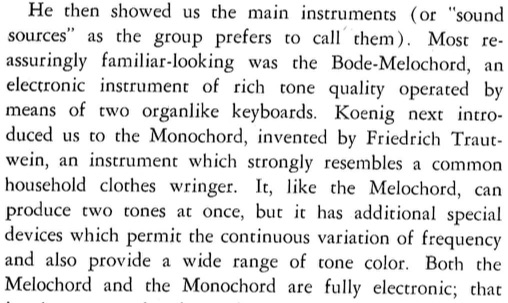
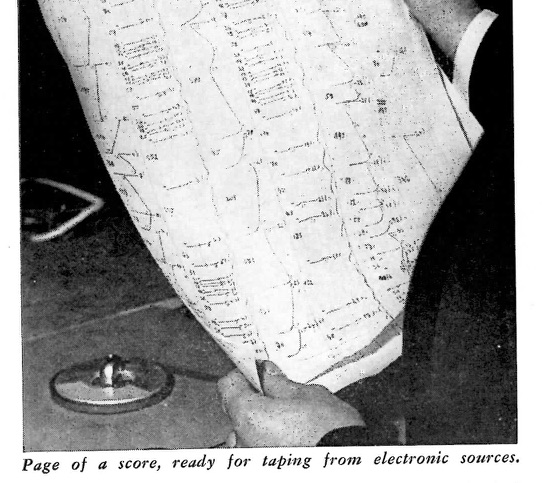
 Download an 8pp article from HIGH FIDELITY magazine, October 1956, on the subject of the WDR Cologne Electronic Music studio; composer-in-residence Karl Stockhausen. Author is Allen Forte.
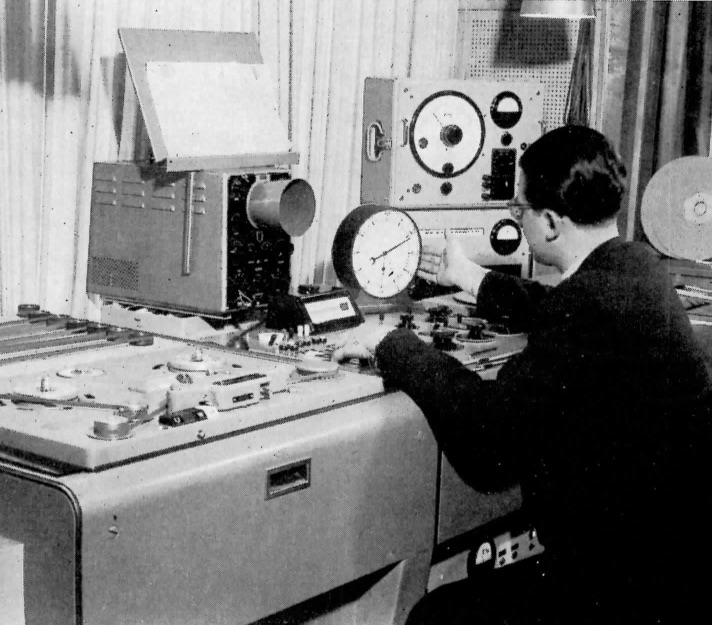 This piece provides a fascinating look into the tools and techniques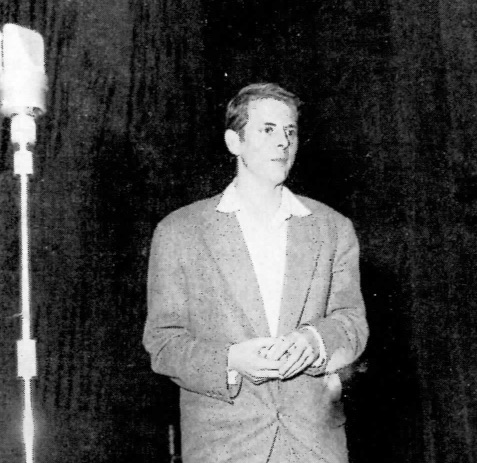


 Courtesy Tom and John Fine is this fascinating 14pp 1962 article on the then-state-of-the-art television operations at Reeves Sound Studio.